• About
  • Privacy Policy
  • Terms of Use
  • Donation
  • Contact
No Result
View All Result
Archaeology News
  • Home
  • News
    • Archaeology
    • Anthropology
    • Paleontology
  • Academic
    • Books
    • Conferences
    • Universities
  • Articles
  • VR Tours
  • Quiz & Game
  • Download
  • Encyclopedia
  • Forum
Archaeology News
No Result
View All Result
Home News Archaeology

Unexpected discovery: sand layer beneath Ishtar Temple in Assur reveals city’s founding and ancient ritual practices

by Dario Radley
February 2, 2026

Archaeologists and geologists have identified a deliberately placed layer of sand beneath the foundations of the Ishtar Temple in Assur, Iraq, dating to between 2896 and 2702 BCE. The finding establishes the earliest absolute date for the city and shows that Assur functioned as an active urban center more than 4,700 years ago. The evidence provides new information about the origins of the cult of the goddess Ishtar and the adoption of Mesopotamian ritual practices in northern Iraq.
Unexpected discovery: sand layer beneath Ishtar Temple in Assur reveals city’s founding and ancient ritual practices
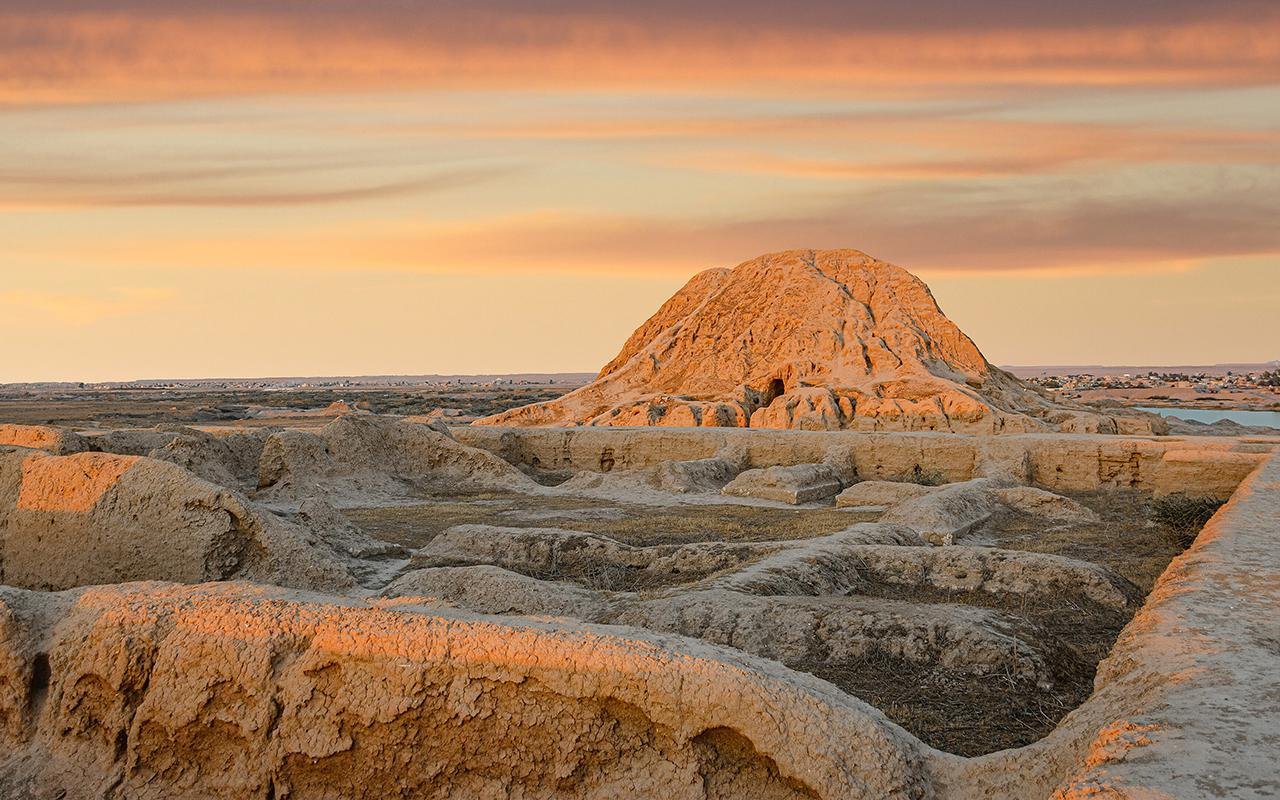
Ruins of Assur showing the ziggurat in the background, with temple and wall remains in the foreground. Credit: Fakhri Mahmood / CC BY-SA 4.0

Assur, located on the western bank of the Tigris River, served as the political and religious center of the Assyrian state. Its importance in the first millennium BCE is well documented, but its third-millennium origins remained unclear. Excavations conducted from 1903 to 1914 under Walter Andrae uncovered the Ishtar Temple, yet the earliest foundation layers were inaccessible. In 2024, the Assur Excavation Project, based at Ludwig Maximilian University of Munich, used modern coring technology to reach these deeper layers inside the temple cella.

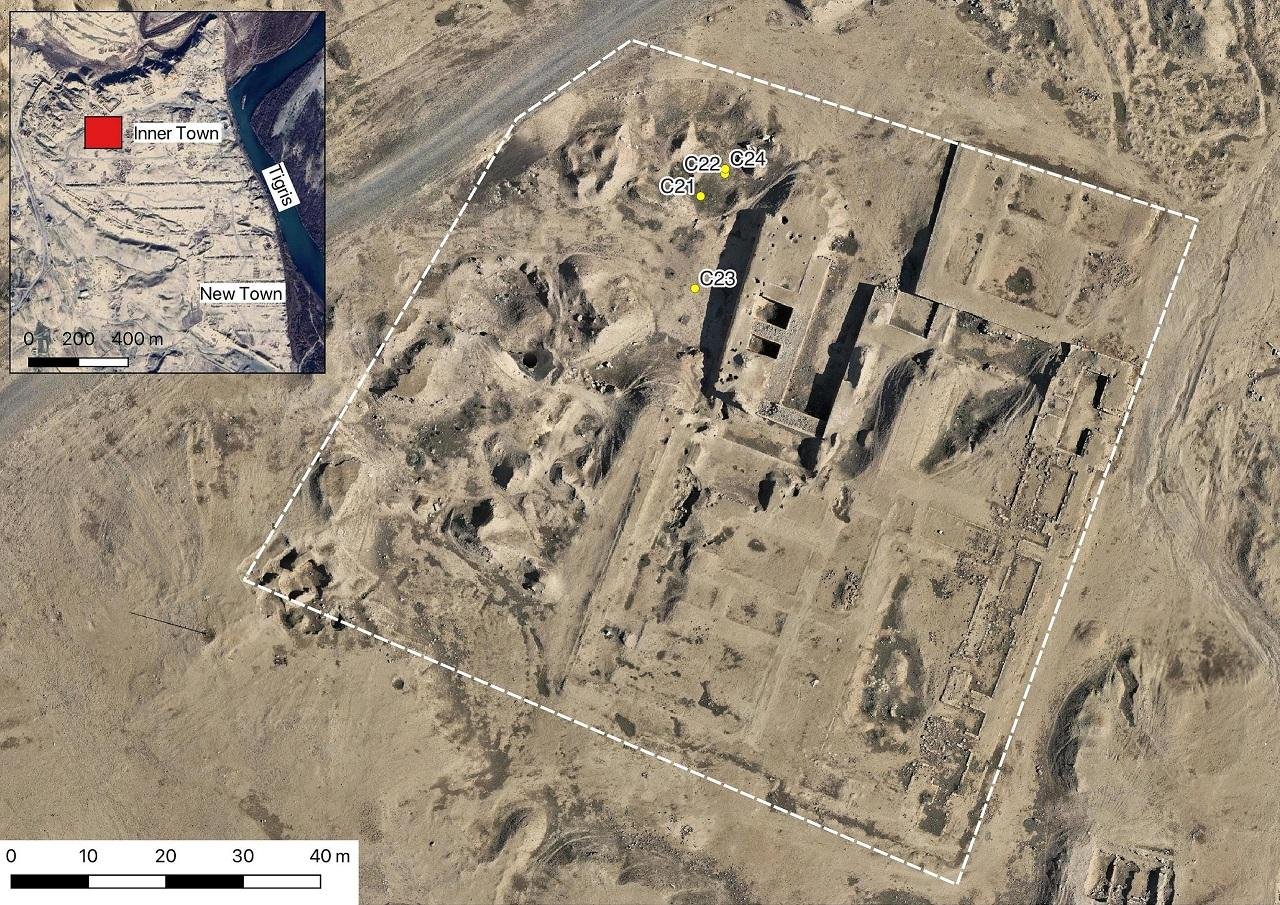
The team collected sediment cores from Temple H, the oldest construction phase of the site, and found a one-meter-thick sand layer beneath the foundation. Radiocarbon dating of charcoal located immediately above the sand placed the construction of the temple between 2896 and 2702 BCE, during the Early Dynastic I period. Temple H represents the earliest occupation level in Assur, providing a new reference point for the city’s foundation.

Analysis of the sand revealed epidote-group minerals, glaucophane, zoisite, and lawsonite, which are characteristic of blueschist-facies metamorphic rocks. These minerals indicate a source in the Zagros Mountains rather than the nearby Tigris River. The sand appears to have been derived from local aeolian deposits, recycled from the Upper Miocene Injana Formation and transported through the Lesser Zab River. The selection of this material demonstrates a deliberate choice based on its geological properties rather than convenience.
Unexpected discovery: sand layer beneath Ishtar Temple in Assur reveals city’s founding and ancient ritual practices
The Ishtar/Nabû temple complex (white dashed line) in the Inner Town of Assur, and the location of the four sediment cores discussed in this paper. Credit: M. Altaweel et al., Journal of Archaeological Science, Reports (2026)

Placing sand under temple foundations served as a ritual in southern Mesopotamia to purify the ground for sacred structures. This layer provides the first evidence of the practice in northern Mesopotamia, showing that early Assur inhabitants adopted ceremonial traditions from the south while sourcing materials from northern regions. The sand may have held connections to Hurrian religious landscapes, linking the Ishtar cult with Shawushka, a goddess worshiped in nearby areas, and reflecting a combination of southern and northern influences in the temple’s design.

RelatedStories

Ancient Mesopotamian cuneiform texts reach new audiences through major digital archive

Ancient Mesopotamian cuneiform texts reach new audiences through major digital archive

May 10, 2026
Archaeologists identify forgotten city of Alexandria on the Tigris in southern Iraq

Archaeologists identify forgotten city of Alexandria on the Tigris in southern Iraq

February 3, 2026

Other major temples in Assur, including the Sin-Shamash and Anu-Adad complexes, do not contain similar sand layers. The selective use of sand in Temple H indicates ritual importance and cultural signaling, highlighting the temple’s role as a political and symbolic structure.

This study represents the first systematic mineralogical examination of archaeological sand in Iraq. By integrating archaeological, historical, and mineralogical data, the research shows how construction materials provide information about urban planning, ritual practices, and long-distance cultural connections. The sand beneath the Ishtar Temple shows that the founders of Assur applied specialized ritual knowledge and combined influences from different regions.

The findings clarify Assur’s earliest phase and demonstrate the value of combining multiple research methods to reconstruct ancient cultural landscapes. The temple foundations now offer direct evidence of architectural and ritual practices in early Mesopotamia.

More information: Altaweel, M., Squitieri, A., Eckmeier, E., Garzanti, E., & Radner, K. (2026). The sand deposit underneath the Ishtar Temple in Assur, Iraq: Origin and implications for the foundation of the goddess’s cult and sanctuary. Journal of Archaeological Science, Reports, 69(105574). doi:10.1016/j.jasrep.2026.105574
Share384Tweet240Share67ShareSend

You May Also Like...

Horse domestication began centuries earlier than thought, study reveals early riding and management in 4th millennium BCE
Archaeology

Horse domestication began centuries earlier than thought, study reveals early riding and management in 4th millennium BCE

May 15, 2026
Ancient Danes kept fishing for millennia after farming arrived, study finds
Archaeology

Ancient Danes kept fishing for millennia after farming arrived, study finds

May 14, 2026
Oldest known dental treatment found in 59,000-year-old Neanderthal tooth from Siberia
Anthropology

Oldest known dental treatment found in 59,000-year-old Neanderthal tooth from Siberia

May 14, 2026
Homo erectus in Java: 140,000-year-old fossils found in submerged river valley
Anthropology

400,000-year-old Homo erectus proteins reveal genetic links to Denisovans and modern humans

May 14, 2026
Cut marks on 1.6-million-year-old bones reveal early humans moved and processed meat in Kenya
Anthropology

Cut marks on 1.6-million-year-old bones reveal early humans moved and processed meat in Kenya

May 13, 2026
280 ancient stone burial monuments found in Sudan reveal lost cattle-herding culture in the Sahara
Archaeology

280 ancient stone burial monuments found in Sudan reveal lost cattle-herding culture in the Sahara

May 13, 2026

Comments 2

  1. Editorial Team says:
    1 second ago

    Disclaimer: This website is a science-focused magazine that welcomes both academic and non-academic audiences. Comments are written by users and may include personal opinions or unverified claims. They do not necessarily reflect the views of our editorial team or rely on scientific evidence.

    Comment Policy: We kindly ask all commenters to engage respectfully. Comments that contain offensive, insulting, degrading, discriminatory, or racist content will be automatically removed.

    Reply
  2. Balter says:
    3 months ago

    It might simply be sand known to compact and bear weight well, no need for every explanation to be “ceremonial”

    Reply
  3. Maria Arch says:
    3 months ago

    As noted in the article, placing sand under temple foundations served as a ritual in southern Mesopotamia to purify the ground for sacred structures. Archaeology is a scientific field, and researchers distinguish between structural and ceremonial practices.

    Reply

Leave a Reply Cancel reply

Your email address will not be published. Required fields are marked *

Follow us


Instagram
242K

Facebook
117K

Threads
46K

LinkedIn
14K

Twitter
6K

YouTube
1K
  • Trending
  • Comments
  • Latest
Shipwreck Salvage. Credit: rawpixel.com / Public Domain

2,000-year-old shipwreck discovered off Turkish coast with remarkably preserved stacked ceramics

July 2, 2025
A new study suggests the mysterious Voynich Manuscript may be a medieval cipher

A new study suggests the mysterious Voynich Manuscript may be a medieval cipher

January 3, 2026
Viking age DNA reveals 9,000-year-old HIV-resistant gene originating near the Black Sea

Viking age DNA reveals 9,000-year-old HIV-resistant gene originating near the Black Sea

May 18, 2025
3D analysis reveals Shroud of Turin image likely came from sculpture, not Jesus’ body

3D analysis reveals Shroud of Turin image likely came from sculpture, not Jesus’ body

August 3, 2025
Moses may be named in ancient Egyptian mine inscriptions, sparking debate over earliest biblical references

Moses may be named in ancient Egyptian mine inscriptions, sparking debate over earliest biblical references

July 31, 2025
3D analysis reveals Shroud of Turin image likely came from sculpture, not Jesus’ body

3D analysis reveals Shroud of Turin image likely came from sculpture, not Jesus’ body

Moses may be named in ancient Egyptian mine inscriptions, sparking debate over earliest biblical references

Moses may be named in ancient Egyptian mine inscriptions, sparking debate over earliest biblical references

$1 million prize offered to decipher 5,300-year-old Indus Valley script

$1 million prize offered to decipher 5,300-year-old Indus Valley script

Oldest ever genetic data from a human relative found in 2-million-year-old fossilized teeth

Oldest ever genetic data from a human relative found in 2-million-year-old fossilized teeth

Exceptionally large Roman shoes discovered at Magna fort near Hadrian’s Wall

Exceptionally large Roman shoes discovered at Magna fort near Hadrian’s Wall

Horse domestication began centuries earlier than thought, study reveals early riding and management in 4th millennium BCE

Horse domestication began centuries earlier than thought, study reveals early riding and management in 4th millennium BCE

May 15, 2026
Ancient Danes kept fishing for millennia after farming arrived, study finds

Ancient Danes kept fishing for millennia after farming arrived, study finds

May 14, 2026
Oldest known dental treatment found in 59,000-year-old Neanderthal tooth from Siberia

Oldest known dental treatment found in 59,000-year-old Neanderthal tooth from Siberia

May 14, 2026
Homo erectus in Java: 140,000-year-old fossils found in submerged river valley

400,000-year-old Homo erectus proteins reveal genetic links to Denisovans and modern humans

May 14, 2026
Cut marks on 1.6-million-year-old bones reveal early humans moved and processed meat in Kenya

Cut marks on 1.6-million-year-old bones reveal early humans moved and processed meat in Kenya

May 13, 2026

Archaeology News online magazine

Archaeology News is an international online magazine that covers all aspects of archaeology.


Categories

  • Academics
    • Books
    • Conferences
    • Universities
  • Articles
  • Download
  • Game
  • News
    • Anthropology
    • Archaeology
    • Paleontology
  • Quiz
  • Tours

Subscribe to our newsletter

© 2024 - Archaeology News Online Magazine. All Rights Reserved.

  • About
  • Privacy Policy
  • Terms of Use
  • Donation
  • Contact

Manage Consent
To provide the best experiences, we use technologies like cookies to store and/or access device information. Consenting to these technologies will allow us to process data such as browsing behavior or unique IDs on this site. Not consenting or withdrawing consent, may adversely affect certain features and functions.
Functional Always active
The technical storage or access is strictly necessary for the legitimate purpose of enabling the use of a specific service explicitly requested by the subscriber or user, or for the sole purpose of carrying out the transmission of a communication over an electronic communications network.
Preferences
The technical storage or access is necessary for the legitimate purpose of storing preferences that are not requested by the subscriber or user.
Statistics
The technical storage or access that is used exclusively for statistical purposes. The technical storage or access that is used exclusively for anonymous statistical purposes. Without a subpoena, voluntary compliance on the part of your Internet Service Provider, or additional records from a third party, information stored or retrieved for this purpose alone cannot usually be used to identify you.
Marketing
The technical storage or access is required to create user profiles to send advertising, or to track the user on a website or across several websites for similar marketing purposes.
  • Manage options
  • Manage services
  • Manage {vendor_count} vendors
  • Read more about these purposes
View preferences
  • {title}
  • {title}
  • {title}
  • Home
  • News
    • Archaeology
    • Anthropology
    • Paleontology
  • Academic
    • Books
    • Conferences
    • Universities
  • Articles
  • VR Tours
  • Quiz & Game
  • Download
  • Encyclopedia
  • Forum

About  .  Contact  .  Donation

© 2024 - Archaeology News Online Magazine. All Rights Reserved