• About
  • Privacy Policy
  • Terms of Use
  • Donation
  • Contact
No Result
View All Result
Archaeology News
  • Home
  • News
    • Archaeology
    • Anthropology
    • Paleontology
  • Academic
    • Books
    • Conferences
    • Universities
  • Articles
  • VR Tours
  • Quiz & Game
  • Download
  • Encyclopedia
  • Forum
Archaeology News
No Result
View All Result
Home News Anthropology

7,000-year-old Chinchorro mummies may have emerged as a form of ancient grief therapy

by Dario Radley
December 27, 2025

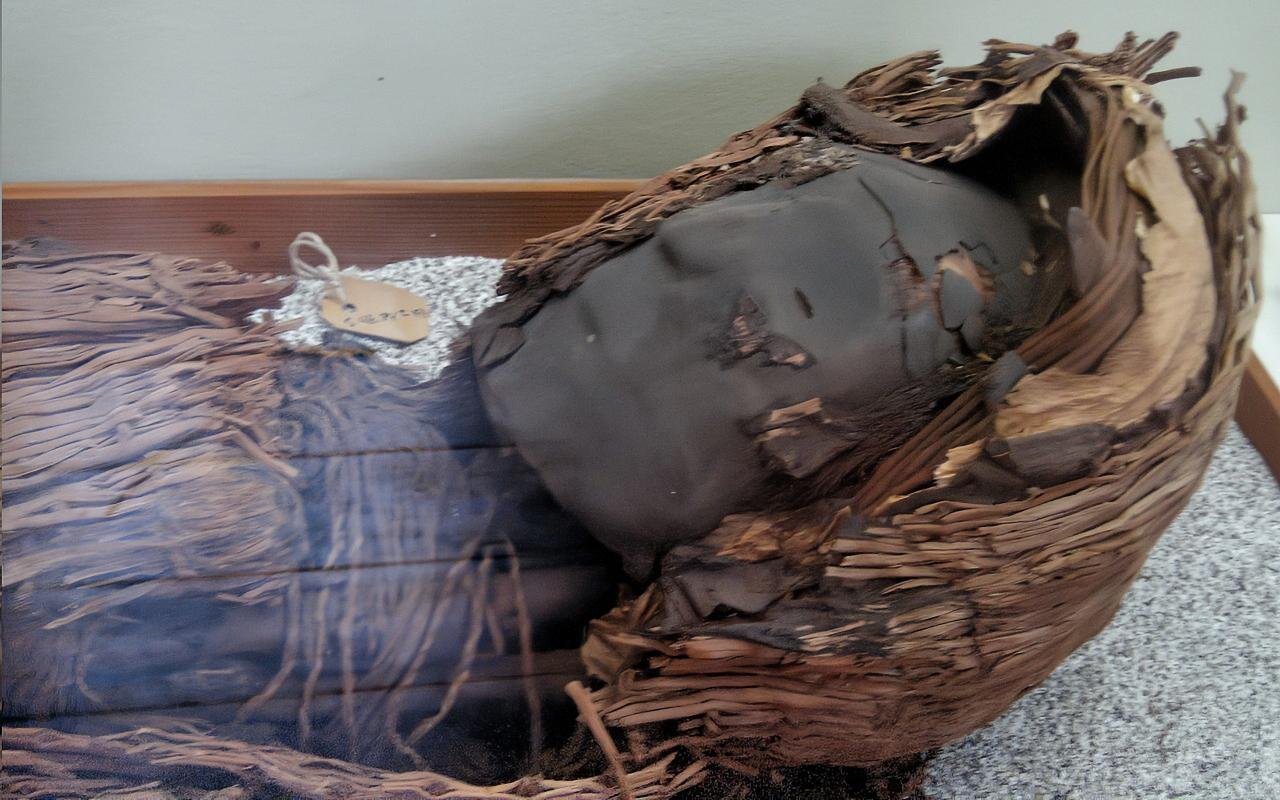
Researchers have recently published an article in the Cambridge Archaeological Journal that provides a new perspective on why the Chinchorro culture in northern Chile began artificially mummifying their dead more than 7,000 years ago. While the practice may be seen only as a ritual or technological innovation, the study suggests that mummification may have emerged as an emotional response to widespread infant mortality in their communities and functioned as grief processing within small coastal communities of the Atacama Desert.
7,000-year-old Chinchorro mummies may have emerged as a form of ancient grief therapy
Head of a mummy from the Chinchorro culture, found in Northern Chile. Credit: Pablo Trincado / CC BY 2.0

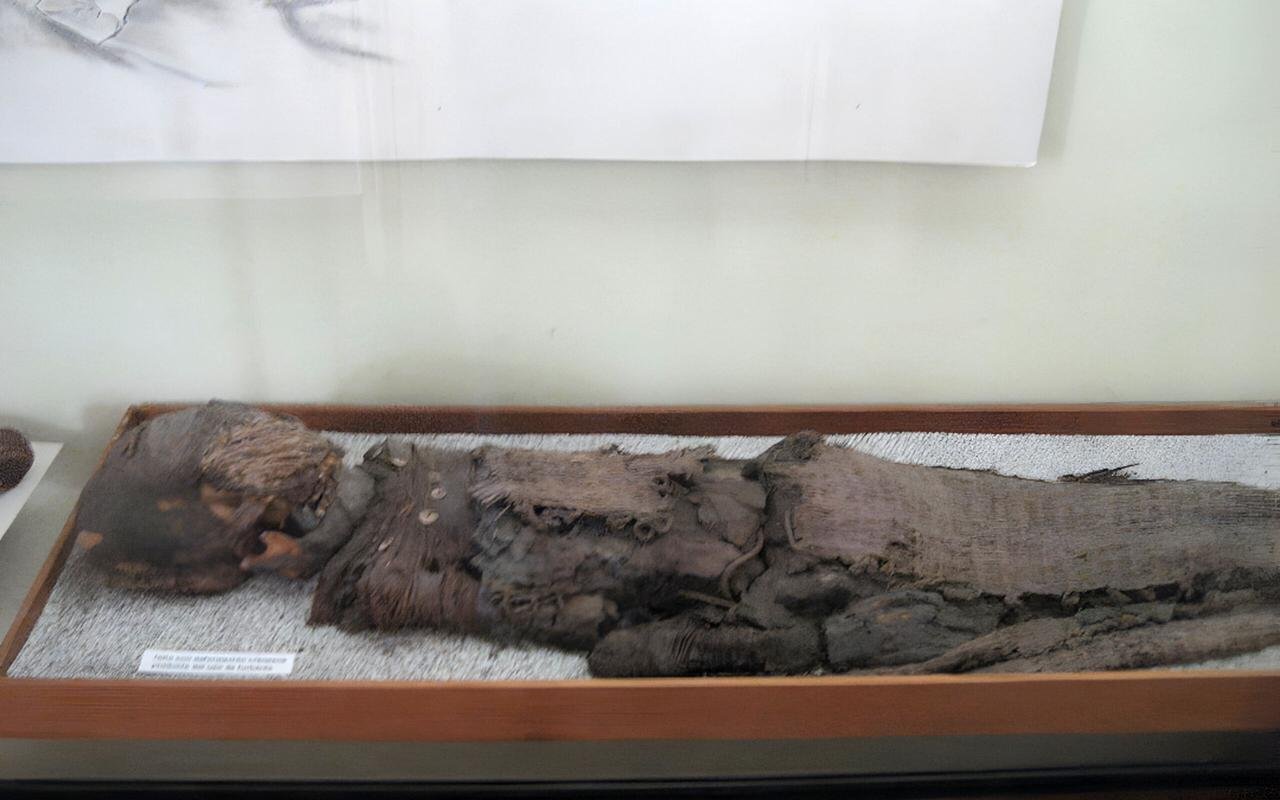
The Chinchorro were mobile hunter-gatherers who were skilled fishermen as well as skilled artisans, and also had unusually complex mortuary practices. They produced elaborately prepared artificial mummies that predate Egyptian mummification by millennia, dating to between roughly 7,000 and 3,500 years ago. The process was quite intensive and creative: they disassembled bodies, reinforced them with sticks, fibers, clay, and soil, and then carefully reassembled them. Facial features and genitals were often recreated, and the bodies were finally coated in black manganese paste or, in later periods, red ocher.

The study asserts that the initial phase of this tradition was centered on infants and young children, especially in areas such as the Camarones Valley. This region was heavily contaminated with arsenic at levels above safe thresholds. Long-term exposure to arsenic would have caused miscarriages, stillbirths, and high infant mortality, which must have put an immense emotional strain on families whose survival depended on successful reproduction. In this context, transforming the bodies of these children into well-designed and visually striking forms may have aided parents by providing a means through which they could cope with loss while also symbolically keeping the dead within the social world of the living.

Over generations, what may have begun as an intimate, emotionally charged response came to be a defining cultural practice for all individuals, regardless of age and sex. The mummies displayed standardized styles and elaborate ornamentation, which suggests that social identity, visibility, and communal memory became intertwined with mortuary art.
7,000-year-old Chinchorro mummies may have emerged as a form of ancient grief therapy
7,000-year-old Chinchorro mummies may have emerged as a form of ancient grief therapy. Credit: Pablo Trincado / CC BY 2.0

However, there is an alarming side to the tradition that is exposed by this research. The use of manganese pigments likely exposed the Chinchorro to toxic substances. Bioarchaeological analyses reveal elevated manganese levels in many individuals, which could have led to neurological disorders resembling Parkinsonian syndromes. These risks may have led to shifts in mortuary practices among the Chinchorro, including the eventual abandonment of black manganese pigments in favor of red ocher.

RelatedStories

Scents of ancient Egypt: tracing embalming recipes by analyzing air around mummies

Scents of ancient Egypt: tracing embalming recipes by analyzing air around mummies

February 6, 2026
CT scans of ancient Egyptian mummies reveal lifespans, health, and daily life of priests

CT scans of ancient Egyptian mummies reveal lifespans, health, and daily life of priests

February 4, 2026

The Chinchorro mummies are not only among the most impressive expressions of prehistoric mortuary art, but also represent a significant example of how ancient societies confronted grief, loss, and memory through their creativity.


More information: Arriaza, B. (2025). The artistic nature of the Chinchorro mummies and the archaeology of grief. Cambridge Archaeological Journal, 1–18. doi:10.1017/s095977432510022x
Share96Tweet60Share17ShareSend

You May Also Like...

Great Basin cave burials not rare or uncommon, study finds
Anthropology

Great Basin cave burials not rare or uncommon, study finds

February 8, 2026
New 3D digital analysis maps Paleolithic engravings at Cova Matutano
Archaeology

New 3D method maps Paleolithic engravings at Cova Matutano

February 8, 2026
Rare deer skull headdress discovered in Germany highlights exchange between hunter-gatherers and Europe's first farmers
Archaeology

Rare deer skull headdress discovered in Germany highlights exchange between hunter-gatherers and Europe’s first farmers

February 7, 2026
Lost infant burial grounds in Ireland rediscovered through folklore and archaeology study
Anthropology

Lost infant burial grounds in Ireland rediscovered through folklore and archaeology study

February 7, 2026
Elephant bone found in Spain provides rare evidence of war elephants during the Punic Wars
Archaeology

Elephant bone found in Spain provides rare evidence of war elephants during the Punic Wars

February 7, 2026
Scents of ancient Egypt: tracing embalming recipes by analyzing air around mummies
Anthropology

Scents of ancient Egypt: tracing embalming recipes by analyzing air around mummies

February 6, 2026

Comments 0

  1. Editorial Team says:
    1 second ago

    Disclaimer: This website is a science-focused magazine that welcomes both academic and non-academic audiences. Comments are written by users and may include personal opinions or unverified claims. They do not necessarily reflect the views of our editorial team or rely on scientific evidence.

    Comment Policy: We kindly ask all commenters to engage respectfully. Comments that contain offensive, insulting, degrading, discriminatory, or racist content will be automatically removed.

    Reply

Leave a Reply Cancel reply

Your email address will not be published. Required fields are marked *

Follow us


Instagram
244K

Facebook
118K

Threads
45K

LinkedIn
14K

Twitter
6K

YouTube
1K
  • Trending
  • Comments
  • Latest
Shipwreck Salvage. Credit: rawpixel.com / Public Domain

2,000-year-old shipwreck discovered off Turkish coast with remarkably preserved stacked ceramics

July 2, 2025
Viking age DNA reveals 9,000-year-old HIV-resistant gene originating near the Black Sea

Viking age DNA reveals 9,000-year-old HIV-resistant gene originating near the Black Sea

May 18, 2025
A new study suggests the mysterious Voynich Manuscript may be a medieval cipher

A new study suggests the mysterious Voynich Manuscript may be a medieval cipher

January 3, 2026
Moses may be named in ancient Egyptian mine inscriptions, sparking debate over earliest biblical references

Moses may be named in ancient Egyptian mine inscriptions, sparking debate over earliest biblical references

July 31, 2025
Mystery of Armenia’s 6,000-year-old dragon stones solved

Mystery of Armenia’s 6,000-year-old dragon stones solved

September 23, 2025
3D analysis reveals Shroud of Turin image likely came from sculpture, not Jesus’ body

3D analysis reveals Shroud of Turin image likely came from sculpture, not Jesus’ body

Moses may be named in ancient Egyptian mine inscriptions, sparking debate over earliest biblical references

Moses may be named in ancient Egyptian mine inscriptions, sparking debate over earliest biblical references

$1 million prize offered to decipher 5,300-year-old Indus Valley script

$1 million prize offered to decipher 5,300-year-old Indus Valley script

Oldest ever genetic data from a human relative found in 2-million-year-old fossilized teeth

Oldest ever genetic data from a human relative found in 2-million-year-old fossilized teeth

Exceptionally large Roman shoes discovered at Magna fort near Hadrian’s Wall

Exceptionally large Roman shoes discovered at Magna fort near Hadrian’s Wall

Great Basin cave burials not rare or uncommon, study finds

Great Basin cave burials not rare or uncommon, study finds

February 8, 2026
New 3D digital analysis maps Paleolithic engravings at Cova Matutano

New 3D method maps Paleolithic engravings at Cova Matutano

February 8, 2026
Rare deer skull headdress discovered in Germany highlights exchange between hunter-gatherers and Europe's first farmers

Rare deer skull headdress discovered in Germany highlights exchange between hunter-gatherers and Europe’s first farmers

February 7, 2026
Lost infant burial grounds in Ireland rediscovered through folklore and archaeology study

Lost infant burial grounds in Ireland rediscovered through folklore and archaeology study

February 7, 2026
Elephant bone found in Spain provides rare evidence of war elephants during the Punic Wars

Elephant bone found in Spain provides rare evidence of war elephants during the Punic Wars

February 7, 2026

Archaeology News online magazine

Archaeology News is an international online magazine that covers all aspects of archaeology.


Categories

  • Academics
    • Books
    • Conferences
    • Universities
  • Articles
  • Download
  • Game
  • News
    • Anthropology
    • Archaeology
    • Paleontology
  • Quiz
  • Tours

Subscribe to our newsletter

© 2024 - Archaeology News Online Magazine. All Rights Reserved.

  • About
  • Privacy Policy
  • Terms of Use
  • Donation
  • Contact

Welcome Back!

Login to your account below

Forgotten Password? Sign Up

Create New Account!

Fill the forms below to register

All fields are required. Log In

Retrieve your password

Please enter your username or email address to reset your password.

Log In

Add New Playlist

Manage Consent
To provide the best experiences, we use technologies like cookies to store and/or access device information. Consenting to these technologies will allow us to process data such as browsing behavior or unique IDs on this site. Not consenting or withdrawing consent, may adversely affect certain features and functions.
Functional Always active
The technical storage or access is strictly necessary for the legitimate purpose of enabling the use of a specific service explicitly requested by the subscriber or user, or for the sole purpose of carrying out the transmission of a communication over an electronic communications network.
Preferences
The technical storage or access is necessary for the legitimate purpose of storing preferences that are not requested by the subscriber or user.
Statistics
The technical storage or access that is used exclusively for statistical purposes. The technical storage or access that is used exclusively for anonymous statistical purposes. Without a subpoena, voluntary compliance on the part of your Internet Service Provider, or additional records from a third party, information stored or retrieved for this purpose alone cannot usually be used to identify you.
Marketing
The technical storage or access is required to create user profiles to send advertising, or to track the user on a website or across several websites for similar marketing purposes.
  • Manage options
  • Manage services
  • Manage {vendor_count} vendors
  • Read more about these purposes
View preferences
  • {title}
  • {title}
  • {title}
  • Home
  • News
    • Archaeology
    • Anthropology
    • Paleontology
  • Academic
    • Books
    • Conferences
    • Universities
  • Articles
  • VR Tours
  • Quiz & Game
  • Download
  • Encyclopedia
  • Forum

About  .  Contact  .  Donation

© 2024 - Archaeology News Online Magazine. All Rights Reserved