
Archaeologists have uncovered two gold-decorated iron lances while working near the village of Boeslunde on Zealand, one of the most exceptional finds ever made in the Bronze Age landscape of Denmark. Their discovery during the targeted excavation in August 2025 revealed not only the country’s earliest known iron objects but also shed light on why the area has been producing an unusually dense concentration of gold treasures over the past decades.
That excavation, by a team from Museum Vestsjælland, set out to investigate the setting of Boeslunde’s famed gold deposits rather than to unearth new artifacts. It didn’t take very long to surpass expectations. Within days, the team found a natural spring directly beneath and beside earlier gold finds—ten oath rings and over 2,000 gold spirals—indicating that the valued items had been placed as offerings at a sacred water source.
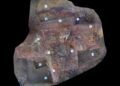
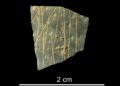
During documentation of the spring area, the team discovered a corroded piece of metal with thin sheets of gold. As the examination continued, it was found to be part of a long iron lance, and then another similar spearhead was soon found. Radiocarbon dating of birch pitch preserved on one of the lance tips showed that the weapons dated to about 900–830 BCE and thus to Bronze Age Period V, making them the oldest iron finds in Denmark known to date.
Although both lances are heavily corroded, visible gold inlays remain along the blades and shafts of each. X-ray imaging of the better-preserved weapon reveals a series of circular inlays along its blade, suggesting superb craftsmanship.
The complete lances were approximately 60 centimeters in length. Their combination of early ironwork with gold ornamentation is exceptionally rare; no similar weapons are known from Northern Europe. Parallels exist only in distant regions such as Central Europe and Greece, and even there, gold-plated examples are virtually unknown.

The finds shed new light on Boeslunde’s long-recognized importance as a religious and economic center in the Late Bronze Age. The newly identified spring, together with nearby cooking pits and the pattern of gold offerings, which includes six gold bowls from Borgbjerg Banke, points to the area as a site of repeated ritual activity. It seems that precious metalwork was deliberately deposited in or around the water source, continuing a long European tradition of ceremonial offerings at springs and wetlands.
More information: Museum Vestsjælland











Disclaimer: This website is a science-focused magazine that welcomes both academic and non-academic audiences. Comments are written by users and may include personal opinions or unverified claims. They do not necessarily reflect the views of our editorial team or rely on scientific evidence.
Comment Policy: We kindly ask all commenters to engage respectfully. Comments that contain offensive, insulting, degrading, discriminatory, or racist content will be automatically removed.