
Archaeologists have uncovered fascinating new evidence that shows tattooing was much more widespread and began at a much younger age than was previously known. Advanced multispectral imaging analysis is now being utilized for the first time on dozens of individuals from Sudan, and the results include the startling observation that tattooing was taking place on infants and toddlers. This provides rare insight into how bodily marking practices evolved alongside major cultural and religious changes in the Nile Valley.

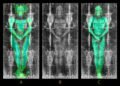
Tattooing has a very rich history in human culture, with known examples going back more than 5,000 years. In Nubia, tattooed mummies have been known, but poor skin preservation and fading pigments limited what could be seen with the naked eye. By capturing images across different wavelengths, including infrared light that penetrates darkened or aged skin, it has been possible to detect tattoos that had not been detected for centuries.
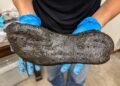
The team examined 1,048 human remains from three archaeological sites in present-day Sudan and southern Egypt: Semna South, Kulubnarti, and the Qinifab School site, dating from roughly 350 BCE to 1400 CE. The team was able to assess 27 individuals of different ages and sexes, almost doubling the previously recognized number of tattooed people from the ancient Nile Valley. Some of the most intriguing examples are of very young children, including an 18-month-old and an infant under one year old.

There is a pattern in tattoo placement and style, indicating a major change during the time of the spread of Christianity in the region, presumably around the seventh century CE. Before then, Nubian tattoos were typically small, discreet designs that consisted of clusters of dots, mostly on the hands or forearms, and largely associated with women. However, at the Kulubnarti site, a Christian-period site in northern Sudan, the tattoos were more visible and more inclusive, and included men, women, and children. Of the population examined, 19 percent exhibited tattoos. These markings were mostly on the face, especially the forehead, temples, cheeks, and eyebrows.

The motifs themselves were also changing. Dot-and-dash patterns were common, one of which was four dots arranged in a diamond shape, perhaps representing a Christian cross. Evidence from the shape of the marks suggests a change in the methods of tattooing from slow, repeated hand-poking with a pointed tool to faster single punctures made with sharper implements, such as a knife tip.
The number of tattooed children raises new questions about the purpose of these tattoos. Although some of these tattoos could be indicative of religious identity, others could be protective or therapeutic, especially in a region where diseases such as malaria have long been a problem. Whatever the case, the evidence defies present-day presumptions regarding childhood and body modification in the past.
The study clearly indicates that ancient Nubian tattooing was not a rare practice but had meaningful patterns that changed with social identities and belief systems.















Disclaimer: This website is a science-focused magazine that welcomes both academic and non-academic audiences. Comments are written by users and may include personal opinions or unverified claims. They do not necessarily reflect the views of our editorial team or rely on scientific evidence.
Comment Policy: We kindly ask all commenters to engage respectfully. Comments that contain offensive, insulting, degrading, discriminatory, or racist content will be automatically removed.