
Archaeologists working in the alpine village of Hallstatt, Austria, have uncovered an extremely rare piece of Roman jewelry: a finely carved cameo depicting Medusa, the mythical Gorgon from Greek mythology. Though it measures only about 1.5 centimeters in height, the artifact is already being recognized as one of the most important individual finds from Roman antiquity in Upper Austria.
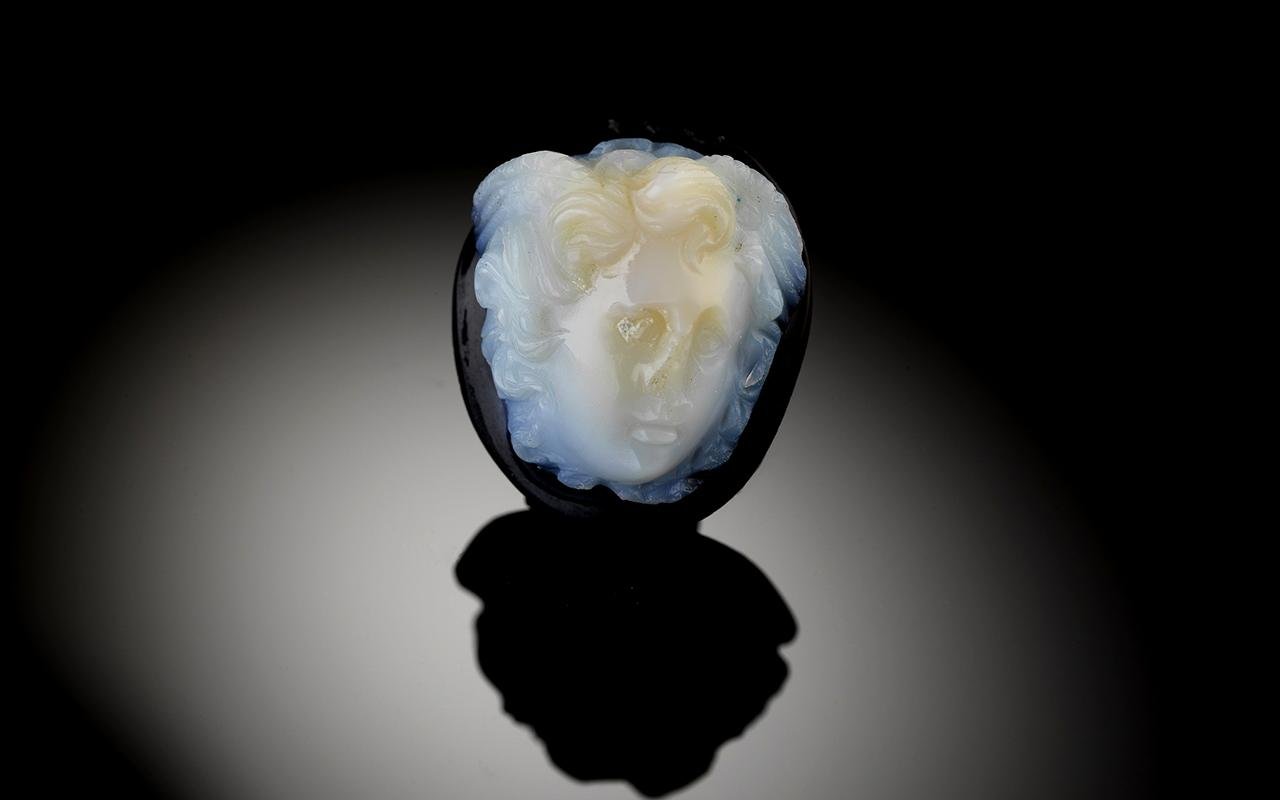
The cameo was found during archaeological investigations at the new funicular railway valley station, a site that was once part of a lively Roman lakeside settlement. Excavations conducted by ARDIS Archäologie GmbH in collaboration with Upper Austrian provincial cultural institutions uncovered remains of foundations, scattered small objects, and, most strikingly of all, this miniature work of art. Despite the uncertainty surrounding both the Roman-era name and the exact layout of the settlement, the find underscores the very longstanding significance of the area as a hub of activity.
Archaeologists date the cameo to the 2nd century CE and attribute its making to Aquileia, an important Roman center on the northern Adriatic coast with a long tradition of highly skilled gem cutters. The head of Medusa was carved from black-and-white banded agate, also known as onyx, a material popular in Roman luxury jewelry. Small in scale, the cameo demonstrates exceptional skill and a profound, sculptural relief; perspective is apparently rendered at a slight angle in keeping with the natural layering of the stone.

It is an image of the Gorgoneion-Medusa’s winged head framed by writhing snakes, a motif prevalent throughout the ancient Greek and Roman world as an apotropaic symbol intended to ward off evil and misfortune. Such images appeared on armor, buildings, household objects, and jewelry and reflected both religious belief and artistic tradition.
Researchers note that the Hallstatt cameo is larger and more three-dimensional than comparable pieces found in the region. It is too large to have been set into a ring; its size and form suggest that it once adorned a necklace, probably worn by a wealthy Roman woman. There are currently only two other Roman cameos on public display in all of Upper Austria.

Beyond its artistic value, the cameo constitutes new evidence of the Roman presence in Hallstatt and the degree of cultural and trade connections that linked the Alpine region to the Mediterranean world.
More information: Landes-Kultur GmbH


















Disclaimer: This website is a science-focused magazine that welcomes both academic and non-academic audiences. Comments are written by users and may include personal opinions or unverified claims. They do not necessarily reflect the views of our editorial team or rely on scientific evidence.
Comment Policy: We kindly ask all commenters to engage respectfully. Comments that contain offensive, insulting, degrading, discriminatory, or racist content will be automatically removed.