
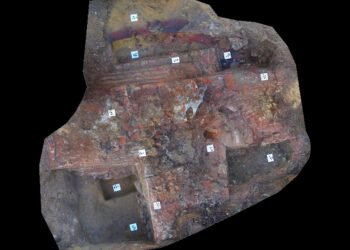
One of the most extensive sacrificial complexes ever documented in the early nomadic necropolises of the Southern Urals has been found by archaeologists working in the Orenburg region of Russia. The finds came during the 2025 field season of the Pre-Urals Expedition of the Institute of Archaeology of the Russian Academy of Sciences, which continued long-term excavations at the Vysokaya Mogila–Studenikin Mar cemetery.
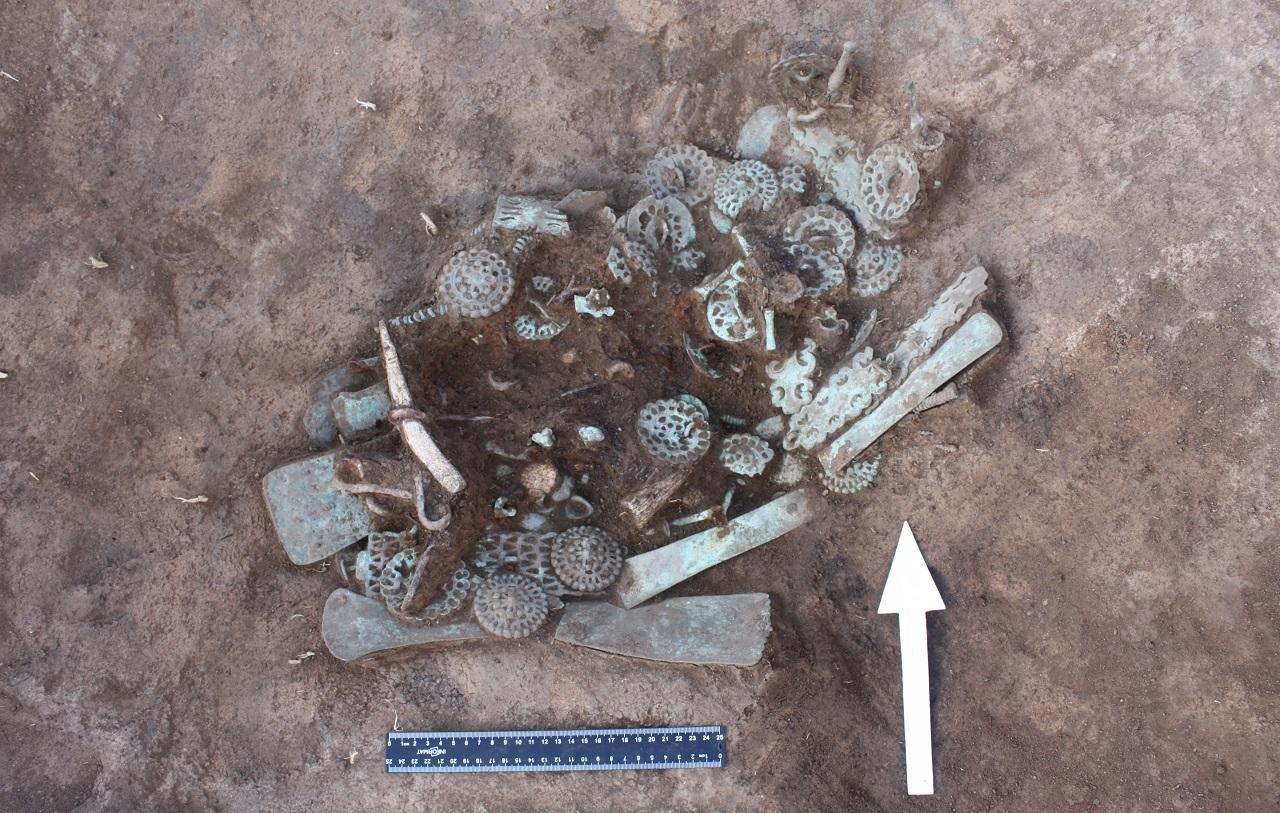
The necropolis extends over five mound groups arranged along an east–west line stretching more than six kilometers. This year’s work focused on the central area, where the researchers examined Mound 19 of the Vysokaya Mogila group and surveyed the extensive zone around Mound 1, a monumental structure rising over seven meters high. While the burial pit inside Mound 19 was empty, the area around the largest mound produced an exceptional concentration of ritual deposits.
East of Mound 1, plowed layers revealed scattered iron bits, cheekpieces, and a browband with a hooked terminal—items that seem to have been dispersed from sacrificial contexts. A gold plaque depicting a tiger’s head and forepaw and a silver fitting from a wooden vessel were also recovered, indicating the existence of high-status offerings once placed near the mound. To the west, archaeologists identified fragments of a bronze ladle and a cauldron, as well as numerous pieces of horse harness. Further study showed these belonged to a sacrificial complex that had been partly destroyed by agricultural activity.

The center of the find was a shallow circular pit containing over a hundred horse-harness items. The deposit included complete sets of bridles—iron bits, horn and metal cheekpieces, iron buckles, fittings, and both bronze and bone ornaments—as well as over 500 small bronze beads. The most spectacular finds were up to seventeen bronze plate browbands, thirty openwork plaques, and a set of round decorative plaques featuring dot patterns, birds, mythological creatures, and swastikas. The assembly also contained bridle ornaments representing the animal-style tradition, diamond-shield plaques, and unusual strap dividers cast in the form of human faces. A wooden ritual bowl with silver mounts added further ceremonial value.
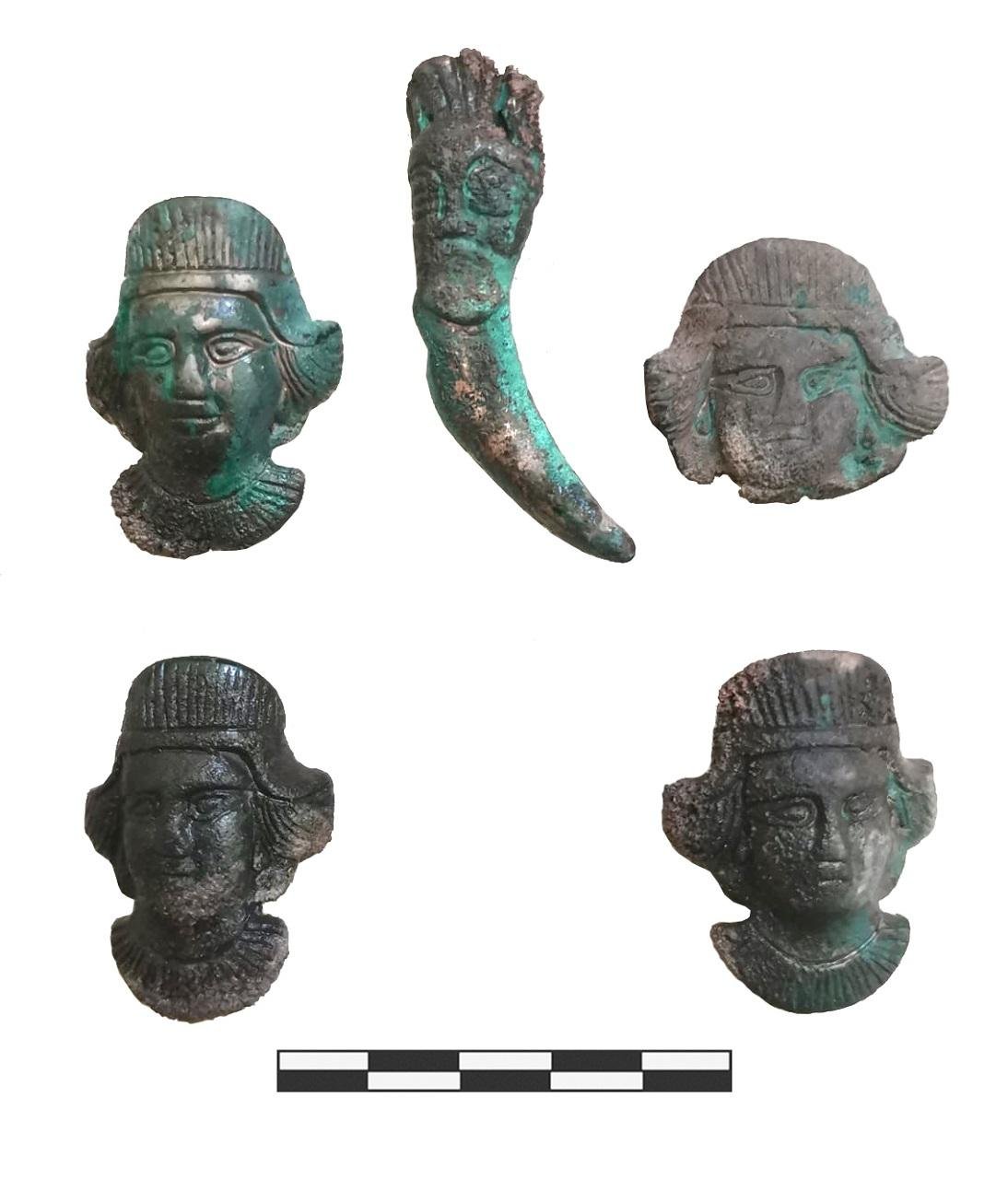
While many objects closely match the elite burial materials of the Southern Urals dating to the fourth–early third centuries BCE, others were completely new to the region and show close parallels to finds from the North Caucasus, Don Basin, and the Northern Black Sea. This blend of familiar and foreign styles suggests far-reaching cultural connections and exchange networks among early nomadic communities.
RelatedStories
Iron Age mass killing in Serbia: 77 women and children found in 2,800-year-old grave at Gomolava

The presence of a broken handmade vessel, boar jaws, and the silver-mounted wooden bowl indicates complex post-burial rituals performed near the mound of a nomadic elite individual. Sacrificial deposits of this type have been documented from other major necropolises of the Filippovka type, but the newly uncovered complex stands out with its size, diversity, and the number of imported items.
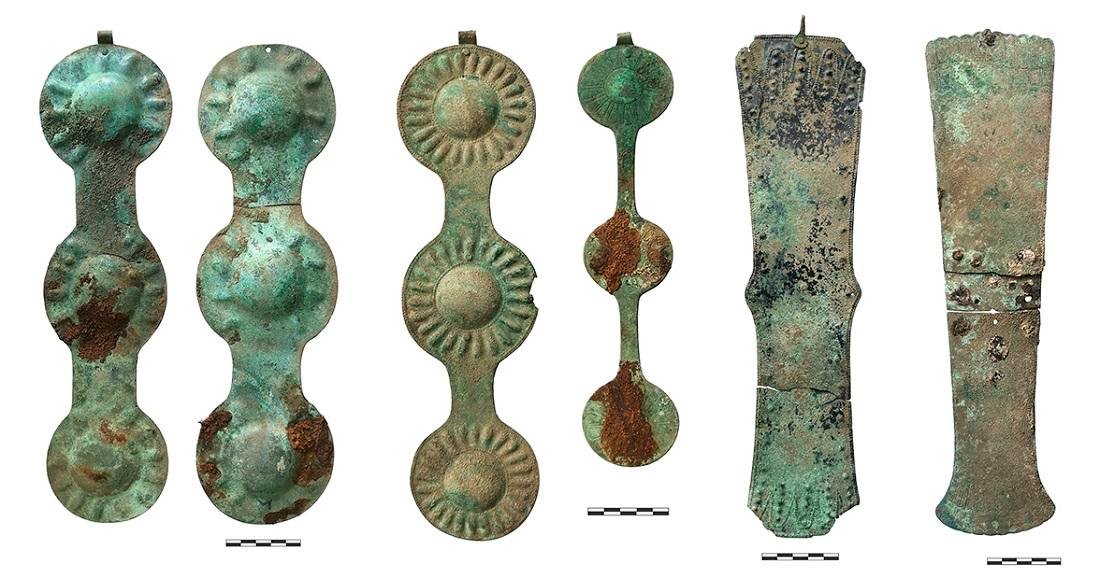
The evidence shows that large burial mounds in the Southern Urals served not only as graves but also as ceremonial centers where rich offerings and rites were performed long after the initial burials. According to the researchers, the systematic study of these spaces between mounds opens new perspectives on the funerary traditions of early nomadic societies in this region.
More information: Russian Academy of Sciences











Disclaimer: This website is a science-focused magazine that welcomes both academic and non-academic audiences. Comments are written by users and may include personal opinions or unverified claims. They do not necessarily reflect the views of our editorial team or rely on scientific evidence.
Comment Policy: We kindly ask all commenters to engage respectfully. Comments that contain offensive, insulting, degrading, discriminatory, or racist content will be automatically removed.