
The discovery of an unusual Bronze Age burial site in the hills of southwest Scotland sheds light on a moment of crisis that befell a prehistoric community more than three millennia ago. Excavations near Twentyshilling Hill, about three miles south of Sanquhar in Dumfries and Galloway, uncovered the burial site as work ahead of the construction of a wind farm.
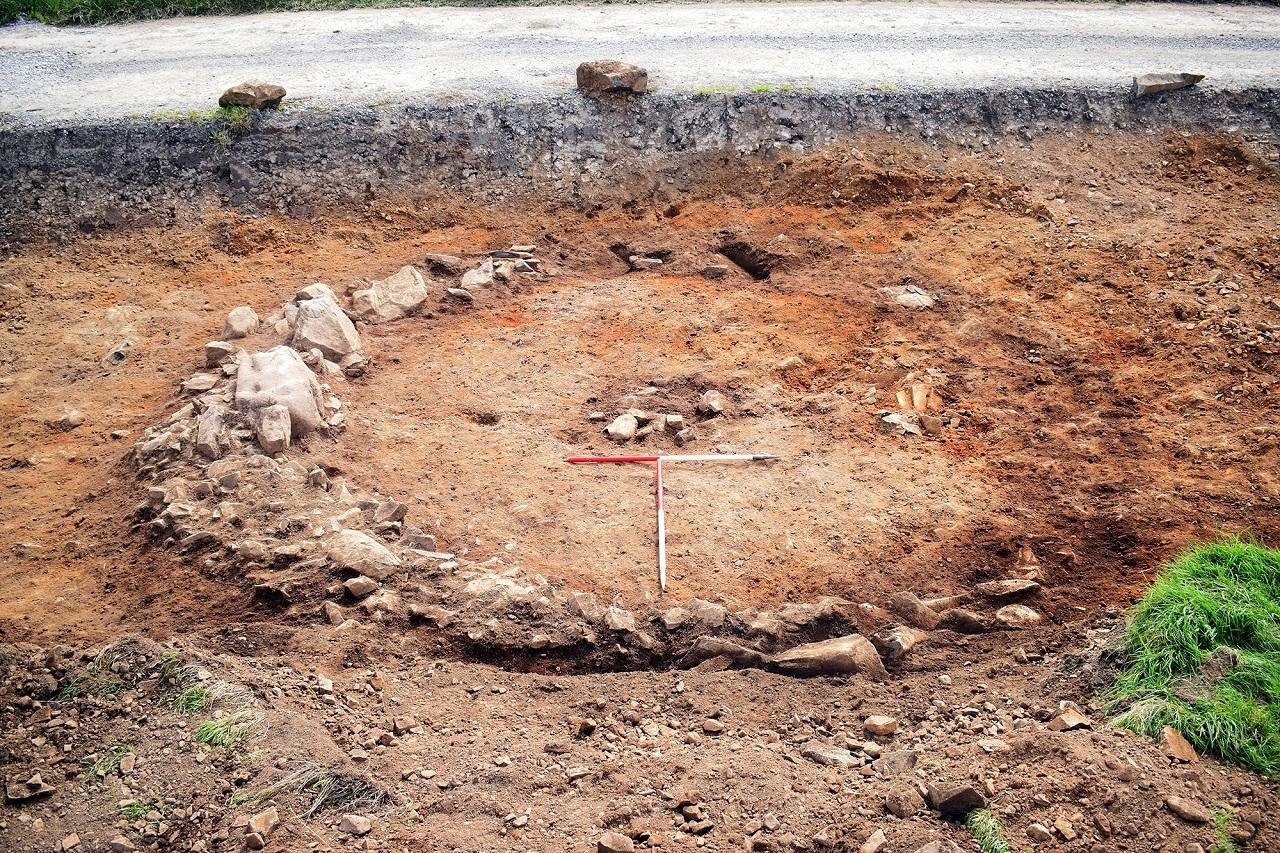
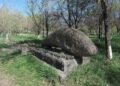
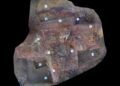
Archaeologists from GUARD Archaeology undertook fieldwork in 2020 and 2021 along the planned access route to the wind farm, an area previously thought to show little sign of prehistoric activity. They uncovered a Bronze Age barrow (an earthen burial mound) with a tightly packed cluster of five ceramic urns within a central pit. Analysis of the cremated remains within the vessels showed that they belonged to at least eight individuals and were deposited within a single burial event that took place between 1439 and 1287 BCE.
The arrangement of the urns and the condition of the cremated bones suggest that the dead were cremated and buried almost immediately rather than over an extended period. This sets the Twentyshilling barrow apart from many other Bronze Age burial sites in Scotland, where there are often signs that bodies were left exposed for some time before their cremation and burial mounds were reopened and reused across generations. For Twentyshilling, there is no evidence for prolonged ritual activity; instead, it points to a sudden and concentrated episode of death.
Because of this, researchers believe they might have all belonged to the same family or social group. Each urn seems to have contained more than one individual, with a combination of adults and juveniles, which is typical for Bronze Age burials across Scotland. Because all five urns were deposited at once, it suggests extraordinary circumstances rather than a routine funerary practice.
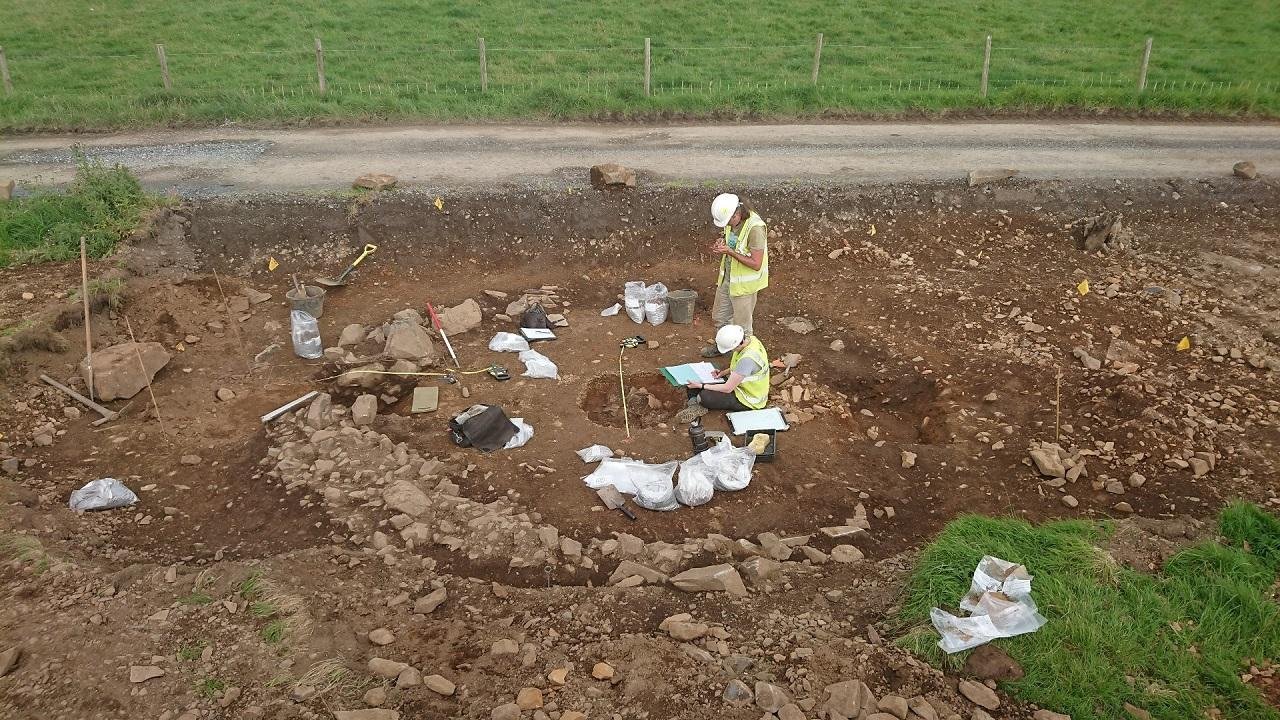
Other excavations nearby revealed a small group of earlier pits from the late Neolithic, between roughly 2867 and 2504 BCE. These features prove that long before this time, the landscape held great importance, as people returned to the same location over many centuries, possibly by ancestral memory, rather than by continuous settlement.
RelatedStories
Iron Age mass killing in Serbia: 77 women and children found in 2,800-year-old grave at Gomolava
According to archaeologists, such a mass burial might indicate a period of extreme stress, like famine or another kind of devastating event, that caused the deaths of many people in a short time. This explanation is supported by evidence from other Bronze Age sites in Dumfries and Galloway, with signs of hardship, population decline, and abandonment elsewhere in the region.
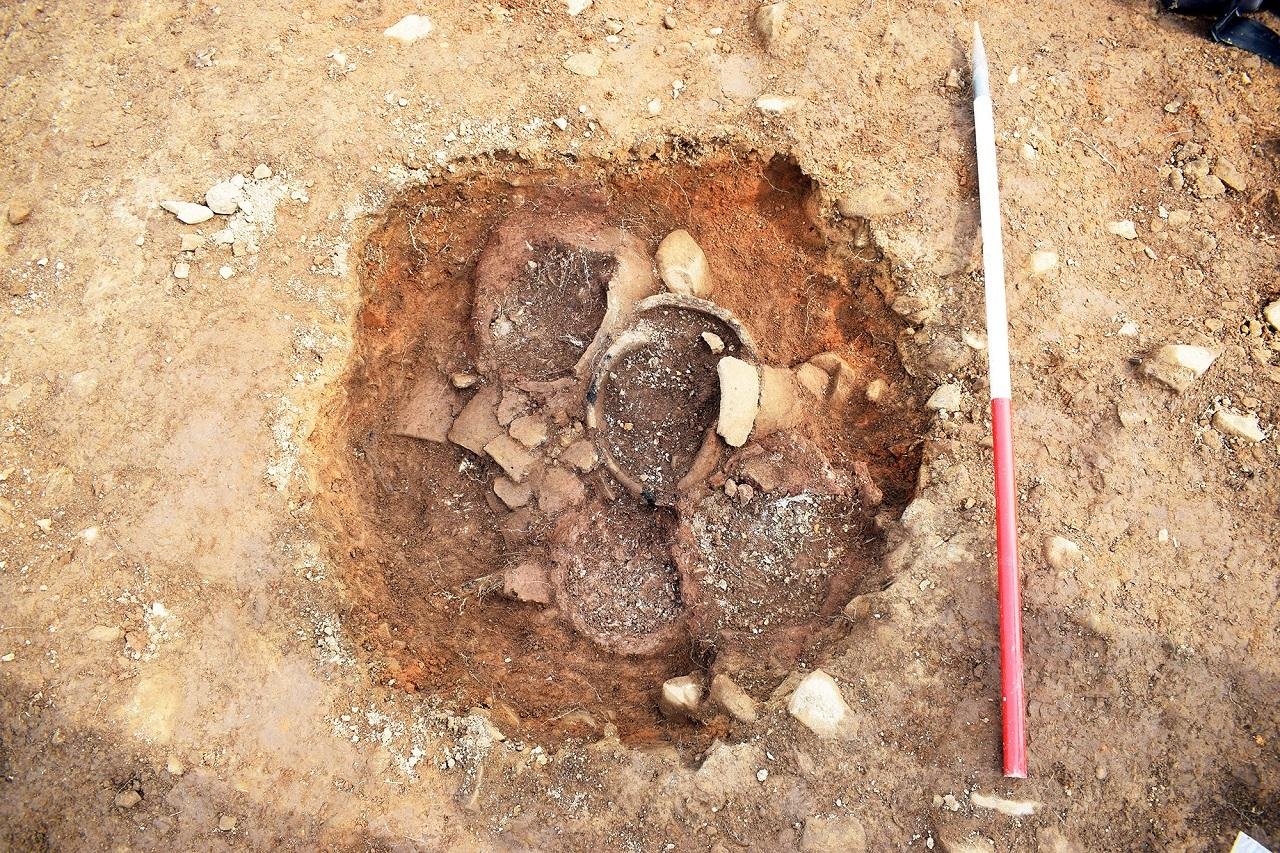
The findings from Twentyshilling together create a rare snapshot of the prehistoric life and death in southern Scotland, showing how those ancient communities responded to crisis and how deeply their lives were tied to the landscapes they inhabited.
More information: GUARD Archaeology







Disclaimer: This website is a science-focused magazine that welcomes both academic and non-academic audiences. Comments are written by users and may include personal opinions or unverified claims. They do not necessarily reflect the views of our editorial team or rely on scientific evidence.
Comment Policy: We kindly ask all commenters to engage respectfully. Comments that contain offensive, insulting, degrading, discriminatory, or racist content will be automatically removed.