
Fragments of a German V-2 rocket from World War II have been discovered in a joint field survey near the historical park of Blizna in southeastern Poland, a region that was a significant missile testing site during the Nazi era.

The discovery was made in Ropczyce Sędziszów County in Poland by members of the Podkarpackie Military Enthusiasts Association, working with two other detectorist groups and with the support of local authorities and forestry services.
This discovery comes from an area that played a critical role in the V-2’s development, officially known as the Aggregat-4. After Allied bombing severely damaged the Peenemünde research center in Germany, Nazi authorities shifted large parts of their rocket testing program to Blizna, where launches took place between 1943 and 1944. The site later became one of the most closely monitored military sites in occupied Poland and a center of Polish underground intelligence efforts.
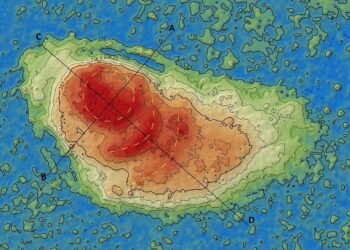
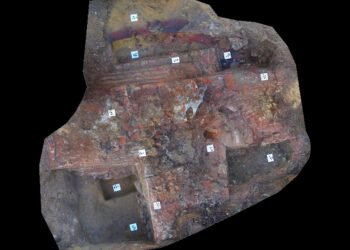
In the recent investigation, researchers focused on an old impact crater, presumed to be a landing point for a test rocket. Excavations uncovered preserved parts that had remained undetected for decades, such as fragments of a turbopump, injectors, and a nearly complete ballistic cone—recognized as one of the most distinctive structural elements of a V-2. Additionally, they uncovered the rocket’s warhead, deeply buried in the soil, along with remains of the second stage that had been driven into the main body on impact. The presence of a practice warhead prevented an explosion when the missile struck.
The V-2 was the world’s first long-range guided ballistic missile and a technological milestone in rocketry, later influencing postwar space programs. The project was directed by the scientist Wernher von Braun, and V-2 rockets were also the first human-made devices to reach the edge of space. However, more than 3,000 V-2 rockets were fired at Allied targets, killing thousands of people, and many forced laborers and concentration camp prisoners died during V-2 production.
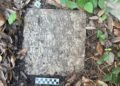
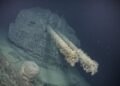
All of these recovered items will go to the Blizna Historical Park and will reinforce an existing exhibition focused on the history of V-1 and V-2 missiles and the role of Polish intelligence during World War II.









Disclaimer: This website is a science-focused magazine that welcomes both academic and non-academic audiences. Comments are written by users and may include personal opinions or unverified claims. They do not necessarily reflect the views of our editorial team or rely on scientific evidence.
Comment Policy: We kindly ask all commenters to engage respectfully. Comments that contain offensive, insulting, degrading, discriminatory, or racist content will be automatically removed.