
A new study published by archaeologists presents two inscribed clay cylinders that bear direct textual evidence of King Nebuchadnezzar II’s restoration work at the ziggurat of Kish, one of the most important religious monuments in ancient Mesopotamia. The find represents a new perspective on how one of the most powerful rulers of Babylon engaged with older sacred architecture and reinforced his authority through temple restoration.

The local residents of the area handed over the cylinders in December 2013 to Iraq’s State Board of Antiquities and Heritage after they were found on the surface of Tell al-Uhaimir, which preserves the remains of the ancient city of Kish in central Iraq. It was only later, when photographic documentation and translation were completed, that it was revealed that both objects date to the reign of Nebuchadnezzar II, who ruled from 604–562 BCE, and that they belong to the Neo-Babylonian tradition of royal foundation inscriptions. Such texts were normally placed in or near major building projects in order to commemorate construction and dedicate it to the gods.
Both cylinders, made of baked clay and shaped like small barrels, are almost identical in wording. Their inscriptions describe the restoration of the Kish ziggurat, a monumental stepped tower dedicated to the war god Zababa and the goddess Ishtar. The texts follow a conventional structure, starting with the king’s titles and his presentation as a ruler appointed by the gods Marduk and Nabû to care for sacred spaces. They then turn to the condition of the ziggurat itself, explaining that it had been built by an earlier king and repaired by another, but had again fallen into serious disrepair as time and weather weakened its walls.
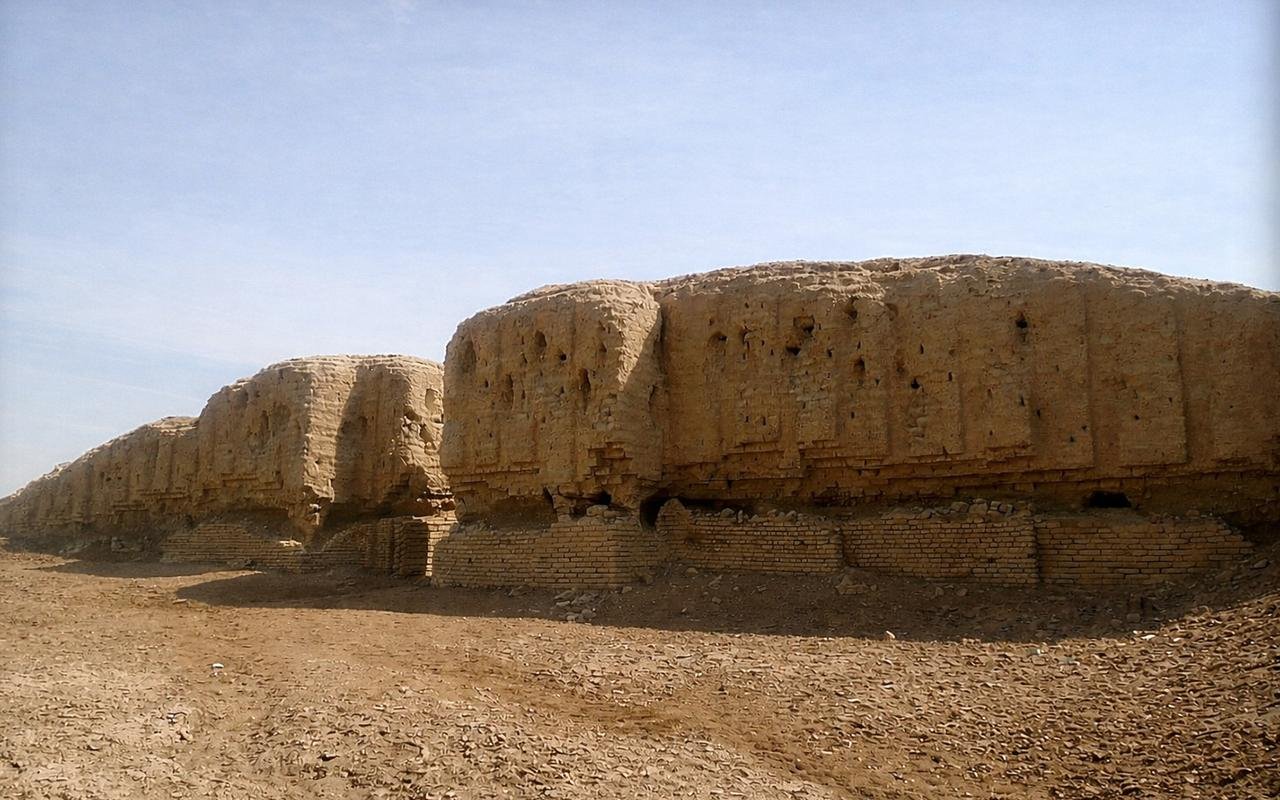
The inscriptions say that Nebuchadnezzar responded to this decline by strengthening the structure, rebuilding damaged parts, and improving its exterior so that it again could stand as a proper dwelling for its deities. A prayer at the end asks the gods to give the king a long life, victory against enemies, and continued divine favor. Without exact dates or technical details about the work, its ceremonial language indicates the religious importance of the restoration rather than the administrative.

The find is important because it confirms long-standing archaeological interpretations. Previous excavations at Kish, including early twentieth-century work, had demonstrated that the ziggurat underwent at least three major construction and repair phases. Stamped bricks bearing Nebuchadnezzar’s name had suggested his involvement, but until now, no foundation text explicitly documented his restoration efforts at the site.


The two cylinders together represent the first known inscriptions directly associating Nebuchadnezzar II with the rebuilding of the ziggurat at Kish. They reinforce the image of Neo-Babylonian kingship as inextricably bound to religious patronage and monumental architecture, underlining the way that rulers used the renewal of ancient temples to align themselves both with the gods and with the prestigious past of Mesopotamia’s earliest cities.











Disclaimer: This website is a science-focused magazine that welcomes both academic and non-academic audiences. Comments are written by users and may include personal opinions or unverified claims. They do not necessarily reflect the views of our editorial team or rely on scientific evidence.
Comment Policy: We kindly ask all commenters to engage respectfully. Comments that contain offensive, insulting, degrading, discriminatory, or racist content will be automatically removed.