• About
  • Privacy Policy
  • Terms of Use
  • Donation
  • Contact
No Result
View All Result
Archaeology News
  • Home
  • News
    • Archaeology
    • Anthropology
    • Paleontology
  • Academic
    • Books
    • Conferences
    • Universities
  • Articles
  • VR Tours
  • Quiz & Game
  • Download
  • Encyclopedia
  • Forum
Archaeology News
No Result
View All Result
Home News Archaeology

Study finds dog meat was consumed at Iron Age feasts in ancient Bulgaria

by Dario Radley
January 26, 2026

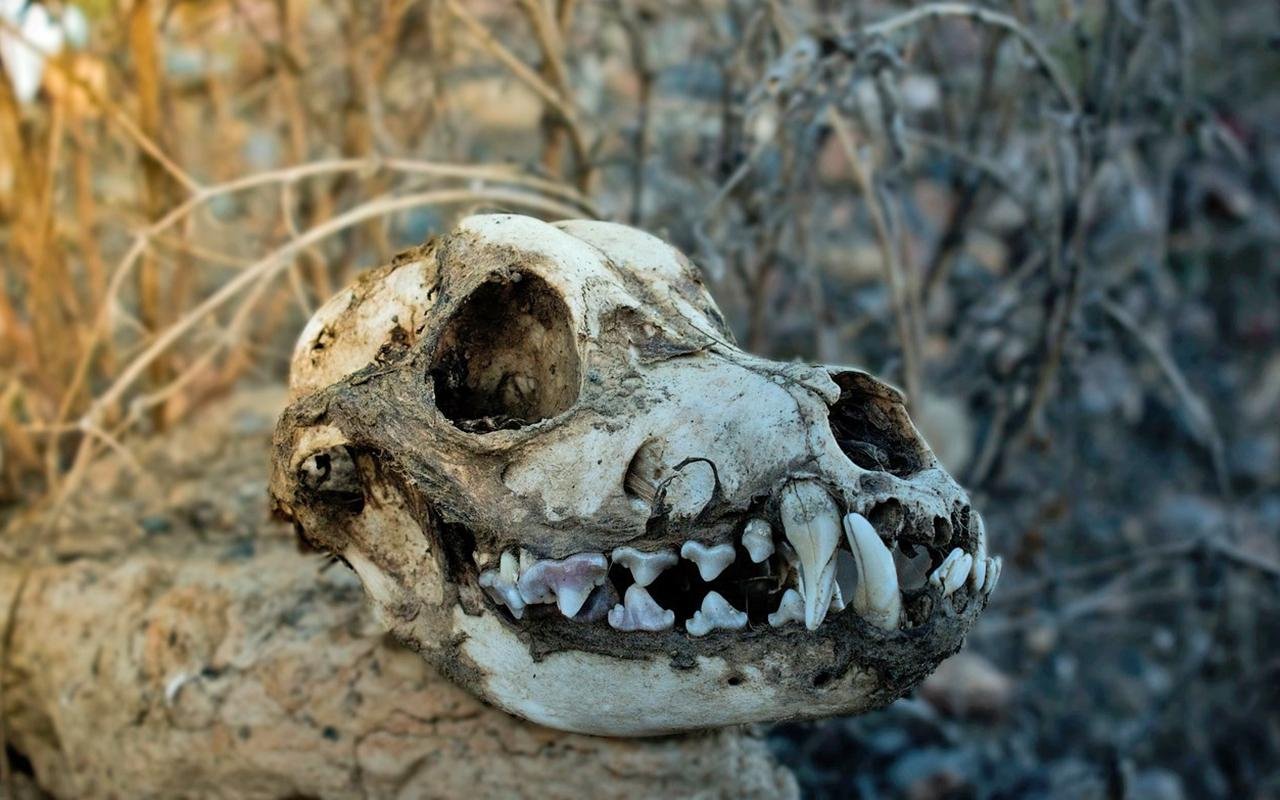
Archaeologists studying animal bones from Iron Age settlements in Bulgaria have found strong evidence for dog consumption between the fifth and first centuries BCE. Cut marks, burning traces, and repeated butchery patterns appear on canine bones from multiple sites. Results show dog meat formed a small but consistent part of local diets rather than an emergency food source.
Study finds dog meat was consumed at Iron Age feasts in ancient Bulgaria
Photo of a dog skull. Credit: GuiniuPublicista / Public domain

Zooarchaeologist Stella Nikolova analyzed material from ten sites across Bulgaria and reviewed earlier reports from five key settlements. Dogs account for between 2 and 10 percent of identified animal bones, depending on location. Emporion Pistiros, a major inland trade center linking Greek merchants with Thracian communities, produced the largest sample. Excavations there recovered more than 80,000 animal remains. Dogs make up about 2 percent of that total.

Close inspection of Pistiros dog bones revealed metal tool cut marks on nearly one-fifth of specimens. Many cuts appear on the upper hind limbs, areas with dense muscle tissue. Similar marks appear on ribs and forelimbs. Bone fragmentation follows patterns seen in sheep and cattle, which suggests similar processing methods. Two lower jaws show burned teeth. Fire likely helped remove fur before butchery.

Most dogs consumed at Pistiros reached adulthood. This pattern differs from livestock slaughter profiles, which often favor younger animals for meat. Researchers think many dogs served as guards in settlements with large herds of domestic animals. Medium snouts and medium to large body size match modern working breeds such as German shepherds.
Study finds dog meat was consumed at Iron Age feasts in ancient Bulgaria
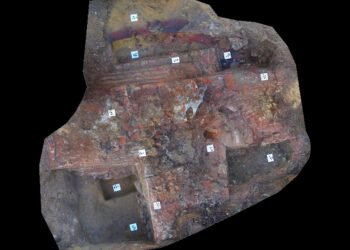
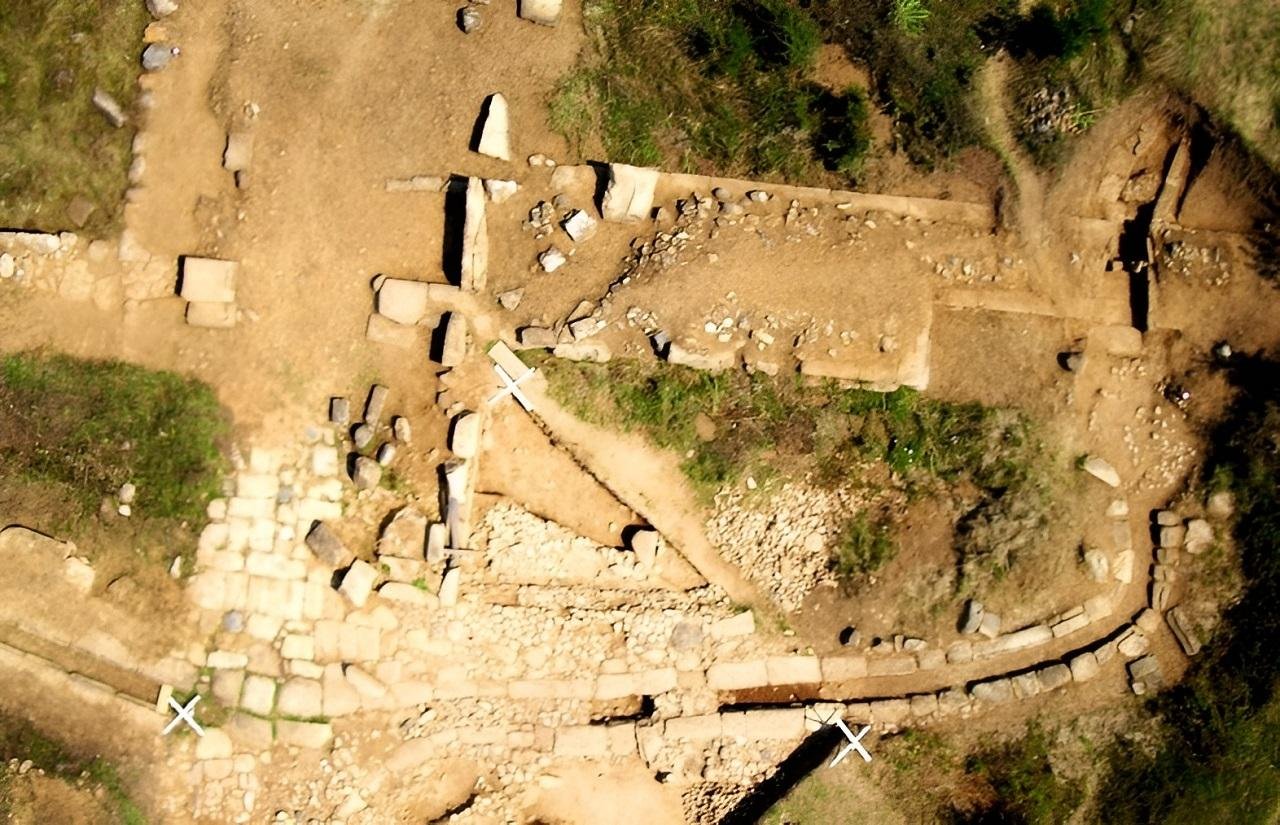
Aerial view of the main excavation area at Pistiros, 2009. Credit: Ivan.giogio / CC BY-SA 4.0

Context offers more clues. Excavators found butchered dog bones mixed with food waste from communal meals as well as household refuse. Such placement argues against famine use. Other protein sources appear in abundance at the same sites, including cattle, sheep, pigs, birds, fish, and wild game. Regular access to these animals weakens any link between dog consumption and scarcity.

RelatedStories

New study finds evidence that Aztec King Moctezuma kept a zoo for ritual purposes

New study finds evidence that Aztec King Moctezuma kept a zoo for ritual purposes

January 22, 2026
480,000-year-old elephant bone tool from Boxgrove is Europe’s oldest known prehistoric retoucher

480,000-year-old elephant bone tool from Boxgrove is the oldest discovered in Europe

January 21, 2026

Similar evidence appears at other Bulgarian settlements and at sites in Greece and Romania. Written sources from classical authors also mention dog meat in parts of the ancient Mediterranean. Combined archaeological and historical data point to a broader regional practice rather than an isolated custom.

Patterns across sites show repeated butchery techniques, though Pistiros displays more intensive portioning. Researchers link dog consumption with social traditions, possibly tied to feasting. Dog bones from later phases at Pistiros tell a different story. Some later layers contain complete dog burials with no butchery marks. This shift hints at changing attitudes toward dogs over time.

Ongoing work under the Corpus Animalium Thracicorum project will compare dietary roles of dogs with burial treatment at additional sites. Future analysis aims to clarify social meanings behind these choices and track cultural change across Iron Age Thrace.


More information: Nikolova, S. (2025). Dog meat in late Iron Age Bulgaria: Necessity, delicacy, or part of a wider intercultural tradition? International Journal of Osteoarchaeology, (oa.70062). doi:10.1002/oa.70062
ShareTweetShareShareSend

You May Also Like...

South African San rock art shows evidence of trance dances and initiation rituals
Archaeology

South African San rock art shows evidence of trance dances and initiation rituals

January 25, 2026
Rare 10th-century bronze wheel cross found in Brandenburg reveals early Christian influence among Slavic populations
Archaeology

Rare 10th-century bronze wheel cross found in Brandenburg reveals early Christian influence among Slavic populations

January 25, 2026
Large Roman cemetery excavation at Brougham reveals diverse burial practices on Britain’s northern frontier
Archaeology

Large Roman cemetery excavation at Brougham reveals diverse burial practices on Britain’s northern frontier

January 24, 2026
5,500-year-old human skeleton in Colombia reveals earliest evidence of syphilis in the Americas
Anthropology

5,500-year-old human skeleton in Colombia reveals earliest evidence of syphilis in the Americas

January 23, 2026
Republican-era tombs and a Hercules shrine unearthed in eastern Rome reveal centuries of suburban life
Archaeology

Republican-era tombs and a Hercules shrine unearthed in eastern Rome reveal centuries of suburban life

January 23, 2026
Wild potato may reshape the agricultural story in the American Southwest
Archaeology

Wild potato may reshape the agricultural story in the American Southwest

January 22, 2026

Comments 0

  1. Editorial Team says:
    1 second ago

    Disclaimer: This website is a science-focused magazine that welcomes both academic and non-academic audiences. Comments are written by users and may include personal opinions or unverified claims. They do not necessarily reflect the views of our editorial team or rely on scientific evidence.

    Comment Policy: We kindly ask all commenters to engage respectfully. Comments that contain offensive, insulting, degrading, discriminatory, or racist content will be automatically removed.

    Reply

Leave a Reply Cancel reply

Your email address will not be published. Required fields are marked *

Follow us


Instagram
244K

Facebook
118K

Threads
45K

LinkedIn
14K

Twitter
6K

YouTube
1K
  • Trending
  • Comments
  • Latest
Shipwreck Salvage. Credit: rawpixel.com / Public Domain

2,000-year-old shipwreck discovered off Turkish coast with remarkably preserved stacked ceramics

July 2, 2025
Viking age DNA reveals 9,000-year-old HIV-resistant gene originating near the Black Sea

Viking age DNA reveals 9,000-year-old HIV-resistant gene originating near the Black Sea

May 18, 2025
A new study suggests the mysterious Voynich Manuscript may be a medieval cipher

A new study suggests the mysterious Voynich Manuscript may be a medieval cipher

January 3, 2026
Moses may be named in ancient Egyptian mine inscriptions, sparking debate over earliest biblical references

Moses may be named in ancient Egyptian mine inscriptions, sparking debate over earliest biblical references

July 31, 2025
Mystery of Armenia’s 6,000-year-old dragon stones solved

Mystery of Armenia’s 6,000-year-old dragon stones solved

September 23, 2025
3D analysis reveals Shroud of Turin image likely came from sculpture, not Jesus’ body

3D analysis reveals Shroud of Turin image likely came from sculpture, not Jesus’ body

Moses may be named in ancient Egyptian mine inscriptions, sparking debate over earliest biblical references

Moses may be named in ancient Egyptian mine inscriptions, sparking debate over earliest biblical references

$1 million prize offered to decipher 5,300-year-old Indus Valley script

$1 million prize offered to decipher 5,300-year-old Indus Valley script

Oldest ever genetic data from a human relative found in 2-million-year-old fossilized teeth

Oldest ever genetic data from a human relative found in 2-million-year-old fossilized teeth

Exceptionally large Roman shoes discovered at Magna fort near Hadrian’s Wall

Exceptionally large Roman shoes discovered at Magna fort near Hadrian’s Wall

Study finds dog meat was consumed at Iron Age feasts in ancient Bulgaria

Study finds dog meat was consumed at Iron Age feasts in ancient Bulgaria

January 26, 2026
South African San rock art shows evidence of trance dances and initiation rituals

South African San rock art shows evidence of trance dances and initiation rituals

January 25, 2026
Rare 10th-century bronze wheel cross found in Brandenburg reveals early Christian influence among Slavic populations

Rare 10th-century bronze wheel cross found in Brandenburg reveals early Christian influence among Slavic populations

January 25, 2026
Large Roman cemetery excavation at Brougham reveals diverse burial practices on Britain’s northern frontier

Large Roman cemetery excavation at Brougham reveals diverse burial practices on Britain’s northern frontier

January 24, 2026
5,500-year-old human skeleton in Colombia reveals earliest evidence of syphilis in the Americas

5,500-year-old human skeleton in Colombia reveals earliest evidence of syphilis in the Americas

January 23, 2026

Archaeology News online magazine

Archaeology News is an international online magazine that covers all aspects of archaeology.


Categories

  • Academics
    • Books
    • Conferences
    • Universities
  • Articles
  • Download
  • Game
  • News
    • Anthropology
    • Archaeology
    • Paleontology
  • Quiz
  • Tours

Subscribe to our newsletter

© 2024 - Archaeology News Online Magazine. All Rights Reserved.

  • About
  • Privacy Policy
  • Terms of Use
  • Donation
  • Contact

Welcome Back!

Login to your account below

Forgotten Password? Sign Up

Create New Account!

Fill the forms below to register

All fields are required. Log In

Retrieve your password

Please enter your username or email address to reset your password.

Log In

Add New Playlist

Manage Consent
To provide the best experiences, we use technologies like cookies to store and/or access device information. Consenting to these technologies will allow us to process data such as browsing behavior or unique IDs on this site. Not consenting or withdrawing consent, may adversely affect certain features and functions.
Functional Always active
The technical storage or access is strictly necessary for the legitimate purpose of enabling the use of a specific service explicitly requested by the subscriber or user, or for the sole purpose of carrying out the transmission of a communication over an electronic communications network.
Preferences
The technical storage or access is necessary for the legitimate purpose of storing preferences that are not requested by the subscriber or user.
Statistics
The technical storage or access that is used exclusively for statistical purposes. The technical storage or access that is used exclusively for anonymous statistical purposes. Without a subpoena, voluntary compliance on the part of your Internet Service Provider, or additional records from a third party, information stored or retrieved for this purpose alone cannot usually be used to identify you.
Marketing
The technical storage or access is required to create user profiles to send advertising, or to track the user on a website or across several websites for similar marketing purposes.
  • Manage options
  • Manage services
  • Manage {vendor_count} vendors
  • Read more about these purposes
View preferences
  • {title}
  • {title}
  • {title}
  • Home
  • News
    • Archaeology
    • Anthropology
    • Paleontology
  • Academic
    • Books
    • Conferences
    • Universities
  • Articles
  • VR Tours
  • Quiz & Game
  • Download
  • Encyclopedia
  • Forum

About  .  Contact  .  Donation

© 2024 - Archaeology News Online Magazine. All Rights Reserved