
Archaeologists in Brandenburg, Germany, have uncovered a bronze wheel cross dating to the 10th or 11th century CE in the Havelland region. The artifact was discovered during a metal-detecting survey conducted by volunteer heritage conservator Juliane Rangnow. Alongside the cross, the survey yielded coins, fragments of partially gilded jewelry, and iron weapons from the same period.
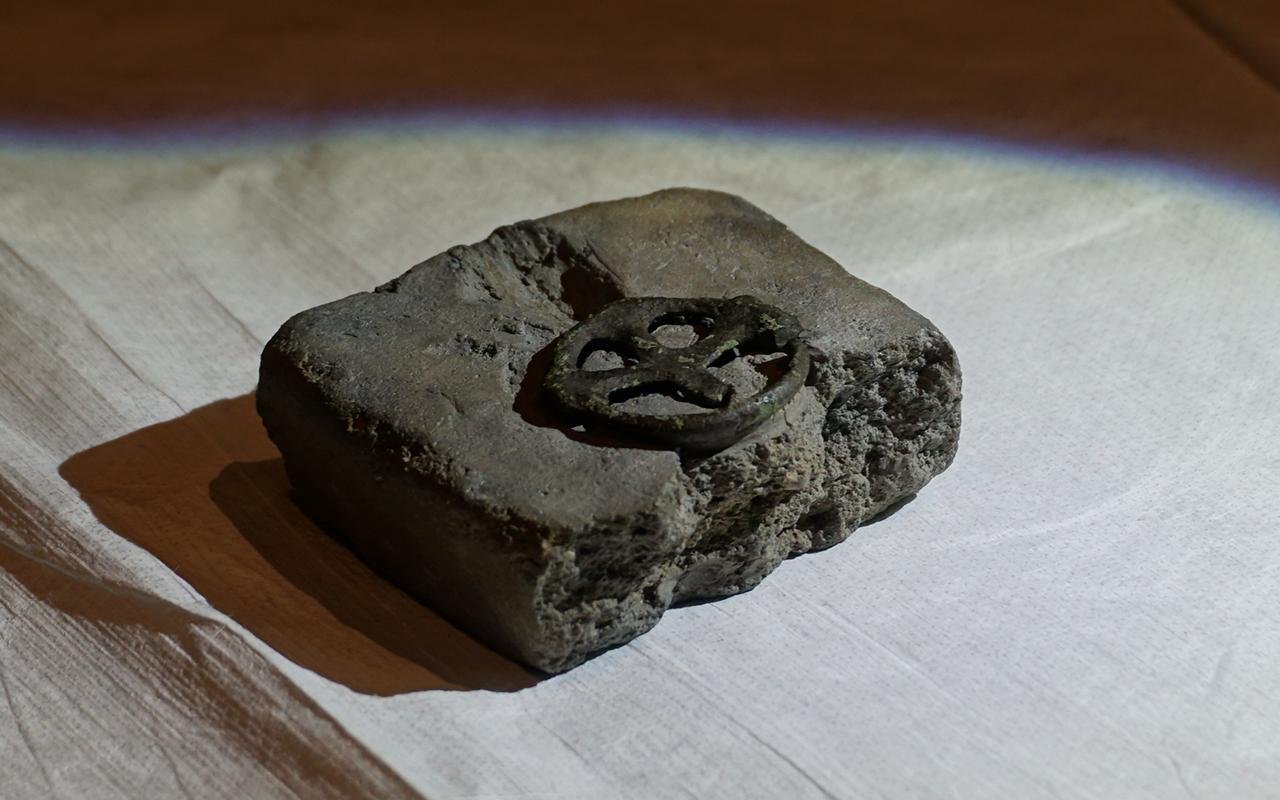
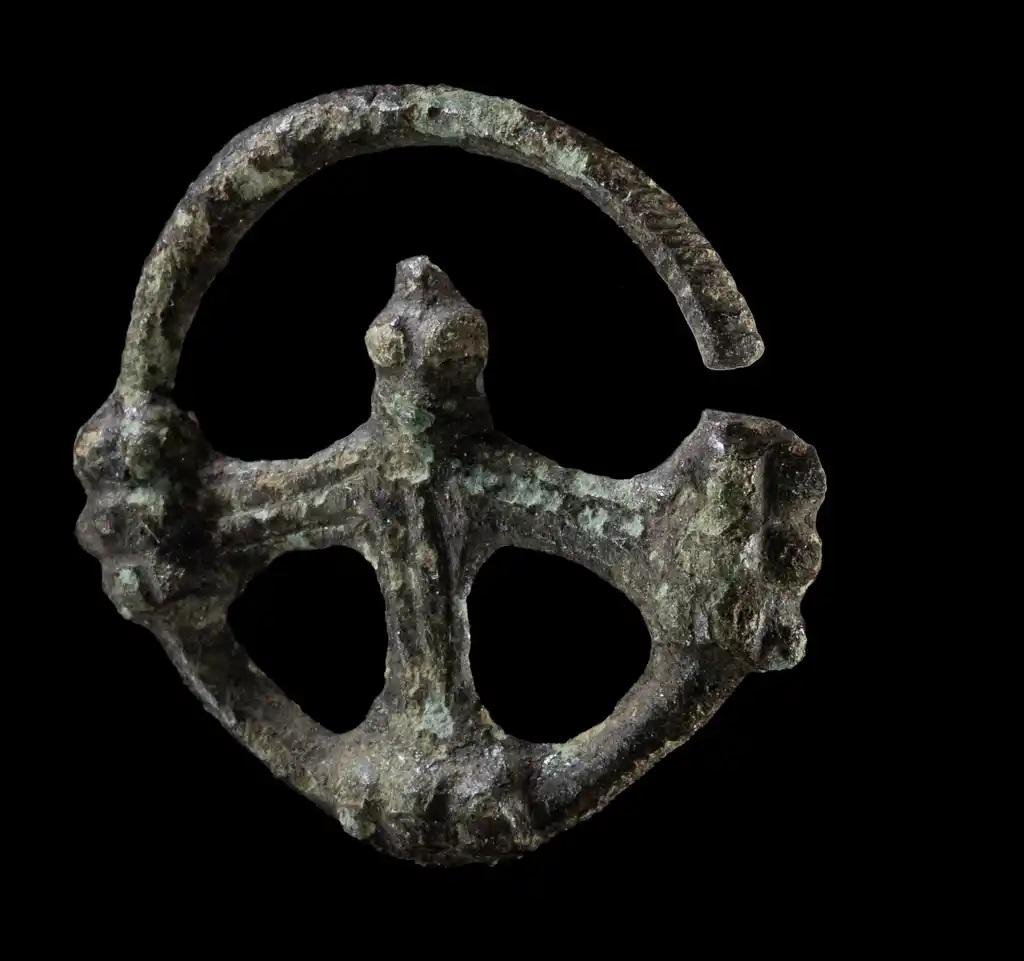
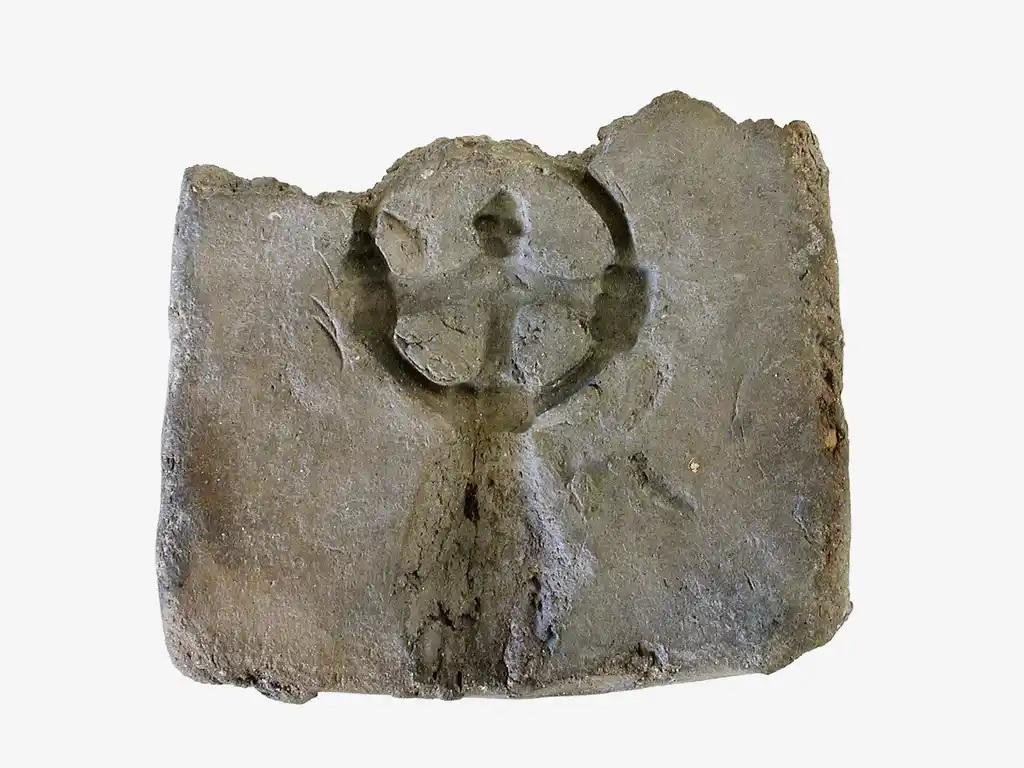
The cross belongs to a type known as a “wheel cross,” distinguished by a ring connecting its arms and a stylized depiction of Christ. Analysis at the Brandenburg State Archaeological Museum confirmed that the cross corresponds precisely to a mold found in 1983 at the Slavic hillfort of Berlin-Spandau, commonly referred to as the “Spandau Cross.” This mold, recovered near the remains of an early wooden church, represents one of the earliest pieces of evidence for Christian symbolism in the area between the Elbe and Oder rivers. Prior to this discovery, no cast made from this mold had been identified.
Measurements and comparisons carried out at the Brandenburg State Archaeological Museum and the Museum of Prehistory and Early History in Berlin verified that the Havelland cross and the Spandau mold belong together. The artifact provides tangible evidence for early Christianization among Slavic populations east of the Elbe, illustrating the region’s cultural exchanges during the 10th century. At that time, the area now comprising Berlin and Brandenburg was influenced by the East Frankish Kingdom.
Although political and religious changes were introduced by new elites, the Slavic inhabitants largely resisted Christian conversion, culminating in the Lutizen Revolt of 983, which restored local political and religious autonomy for roughly 150 years. Sustained Christianization occurred only after the 12th century, following full integration into the Margraviate of Brandenburg.
The Havelland cross also highlights the contributions of volunteer heritage conservators. Brandenburg currently hosts around 350 officially trained volunteers who work closely with professional archaeologists at the Brandenburg State Office for Monument Preservation and the Archaeological State Museum. Their efforts help document and preserve a landscape containing over 40,000 known archaeological sites, ranging from Neanderthal flint tools dating to approximately 130,000 years ago to 20th-century relics such as an escape tunnel under former GDR border fortifications. Since 2022, BLDAM has assigned a staff member specifically to support and advise volunteers.
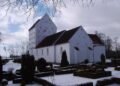
The cross and the original mold will be displayed together at the Archaeological State Museum Brandenburg in Brandenburg an der Havel from January 24 to March 11, 2026. This find not only advances understanding of early Christianization in northeastern Germany but also demonstrates the value of systematic volunteer participation in preserving and interpreting regional cultural heritage.
More information: BLDAM













Disclaimer: This website is a science-focused magazine that welcomes both academic and non-academic audiences. Comments are written by users and may include personal opinions or unverified claims. They do not necessarily reflect the views of our editorial team or rely on scientific evidence.
Comment Policy: We kindly ask all commenters to engage respectfully. Comments that contain offensive, insulting, degrading, discriminatory, or racist content will be automatically removed.