
Archaeologists working at the Early Neolithic settlement of Eilsleben in Saxony-Anhalt have uncovered evidence of close contact between Europe’s first farming communities and local hunter-gatherers. Finds from recent fieldwork, combined with material recovered in earlier excavations, show shared technologies and symbolic objects within a village founded by members of the Linear Pottery culture around 5375 BCE.
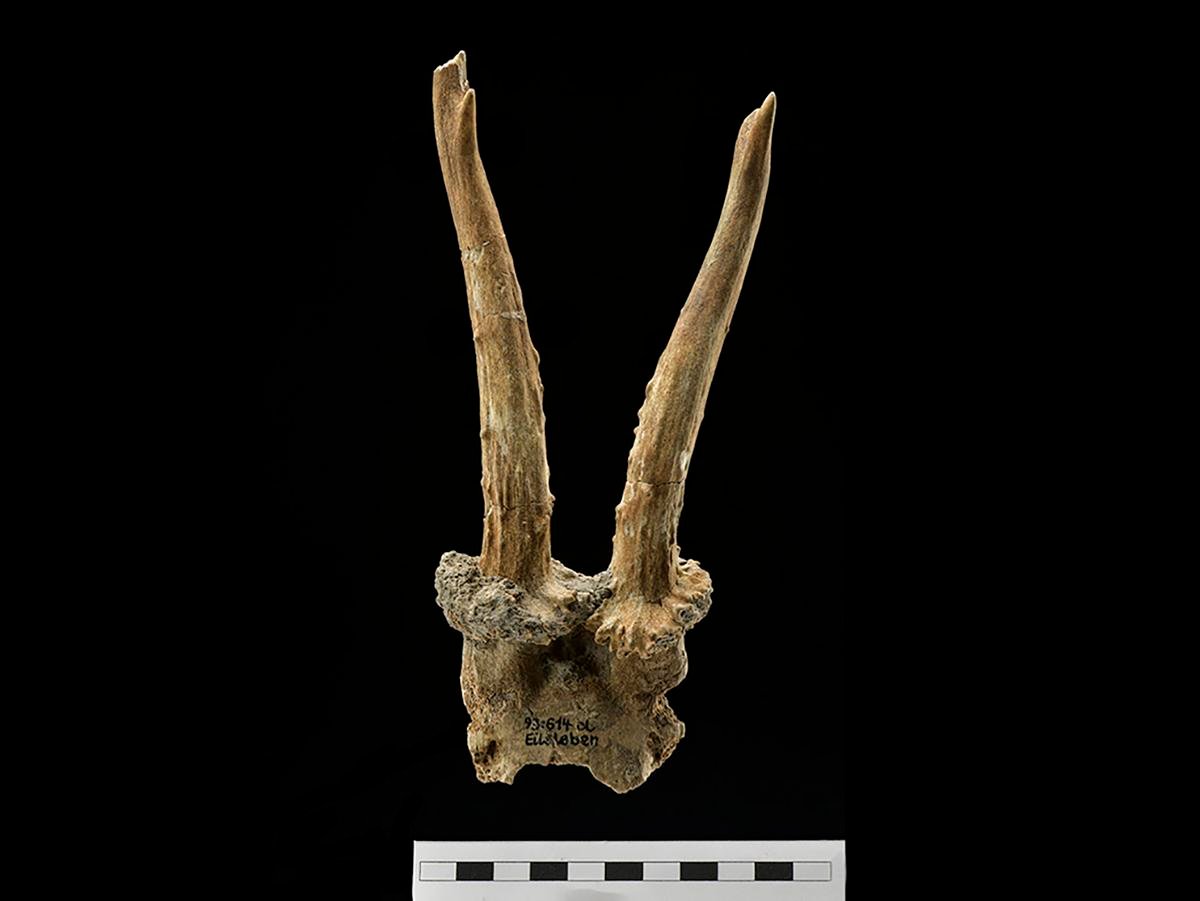
Eilsleben lies in a fertile loess region and marks the northern edge of early Neolithic expansion into Central Europe. Surveys and excavations since the 1970s have revealed a large settlement that covered about 20 acres. Geomagnetic data outline rows of longhouses, pits, and ditches linked with LBK traditions. At least nine burials belong to this farming group, along with unusual deposits of isolated skulls and articulated body parts placed in settlement features.
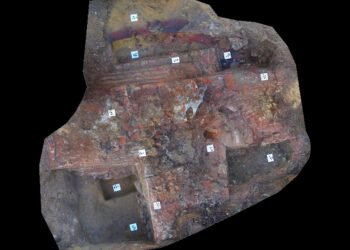
Excavations in 2024 exposed well-preserved occupation layers in a shallow depression protected from later plowing. Burnt daub, house debris, plant remains, and soil layers now allow detailed study of daily activities. Researchers use archaeobotany, micromorphology, soil chemistry, and radiocarbon dating to reconstruct house locations, work areas, and the sequence of enclosure construction. The team also studies about 70,000 artifacts from earlier digs, stored by the regional heritage office.
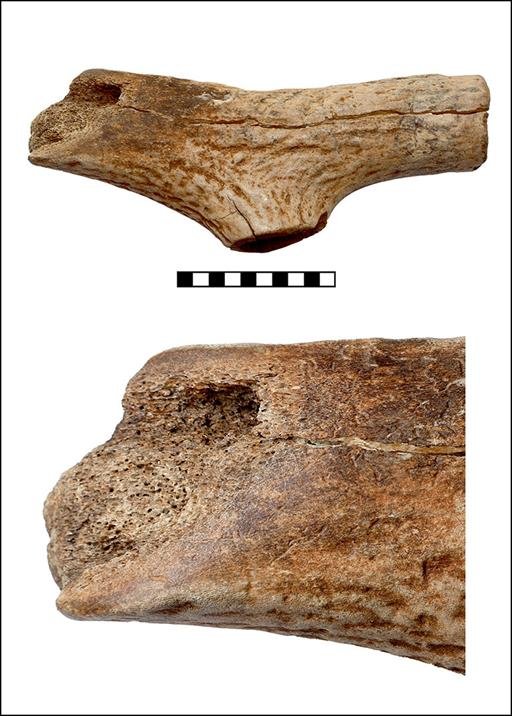
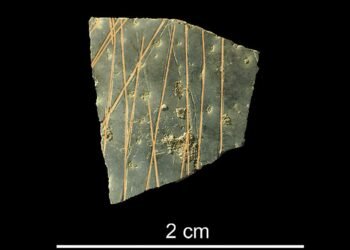
Among typical LBK pottery, stone tools, and animal bones, archaeologists identified a group of objects linked with Mesolithic traditions. These include numerous antler tools and production waste, showing on site manufacture. Several T-shaped antler axes match forms known from Late Mesolithic and early farmer contact zones in other parts of Europe. Antler punches and transverse flint arrowheads also fit hunting technologies used by foraging groups.
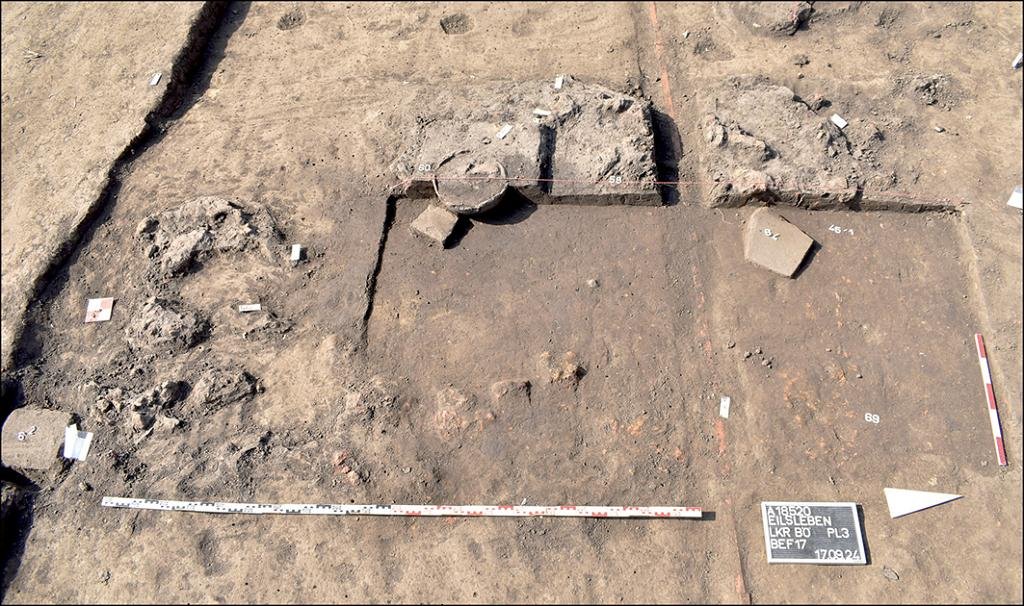
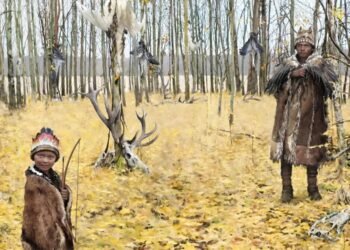
The most striking object is a roe deer skull with antlers modified into a headdress or mask. Similar items appear in Mesolithic ritual contexts, including the famous burial at Bad Dürrenberg dated to about 7000 BCE. Such objects hold strong symbolic meaning in hunter-gatherer societies. Their presence inside an LBK farming village points to more than trade in raw materials. Shared practices and ideas likely moved between groups.

Antler rarely served as a main raw material in LBK toolkits. Its frequent use at Eilsleben suggests local adoption of forager techniques. This pattern supports a model of technology transfer in which farmers learned selected skills from neighboring hunter-gatherers. Exchange did not replace core farming lifeways, since most artifacts still follow Neolithic traditions. Instead, the site shows a blended material culture in a frontier zone.
Defensive features add another layer to the story. Ditches and ramparts surrounded parts of the settlement during several phases. Radiocarbon dates from these enclosures will clarify whether construction relates to conflict, social display, or other forms of boundary marking in a landscape shared by different communities.
Genetic studies from other regions indicate limited intermarriage between early farmers and Mesolithic groups. Eilsleben offers archaeological evidence for regular contact without large scale population mixing. Material exchange, shared rituals, and selective adoption of tools formed part of everyday life along this cultural boundary. Ongoing analysis of human remains and settlement deposits will refine understanding of how these neighboring societies shaped each other during the first spread of agriculture in Europe.












Disclaimer: This website is a science-focused magazine that welcomes both academic and non-academic audiences. Comments are written by users and may include personal opinions or unverified claims. They do not necessarily reflect the views of our editorial team or rely on scientific evidence.
Comment Policy: We kindly ask all commenters to engage respectfully. Comments that contain offensive, insulting, degrading, discriminatory, or racist content will be automatically removed.