
Researchers have examined 125 adult skeletons from two Neolithic sites in eastern Hungary to study how work, daily routines, and burial customs related to gender. The sites, Polgár-Ferenci-hát, dated to about 5300 to 5070 BCE, and Polgár-Csőszhalom, dated to about 4800 to 4650 BCE, lie within the same microregion but show different social patterns. The results were published on February 16, 2026, in the American Journal of Biological Anthropology.
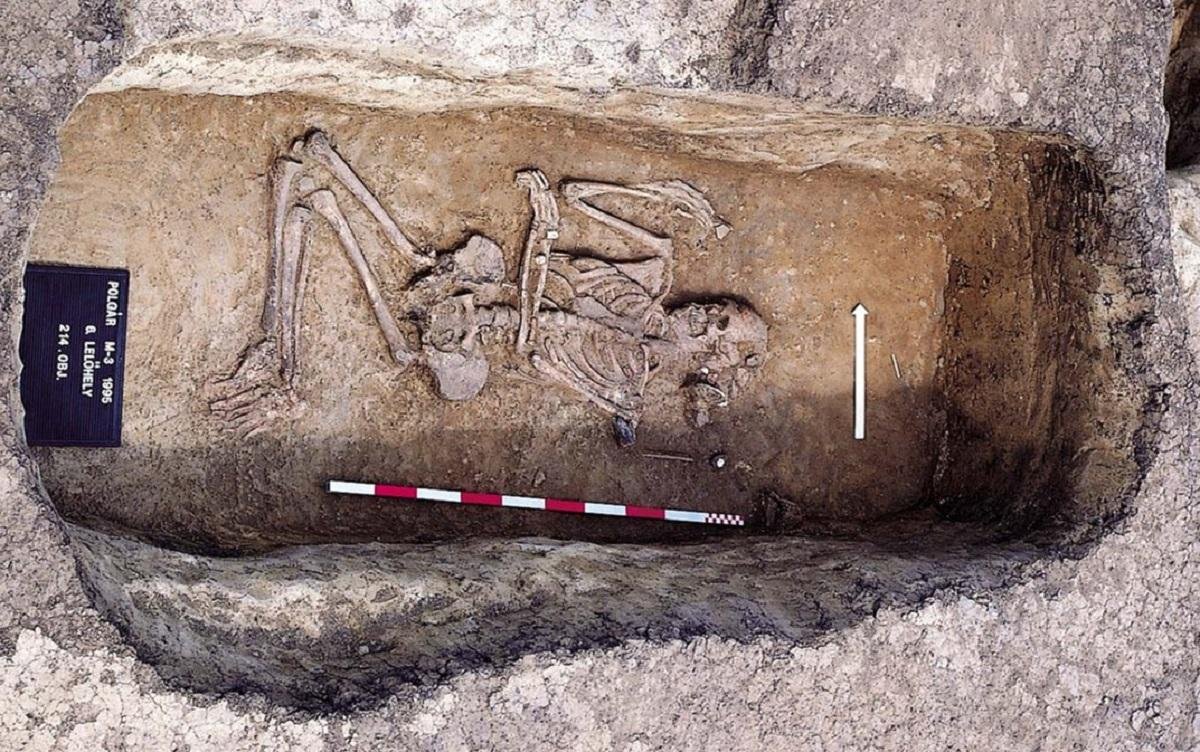
The team combined skeletal analysis with burial data. They recorded activity-related skeletal changes such as spondylolysis in the spine, which reflects overall workload, humeral enthesopathies linked to repeated strain in one arm, and metatarsal facets on foot bones associated with habitual kneeling or toe hyperextension. They also examined body position in graves and the presence of objects, including polished stone tools.
At Polgár-Ferenci-hát, burial treatment did not differ clearly between women and men. The graves showed no consistent separation in body position or objects based on sex. Skeletal markers at this site also did not reveal strong sex-based contrasts in overall workload. Both women and men displayed evidence of physically demanding lives, but patterns varied within each group.
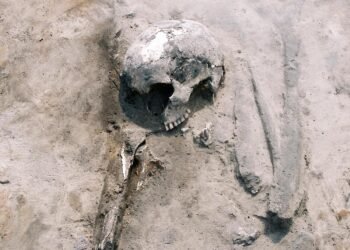
Polgár-Csőszhalom presented a different picture. Individuals buried there showed higher levels of physical strain overall than those at Ferenci-hát. Burial customs followed a stricter pattern. Women were placed on their left side, while men were placed on their right. Polished stone tools frequently accompanied male burials.
Skeletal evidence partly matched these funerary distinctions. At both sites, male skeletons often showed overuse of the right upper limb. Lesions on the dominant arm point to repeated unilateral tasks, such as throwing or intensive work with stone and wood. Similar patterns appear across prehistoric Europe, suggesting a shared trend in male activity.
RelatedStories
Iron Age mass killing in Serbia: 77 women and children found in 2,800-year-old grave at Gomolava
At Csőszhalom, nine males buried with polished stone tools also displayed metatarsal facets, indicating repeated postures involving strong toe extension. One female burial combined these so-called male-associated grave goods with the same skeletal markers. This case shows that burial symbolism and lived experience did not always align with biological sex in a strict way.
The comparison between the two communities shows that gender roles were differentiated but not fixed. At Csőszhalom, burial practice expressed a clearer social structure tied to gender. At Ferenci-hát, such distinctions were less visible. Skeletal markers add another layer, revealing both shared European trends, such as dominant arm overuse among males, and local variation in daily activities.
The sample size limits broad generalizations, and activity markers do not identify specific tasks with precision. Even so, combining bone evidence with burial context provides a closer view of how Neolithic communities organized labor and identity. These findings indicate that gender shaped work and ritual while still allowing individual variation within each community.














Disclaimer: This website is a science-focused magazine that welcomes both academic and non-academic audiences. Comments are written by users and may include personal opinions or unverified claims. They do not necessarily reflect the views of our editorial team or rely on scientific evidence.
Comment Policy: We kindly ask all commenters to engage respectfully. Comments that contain offensive, insulting, degrading, discriminatory, or racist content will be automatically removed.