• About
  • Privacy Policy
  • Terms of Use
  • Donation
  • Contact
No Result
View All Result
Archaeology News
  • Home
  • News
    • Archaeology
    • Anthropology
    • Paleontology
  • Academic
    • Books
    • Conferences
    • Universities
  • Articles
  • VR Tours
  • Quiz & Game
  • Download
  • Encyclopedia
  • Forum
Archaeology News
No Result
View All Result
Home News Archaeology

Seabird guano fueled the rise of Peru’s Chincha Kingdom, isotope study finds

by Dario Radley
February 19, 2026

A new study in PLOS ONE links the rise of the Chincha Kingdom on Peru’s southern coast to seabird guano. Researchers combined chemical testing of crops, animal remains, archaeological evidence, and colonial records. Their results show that marine bird droppings enriched maize fields in one of the driest places on Earth and supported the growth of a large pre-Inca society.
Seabird guano fueled the rise of Peru’s Chincha Kingdom, isotope study finds
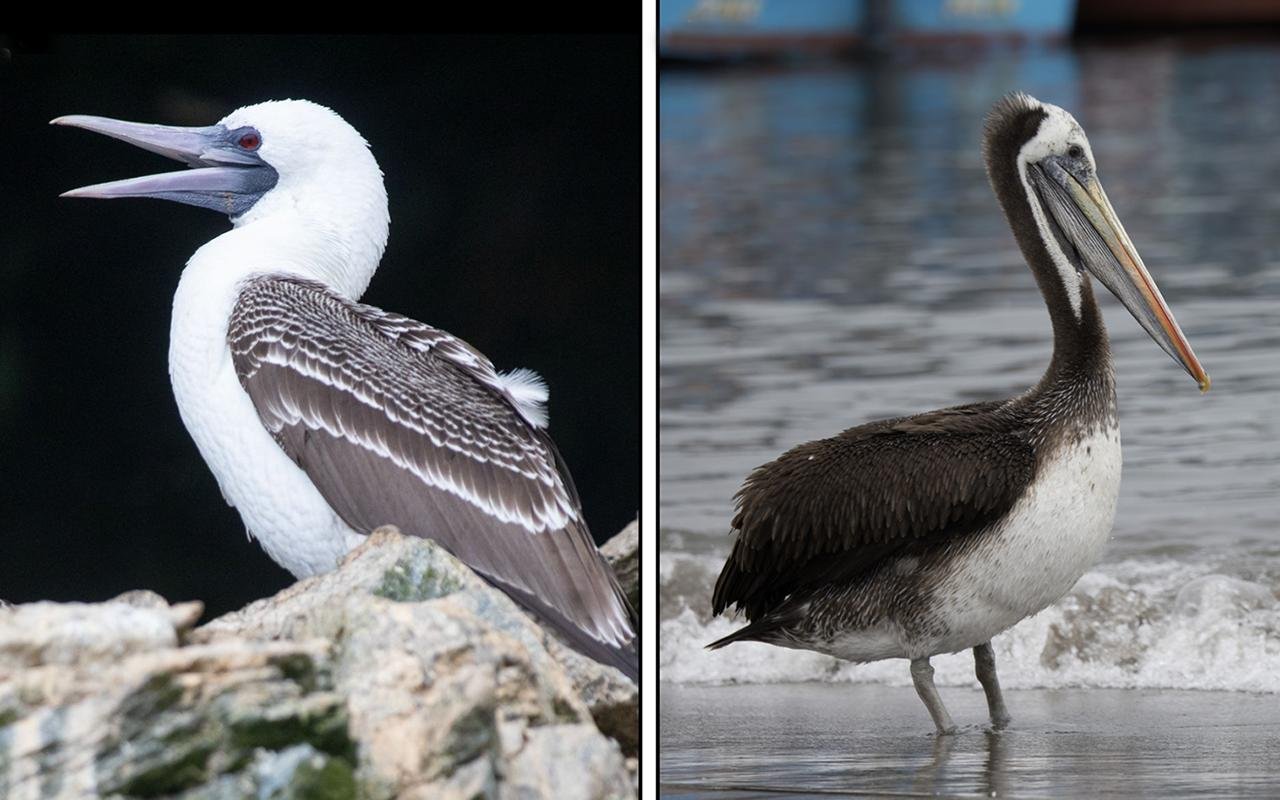
The primary guano producing bird species, left, the Peruvian booby (Sula variegata), and right, the Peruvian pelican (Pelecanus thagus). Credit: Diego H., left, and Claude Kolwelter, right, iNaturalist.org. Licensed under CC BY 4.0.

The Chincha Valley lies along the desert coast of southern Peru. Farmers relied on irrigation from rivers flowing out of the Andes. Even with water, sandy soils lost nutrients quickly. About 25 kilometers offshore sit the Chincha Islands. Large colonies of guanay cormorants, Peruvian boobies, and pelicans nest there. Fed by rich fisheries created by the Humboldt Current, these birds produced thick layers of guano. The dry climate allowed the deposits to build up for centuries. Guano contains far more nitrogen and phosphorus than livestock manure, both of which are essential for plant growth.

To test whether farmers used this fertilizer, the research team analyzed 35 maize cobs from archaeological graves dated between about 1150 and 1675 CE. They also studied 11 seabird remains from contexts ranging from around 200 BCE to the Colonial period. The scientists measured stable nitrogen, carbon, and sulfur isotopes. Many maize samples showed high nitrogen isotope ratios. About half had extremely high values of δ15N. Such readings exceed those found in unfertilized desert soils and match crops grown with seabird guano in earlier field and archaeological studies in Chile.

Radiocarbon dates and isotopic patterns indicate that Chincha communities applied guano to maize fields by at least 1250 CE. The sulfur data overlapped with experimental results, though without strong enrichment, which the researchers link to environmental and cultural factors. Colonial documents describe coastal people traveling by raft to collect guano from offshore islands. Under Inca rule, officials restricted access during bird breeding seasons and imposed severe penalties for killing guano birds.
Seabird guano fueled the rise of Peru’s Chincha Kingdom, isotope study finds
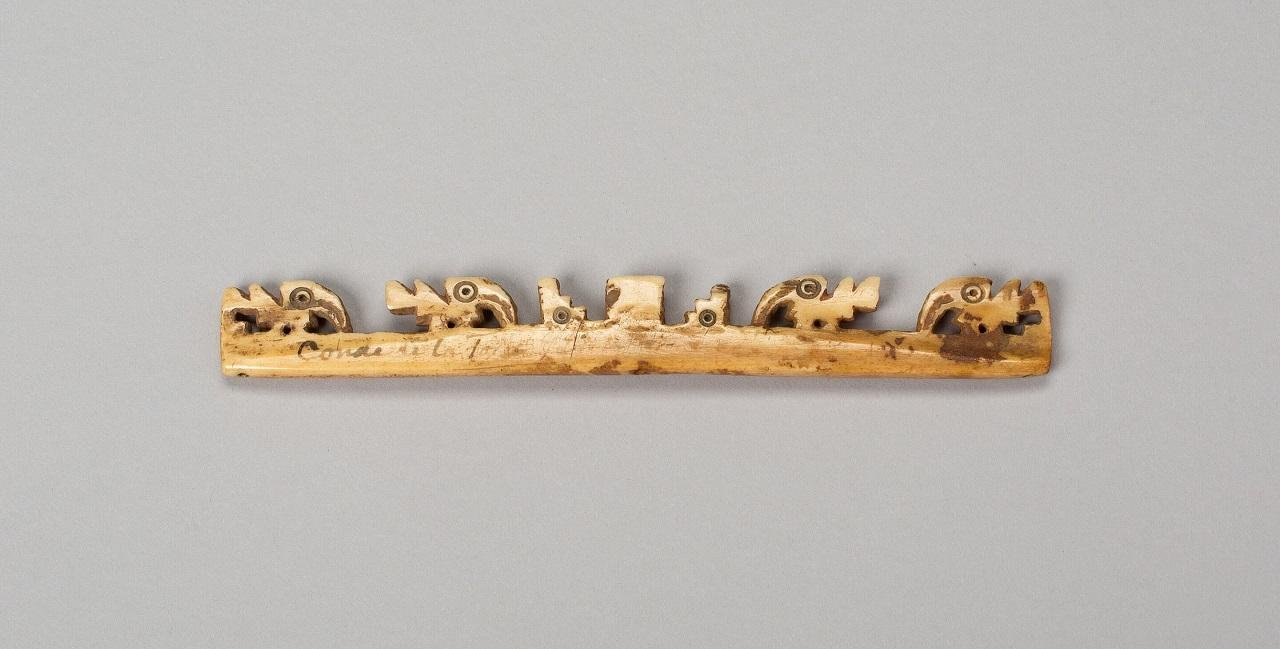
Bone balance beam scale. The Art Institute of Chicago, 1955.2579d. Public domain.

The Chincha Kingdom flourished between about 1000 and 1400 CE and may have included close to 100,000 people. Society was organized into fishers, farmers, and merchants. Higher maize yields would have supported population growth and long-distance trade along the Pacific coast. Chincha textiles, ceramics, and metal objects depict seabirds, fish, ocean waves, and sprouting maize. These images show an awareness of the link between marine life and agriculture.
RelatedStories

Rare deer skull headdress discovered in Germany highlights exchange between hunter-gatherers and Europe's first farmers

Rare deer skull headdress discovered in Germany highlights exchange between hunter-gatherers and Europe’s first farmers

February 7, 2026
Elephant bone found in Spain provides rare evidence of war elephants during the Punic Wars

Elephant bone found in Spain provides rare evidence of war elephants during the Punic Wars

February 7, 2026

In 1532, when Spanish forces led by Francisco Pizarro captured the Inca ruler Atahualpa at Cajamarca, Pedro Pizarro noted that the Lord of Chincha was the only other leader carried on a litter. Control over guano enriched agriculture likely strengthened Chincha’s political position within the Inca Empire. Around 1400 CE, the Inca incorporated Chincha after what sources describe as a peaceful capitulation.

The findings expand evidence for marine fertilization along the Andean coast. Stable nitrogen isotope analysis offers a reliable method for identifying past guano use, especially in places where material remains are limited. The study ties coastal ecosystems to agricultural output and political growth in pre-Hispanic Peru.


More information: Bongers, J. L., Milton, E. B. P., Osborn, J., Drucker, D. G., Robinson, J. R., & Scaffidi, B. K. (2026). Seabirds shaped the expansion of pre-Inca society in Peru. PloS One, 21(2), e0341263. doi:10.1371/journal.pone.0341263
ShareTweetShareShareSend

You May Also Like...

1.77-million-year-old Homo erectus skulls in China show early humans reached Asia sooner than believed
Anthropology

1.77-million-year-old Homo erectus skulls in China show early humans reached Asia sooner than believed

February 19, 2026
Hidden 17th-century bastion fort discovered in Świerże, eastern Poland
Archaeology

Hidden 17th-century bastion fort discovered in Świerże, eastern Poland

February 19, 2026
Historic cannon unearthed during Hull’s Queen’s Gardens restoration in the UK
Archaeology

Historic cannon unearthed during Hull’s Queen’s Gardens restoration in England

February 18, 2026
DNA reveals extended hunter-gatherer family ties in 5,500-year-old Stone Age graves on Gotland
Anthropology

DNA reveals extended hunter-gatherer family ties in 5,500-year-old Stone Age graves on Gotland

February 18, 2026
Earliest shipwreck in Singapore reveals 14th century trading port and massive ceramic cargo
Archaeology

Earliest shipwreck in Singapore reveals 14th century trading port and massive ceramic cargo

February 18, 2026
New study reveals how Londoners used weekly death data to Survive the Great Plague of 1665
Archaeology

New study reveals how Londoners used weekly death data to survive the Great Plague of 1665

February 18, 2026

Comments 0

  1. Editorial Team says:
    1 second ago

    Disclaimer: This website is a science-focused magazine that welcomes both academic and non-academic audiences. Comments are written by users and may include personal opinions or unverified claims. They do not necessarily reflect the views of our editorial team or rely on scientific evidence.

    Comment Policy: We kindly ask all commenters to engage respectfully. Comments that contain offensive, insulting, degrading, discriminatory, or racist content will be automatically removed.

    Reply

Leave a Reply Cancel reply

Your email address will not be published. Required fields are marked *

Follow us


Instagram
244K

Facebook
118K

Threads
45K

LinkedIn
14K

Twitter
6K

YouTube
1K
  • Trending
  • Comments
  • Latest
Shipwreck Salvage. Credit: rawpixel.com / Public Domain

2,000-year-old shipwreck discovered off Turkish coast with remarkably preserved stacked ceramics

July 2, 2025
Viking age DNA reveals 9,000-year-old HIV-resistant gene originating near the Black Sea

Viking age DNA reveals 9,000-year-old HIV-resistant gene originating near the Black Sea

May 18, 2025
A new study suggests the mysterious Voynich Manuscript may be a medieval cipher

A new study suggests the mysterious Voynich Manuscript may be a medieval cipher

January 3, 2026
Moses may be named in ancient Egyptian mine inscriptions, sparking debate over earliest biblical references

Moses may be named in ancient Egyptian mine inscriptions, sparking debate over earliest biblical references

July 31, 2025
Mystery of Armenia’s 6,000-year-old dragon stones solved

Mystery of Armenia’s 6,000-year-old dragon stones solved

September 23, 2025
3D analysis reveals Shroud of Turin image likely came from sculpture, not Jesus’ body

3D analysis reveals Shroud of Turin image likely came from sculpture, not Jesus’ body

Moses may be named in ancient Egyptian mine inscriptions, sparking debate over earliest biblical references

Moses may be named in ancient Egyptian mine inscriptions, sparking debate over earliest biblical references

$1 million prize offered to decipher 5,300-year-old Indus Valley script

$1 million prize offered to decipher 5,300-year-old Indus Valley script

Oldest ever genetic data from a human relative found in 2-million-year-old fossilized teeth

Oldest ever genetic data from a human relative found in 2-million-year-old fossilized teeth

Exceptionally large Roman shoes discovered at Magna fort near Hadrian’s Wall

Exceptionally large Roman shoes discovered at Magna fort near Hadrian’s Wall

1.77-million-year-old Homo erectus skulls in China show early humans reached Asia sooner than believed

1.77-million-year-old Homo erectus skulls in China show early humans reached Asia sooner than believed

February 19, 2026
Hidden 17th-century bastion fort discovered in Świerże, eastern Poland

Hidden 17th-century bastion fort discovered in Świerże, eastern Poland

February 19, 2026
Seabird guano fueled the rise of Peru’s Chincha Kingdom, isotope study finds

Seabird guano fueled the rise of Peru’s Chincha Kingdom, isotope study finds

February 19, 2026
Historic cannon unearthed during Hull’s Queen’s Gardens restoration in the UK

Historic cannon unearthed during Hull’s Queen’s Gardens restoration in England

February 18, 2026
DNA reveals extended hunter-gatherer family ties in 5,500-year-old Stone Age graves on Gotland

DNA reveals extended hunter-gatherer family ties in 5,500-year-old Stone Age graves on Gotland

February 18, 2026

Archaeology News online magazine

Archaeology News is an international online magazine that covers all aspects of archaeology.


Categories

  • Academics
    • Books
    • Conferences
    • Universities
  • Articles
  • Download
  • Game
  • News
    • Anthropology
    • Archaeology
    • Paleontology
  • Quiz
  • Tours

Subscribe to our newsletter

© 2024 - Archaeology News Online Magazine. All Rights Reserved.

  • About
  • Privacy Policy
  • Terms of Use
  • Donation
  • Contact

Manage Consent
To provide the best experiences, we use technologies like cookies to store and/or access device information. Consenting to these technologies will allow us to process data such as browsing behavior or unique IDs on this site. Not consenting or withdrawing consent, may adversely affect certain features and functions.
Functional Always active
The technical storage or access is strictly necessary for the legitimate purpose of enabling the use of a specific service explicitly requested by the subscriber or user, or for the sole purpose of carrying out the transmission of a communication over an electronic communications network.
Preferences
The technical storage or access is necessary for the legitimate purpose of storing preferences that are not requested by the subscriber or user.
Statistics
The technical storage or access that is used exclusively for statistical purposes. The technical storage or access that is used exclusively for anonymous statistical purposes. Without a subpoena, voluntary compliance on the part of your Internet Service Provider, or additional records from a third party, information stored or retrieved for this purpose alone cannot usually be used to identify you.
Marketing
The technical storage or access is required to create user profiles to send advertising, or to track the user on a website or across several websites for similar marketing purposes.
  • Manage options
  • Manage services
  • Manage {vendor_count} vendors
  • Read more about these purposes
View preferences
  • {title}
  • {title}
  • {title}
  • Home
  • News
    • Archaeology
    • Anthropology
    • Paleontology
  • Academic
    • Books
    • Conferences
    • Universities
  • Articles
  • VR Tours
  • Quiz & Game
  • Download
  • Encyclopedia
  • Forum

About  .  Contact  .  Donation

© 2024 - Archaeology News Online Magazine. All Rights Reserved