• About
  • Privacy Policy
  • Terms of Use
  • Donation
  • Contact
No Result
View All Result
Archaeology News
  • Home
  • News
    • Archaeology
    • Anthropology
    • Paleontology
  • Academic
    • Books
    • Conferences
    • Universities
  • Articles
  • VR Tours
  • Quiz & Game
  • Download
  • Encyclopedia
  • Forum
Archaeology News
No Result
View All Result
Home News Archaeology

Native Americans Mined Copper on a Large Scale 6,000 Years Ago

by Dario Radley
February 4, 2023

Copper’s allure has endured for millennia. Both ancient and modern mines for the extremely useful metal abound in North America’s Lake Superior region; long before modern miners extracted the ore from deep underground, local Indigenous communities dug it from shallow pit mines.
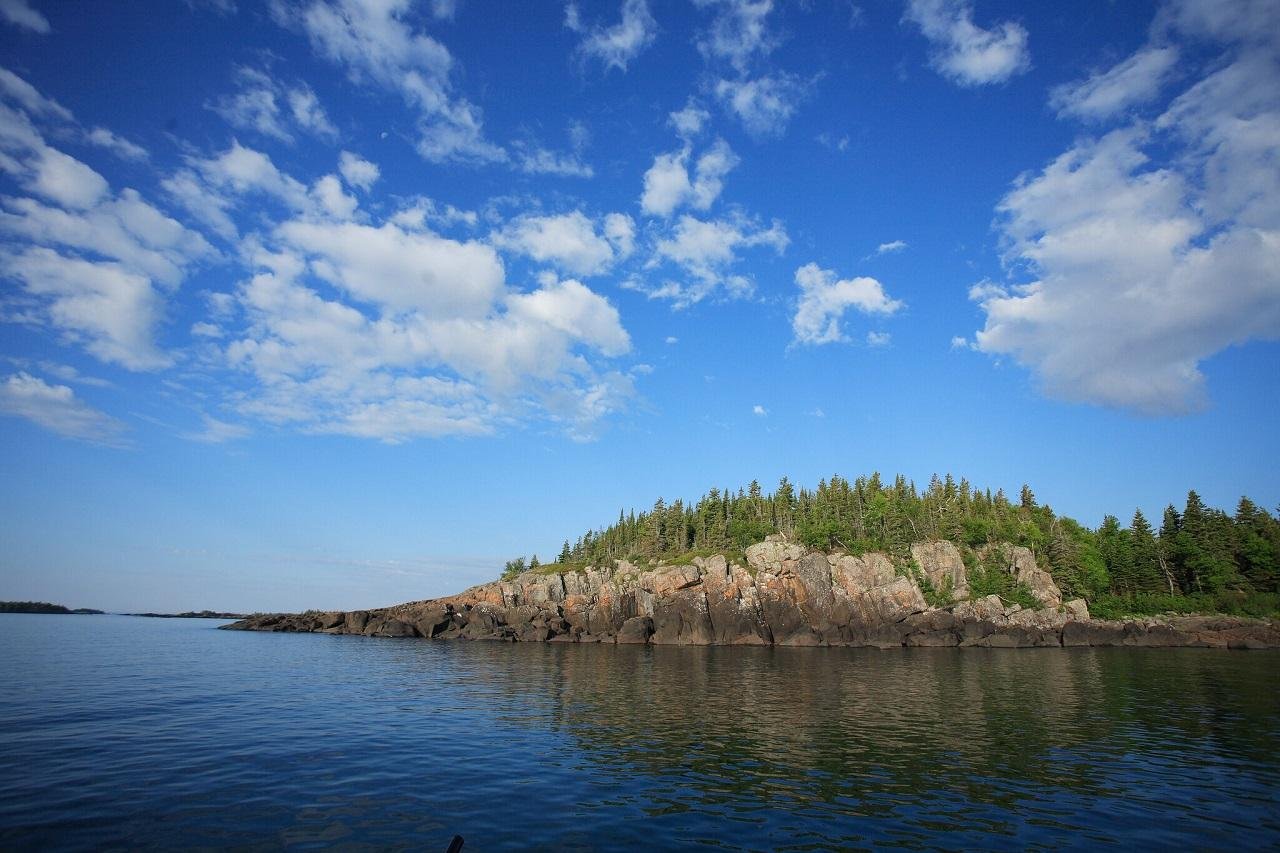
Native Americans Mined Copper on a Large Scale 6,000 Years Ago
Isle Royale National Park. Credit: Ray Dumas via Flickr (CC BY-SA 2.0)

These prehistoric mines’ ages were a “long-standing mystery,” says David Pompeani, a geologist at the University of Hawaii at Mānoa.

Previous research used archaeological remnants to evaluate when mine sites were active, but later mining at the same sites often obliterated ancient artifacts, Pompeani says. To work around this, he and his colleagues took a different approach: instead of artifacts, they looked for signs of mining preserved in the environment.

For a recent study in Anthropocene, the researchers examined sediments from two small inland lakes near ancient mines on Lake Superior’s isolated Isle Royale in Michigan.

Such sediments are affected by annual changes and thus act a little like tree rings. Each layer is a snapshot of what happened in a given year, including weather events, wildfires—and pollution.

Even preindustrial copper mining produced pollution, mainly from lead impurities in copper deposits. “Lead is a good proxy to record human impact … it’s not a metal we can get in a natural way,” says Francisca Martínez-Ruiz, a geochemist at Instituto Andaluz de Ciencias de la Tierra in Spain, who was not involved in the study.

Before modern machinery, extracting copper was labor-intensive. Native Americans hammered it out of the rock—hard, dusty work that lofted fine particles of stone and metals into the air. Pompeani says they probably also used bonfires to warm this rock, softening the copper and liquefying the easily meltable lead.

These fires volatilized the lead and wafted it over the surrounding area, sprinkling particles onto the land and lakes. Analyzing lake sediments, the researchers found evidence of a peak in lead pollution around 6,000 years ago during the Archaic period. This suggested a simultaneous peak in large-scale copper mining—and matched archaeological evidence from the same period.

“The paper shows that the lead is a reliable proxy that can be used for reconstruction in this region,” Martínez-Ruiz says. She adds that similar studies of small lakes’ environmental pollution could be used to investigate human impacts worldwide.

Pompeani says the study confirms some of the world’s earliest-known large-scale mining efforts and puts a new spin on how Indigenous societies operated.

“There’s this idea that hunter-gatherers couldn’t organize to conduct a mining operation,” he says. “Yet that lake sediment indicates that during the Archaic period, they mined to such a degree that we can detect it in the environment.”

Provided by Scientific American
Share:

Share on Facebook Share on X (Twitter) Share on LinkedIn Share on Pinterest Share on WhatsApp Share on Email

Related Posts

Buried church bell found in Poland after decades hidden beneath roadside
Archaeology

Buried church bell found in Poland after decades hidden beneath roadside

May 31, 2026
Stone Age humans built complex grass beds at Border Cave 200,000 years ago, study finds
Archaeology

Stone Age humans built complex grass beds at Border Cave 200,000 years ago, study finds

May 30, 2026
Radiocarbon dating confirms Teutonic Knights built Feldioara Fortress in 13th-century Transylvania
Archaeology

Radiocarbon dating confirms Teutonic Knights built Feldioara Fortress in 13th-century Transylvania

May 30, 2026
Ancient shipwreck with 300 amphorae found off Italy could reshape views of Mediterranean wine trade
Archaeology

Ancient shipwreck with 300 amphorae found off Italy could reshape views of Mediterranean wine trade

May 29, 2026
Ancient DNA reveals 700-kilometer migration along Peru’s coast before the Inca Empire
Anthropology

Ancient DNA reveals 700-kilometer migration along Peru’s coast before the Inca Empire

May 29, 2026
6,000-year-old mega-structure unearthed at prehistoric settlement in Romania
Archaeology

6,000-year-old mega-structure unearthed at prehistoric settlement in Romania

May 29, 2026

Follow us


Instagram
242K

Facebook
117K

Threads
47K

LinkedIn
15K

Twitter
6K

YouTube
1K

Archaeology News online magazine

Archaeology News is an international online magazine that covers all aspects of archaeology.


Categories

  • Academics
    • Books
    • Conferences
    • Universities
  • Articles
  • Download
  • Game
  • News
    • Anthropology
    • Archaeology
    • Paleontology
  • Quiz
  • Tours

Subscribe to our newsletter

© 2024 - Archaeology News Online Magazine. All Rights Reserved.

  • About
  • Privacy Policy
  • Terms of Use
  • Donation
  • Contact

Manage Consent
To provide the best experiences, we use technologies like cookies to store and/or access device information. Consenting to these technologies will allow us to process data such as browsing behavior or unique IDs on this site. Not consenting or withdrawing consent, may adversely affect certain features and functions.
Functional Always active
The technical storage or access is strictly necessary for the legitimate purpose of enabling the use of a specific service explicitly requested by the subscriber or user, or for the sole purpose of carrying out the transmission of a communication over an electronic communications network.
Preferences
The technical storage or access is necessary for the legitimate purpose of storing preferences that are not requested by the subscriber or user.
Statistics
The technical storage or access that is used exclusively for statistical purposes. The technical storage or access that is used exclusively for anonymous statistical purposes. Without a subpoena, voluntary compliance on the part of your Internet Service Provider, or additional records from a third party, information stored or retrieved for this purpose alone cannot usually be used to identify you.
Marketing
The technical storage or access is required to create user profiles to send advertising, or to track the user on a website or across several websites for similar marketing purposes.
  • Manage options
  • Manage services
  • Manage {vendor_count} vendors
  • Read more about these purposes
View preferences
  • {title}
  • {title}
  • {title}
  • Home
  • News
    • Archaeology
    • Anthropology
    • Paleontology
  • Academic
    • Books
    • Conferences
    • Universities
  • Articles
  • VR Tours
  • Quiz & Game
  • Download
  • Encyclopedia
  • Forum

About  .  Contact  .  Donation

© 2024 - Archaeology News Online Magazine. All Rights Reserved