• About
  • Privacy Policy
  • Terms of Use
  • Donation
  • Contact
No Result
View All Result
Archaeology News
  • Home
  • News
    • Archaeology
    • Anthropology
    • Paleontology
  • Academic
    • Books
    • Conferences
    • Universities
  • Articles
  • VR Tours
  • Quiz & Game
  • Download
  • Encyclopedia
  • Forum
Archaeology News
No Result
View All Result
Home News Archaeology

Archaeologists have unearthed anthropomorphic figurines at Aztec Templo Mayor

by Dario Radley
August 31, 2023

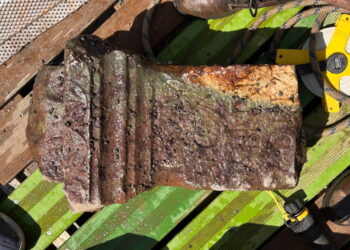
Archaeologists from the Templo Mayor Project and Mexico’s National Institute of Anthropology and History (INAH) have uncovered a stone chest, known in Nahuatl as a tepetlacalli, containing a ritual offering of 15 anthropomorphic figurines at the Templo Mayor in Mexico City.

Archaeologists have unearthed anthropomorphic figurines at Aztec Templo Mayor
An Aztec anthropomorphic figurine, 1325–1521. Mexico, 14th century- 16th century. Overall: 7 cm (2 3/4 in.). The Cleveland Museum of Art

The Templo Mayor, once the central temple of Tenochtitlan—the Aztec Empire’s capital—was dedicated to two principal deities: Huitzilopochtli, the god of war, and Tlaloc, the god of rain and agriculture. Its construction began shortly after CE 1325, but the temple was destroyed in 1521 following the Spanish conquest of Tenochtitlan.

The figurines found inside the stone chest are carved in the Mezcala style, which is recognized for its abstract and geometric features, even in the representation of human faces. The Mezcala culture thrived in the area now known as northern Guerrero in southwestern Mexico and dates back to the Preclassic period (700–200 BCE) and the Classic period (250–650 CE).

The Aztecs developed a fascination with Mezcala artifacts and incorporated them into their own cultural and religious framework. During the reign of Emperor Moctezuma I (1440–1469 CE), the Aztec Empire expanded significantly, and Mezcala relics—some more than a thousand years old—were deliberately excavated and retrieved from ancient sites.

Designated Offering 186, the stone chest contained 14 male anthropomorphic figurines and one miniature female figure. Made from green metamorphic stone, the figurines range in height from nearly a foot to just an inch. One figurine still bears remnants of facial paint representing Tlaloc, indicating that these ancient objects were consciously integrated into the Aztecs’ own religious rites.

The chest was located beneath the platform at the rear façade of the Templo Mayor, in a stratigraphic layer associated with the reign of Moctezuma I. In addition to the figurines, the chest held two earrings shaped like rattlesnakes, 135 greenstone beads, and a collection of 1,942 seashells, snail shells, and pieces of coral.

These marine materials came from the Atlantic coast, an area conquered by the Aztecs of the Triple Alliance—formed by Tenochtitlan, Tetzcoco, and Tlacopan—during the rule of Moctezuma I.

The discovery illustrates the Mexica people’s deep respect for symbolism and ritualistic offerings. According to archaeologist Leonardo López Luján, director of the Templo Mayor Project, the stone chest served as a sacred container for some of the most important emblems of water and fertility.

Just as the Mexica stored valued possessions such as jewelry, fine feathers, and cotton garments in palm-frond chests in their homes, they used these stone chests to house sacred items like sculptures, greenstone beads, shells, and snails.
Share:

Share on Facebook Share on X (Twitter) Share on LinkedIn Share on Pinterest Share on WhatsApp Share on Email

You May Also Like...

Roman altar dedicated to Jupiter emerges from Danube as record-low water levels expose riverbed in Hungary
Archaeology

Roman altar dedicated to Jupiter emerges from Danube as record-low water levels expose riverbed in Hungary

August 9, 2026
6,000-year-old necropolis and ancient settlement found in Egypt’s eastern Delta
Anthropology

6,000-year-old necropolis and ancient settlement found in Egypt’s eastern Delta

August 9, 2026
Shackled men in ancient Athens mass grave were locals, not foreign invaders, study reveals
Anthropology

Shackled men in ancient Athens mass grave were locals, not foreign invaders, study reveals

August 8, 2026
Two ancient genomes reveal how migration and diet shaped the ancestors of modern Japanese people
Anthropology

Ancient genomes reveal how migration and diet shaped the ancestors of modern Japanese people

August 8, 2026
Ancient drainage network found beneath Roman theater in Catania, Italy
Archaeology

Ancient drainage network found beneath Roman theater in Catania, Italy

August 8, 2026
Roman-era building with colorful mosaics and frescoes found beneath Rome's Villa Celimontana
Archaeology

Roman-era building with colorful mosaics and frescoes found beneath Rome’s Villa Celimontana

August 7, 2026

Follow us

Instagram Instagram
243K
Facebook Facebook
117K
Threads Threads
50K
LinkedIn LinkedIn
15K
X X
6K
YouTube YouTube
1K
Archaeology News online magazine

Archaeology News is an international online magazine that covers all aspects of archaeology.

WhatsApp Telegram Mastodon Pinterest Flipboard RSS

Categories

  • Academics
    • Books
    • Conferences
    • Universities
  • Articles
  • Download
  • Game
  • News
    • Anthropology
    • Archaeology
    • Paleontology
  • Quiz
  • Tours

Subscribe to our newsletter

© 2024 - Archaeology News Online Magazine. All Rights Reserved.

  • About
  • Privacy Policy
  • Terms of Use
  • Donation
  • Contact
Manage Consent
To provide the best experiences, we use technologies like cookies to store and/or access device information. Consenting to these technologies will allow us to process data such as browsing behavior or unique IDs on this site. Not consenting or withdrawing consent, may adversely affect certain features and functions.
Functional Always active
The technical storage or access is strictly necessary for the legitimate purpose of enabling the use of a specific service explicitly requested by the subscriber or user, or for the sole purpose of carrying out the transmission of a communication over an electronic communications network.
Preferences
The technical storage or access is necessary for the legitimate purpose of storing preferences that are not requested by the subscriber or user.
Statistics
The technical storage or access that is used exclusively for statistical purposes. The technical storage or access that is used exclusively for anonymous statistical purposes. Without a subpoena, voluntary compliance on the part of your Internet Service Provider, or additional records from a third party, information stored or retrieved for this purpose alone cannot usually be used to identify you.
Marketing
The technical storage or access is required to create user profiles to send advertising, or to track the user on a website or across several websites for similar marketing purposes.
  • Manage options
  • Manage services
  • Manage {vendor_count} vendors
  • Read more about these purposes
View preferences
  • {title}
  • {title}
  • {title}
  • Home
  • News
    • Archaeology
    • Anthropology
    • Paleontology
  • Academic
    • Books
    • Conferences
    • Universities
  • Articles
  • VR Tours
  • Quiz & Game
  • Download
  • Encyclopedia
  • Forum

About  .  Contact  .  Donation

Instagram Facebook Threads X LinkedIn YouTube

© 2024 - Archaeology News Online Magazine. All Rights Reserved