• About
  • Privacy Policy
  • Terms of Use
  • Donation
  • Contact
No Result
View All Result
Archaeology News
  • Home
  • News
    • Archaeology
    • Anthropology
    • Paleontology
  • Academics
    • Books
    • Conferences
    • Universities
  • Articles
  • VR Tours
  • Quiz & Game
  • Download
  • Encyclopedia
  • Forum
Archaeology News
No Result
View All Result
Home News Archaeology

Ancient Teotihuacan murals reveal possible 2,000-year-old Uto-Aztecan language

by Dario Radley
October 10, 2025

A new study published in Current Anthropology may have solved one of the largest mysteries of ancient Mesoamerica—the language spoken in Teotihuacan, the vast metropolis that dominated central Mexico nearly two thousand years ago.
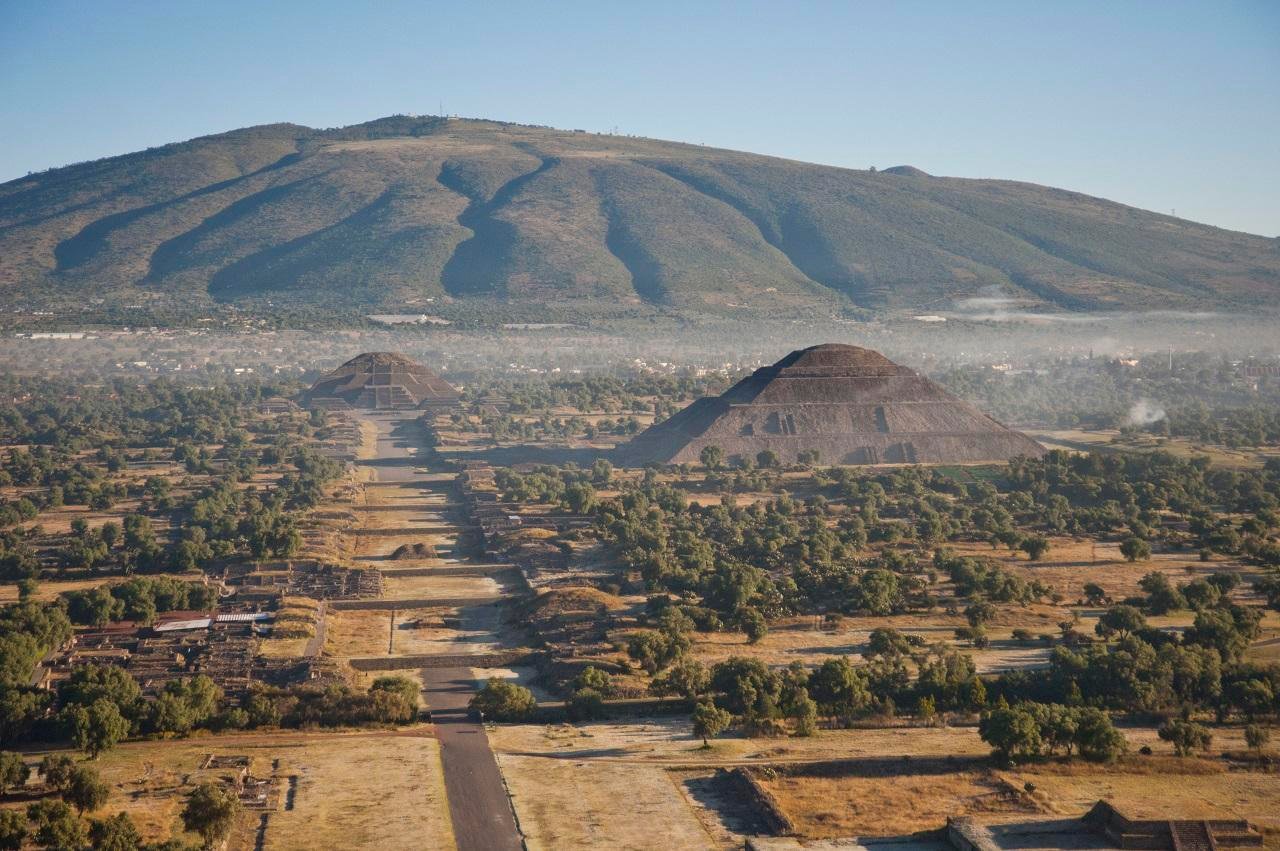
Ancient Teotihuacan murals reveal possible 2,000-year-old Uto-Aztecan language
The Mesoamerican city of Teotihuacan in Mexico. Credit: Christophe Helmke, University of Copenhagen

Teotihuacan, founded around 100 BCE and abandoned by 600 CE, was one of the largest cities of the ancient world, home to more than 100,000 people at its zenith. It was a cultural and political hub whose influence spread across Mesoamerica, with monumental pyramids, wide avenues, and intricate painted murals. Yet despite decades of excavation, a question has remained for years: what language its inhabitants spoke → what language did its inhabitants speak?

Researchers Christophe Helmke and Magnus Pharao Hansen of the University of Copenhagen now propose that Teotihuacan’s murals and artifacts preserve an early Uto-Aztecan language, the ancestor of later languages such as Cora, Huichol, and Nahuatl—the language of the Aztecs. Their study provides evidence for a direct link between the people of Teotihuacan and later Nahuatl-speaking populations, implying the Aztecs may be descendants of this earlier urban civilization.

The researchers’ conclusions derive from years of detailed examination of signs found on Teotihuacan’s murals and pottery. Scholars have wondered for a long time whether the images were merely decorative or represented a writing system. Helmke and Hansen think they do both: some signs are logograms, pictorial representations of entire words—a coyote for the word “coyote,” for instance—while others form phonetic compounds, or rebuses, that represent sounds, not meanings. This dual use of signs marks the system as a true writing system.
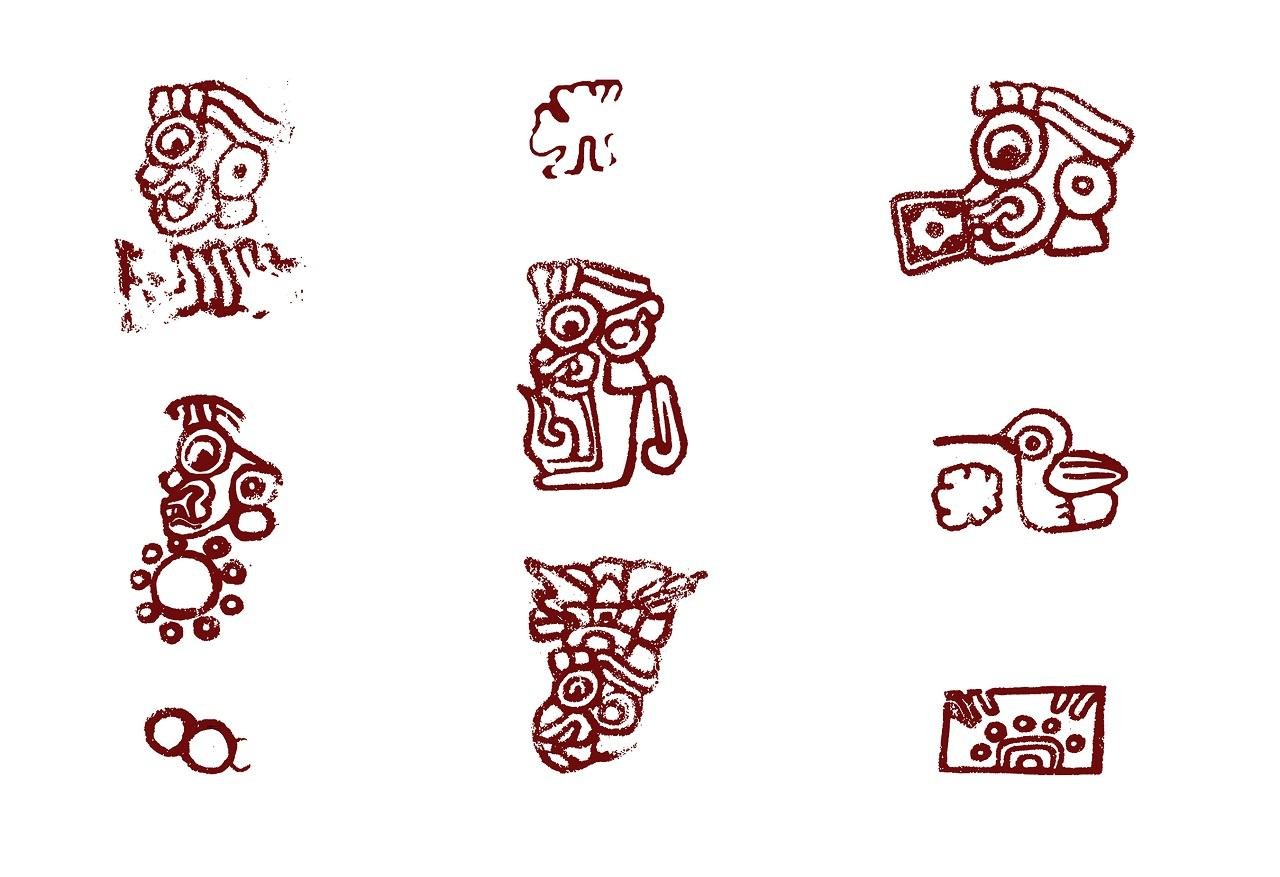
Ancient Teotihuacan murals reveal possible 2,000-year-old Uto-Aztecan language
Examples of glyphic signs in the Teotihuacan writing system. Credit: Christophe Helmke, University of Copenhagen

Deciphering it is no simple process, however. Because the Uto-Aztecan family changed so much over time, Pharao Hansen first had to reconstruct what the language would have sounded like more than 1,500 years ago. Only then could they determine whether the mural signs fit the linguistic pattern of that early stage.

RelatedStories

Misread medieval tale misled generations of historians about the Black Death's spread, study finds

Misread medieval tale misled generations of historians about the Black Death’s spread, study finds

November 7, 2025
Teotihuacan’s forgotten sacred mountain: archaeologists uncover Cerro Patlachique’s pilgrimage shrine

Teotihuacan’s forgotten sacred mountain: archaeologists uncover Cerro Patlachique’s pilgrimage shrine

November 1, 2025

So far, the texts available to study are limited, found mainly on wall paintings and decorated ceramics. However, the researchers have identified recurring signs and grammatical clues that support their interpretation. They hope that new discoveries will confirm their theory and enable a more comprehensive translation of the inscriptions in the city.

If correct, the find would dramatically rewrite the history of central Mexico. Archaeologists have long believed that speakers of Nahuatl moved into the region only after Teotihuacan’s collapse. The new evidence instead implies a continuous linguistic and cultural tradition from Teotihuacan to the later Aztec Empire nearly a millennium later.

Helmke and Hansen emphasize that their work is only the beginning. They are now inviting colleagues worldwide to join collaborative workshops aimed at testing and expanding their decoding method. Beyond revealing a long-lost language, their study offers a new way to approach the earliest writing systems of Mesoamerica.

“If we’re right,” Helmke noted, “it is not only remarkable that we have deciphered a writing system. It could have implications for our entire understanding of Mesoamerican cultures and, of course, point to a solution to the mystery surrounding the inhabitants of Teotihuacan.”

More information: University of Copenhagen
Reference: Pharao Hansen, M., & Helmke, C. (2025). The language of Teotihuacan writing. Current Anthropology, 66(5), 705–739. doi:10.1086/737863
Share38Tweet24Share7ShareSend

You May Also Like...

Air-filled anomalies in the Menkaure Pyramid may point to a second entrance
Archaeology

Air-filled anomalies in the Menkaure Pyramid may point to a second entrance

November 11, 2025
Scientists uncover purpose of 5,200 mystery holes in Peru, revealing a lost Andean system of trade and record-keeping
Archaeology

Scientists uncover purpose of 5,200 mystery holes in Peru, revealing a lost Andean system of trade and record-keeping

November 10, 2025
Archaeologists uncover oldest and largest Maya monument built to represent the cosmos
Archaeology

Archaeologists uncover oldest and largest Maya monument built to represent the cosmos

November 10, 2025
Roman roads reimagined: new digital map expands the empire’s network to nearly 300,000 km
Archaeology

Roman roads reimagined: new digital map expands the empire’s network to nearly 300,000 km

November 9, 2025
New study debunks myth of Easter Island's ecological collapse
Archaeology

Rats and the fall of Rapa Nui’s forests: invasive species, not humans, drove the island’s deforestation

November 9, 2025
2.75-million-year-old stone tools in Kenya reveal 300,000 years of technological stability
Anthropology

2.75-million-year-old stone tools in Kenya reveal 300,000 years of technological stability

November 9, 2025

Comments 0

  1. Editorial Team says:
    1 second ago
    Disclaimer: This website is a science-focused magazine that welcomes both academic and non-academic audiences. Comments are written by users and may include personal opinions or unverified claims. They do not necessarily reflect the views of our editorial team or rely on scientific evidence.
    Reply

Leave a Reply Cancel reply

Your email address will not be published. Required fields are marked *

Follow us


Instagram
245K

Facebook
117K

Threads
45K

LinkedIn
14K

Twitter
6K

YouTube
1K
  • Trending
  • Comments
  • Latest
Shipwreck Salvage. Credit: rawpixel.com / Public Domain

2,000-year-old shipwreck discovered off Turkish coast with remarkably preserved stacked ceramics

July 2, 2025
Viking age DNA reveals 9,000-year-old HIV-resistant gene originating near the Black Sea

Viking age DNA reveals 9,000-year-old HIV-resistant gene originating near the Black Sea

May 18, 2025
Complete copy of the Canopus Decree unearthed in Egypt after 150 years

Complete copy of the Canopus Decree unearthed in Egypt after 150 years

September 13, 2025
Mystery of Armenia’s 6,000-year-old dragon stones solved

Mystery of Armenia’s 6,000-year-old dragon stones solved

September 23, 2025
Moses may be named in ancient Egyptian mine inscriptions, sparking debate over earliest biblical references

Moses may be named in ancient Egyptian mine inscriptions, sparking debate over earliest biblical references

July 31, 2025
Moses may be named in ancient Egyptian mine inscriptions, sparking debate over earliest biblical references

Moses may be named in ancient Egyptian mine inscriptions, sparking debate over earliest biblical references

3D analysis reveals Shroud of Turin image likely came from sculpture, not Jesus’ body

3D analysis reveals Shroud of Turin image likely came from sculpture, not Jesus’ body

$1 million prize offered to decipher 5,300-year-old Indus Valley script

$1 million prize offered to decipher 5,300-year-old Indus Valley script

Oldest ever genetic data from a human relative found in 2-million-year-old fossilized teeth

Oldest ever genetic data from a human relative found in 2-million-year-old fossilized teeth

Exceptionally large Roman shoes discovered at Magna fort near Hadrian’s Wall

Exceptionally large Roman shoes discovered at Magna fort near Hadrian’s Wall

Air-filled anomalies in the Menkaure Pyramid may point to a second entrance

Air-filled anomalies in the Menkaure Pyramid may point to a second entrance

November 11, 2025
Scientists uncover purpose of 5,200 mystery holes in Peru, revealing a lost Andean system of trade and record-keeping

Scientists uncover purpose of 5,200 mystery holes in Peru, revealing a lost Andean system of trade and record-keeping

November 10, 2025
Archaeologists uncover oldest and largest Maya monument built to represent the cosmos

Archaeologists uncover oldest and largest Maya monument built to represent the cosmos

November 10, 2025
Roman roads reimagined: new digital map expands the empire’s network to nearly 300,000 km

Roman roads reimagined: new digital map expands the empire’s network to nearly 300,000 km

November 9, 2025
New study debunks myth of Easter Island's ecological collapse

Rats and the fall of Rapa Nui’s forests: invasive species, not humans, drove the island’s deforestation

November 9, 2025

Archaeology News online magazine

Archaeology News is an international online magazine that covers all aspects of archaeology.


Categories

  • Academics
    • Books
    • Conferences
    • Universities
  • Articles
  • Download
  • Game
  • News
    • Anthropology
    • Archaeology
    • Paleontology
  • Quiz
  • Tours

Subscribe to our newsletter

© 2024 - Archaeology News Online Magazine. All Rights Reserved.

  • About
  • Privacy Policy
  • Terms of Use
  • Donation
  • Contact

Welcome Back!

Login to your account below

Forgotten Password? Sign Up

Create New Account!

Fill the forms below to register

All fields are required. Log In

Retrieve your password

Please enter your username or email address to reset your password.

Log In

Add New Playlist

Manage Consent
To provide the best experiences, we use technologies like cookies to store and/or access device information. Consenting to these technologies will allow us to process data such as browsing behavior or unique IDs on this site. Not consenting or withdrawing consent, may adversely affect certain features and functions.
Functional Always active
The technical storage or access is strictly necessary for the legitimate purpose of enabling the use of a specific service explicitly requested by the subscriber or user, or for the sole purpose of carrying out the transmission of a communication over an electronic communications network.
Preferences
The technical storage or access is necessary for the legitimate purpose of storing preferences that are not requested by the subscriber or user.
Statistics
The technical storage or access that is used exclusively for statistical purposes. The technical storage or access that is used exclusively for anonymous statistical purposes. Without a subpoena, voluntary compliance on the part of your Internet Service Provider, or additional records from a third party, information stored or retrieved for this purpose alone cannot usually be used to identify you.
Marketing
The technical storage or access is required to create user profiles to send advertising, or to track the user on a website or across several websites for similar marketing purposes.
Manage options Manage services Manage {vendor_count} vendors Read more about these purposes
View preferences
{title} {title} {title}
  • Home
  • News
    • Archaeology
    • Anthropology
    • Paleontology
  • Academics
    • Books
    • Conferences
    • Universities
  • Articles
  • VR Tours
  • Quiz & Game
  • Download
  • Encyclopedia
  • Forum

About  .  Contact  .  Donation

© 2024 - Archaeology News Online Magazine. All Rights Reserved