
Medieval religious art was never meant to be experienced as a silent visual display, according to a new study examining how people in early medieval England interacted with illustrated manuscripts. The research suggests that images in religious settings such as churches, cathedrals, and pilgrimage centers likely triggered imagined sounds in the minds of viewers, turning static pictures into multisensory experiences.
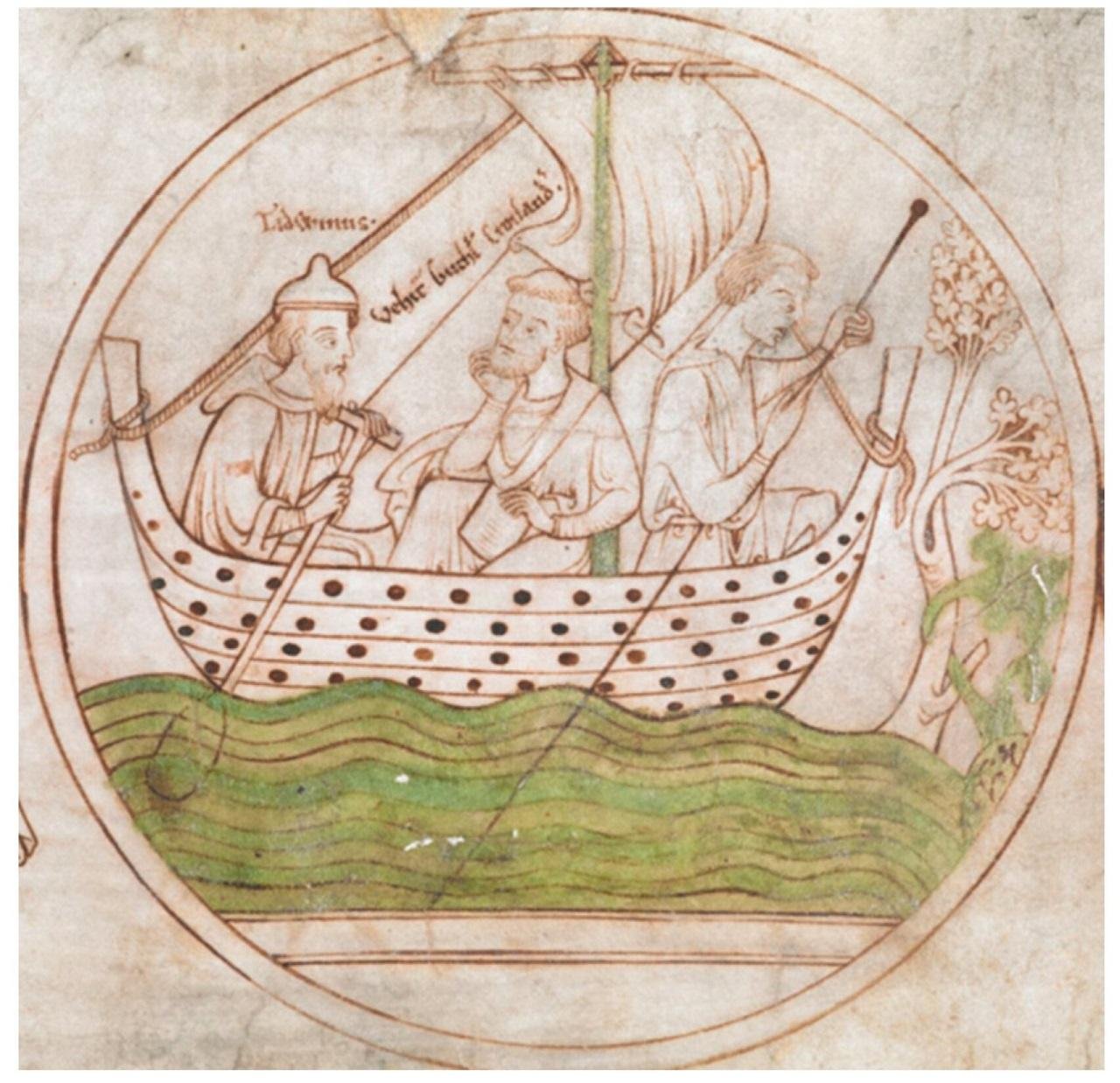
The study, published in the journal Religions, was led by Britton Elliott Brooks of Kyushu University. His work focuses on the Harley Roll, a medieval English scroll created in the 12th or 13th century. The scroll, preserved as British Library Harley MS Y.6, tells the life story of Saint Guthlac through 18 circular illustrations.
Guthlac was an Anglo-Saxon saint who first lived as a warrior before leaving behind military life and wealth to become a hermit devoted to God. He settled in Crowland, in eastern England, where his hermitage later grew into Crowland Abbey, an important pilgrimage center.
Brooks compared the Harley Roll with earlier written biographies of Guthlac. This comparison showed that the scroll’s illustrator did more than simply copy written material. Some scenes add visual details that seem designed to bring familiar sounds to mind.
One example appears in the image of Guthlac traveling by boat to Crowland. Earlier texts describe the journey only briefly, but the Harley Roll expands the moment visually. Curved waves, angled sails, and moving oars suggest the splash of water, the creaking of wood, ropes tightening in the wind, and the rhythm of rowing. For medieval viewers, especially those familiar with river or coastal travel, these details likely carried strong sonic associations.


Another scene shows Guthlac building his small dwelling. Written accounts mention only a modest structure, but the scroll depicts a much busier construction process. Laborers appear carrying stone and working with tools. The image likely brought to mind hammering, scraping, and the repeated sounds of building activity. Archaeological evidence suggests these construction details reflected architecture more familiar to a 12th-century audience than to Guthlac’s own earlier period.
The study argues that these visual cues worked because the human brain naturally predicts sensory information. Brooks draws on the neuroscience concept of predictive processing, which proposes that the brain constantly anticipates sounds, sights, and other sensations based on past experience. When viewers saw objects strongly linked to sound, such as ships, tools, or animals, brain regions connected to hearing may have activated even in silence.
This process helped create what Brooks describes through the framework of a “sound milieu,” an immersive sensory environment shaped by sound sources, listeners, and surrounding vibrations. In medieval pilgrimage settings, this imagined layer of sound blended with real environmental noise.
Religious centers such as Crowland were already filled with sound. Pilgrims would have heard prayers, sermons, chanting, feast day performances, and hagiographical storytelling. Construction and rebuilding also formed part of the everyday acoustic environment at major monastic sites. Against this background, illustrated manuscripts did not function separately from lived experience. Instead, they connected sacred narratives with sounds audiences already knew.
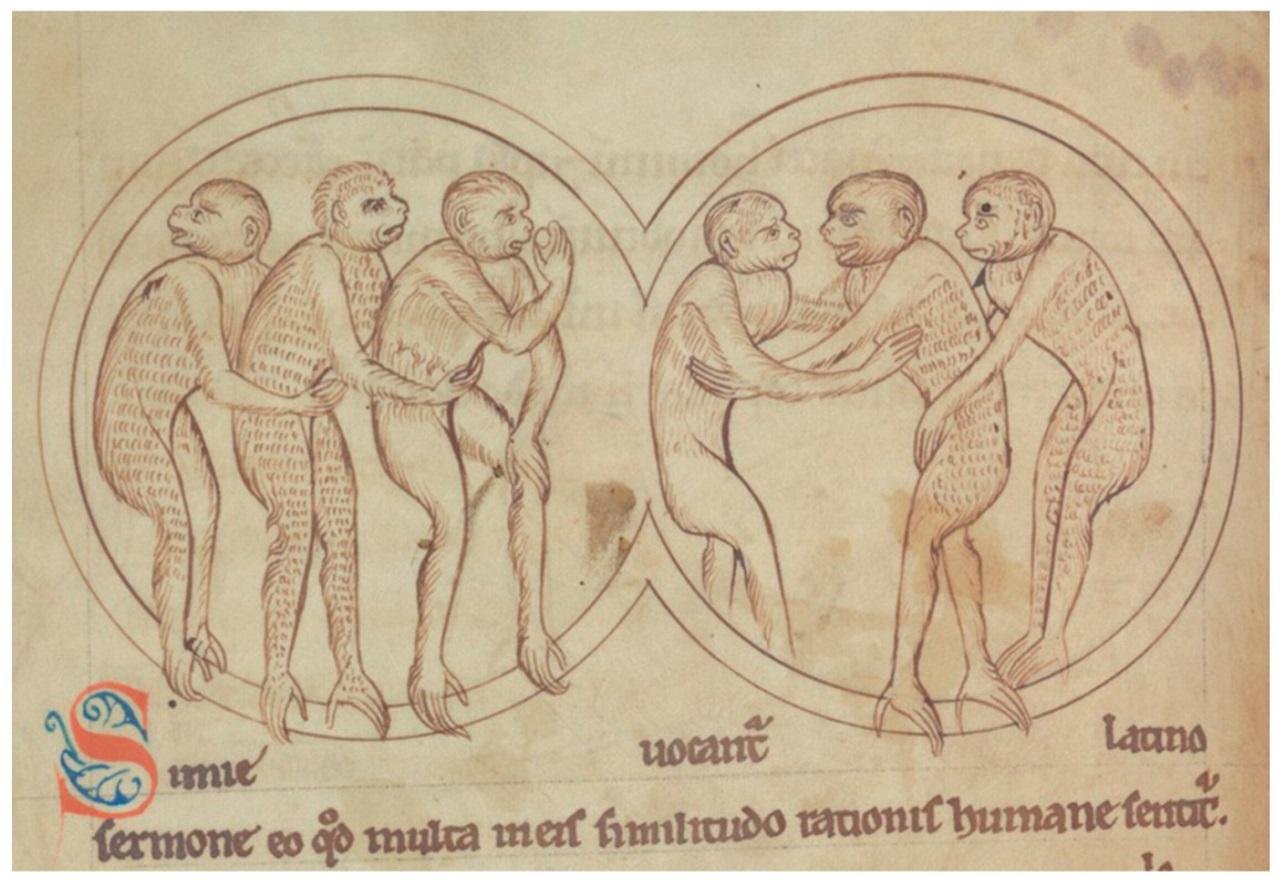
The Harley Roll also includes more dramatic sound imagery. In one roundel, Guthlac is surrounded by demons with animal-like heads. Their mouths are open as they crowd around him, but they do not physically touch him. The threat is communicated through implied noise rather than bodily attack.
Brooks notes that medieval Christian imagery often linked certain animals with evil or spiritual danger. Ravens, wolves, birds of prey, and stranger creatures such as apes could evoke fear through imagined cries, screeches, or roars. Local animals would have been especially effective because audiences already knew their sounds.
The findings suggest medieval people approached religious images with more than sight alone. They likely experienced manuscripts, stained glass, sculpture, and other sacred art through a combination of vision, hearing, memory, and bodily sensation.
By studying how sound appears in images, Brooks argues that scholars can better understand how medieval material culture worked in daily life. The approach also opens new ways to study other illustrated manuscripts, including psalters and biblical scenes, where thunder, music, animals, or labor might have carried their own imagined acoustic worlds.
For medieval worshippers standing inside a church or monastery, an image of a saint was not a quiet object on a page or wall. It was part of a larger sensory setting, one shaped by movement, ritual, architecture, and the sounds people carried in their own minds.








Disclaimer: This website is a science-focused magazine that welcomes both academic and non-academic audiences. Comments are written by users and may include personal opinions or unverified claims. They do not necessarily reflect the views of our editorial team or rely on scientific evidence.
Comment Policy: We kindly ask all commenters to engage respectfully. Comments that contain offensive, insulting, degrading, discriminatory, or racist content will be automatically removed.
Radley’s article on sound in medieval times echoes J. Jaynes’ earlier work: The Origins of Consciousness in the Breakdown of the Bicameral Mind.
… Or maybe the details of waves and a full sail are to help people discern what the artist is trying to portray visually? The boat is fairly clear but what artist would draw a boat in a flat sea? It’s more fun to draw waves. It’s more interesting to depict a full sail than otherwise.