• About
  • Privacy Policy
  • Terms of Use
  • Donation
  • Contact
No Result
View All Result
Archaeology News
  • Home
  • News
    • Archaeology
    • Anthropology
    • Paleontology
  • Academic
    • Books
    • Conferences
    • Universities
  • Articles
  • VR Tours
  • Quiz & Game
  • Download
  • Encyclopedia
  • Forum
Archaeology News
No Result
View All Result
Home News Archaeology

3000-year-old weavings unearthed in Kodiak Island, Alaska

by Dario Radley
September 2, 2023

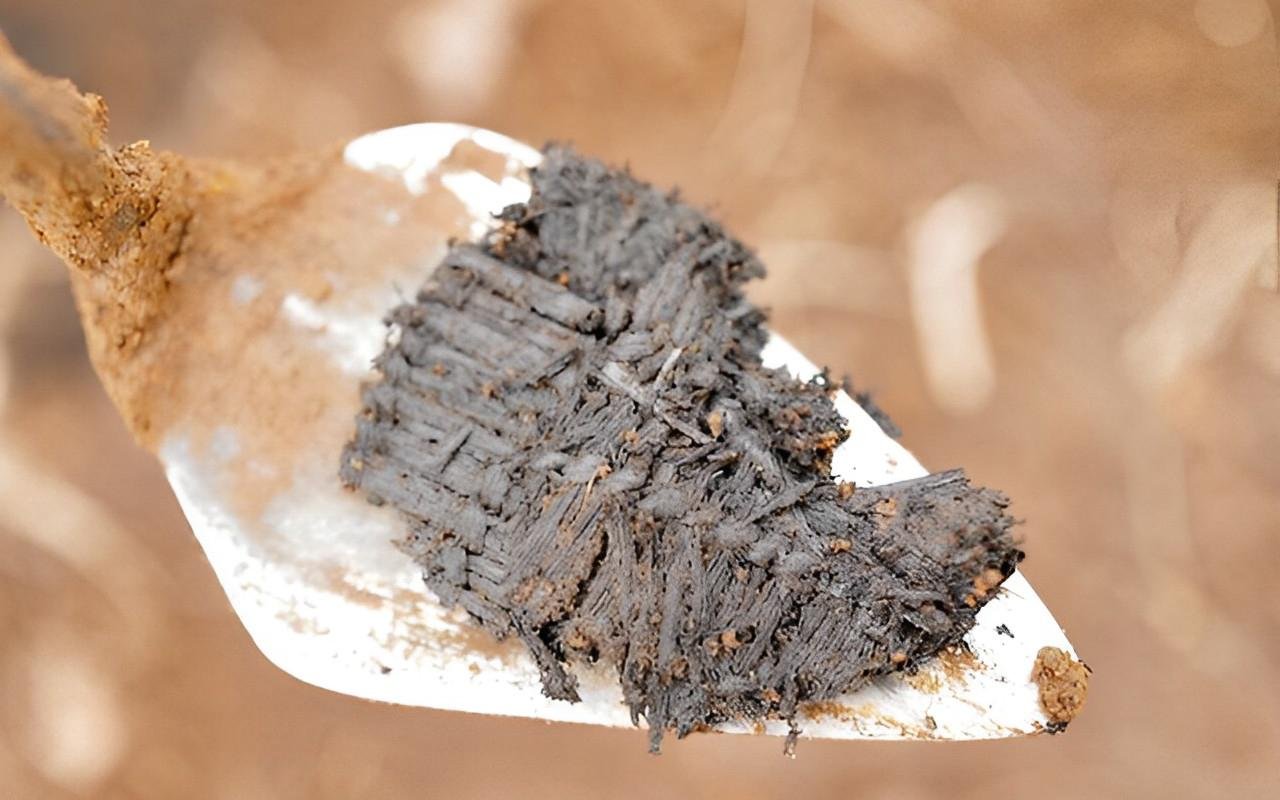
Archaeologists from the Alutiiq Museum and Archaeological Repository have unearthed fragments of ancient weavings, during excavations of an ancestral sod house on Kodiak Island, Alaska.

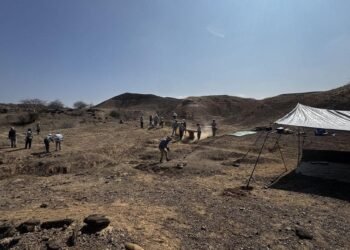
Patrick Saltonstall, the Curator of Archaeology at the Alutiiq Museum, explained the circumstances that led to the preservation of the woven fragments. The sod house in question had burned and collapsed approximately 3,000 years ago. As the walls of the structure, lined with wood, collapsed inward, they covered a portion of the floor, effectively sealing and protecting it from further burning.
3,000-year-old weavings unearthed in Kodiak Island, Alaska
Credit: Alutiiq Museum

This led to the remarkable discovery of fragments of charred weaving, believed to be grass mats that once covered the floor of the sod house. These fragments, covering an area of approximately two meters at the back of the house, may have been used for sleeping.

Weaving has been a long-standing Alutiiq art form, but its archaeological documentation is challenging due to the fragility of fiber artifacts.

Prior to this discovery, the Alutiiq Museum’s extensive collections contained grass and spruce root baskets dating back as far as 600 years. However, there were no known examples of weaving older than this.

RelatedStories

Why bison hunters abandoned a long-used site 1,100 years ago due to severe droughts

Why bison hunters abandoned a long-used site 1,100 years ago due to severe droughts

February 11, 2026
Oldest known sewn hide identified in Ice Age Oregon cave suggests early clothing

Oldest known sewn hide identified in Ice Age Oregon cave suggests early clothing

February 8, 2026

Carbon dating confirmed that the sod house, which produced these weavings, is approximately 3,000 years old, a determination supported by the architectural style of the structure and the artifacts found nearby.

April Laktonen Counceller, the Executive Director of the Alutiiq Museum, expressed the significance of this find, stating that it extends their knowledge of Alutiiq weaving back an additional 2,400 years.

The examination of the woven fragments revealed a weaving technique in which long parallel strands of grass, known as the warp, were laid down first. They were then secured with perpendicular rows of twining, referred to as the weft, with approximately one-inch spacing. This technique created an open weave pattern, similar to historical Alutiiq grass matting. Some fragments even exhibit more intricate braiding, possibly representing the finished edge of a mat.

To ensure the preservation and further study of these fragile woven remnants, the field crew meticulously removed them from the sod house floor and placed them in a specially designed box for transport to Kodiak.

In Kodiak, these artifacts will be documented, preserved, and made available for study, thanks to the generous support of Koniag, the regional Alaska Native Corporation for Kodiak Alutiiq people, which also sponsored the research and owns the land where the excavation occurred.

Shauna Hegna, President of Koniag, expressed appreciation for partnering with the Alutiiq Museum on critical projects like this, acknowledging the significance of discoveries that highlight the innovation and resilience of the Alutiiq people.

The Alutiiq Museum is a non-profit organization dedicated to preserving and sharing the history and culture of the Alutiiq people, an Alaska Native tribal group. The museum is governed by representatives of Kodiak Alutiiq organizations and is funded through charitable contributions, memberships, grants, contracts, and sales.

Share:

Share on Facebook Share on X (Twitter) Share on LinkedIn Share on Pinterest Share on WhatsApp Share on Email

You May Also Like...

'Patchwork families' lived in Europe over 5,000 years ago, Neolithic DNA study finds
Anthropology

‘Patchwork families’ lived in Europe over 5,000 years ago, Neolithic DNA study finds

May 25, 2026
100,000-year-old Homo sapiens bones from Ethiopia may preserve earliest evidence of human cremation
Anthropology

100,000-year-old Homo sapiens bones from Ethiopia may preserve earliest evidence of human cremation

May 24, 2026
Ancient Peruvian hairless dogs buried with Wari elites 1,200 years ago
Archaeology

Ancient Peruvian hairless dogs buried with Wari elites 1,200 years ago

May 24, 2026
4,000-year-old Mohenjo-daro study finds ancient city grew more equal over time
Archaeology

4,000-year-old Mohenjo-daro study finds ancient city grew more equal over time

May 24, 2026
Bronze Age towers in Sardinia remained centers of worship and ritual in the Iron Age
Archaeology

Bronze Age towers in Sardinia remained centers of worship and ritual in the Iron Age

May 23, 2026
Rare 19th-century bone dental bridge found in Portugal points to early cosmetic tooth replacement
Anthropology

Rare 19th-century bone dental bridge found in Portugal points to early cosmetic tooth replacement

May 23, 2026

Follow us


Instagram
242K

Facebook
117K

Threads
46K

LinkedIn
14K

Twitter
6K

YouTube
1K
'Patchwork families' lived in Europe over 5,000 years ago, Neolithic DNA study finds

‘Patchwork families’ lived in Europe over 5,000 years ago, Neolithic DNA study finds

May 25, 2026
100,000-year-old Homo sapiens bones from Ethiopia may preserve earliest evidence of human cremation

100,000-year-old Homo sapiens bones from Ethiopia may preserve earliest evidence of human cremation

May 24, 2026
Ancient Peruvian hairless dogs buried with Wari elites 1,200 years ago

Ancient Peruvian hairless dogs buried with Wari elites 1,200 years ago

May 24, 2026
4,000-year-old Mohenjo-daro study finds ancient city grew more equal over time

4,000-year-old Mohenjo-daro study finds ancient city grew more equal over time

May 24, 2026

Archaeology News online magazine

Archaeology News is an international online magazine that covers all aspects of archaeology.


Categories

  • Academics
    • Books
    • Conferences
    • Universities
  • Articles
  • Download
  • Game
  • News
    • Anthropology
    • Archaeology
    • Paleontology
  • Quiz
  • Tours

Subscribe to our newsletter

© 2024 - Archaeology News Online Magazine. All Rights Reserved.

  • About
  • Privacy Policy
  • Terms of Use
  • Donation
  • Contact

Manage Consent
To provide the best experiences, we use technologies like cookies to store and/or access device information. Consenting to these technologies will allow us to process data such as browsing behavior or unique IDs on this site. Not consenting or withdrawing consent, may adversely affect certain features and functions.
Functional Always active
The technical storage or access is strictly necessary for the legitimate purpose of enabling the use of a specific service explicitly requested by the subscriber or user, or for the sole purpose of carrying out the transmission of a communication over an electronic communications network.
Preferences
The technical storage or access is necessary for the legitimate purpose of storing preferences that are not requested by the subscriber or user.
Statistics
The technical storage or access that is used exclusively for statistical purposes. The technical storage or access that is used exclusively for anonymous statistical purposes. Without a subpoena, voluntary compliance on the part of your Internet Service Provider, or additional records from a third party, information stored or retrieved for this purpose alone cannot usually be used to identify you.
Marketing
The technical storage or access is required to create user profiles to send advertising, or to track the user on a website or across several websites for similar marketing purposes.
  • Manage options
  • Manage services
  • Manage {vendor_count} vendors
  • Read more about these purposes
View preferences
  • {title}
  • {title}
  • {title}
  • Home
  • News
    • Archaeology
    • Anthropology
    • Paleontology
  • Academic
    • Books
    • Conferences
    • Universities
  • Articles
  • VR Tours
  • Quiz & Game
  • Download
  • Encyclopedia
  • Forum

About  .  Contact  .  Donation

© 2024 - Archaeology News Online Magazine. All Rights Reserved