• About
  • Privacy Policy
  • Terms of Use
  • Donation
  • Contact
No Result
View All Result
Archaeology News
  • Home
  • News
    • Archaeology
    • Anthropology
    • Paleontology
  • Academics
    • Books
    • Conferences
    • Universities
  • Articles
  • VR Tours
  • Quiz & Game
  • Download
  • Encyclopedia
  • Forum
Archaeology News
No Result
View All Result
Home News Anthropology

Cup made from prehistoric human skull discovered in Spanish cave

by Dario Radley
September 22, 2023

Ancient human remains discovered in a Spanish cave have offered insights into enigmatic burial practices that extended across millennia.

Cup made from prehistoric human skull discovered in Spanish cave
The opening to Cueva de los Marmoles. Credit: J.C. Vera Rodríguez, CC-BY 4.0

The findings, published in the journal PLOS One, reveal how prehistoric people in the Iberian Peninsula engaged with their deceased, manipulating and repurposing human bones, with potential uses ranging from tools to dinnerware.

The study, conducted by a team of researchers from the University of Bern in Switzerland, the University of Córdoba in Spain, and numerous other experts, centered on the remains found at Cueva de los Marmoles in southern Spain’s Andalusia region.

The cave, located about 45 miles southeast of Córdoba, has long been a significant site for burials, dating back to approximately 6,000 to 3,000 years ago, covering the Neolithic to the Bronze Age periods.
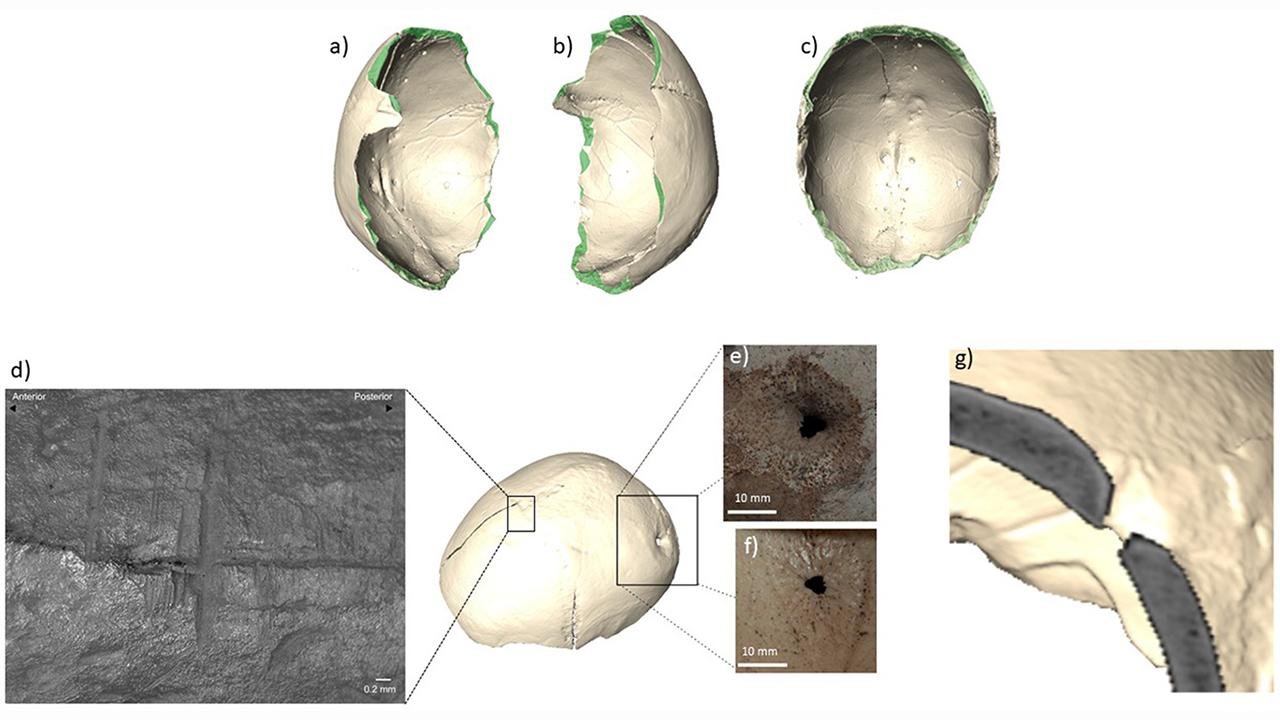
Cup made from prehistoric human skull discovered in Spanish cave
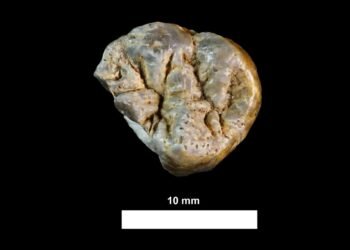
The “skull cup” discovered in Marmoles Cave. Credit: Photographs by Z. Laffranchi, CT images by M. Milella

The examination of at least 12 individuals’ remains revealed signs of deliberate bone modifications, suggesting post-mortem actions like fractures and scraping, possibly for marrow extraction or other purposes.


RelatedStories

Systematic human bone modification discovered in Neolithic Liangzhu civilization in China

Systematic human bone modification discovered in Neolithic Liangzhu civilization in China

October 4, 2025
Trading human remains: Why bones should not become a commodity

Trading human remains: Why bones should not become a commodity

September 11, 2025

A particularly striking discovery was a “skull cup” crafted from a human cranium, likely that of a man aged 35 to 50. Researchers found evidence of intentional separation of the cranium from the lower skull and extensive scraping to remove flesh. Similar skull cups have been found in other Neolithic sites in southern Spain, hinting at possible diverse functions, including the consumption of brain matter or liquids.

Although the exact motivation behind these practices remains elusive, researchers have proposed several theories. One possibility is that these actions were carried out during funerary services, serving as a way to mediate the transition between the realms of the living and the dead, emphasizing the importance of the deceased in the lives of the living.

Cup made from prehistoric human skull discovered in Spanish cave
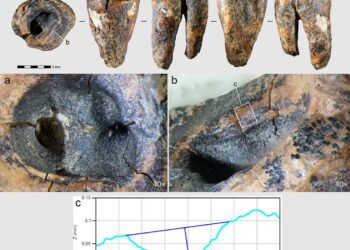
The rounded and polished end of the leg bone indicates people may have used it as a tool. Credit: Z. Laffranchi

Numerous other cave sites across the Iberian Peninsula have shown similar evidence of bone modifications, suggesting shared complex cultural beliefs regarding death and the afterlife. However, the study authors are cautious not to draw definitive conclusions, recognizing that the precise symbolic meanings of these practices require further investigation.
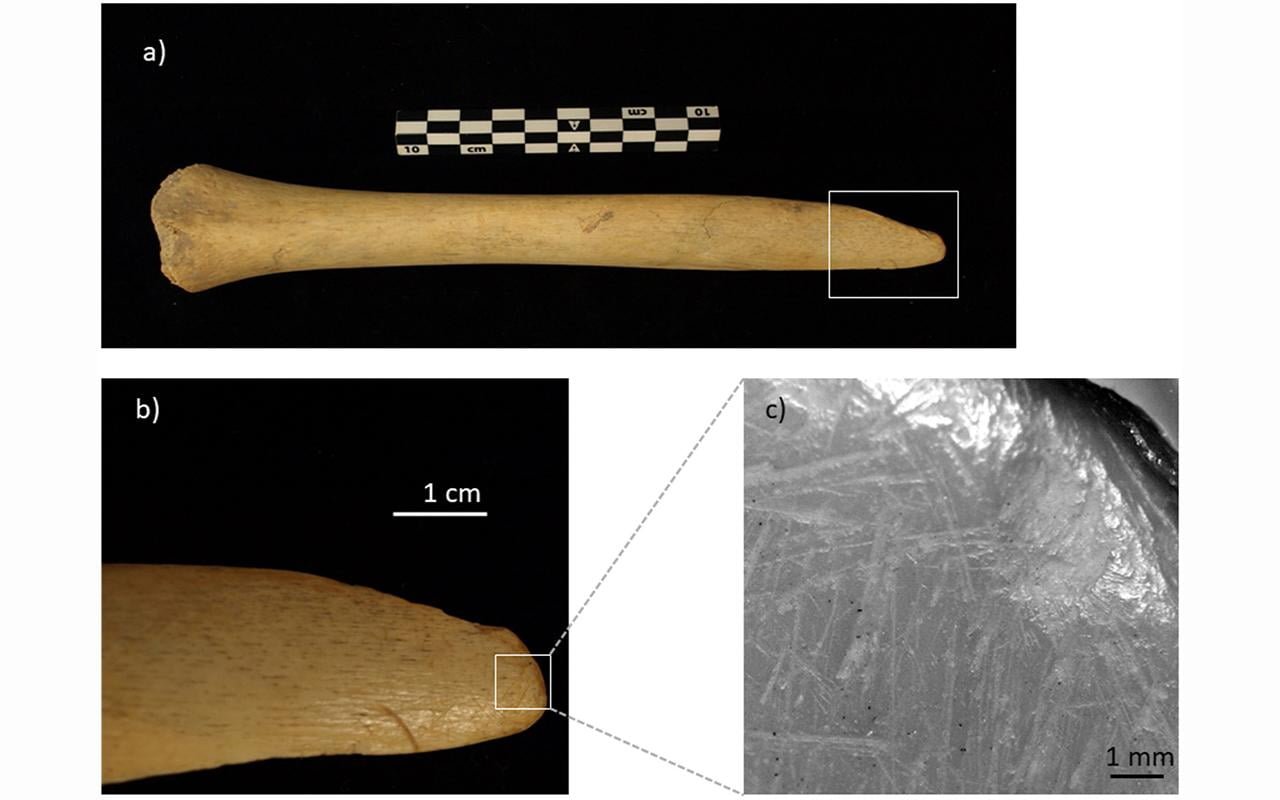
Cup made from prehistoric human skull discovered in Spanish cave
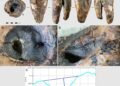
Polish and pits on parts of this human shin-bone showed it had been used as some sort of primitive tool. Credit: Photographs by Z. Laffranchi, digital microscope images by J. Brünig

The extensive time frame during which Cueva de los Marmoles was used for these practices is another fascinating aspect. The site was utilized in three distinct phases between approximately 3,800 BCE and 1,300 BCE, with intervals of up to a thousand years between each period. This raises questions about how knowledge of the site was passed down through generations. Oral histories, myths, or traditions could have played a role in guiding people back to the cave for these unique rituals.

More information: Laffranchi Z, et al. (2023) As above, so below: Deposition, modification, and reutilization of human remains at Marmoles cave (Cueva de los Marmoles: Southern Spain, 4000–1000 cal. BCE). PLoS ONE 18(9): e0291152. https://doi.org/10.1371/journal.pone.0291152
ShareTweetShareShareSend

You May Also Like...

Misread medieval tale misled generations of historians about the Black Death's spread, study finds
Archaeology

Misread medieval tale misled generations of historians about the Black Death’s spread, study finds

November 7, 2025
Signatures meant more in Mesopotamia than they do now − what cylinder seals say about ancient and modern life
Archaeology

Signatures meant more in Mesopotamia than they do now − what cylinder seals say about ancient and modern life

November 7, 2025
Daily life uncovered in Hellenistic military settlement at Pyla-Vigla, Cyprus
Archaeology

New discoveries reveal daily life in a Hellenistic military settlement at Pyla-Vigla, Cyprus

November 7, 2025
Viking treasures unearthed in Sweden reveal a society in transition
Archaeology

Viking treasures unearthed in Sweden reveal a society in transition

November 6, 2025
Archaeologists unearth 5,000-year-old winepress and Canaanite ritual artifacts near Tel Megiddo
Archaeology

Archaeologists unearth 5,000-year-old winepress and Canaanite ritual artifacts near Tel Megiddo

November 5, 2025
5,000-year-old monumental building in Iraq reveals ties to the world’s first cities
Archaeology

5,000-year-old monumental building in Iraq reveals ties to the world’s first cities

November 3, 2025

Follow us


Instagram
245K

Facebook
117K

Threads
45K

LinkedIn
14K

Twitter
6K

YouTube
1K
  • Trending
  • Comments
  • Latest
Shipwreck Salvage. Credit: rawpixel.com / Public Domain

2,000-year-old shipwreck discovered off Turkish coast with remarkably preserved stacked ceramics

July 2, 2025
Viking age DNA reveals 9,000-year-old HIV-resistant gene originating near the Black Sea

Viking age DNA reveals 9,000-year-old HIV-resistant gene originating near the Black Sea

May 18, 2025
Complete copy of the Canopus Decree unearthed in Egypt after 150 years

Complete copy of the Canopus Decree unearthed in Egypt after 150 years

September 13, 2025
Mystery of Armenia’s 6,000-year-old dragon stones solved

Mystery of Armenia’s 6,000-year-old dragon stones solved

September 23, 2025
Moses may be named in ancient Egyptian mine inscriptions, sparking debate over earliest biblical references

Moses may be named in ancient Egyptian mine inscriptions, sparking debate over earliest biblical references

July 31, 2025
Moses may be named in ancient Egyptian mine inscriptions, sparking debate over earliest biblical references

Moses may be named in ancient Egyptian mine inscriptions, sparking debate over earliest biblical references

3D analysis reveals Shroud of Turin image likely came from sculpture, not Jesus’ body

3D analysis reveals Shroud of Turin image likely came from sculpture, not Jesus’ body

$1 million prize offered to decipher 5,300-year-old Indus Valley script

$1 million prize offered to decipher 5,300-year-old Indus Valley script

Oldest ever genetic data from a human relative found in 2-million-year-old fossilized teeth

Oldest ever genetic data from a human relative found in 2-million-year-old fossilized teeth

Exceptionally large Roman shoes discovered at Magna fort near Hadrian’s Wall

Exceptionally large Roman shoes discovered at Magna fort near Hadrian’s Wall

Misread medieval tale misled generations of historians about the Black Death's spread, study finds

Misread medieval tale misled generations of historians about the Black Death’s spread, study finds

November 7, 2025
Signatures meant more in Mesopotamia than they do now − what cylinder seals say about ancient and modern life

Signatures meant more in Mesopotamia than they do now − what cylinder seals say about ancient and modern life

November 7, 2025
Daily life uncovered in Hellenistic military settlement at Pyla-Vigla, Cyprus

New discoveries reveal daily life in a Hellenistic military settlement at Pyla-Vigla, Cyprus

November 7, 2025
Viking treasures unearthed in Sweden reveal a society in transition

Viking treasures unearthed in Sweden reveal a society in transition

November 6, 2025
Archaeologists unearth 5,000-year-old winepress and Canaanite ritual artifacts near Tel Megiddo

Archaeologists unearth 5,000-year-old winepress and Canaanite ritual artifacts near Tel Megiddo

November 5, 2025

Archaeology News online magazine

Archaeology News is an international online magazine that covers all aspects of archaeology.


Categories

  • Academics
    • Books
    • Conferences
    • Universities
  • Articles
  • Download
  • Game
  • News
    • Anthropology
    • Archaeology
    • Paleontology
  • Quiz
  • Tours

Subscribe to our newsletter

© 2024 - Archaeology News Online Magazine. All Rights Reserved.

  • About
  • Privacy Policy
  • Terms of Use
  • Donation
  • Contact

Welcome Back!

Login to your account below

Forgotten Password? Sign Up

Create New Account!

Fill the forms below to register

All fields are required. Log In

Retrieve your password

Please enter your username or email address to reset your password.

Log In

Add New Playlist

Manage Consent
To provide the best experiences, we use technologies like cookies to store and/or access device information. Consenting to these technologies will allow us to process data such as browsing behavior or unique IDs on this site. Not consenting or withdrawing consent, may adversely affect certain features and functions.
Functional Always active
The technical storage or access is strictly necessary for the legitimate purpose of enabling the use of a specific service explicitly requested by the subscriber or user, or for the sole purpose of carrying out the transmission of a communication over an electronic communications network.
Preferences
The technical storage or access is necessary for the legitimate purpose of storing preferences that are not requested by the subscriber or user.
Statistics
The technical storage or access that is used exclusively for statistical purposes. The technical storage or access that is used exclusively for anonymous statistical purposes. Without a subpoena, voluntary compliance on the part of your Internet Service Provider, or additional records from a third party, information stored or retrieved for this purpose alone cannot usually be used to identify you.
Marketing
The technical storage or access is required to create user profiles to send advertising, or to track the user on a website or across several websites for similar marketing purposes.
Manage options Manage services Manage {vendor_count} vendors Read more about these purposes
View preferences
{title} {title} {title}
  • Home
  • News
    • Archaeology
    • Anthropology
    • Paleontology
  • Academics
    • Books
    • Conferences
    • Universities
  • Articles
  • VR Tours
  • Quiz & Game
  • Download
  • Encyclopedia
  • Forum

About  .  Contact  .  Donation

© 2024 - Archaeology News Online Magazine. All Rights Reserved