• About
  • Privacy Policy
  • Terms of Use
  • Donation
  • Contact
No Result
View All Result
Archaeology News
  • Home
  • News
    • Archaeology
    • Anthropology
    • Paleontology
  • Academic
    • Books
    • Conferences
    • Universities
  • Articles
  • VR Tours
  • Quiz & Game
  • Download
  • Encyclopedia
  • Forum
Archaeology News
No Result
View All Result
Home News Archaeology

11,000-year-old feast in Iran’s Zagros Mountains reveals long-distance animal transport and early Neolithic social rituals

by Dario Radley
July 12, 2025

Archaeologists have uncovered new evidence that ancient human communities in western Iran, over 11,000 years ago, were engaging in grand feasting rituals with wild animals transported from far-off places, well before the dawn of agriculture. The research, published in Communications Earth & Environment, is centered around discoveries at the Early Neolithic site of Asiab in the Zagros Mountains.
11,000-year-old feast in Iran’s Zagros Mountains reveals long-distance animal transport and early Neolithic social rituals

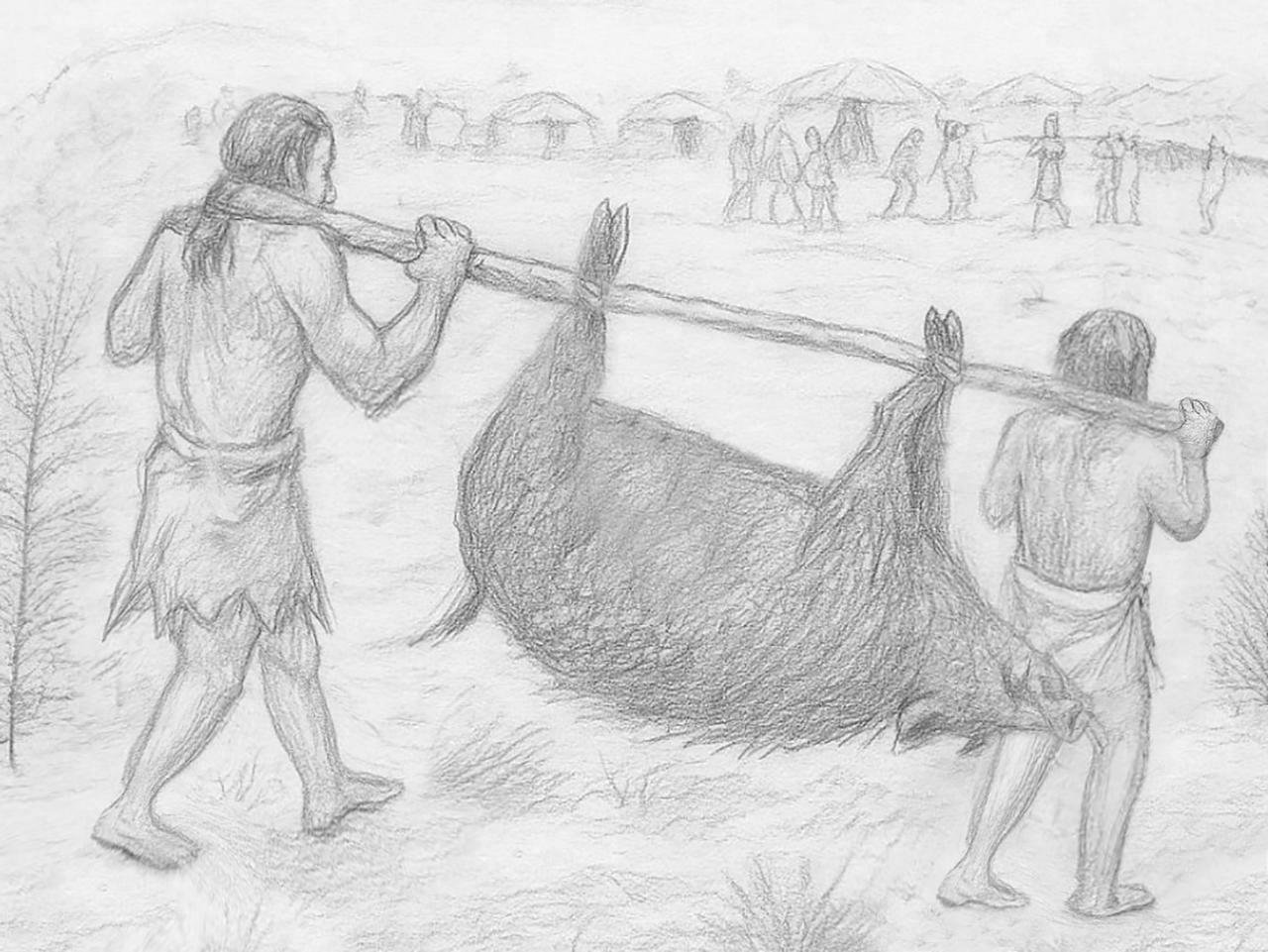
Excavations at Asiab revealed the skeletons of 19 wild boars, slaughtered and buried together in a pit within a circular semi-subterranean building approximately 20 meters in diameter. This structure, which is believed to have served as a communal gathering place, was likely the site of a single large-scale ceremonial feast. Along with the skeletons of the boars, researchers also found brown bear bones and red deer antlers, suggesting a broader ritual context.

What makes this discovery unique is the new understanding of the origin of the animals used in the feast. The researchers used microscopic analysis of tooth enamel, which forms in daily layers like tree rings, to determine where the animals came from. By combining enamel growth patterns with advanced geochemical techniques, including oxygen and strontium isotope analysis and barium mapping, they were able to trace the animals’ movements throughout their lifetimes.

Although the region appears to be well suited to wild boars, isotopic analysis revealed that some of the animals had been moved from as far away as 70 kilometers. Transporting these animals over such hilly country would have required a deliberate and significant effort.
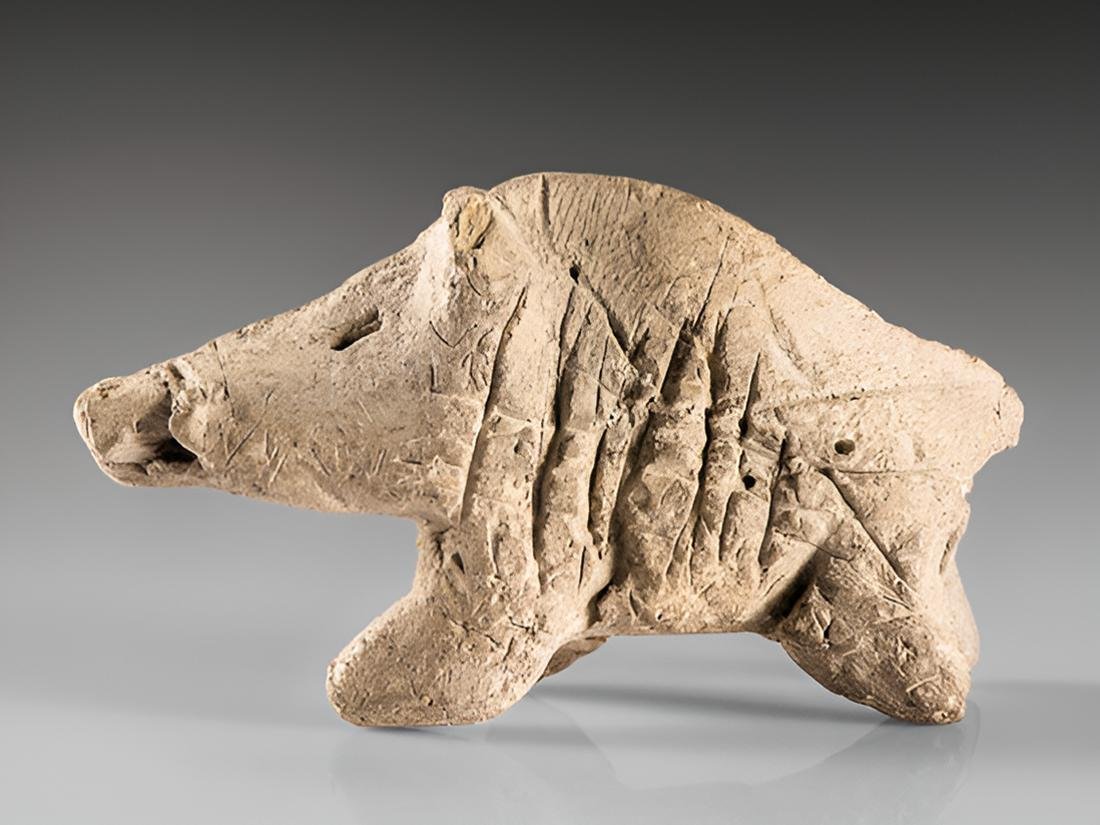
11,000-year-old feast in Iran’s Zagros Mountains reveals long-distance animal transport and early Neolithic social rituals
Clay figurine of a wild boar, Neolithic period. Found at Tepe Sarab, Iran. Credit: National Museum of Iran / CC BY-SA 4.0

Feasting, as researchers believe, was not merely the consumption of food—rather, it was a means of forging and reaffirming social ties. The yield of meat, approximately 700 kilograms as estimated by researchers, could have fed 350 to 1,200 people, many more than a typical Epipaleolithic settlement. This suggests the potential that the event was a mass gathering or that the meat was used ritually, for more than consumption, perhaps even sacrifice.


RelatedStories

New study finds evidence that Aztec King Moctezuma kept a zoo for ritual purposes

New study finds evidence that Aztec King Moctezuma kept a zoo for ritual purposes

January 22, 2026
Elite Anglo-Saxon sand burials and sacrificed horse grave found near Sizewell nuclear site in England

Elite Anglo-Saxon sand burials and sacrificed horse grave found near Sizewell nuclear site in England

January 19, 2026

What makes the Asiab results particularly significant is that they push the date back for these sophisticated social practices to a pre-agricultural, pre-domestication period. While such extensive transport of foodstuffs has been documented at later sites such as Stonehenge, this is the first known instance from a pre-agricultural context.

The Asiab feast reflects an elaborate system of social relations and shared cultural practices that extended across landscapes. As far as the researchers can tell, the symbolic act of collecting distant animals for communal feasting might have contributed to the fostering of the kinds of reciprocal relationships that eventually supported more permanent, agricultural societies.


More information: The Conversation
Publication: Vaiglova, P., Kierdorf, H., Witzel, C. et al.(2025). Transport of animals underpinned ritual feasting at the onset of the Neolithic in southwestern Asia. Commun Earth Environ 6, 519. doi:10.1038/s43247-025-02501-z
Share191Tweet119Share33ShareSend

You May Also Like...

5,500-year-old human skeleton in Colombia reveals earliest evidence of syphilis in the Americas
Anthropology

5,500-year-old human skeleton in Colombia reveals earliest evidence of syphilis in the Americas

January 23, 2026
Republican-era tombs and a Hercules shrine unearthed in eastern Rome reveal centuries of suburban life
Archaeology

Republican-era tombs and a Hercules shrine unearthed in eastern Rome reveal centuries of suburban life

January 23, 2026
New study finds evidence that Aztec King Moctezuma kept a zoo for ritual purposes
Archaeology

New study finds evidence that Aztec King Moctezuma kept a zoo for ritual purposes

January 22, 2026
Roman basilica designed by Vitruvius identified in Fano, ending centuries of debate
Archaeology

Roman basilica designed by Vitruvius identified in Fano, ending centuries of debate

January 21, 2026
Oldest known rock art dated to 67,800 years discovered in Sulawesi cave
Archaeology

Oldest known rock art dated to 67,800 years discovered in Sulawesi cave

January 20, 2026
Elite Anglo-Saxon sand burials and sacrificed horse grave found near Sizewell nuclear site in England
Anthropology

Elite Anglo-Saxon sand burials and sacrificed horse grave found near Sizewell nuclear site in England

January 19, 2026

Comments 0

  1. Editorial Team says:
    1 second ago

    Disclaimer: This website is a science-focused magazine that welcomes both academic and non-academic audiences. Comments are written by users and may include personal opinions or unverified claims. They do not necessarily reflect the views of our editorial team or rely on scientific evidence.

    Comment Policy: We kindly ask all commenters to engage respectfully. Comments that contain offensive, insulting, degrading, discriminatory, or racist content will be automatically removed.

    Reply

Leave a Reply Cancel reply

Your email address will not be published. Required fields are marked *

Follow us


Instagram
244K

Facebook
118K

Threads
45K

LinkedIn
14K

Twitter
6K

YouTube
1K
  • Trending
  • Comments
  • Latest
Shipwreck Salvage. Credit: rawpixel.com / Public Domain

2,000-year-old shipwreck discovered off Turkish coast with remarkably preserved stacked ceramics

July 2, 2025
Viking age DNA reveals 9,000-year-old HIV-resistant gene originating near the Black Sea

Viking age DNA reveals 9,000-year-old HIV-resistant gene originating near the Black Sea

May 18, 2025
A new study suggests the mysterious Voynich Manuscript may be a medieval cipher

A new study suggests the mysterious Voynich Manuscript may be a medieval cipher

January 3, 2026
Moses may be named in ancient Egyptian mine inscriptions, sparking debate over earliest biblical references

Moses may be named in ancient Egyptian mine inscriptions, sparking debate over earliest biblical references

July 31, 2025
Mystery of Armenia’s 6,000-year-old dragon stones solved

Mystery of Armenia’s 6,000-year-old dragon stones solved

September 23, 2025
3D analysis reveals Shroud of Turin image likely came from sculpture, not Jesus’ body

3D analysis reveals Shroud of Turin image likely came from sculpture, not Jesus’ body

Moses may be named in ancient Egyptian mine inscriptions, sparking debate over earliest biblical references

Moses may be named in ancient Egyptian mine inscriptions, sparking debate over earliest biblical references

$1 million prize offered to decipher 5,300-year-old Indus Valley script

$1 million prize offered to decipher 5,300-year-old Indus Valley script

Oldest ever genetic data from a human relative found in 2-million-year-old fossilized teeth

Oldest ever genetic data from a human relative found in 2-million-year-old fossilized teeth

Exceptionally large Roman shoes discovered at Magna fort near Hadrian’s Wall

Exceptionally large Roman shoes discovered at Magna fort near Hadrian’s Wall

5,500-year-old human skeleton in Colombia reveals earliest evidence of syphilis in the Americas

5,500-year-old human skeleton in Colombia reveals earliest evidence of syphilis in the Americas

January 23, 2026
Republican-era tombs and a Hercules shrine unearthed in eastern Rome reveal centuries of suburban life

Republican-era tombs and a Hercules shrine unearthed in eastern Rome reveal centuries of suburban life

January 23, 2026
New study finds evidence that Aztec King Moctezuma kept a zoo for ritual purposes

New study finds evidence that Aztec King Moctezuma kept a zoo for ritual purposes

January 22, 2026
Roman basilica designed by Vitruvius identified in Fano, ending centuries of debate

Roman basilica designed by Vitruvius identified in Fano, ending centuries of debate

January 21, 2026
Oldest known rock art dated to 67,800 years discovered in Sulawesi cave

Oldest known rock art dated to 67,800 years discovered in Sulawesi cave

January 20, 2026

Archaeology News online magazine

Archaeology News is an international online magazine that covers all aspects of archaeology.


Categories

  • Academics
    • Books
    • Conferences
    • Universities
  • Articles
  • Download
  • Game
  • News
    • Anthropology
    • Archaeology
    • Paleontology
  • Quiz
  • Tours

Subscribe to our newsletter

© 2024 - Archaeology News Online Magazine. All Rights Reserved.

  • About
  • Privacy Policy
  • Terms of Use
  • Donation
  • Contact

Welcome Back!

Login to your account below

Forgotten Password? Sign Up

Create New Account!

Fill the forms below to register

All fields are required. Log In

Retrieve your password

Please enter your username or email address to reset your password.

Log In

Add New Playlist

Manage Consent
To provide the best experiences, we use technologies like cookies to store and/or access device information. Consenting to these technologies will allow us to process data such as browsing behavior or unique IDs on this site. Not consenting or withdrawing consent, may adversely affect certain features and functions.
Functional Always active
The technical storage or access is strictly necessary for the legitimate purpose of enabling the use of a specific service explicitly requested by the subscriber or user, or for the sole purpose of carrying out the transmission of a communication over an electronic communications network.
Preferences
The technical storage or access is necessary for the legitimate purpose of storing preferences that are not requested by the subscriber or user.
Statistics
The technical storage or access that is used exclusively for statistical purposes. The technical storage or access that is used exclusively for anonymous statistical purposes. Without a subpoena, voluntary compliance on the part of your Internet Service Provider, or additional records from a third party, information stored or retrieved for this purpose alone cannot usually be used to identify you.
Marketing
The technical storage or access is required to create user profiles to send advertising, or to track the user on a website or across several websites for similar marketing purposes.
  • Manage options
  • Manage services
  • Manage {vendor_count} vendors
  • Read more about these purposes
View preferences
  • {title}
  • {title}
  • {title}
  • Home
  • News
    • Archaeology
    • Anthropology
    • Paleontology
  • Academic
    • Books
    • Conferences
    • Universities
  • Articles
  • VR Tours
  • Quiz & Game
  • Download
  • Encyclopedia
  • Forum

About  .  Contact  .  Donation

© 2024 - Archaeology News Online Magazine. All Rights Reserved