• About
  • Privacy Policy
  • Terms of Use
  • Donation
  • Contact
No Result
View All Result
Archaeology News
  • Home
  • News
    • Archaeology
    • Anthropology
    • Paleontology
  • Academic
    • Books
    • Conferences
    • Universities
  • Articles
  • VR Tours
  • Quiz & Game
  • Download
  • Encyclopedia
  • Forum
Archaeology News
No Result
View All Result
Home News Archaeology

Archaeologists unearth Roman triumphal arch in Serbia

by Dario Radley
January 24, 2024

Researchers in Serbia have unearthed a rare ancient Roman triumphal arch at the historic site of Viminacium, near Kostolac, approximately 70 kilometers east of Belgrade. The discovery, made during the excavation of the main street of Viminacium, marks a pivotal moment in the region’s history.
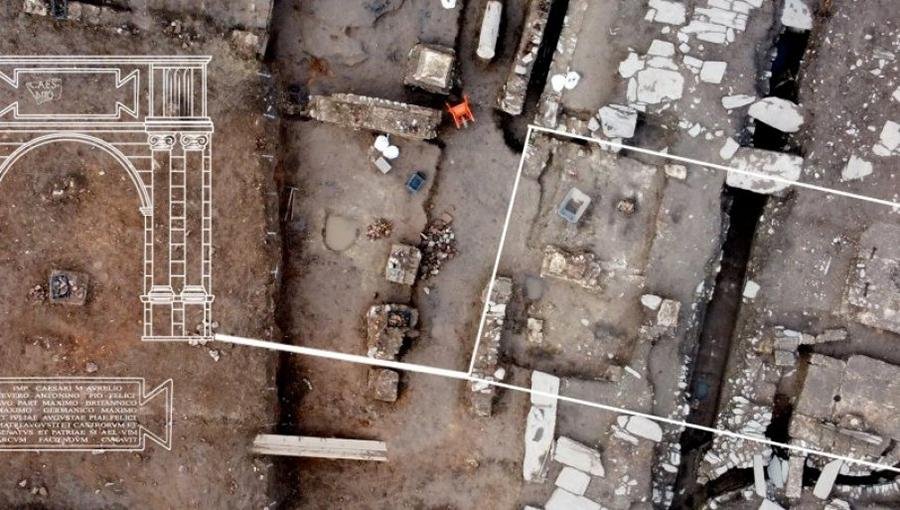
Archaeologists unearth Roman triumphal arch in Serbia
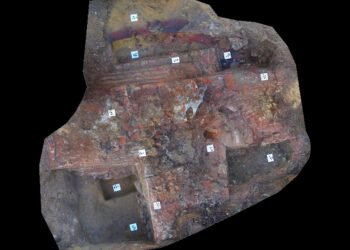
Archaeologists have unearthed a rare ancient Roman triumphal arch at the historic site of Viminacium, Serbia. Credit: Institute of Archaeology, Belgrade

The triumphal arch, dating back to the third century CE, is a monumental find, as Serbia joins a select group of countries boasting such architectural marvels. Leading archaeologist Miomir Korac, who spearheaded the excavation, told Reuters “This is the first such triumphal arch in this area… It can be dated to the first decades of the third century CE.”

The triumphal arch was revealed in December, adding to the already impressive array of historical artifacts found at Viminacium, a sprawling Roman city that existed between the first and sixth centuries. The city, with a population of 45,000 people, boasted a multitude of structures, including a hippodrome, fortifications, a forum, palace, temples, amphitheater, aqueducts, baths, and workshops.

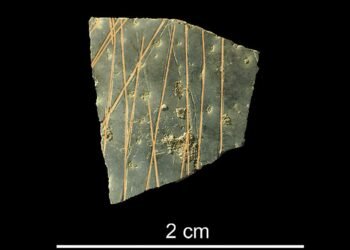
The identity of the Roman emperor to whom the triumphal arch was dedicated became apparent through the discovery of a fragment of a marble slab with the inscription “CAES/ANTO.” This inscription led researchers to conclude that the arch honored Emperor Marcus Aurelius Antoninus, commonly known as Caracalla, who reigned from 198 to 217 CE.
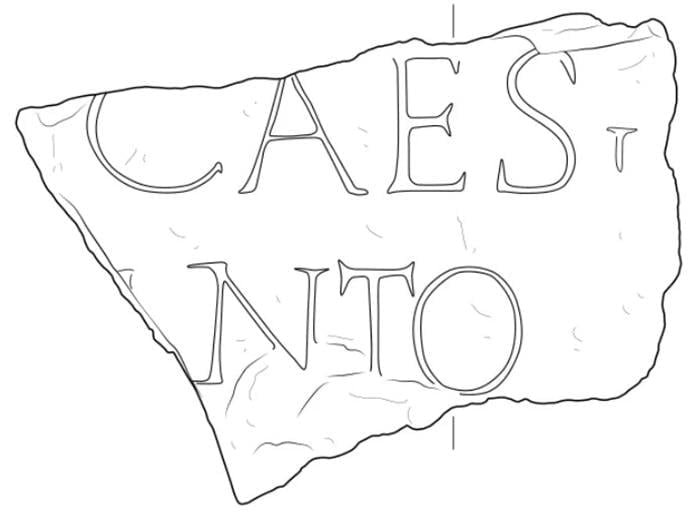
Archaeologists unearth Roman triumphal arch in Serbia
Marble slab with the inscription “CAES/ANTO.” Credit: Archaeological Institute, Belgrade
Archaeologists unearth Roman triumphal arch in Serbia
A reconstruction of the Caracalla triumphal arch. Credit: Archaeological Institute, Belgrade
Archaeologists unearth Roman triumphal arch in Serbia
A reconstruction of the Caracalla triumphal arch. Credit: Archaeological Institute, Belgrade

Mladen Jovicic, another archaeologist involved in the project, expressed optimism about the ongoing excavations. “We are hoping to find more pieces… We have found one finely made pillar, beams, but we would like to find more from the inscription on the arch,” said Jovicic. The researchers believe that Caracalla’s elevation to emperor in Viminacium is a key historical event associated with the construction of the triumphal arch.


RelatedStories

The “Princess” of Bagicz re-dated: tree rings resolve the mystery of a rare Roman-era log coffin

The “Princess” of Bagicz re-dated: tree rings resolve the mystery of a rare Roman-era log coffin

February 20, 2026
Drone surveys reveal Roman forum and previously unknown monumental theater at Fioccaglia

Drone surveys reveal Roman forum and previously unknown monumental theater at Fioccaglia

February 15, 2026

Dr. Ilija Danković, part of the expert archaeological team, highlighted the unexpected nature of the discovery. “We were completely surprised when we discovered that a section of the main street of Viminacium lacked a roadway and its substructure. Instead, we found a square-shaped foundation made of massive blocks of limestone. We continued with excavations and discovered three more such foundations! It became clear that these were the foundations of tetrapylons, a building on four pillars, with passages on all four sides. There was no doubt that it was one of the symbols of Roman architecture: a triumphal arch or the triumphal gate,” said Dr. Danković in his statement to the local press.

The Viminacium triumphal arch, built in the form of a tetrapylon with a single passage and an inscription field above the arched part, has dimensions of 10.40 by 6.25 meters. Remarkably, these dimensions closely resemble the Arco dei Gavi triumphal arch in Verona.

Archaeologists working on the site have also reconstructed the appearance of the Viminacium arch by comparing it to Caracalla’s arch in Djemila, Algeria, and using architectural parts found on-site. Caracalla, known for his transformative Edict of 212 CE granting Roman citizenship to all free inhabitants of the Roman Empire, played a crucial role in shaping the empire’s character.

Prof. Dr. Miomir Korać emphasized the significance of Viminacium in the proclamation of Caracalla as Caesar. “Viminacium was undoubtedly chosen because this area provided the best soldiers of the empire. Several of the best legions had to attend the ceremony of Caracalla’s proclamation as Caesar, and the proclamation ceremony took place in the 400-meter-long hippodrome, which we now know for sure existed in Viminacium,” stated Prof. Dr. Korać.

The ongoing excavations at Viminacium, which began in 1882, have uncovered a wealth of artifacts, including two Roman ships, golden tiles, coins, jade sculptures, religious items, mosaics, frescoes, weapons, and even remains of three mammoths. The vastness of the site, estimated at 450 hectares, and the absence of modern urban development have allowed archaeologists to explore only around 5% of the city, leaving ample room for future discoveries.


Share2Tweet1ShareShareSend

You May Also Like...

2,000-year-old human and animal footprints discovered at Lunan Bay, Scotland
Archaeology

2,000-year-old human and animal footprints discovered at Lunan Bay, Scotland

February 20, 2026
The “Princess” of Bagicz re-dated: tree rings resolve the mystery of a rare Roman-era log coffin
Anthropology

The “Princess” of Bagicz re-dated: tree rings resolve the mystery of a rare Roman-era log coffin

February 20, 2026
1.77-million-year-old Homo erectus skulls in China show early humans reached Asia sooner than believed
Anthropology

1.77-million-year-old Homo erectus skulls in China show early humans reached Asia sooner than believed

February 19, 2026
Hidden 17th-century bastion fort discovered in Świerże, eastern Poland
Archaeology

Hidden 17th-century bastion fort discovered in Świerże, eastern Poland

February 19, 2026
Seabird guano fueled the rise of Peru’s Chincha Kingdom, isotope study finds
Archaeology

Seabird guano fueled the rise of Peru’s Chincha Kingdom, isotope study finds

February 19, 2026
Historic cannon unearthed during Hull’s Queen’s Gardens restoration in the UK
Archaeology

Historic cannon unearthed during Hull’s Queen’s Gardens restoration in England

February 18, 2026

Follow us


Instagram
244K

Facebook
118K

Threads
45K

LinkedIn
14K

Twitter
6K

YouTube
1K
  • Trending
  • Comments
  • Latest
Shipwreck Salvage. Credit: rawpixel.com / Public Domain

2,000-year-old shipwreck discovered off Turkish coast with remarkably preserved stacked ceramics

July 2, 2025
Viking age DNA reveals 9,000-year-old HIV-resistant gene originating near the Black Sea

Viking age DNA reveals 9,000-year-old HIV-resistant gene originating near the Black Sea

May 18, 2025
A new study suggests the mysterious Voynich Manuscript may be a medieval cipher

A new study suggests the mysterious Voynich Manuscript may be a medieval cipher

January 3, 2026
Moses may be named in ancient Egyptian mine inscriptions, sparking debate over earliest biblical references

Moses may be named in ancient Egyptian mine inscriptions, sparking debate over earliest biblical references

July 31, 2025
Mystery of Armenia’s 6,000-year-old dragon stones solved

Mystery of Armenia’s 6,000-year-old dragon stones solved

September 23, 2025
3D analysis reveals Shroud of Turin image likely came from sculpture, not Jesus’ body

3D analysis reveals Shroud of Turin image likely came from sculpture, not Jesus’ body

Moses may be named in ancient Egyptian mine inscriptions, sparking debate over earliest biblical references

Moses may be named in ancient Egyptian mine inscriptions, sparking debate over earliest biblical references

$1 million prize offered to decipher 5,300-year-old Indus Valley script

$1 million prize offered to decipher 5,300-year-old Indus Valley script

Oldest ever genetic data from a human relative found in 2-million-year-old fossilized teeth

Oldest ever genetic data from a human relative found in 2-million-year-old fossilized teeth

Exceptionally large Roman shoes discovered at Magna fort near Hadrian’s Wall

Exceptionally large Roman shoes discovered at Magna fort near Hadrian’s Wall

2,000-year-old human and animal footprints discovered at Lunan Bay, Scotland

2,000-year-old human and animal footprints discovered at Lunan Bay, Scotland

February 20, 2026
The “Princess” of Bagicz re-dated: tree rings resolve the mystery of a rare Roman-era log coffin

The “Princess” of Bagicz re-dated: tree rings resolve the mystery of a rare Roman-era log coffin

February 20, 2026
1.77-million-year-old Homo erectus skulls in China show early humans reached Asia sooner than believed

1.77-million-year-old Homo erectus skulls in China show early humans reached Asia sooner than believed

February 19, 2026
Hidden 17th-century bastion fort discovered in Świerże, eastern Poland

Hidden 17th-century bastion fort discovered in Świerże, eastern Poland

February 19, 2026
Seabird guano fueled the rise of Peru’s Chincha Kingdom, isotope study finds

Seabird guano fueled the rise of Peru’s Chincha Kingdom, isotope study finds

February 19, 2026

Archaeology News online magazine

Archaeology News is an international online magazine that covers all aspects of archaeology.


Categories

  • Academics
    • Books
    • Conferences
    • Universities
  • Articles
  • Download
  • Game
  • News
    • Anthropology
    • Archaeology
    • Paleontology
  • Quiz
  • Tours

Subscribe to our newsletter

© 2024 - Archaeology News Online Magazine. All Rights Reserved.

  • About
  • Privacy Policy
  • Terms of Use
  • Donation
  • Contact

Manage Consent
To provide the best experiences, we use technologies like cookies to store and/or access device information. Consenting to these technologies will allow us to process data such as browsing behavior or unique IDs on this site. Not consenting or withdrawing consent, may adversely affect certain features and functions.
Functional Always active
The technical storage or access is strictly necessary for the legitimate purpose of enabling the use of a specific service explicitly requested by the subscriber or user, or for the sole purpose of carrying out the transmission of a communication over an electronic communications network.
Preferences
The technical storage or access is necessary for the legitimate purpose of storing preferences that are not requested by the subscriber or user.
Statistics
The technical storage or access that is used exclusively for statistical purposes. The technical storage or access that is used exclusively for anonymous statistical purposes. Without a subpoena, voluntary compliance on the part of your Internet Service Provider, or additional records from a third party, information stored or retrieved for this purpose alone cannot usually be used to identify you.
Marketing
The technical storage or access is required to create user profiles to send advertising, or to track the user on a website or across several websites for similar marketing purposes.
  • Manage options
  • Manage services
  • Manage {vendor_count} vendors
  • Read more about these purposes
View preferences
  • {title}
  • {title}
  • {title}
  • Home
  • News
    • Archaeology
    • Anthropology
    • Paleontology
  • Academic
    • Books
    • Conferences
    • Universities
  • Articles
  • VR Tours
  • Quiz & Game
  • Download
  • Encyclopedia
  • Forum

About  .  Contact  .  Donation

© 2024 - Archaeology News Online Magazine. All Rights Reserved