• About
  • Privacy Policy
  • Terms of Use
  • Donation
  • Contact
No Result
View All Result
Archaeology News
  • Home
  • News
    • Archaeology
    • Anthropology
    • Paleontology
  • Academic
    • Books
    • Conferences
    • Universities
  • Articles
  • VR Tours
  • Quiz & Game
  • Download
  • Encyclopedia
  • Forum
Archaeology News
No Result
View All Result
Home News Archaeology

Prehistoric henge reveals Saint Guthlac’s realm and centuries-old sacred site in Lincolnshire

by Dario Radley
April 8, 2024

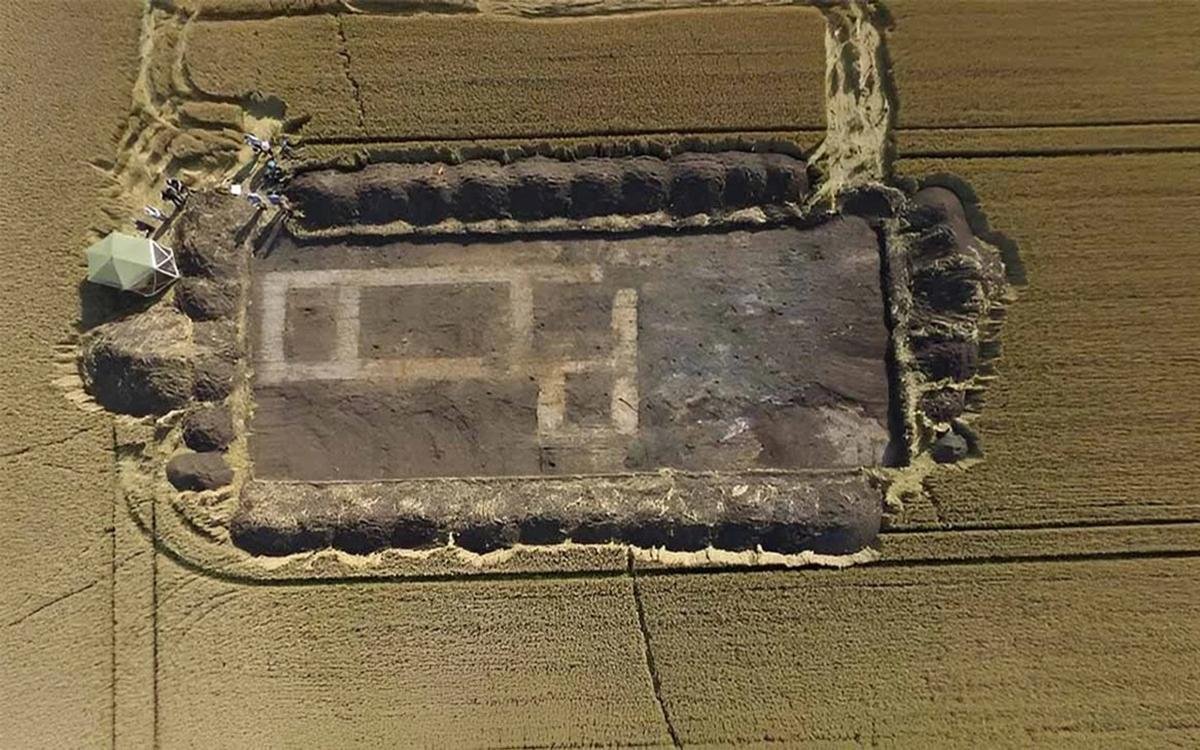
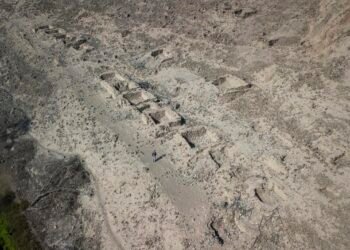
Archaeologists from Newcastle University, in collaboration with experts from the University of Sheffield, have recently conducted excavations near Crowland, Lincolnshire, unearthing a remarkable and multifaceted sacred landscape that spans centuries.
Prehistoric henge reveals Saint Guthlac's realm and centuries-old sacred site in Lincolnshire
An aerial view of the excavation site at Crowland, Lincolnshire. Credit: The Anchor Church Field Project

At the heart of this exploration lies the search for the hermitage of Saint Guthlac, a revered figure in local folklore and early Christian history. Saint Guthlac, known for his ascetic lifestyle and renunciation of wealth as a nobleman’s son, established his hermitage in the early 8th century on what was believed to be a previously looted burial mound. This site, steeped in legend and documented in the Vita Sancti Guthlaci, written by the monk Felix shortly after Guthlac’s death, attracted pilgrims and eventually led to the founding of Crowland Abbey in the 10th century.

For years, the exact location of Guthlac’s hermitage remained a mystery, with Anchor Church Field often considered a likely candidate. However, extensive excavation in this area has been hindered by agricultural activity until recent years.

Surprisingly, the archaeological team’s findings surpassed expectations. They unearthed a previously unknown Late Neolithic or early Bronze Age henge, one of the largest ever discovered in eastern England. This circular earthwork, strategically positioned on a peninsula amid marshes and waterways, would have been a prominent feature of the landscape, serving as a focal point for ceremonial activities.
Prehistoric henge reveals Saint Guthlac's realm and centuries-old sacred site in Lincolnshire
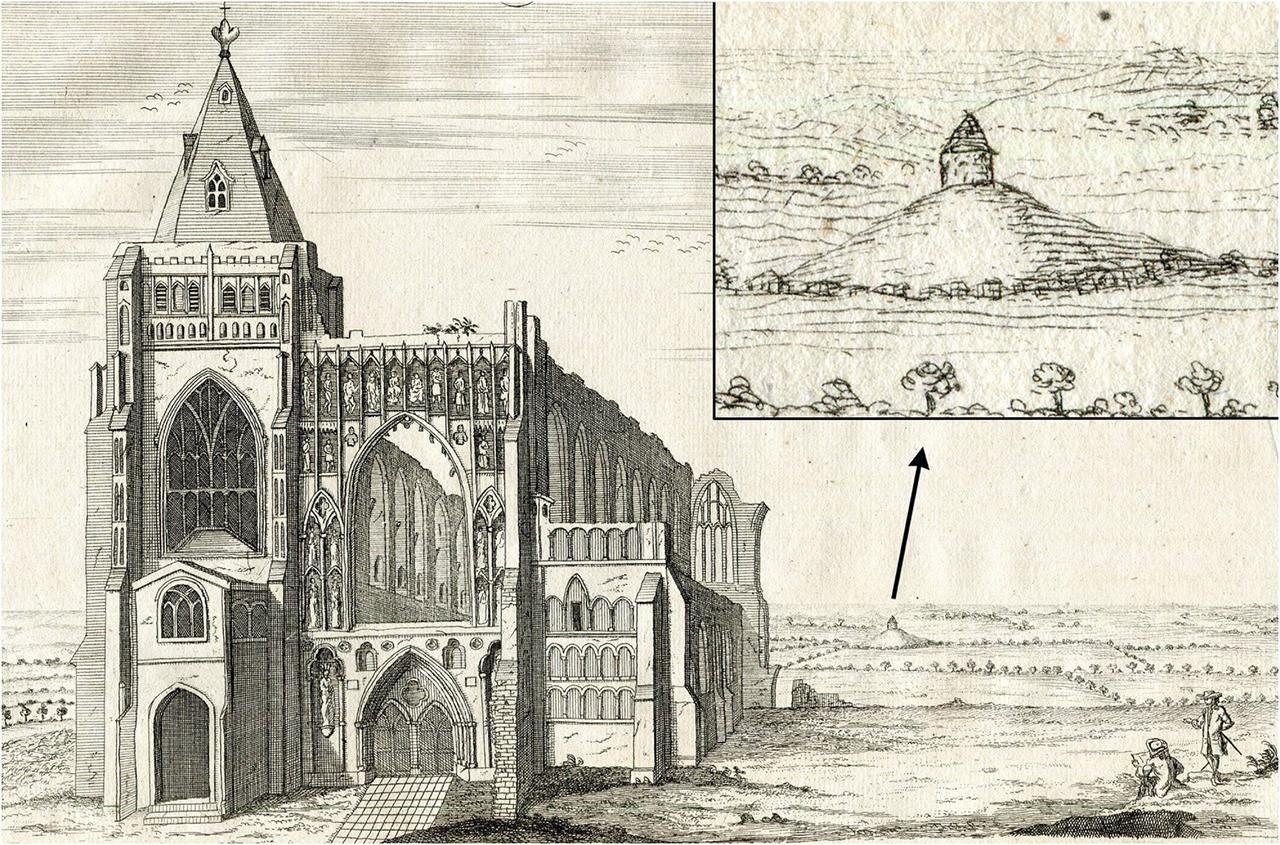
Stukeley’s view of the western prospect of Crowland Abbey, 1724, including a depiction of a building at Anchor Church Field located on a distinctive mound. Credit: Wright, D. W. et al., Journal of Field Archaeology 2024

The henge, later reoccupied during Guthlac’s era, yielded artifacts such as pottery, bone combs, and fragments of high-status drinking vessels from the Anglo-Saxon period. Dr. Duncan Wright, Lecturer in Medieval Archaeology at Newcastle University, “We know that many prehistoric monuments were reused by the Anglo-Saxons, but to find a henge—especially one that was previously unknown—occupied in this way is really quite rare.”

RelatedStories

3,400-year-old Nördlingen bronze sword reveals advanced metalworking techniques

3,400-year-old Nördlingen bronze sword reveals advanced metalworking techniques

February 14, 2026
Rich medieval Christians buried ‘closer to God’ even with leprosy or tuberculosis, archaeologists find

Rich medieval Christians buried ‘closer to God’ even with leprosy or tuberculosis, archaeologists find

February 12, 2026

Furthermore, the excavation uncovered remnants of a 12th-century hall and chapel, likely constructed by the Abbots of Crowland to honor Saint Pega, Guthlac’s sister, who was also a hermit of note in the region. This complex would have provided accommodations for high-status pilgrims visiting Crowland, further solidifying the site’s importance as a religious center. A significant discovery near the 12th-century hall—a stone-lined pit thought to be a well—may have served as the setting for a large cross.

As the centuries passed, the landscape of Crowland underwent transformations, with the draining of marshlands and conversion to farmland altering the topography. Despite these changes, the site retained its sacred significance, as evidenced by historical records of continued veneration well into the 18th century.

Dr. Hugh Willmott from the University of Sheffield emphasized, “By examining the archaeological evidence we uncovered and looking at historic texts, it’s clear that even in later years Anchor Church Field continued to be seen as a special place worthy of veneration.” He added, “Guthlac and Pega were very important figures in the early Christian history of England, so it is hugely exciting that we’ve been able to determine the chronology of what is clearly a historically significant site.”

More information: Newcastle University
Wright, D. W., & Willmott, H. (2024). Sacred landscapes and deep time: Mobility, memory, and monasticism on Crowland. Journal of Field Archaeology, 1–20. doi:10.1080/00934690.2024.2332853

Share2Tweet1ShareShareSend

You May Also Like...

Chalcolithic cornets at Teleilat Ghassul reveal ritual lamp use in Jordan’s prehistoric communities
Archaeology

Chalcolithic cornets at Teleilat Ghassul reveal ritual lamp use in Jordan’s prehistoric communities

February 16, 2026
DNA study reveals 3,000 years of genetic stability in Europe’s Low Countries before Bell Beaker expansion
Anthropology

DNA study reveals 3,000 years of genetic stability in Europe’s Low Countries before Bell Beaker expansion

February 16, 2026
Second Temple period stone vessel workshop unearthed on Mount Scopus after antiquities theft arrests
Archaeology

Second Temple period stone vessel workshop unearthed on Mount Scopus after antiquities theft arrests

February 16, 2026
10,000 years of rock art discovered at Umm Arak Plateau in Egypt’s southern Sinai
Archaeology

10,000 years of rock art discovered at Umm Arak Plateau in Egypt’s southern Sinai

February 15, 2026
Drone surveys reveal Roman forum and previously unknown monumental theater at Fioccaglia
Archaeology

Drone surveys reveal Roman forum and previously unknown monumental theater at Fioccaglia

February 15, 2026
Earliest known burial in Northern Britain identified as young girl through DNA analysis
Anthropology

Earliest known burial in Northern Britain identified as young girl through DNA analysis

February 14, 2026

Follow us


Instagram
244K

Facebook
118K

Threads
45K

LinkedIn
14K

Twitter
6K

YouTube
1K
  • Trending
  • Comments
  • Latest
Shipwreck Salvage. Credit: rawpixel.com / Public Domain

2,000-year-old shipwreck discovered off Turkish coast with remarkably preserved stacked ceramics

July 2, 2025
Viking age DNA reveals 9,000-year-old HIV-resistant gene originating near the Black Sea

Viking age DNA reveals 9,000-year-old HIV-resistant gene originating near the Black Sea

May 18, 2025
A new study suggests the mysterious Voynich Manuscript may be a medieval cipher

A new study suggests the mysterious Voynich Manuscript may be a medieval cipher

January 3, 2026
Moses may be named in ancient Egyptian mine inscriptions, sparking debate over earliest biblical references

Moses may be named in ancient Egyptian mine inscriptions, sparking debate over earliest biblical references

July 31, 2025
Mystery of Armenia’s 6,000-year-old dragon stones solved

Mystery of Armenia’s 6,000-year-old dragon stones solved

September 23, 2025
3D analysis reveals Shroud of Turin image likely came from sculpture, not Jesus’ body

3D analysis reveals Shroud of Turin image likely came from sculpture, not Jesus’ body

Moses may be named in ancient Egyptian mine inscriptions, sparking debate over earliest biblical references

Moses may be named in ancient Egyptian mine inscriptions, sparking debate over earliest biblical references

$1 million prize offered to decipher 5,300-year-old Indus Valley script

$1 million prize offered to decipher 5,300-year-old Indus Valley script

Oldest ever genetic data from a human relative found in 2-million-year-old fossilized teeth

Oldest ever genetic data from a human relative found in 2-million-year-old fossilized teeth

Exceptionally large Roman shoes discovered at Magna fort near Hadrian’s Wall

Exceptionally large Roman shoes discovered at Magna fort near Hadrian’s Wall

Chalcolithic cornets at Teleilat Ghassul reveal ritual lamp use in Jordan’s prehistoric communities

Chalcolithic cornets at Teleilat Ghassul reveal ritual lamp use in Jordan’s prehistoric communities

February 16, 2026
DNA study reveals 3,000 years of genetic stability in Europe’s Low Countries before Bell Beaker expansion

DNA study reveals 3,000 years of genetic stability in Europe’s Low Countries before Bell Beaker expansion

February 16, 2026
Second Temple period stone vessel workshop unearthed on Mount Scopus after antiquities theft arrests

Second Temple period stone vessel workshop unearthed on Mount Scopus after antiquities theft arrests

February 16, 2026
10,000 years of rock art discovered at Umm Arak Plateau in Egypt’s southern Sinai

10,000 years of rock art discovered at Umm Arak Plateau in Egypt’s southern Sinai

February 15, 2026
Drone surveys reveal Roman forum and previously unknown monumental theater at Fioccaglia

Drone surveys reveal Roman forum and previously unknown monumental theater at Fioccaglia

February 15, 2026

Archaeology News online magazine

Archaeology News is an international online magazine that covers all aspects of archaeology.


Categories

  • Academics
    • Books
    • Conferences
    • Universities
  • Articles
  • Download
  • Game
  • News
    • Anthropology
    • Archaeology
    • Paleontology
  • Quiz
  • Tours

Subscribe to our newsletter

© 2024 - Archaeology News Online Magazine. All Rights Reserved.

  • About
  • Privacy Policy
  • Terms of Use
  • Donation
  • Contact

Manage Consent
To provide the best experiences, we use technologies like cookies to store and/or access device information. Consenting to these technologies will allow us to process data such as browsing behavior or unique IDs on this site. Not consenting or withdrawing consent, may adversely affect certain features and functions.
Functional Always active
The technical storage or access is strictly necessary for the legitimate purpose of enabling the use of a specific service explicitly requested by the subscriber or user, or for the sole purpose of carrying out the transmission of a communication over an electronic communications network.
Preferences
The technical storage or access is necessary for the legitimate purpose of storing preferences that are not requested by the subscriber or user.
Statistics
The technical storage or access that is used exclusively for statistical purposes. The technical storage or access that is used exclusively for anonymous statistical purposes. Without a subpoena, voluntary compliance on the part of your Internet Service Provider, or additional records from a third party, information stored or retrieved for this purpose alone cannot usually be used to identify you.
Marketing
The technical storage or access is required to create user profiles to send advertising, or to track the user on a website or across several websites for similar marketing purposes.
  • Manage options
  • Manage services
  • Manage {vendor_count} vendors
  • Read more about these purposes
View preferences
  • {title}
  • {title}
  • {title}
  • Home
  • News
    • Archaeology
    • Anthropology
    • Paleontology
  • Academic
    • Books
    • Conferences
    • Universities
  • Articles
  • VR Tours
  • Quiz & Game
  • Download
  • Encyclopedia
  • Forum

About  .  Contact  .  Donation

© 2024 - Archaeology News Online Magazine. All Rights Reserved