• About
  • Privacy Policy
  • Terms of Use
  • Donation
  • Contact
No Result
View All Result
Archaeology News
  • Home
  • News
    • Archaeology
    • Anthropology
    • Paleontology
  • Academic
    • Books
    • Conferences
    • Universities
  • Articles
  • VR Tours
  • Quiz & Game
  • Download
  • Encyclopedia
  • Forum
Archaeology News
No Result
View All Result
Home News Anthropology

Archaeologists identify Zagros Mountains as likely place for Neanderthal and Homo Sapiens interbreeding

New research sheds light on a pivotal region in human evolutionary history—the Zagros Mountains, which stretch across modern-day Iran, Iraq, and southeastern Turkey.

by Dario Radley
September 9, 2024

According to a study published in Scientific Reports, a team of archaeologists has identified the Zagros Mountains as a likely area where interbreeding between Neanderthals and anatomically modern humans (AMHs) occurred during the Late Pleistocene.

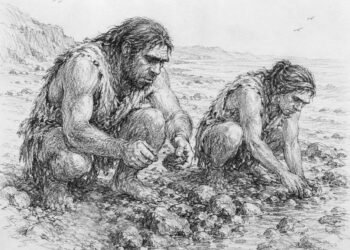
A reconstruction of a Neanderthal man.
A reconstruction of an elderly Neanderthal man. Credit: Neanderthal-Museum, Mettmann

This discovery, based on advanced ecological niche modeling and geographical information systems (GIS), offers new insights into where these two human species may have crossed paths, exchanged genes, and shaped the genetic makeup of modern populations.

While the genetic intermingling of Neanderthals and AMHs is well-documented, the exact locations where such interactions occurred have been unclear. However, this recent study, led by Saman Guran from the University of Cologne in Germany, points to the Zagros Mountains as a critical area. The researchers focused on a period known as Marine Isotope Stage 5 (MIS 5), which occurred between 120,000 and 80,000 years ago. Using climate and environmental data, the team reconstructed the possible ranges of Neanderthals and modern humans and identified overlapping areas where these species likely met.

Archaeologists identify Zagros Mountains as likely place for Neanderthal and Homo Sapiens interbreeding
Habitat suitability models of the two Homo species and their potential contact and interbreeding zones in Southwest Asia and Southeast Europe. Credit: Guran et al., Scientific Reports (2024) CC BY 4.0

The Zagros region, known for its steep cliffs and rich biodiversity, stood out as an ideal environment for both species. The area’s varied topography and warm climate would have made it an attractive habitat for Neanderthals, who were accustomed to the harsher, cooler climates of Europe. At the same time, it lay directly in the path of modern humans migrating out of Africa, making it a natural crossroads for the two species.

“The possibility of attracting different hominin groups in the Zagros Mountains is justified by the geographical conditions of this region,” the research team noted in the study. This area, they explained, sits at the border between the Palearctic and Afrotropical biogeographical zones, which likely facilitated the northward movement of modern humans and the southward dispersal of Neanderthals during climatic shifts in the Pleistocene.
RelatedStories

Neanderthals gathered shellfish like modern humans 115,000 years ago, study finds

Neanderthals gathered shellfish like modern humans 115,000 years ago, study finds

May 21, 2026
Oldest known dental treatment found in 59,000-year-old Neanderthal tooth from Siberia

Oldest known dental treatment found in 59,000-year-old Neanderthal tooth from Siberia

May 14, 2026

Fossil evidence from the Zagros region further supports this theory. Shanidar Cave in the northern Zagros, for instance, has yielded the remains of ten Neanderthals, some of which were buried with flowers, indicating that Neanderthals may have had ritual burial practices. Similarly, the Wezmeh and Bisetun caves in Iran have revealed Neanderthal fossils, while a Neanderthal tooth discovered at the Bawa Yawan rock shelter provides crucial evidence that Neanderthals were present in the area at a time when interbreeding with AMHs could have taken place.

Archaeologists identify Zagros Mountains as likely place for Neanderthal and Homo Sapiens interbreeding
Distribution of key archaeological sites dating between MIS 5 to 3 across southwest Asia and southeast Europe. Credit: Guran et al., Scientific Reports (2024)

While physical evidence is often scarce, the team’s use of ecological niche modeling offers a novel approach to identifying potential interbreeding zones. By analyzing factors such as temperature, precipitation, and terrain, they were able to pinpoint the Zagros Mountains as a likely meeting ground. The models suggest that during periods of climatic shifts, this mountainous area became more favorable for both Neanderthals and modern humans, increasing the chances of interaction and, eventually, interbreeding.

The implications of this interbreeding are profound. Genetic studies have shown that Neanderthal DNA still exists in many people today, particularly those of non-African descent. This inherited DNA influences various traits, including immune responses and skin pigmentation, highlighting the enduring impact of these ancient encounters on modern human biology.

More information: Guran, S.H., Yousefi, M., Kafash, A. et al. (2024). Reconstructing contact and a potential interbreeding geographical zone between Neanderthals and anatomically modern humans. Sci Rep 14, 20475. DOI:10.1038/s41598-024-70206-y

Share:

Share on Facebook Share on X (Twitter) Share on LinkedIn Share on Pinterest Share on WhatsApp Share on Email

You May Also Like...

Nondestructive DNA sampling uncovers 1,300 years of history preserved in ancient parchments
Archaeology

Nondestructive DNA sampling uncovers 1,300 years of history preserved in ancient parchments

May 22, 2026
2,300-year-old Iron Age riverside structure discovered beneath German city astonishes archaeologists
Archaeology

2,300-year-old Iron Age riverside structure discovered beneath German city

May 22, 2026
100 Abbasid-era gold jewelry pieces found at ancient Dariyah site in Saudi Arabia
Archaeology

100 Abbasid-era gold jewelry pieces found at ancient Dariyah site in Saudi Arabia

May 22, 2026
Neanderthals gathered shellfish like modern humans 115,000 years ago, study finds
Anthropology

Neanderthals gathered shellfish like modern humans 115,000 years ago, study finds

May 21, 2026
Ancient pigeons were already living alongside humans 3,400 years ago, study finds
Archaeology

Ancient pigeons were already living alongside humans 3,400 years ago, study finds

May 21, 2026
Ancient Venetic sanctuary with rare inscriptions unearthed beneath road project in Italy
Archaeology

Ancient Venetic sanctuary with rare inscriptions unearthed beneath road project in Italy

May 21, 2026

Follow us


Instagram
242K

Facebook
117K

Threads
46K

LinkedIn
14K

Twitter
6K

YouTube
1K
Nondestructive DNA sampling uncovers 1,300 years of history preserved in ancient parchments

Nondestructive DNA sampling uncovers 1,300 years of history preserved in ancient parchments

May 22, 2026
2,300-year-old Iron Age riverside structure discovered beneath German city astonishes archaeologists

2,300-year-old Iron Age riverside structure discovered beneath German city

May 22, 2026
100 Abbasid-era gold jewelry pieces found at ancient Dariyah site in Saudi Arabia

100 Abbasid-era gold jewelry pieces found at ancient Dariyah site in Saudi Arabia

May 22, 2026
Neanderthals gathered shellfish like modern humans 115,000 years ago, study finds

Neanderthals gathered shellfish like modern humans 115,000 years ago, study finds

May 21, 2026

Archaeology News online magazine

Archaeology News is an international online magazine that covers all aspects of archaeology.


Categories

  • Academics
    • Books
    • Conferences
    • Universities
  • Articles
  • Download
  • Game
  • News
    • Anthropology
    • Archaeology
    • Paleontology
  • Quiz
  • Tours

Subscribe to our newsletter

© 2024 - Archaeology News Online Magazine. All Rights Reserved.

  • About
  • Privacy Policy
  • Terms of Use
  • Donation
  • Contact

Manage Consent
To provide the best experiences, we use technologies like cookies to store and/or access device information. Consenting to these technologies will allow us to process data such as browsing behavior or unique IDs on this site. Not consenting or withdrawing consent, may adversely affect certain features and functions.
Functional Always active
The technical storage or access is strictly necessary for the legitimate purpose of enabling the use of a specific service explicitly requested by the subscriber or user, or for the sole purpose of carrying out the transmission of a communication over an electronic communications network.
Preferences
The technical storage or access is necessary for the legitimate purpose of storing preferences that are not requested by the subscriber or user.
Statistics
The technical storage or access that is used exclusively for statistical purposes. The technical storage or access that is used exclusively for anonymous statistical purposes. Without a subpoena, voluntary compliance on the part of your Internet Service Provider, or additional records from a third party, information stored or retrieved for this purpose alone cannot usually be used to identify you.
Marketing
The technical storage or access is required to create user profiles to send advertising, or to track the user on a website or across several websites for similar marketing purposes.
  • Manage options
  • Manage services
  • Manage {vendor_count} vendors
  • Read more about these purposes
View preferences
  • {title}
  • {title}
  • {title}
  • Home
  • News
    • Archaeology
    • Anthropology
    • Paleontology
  • Academic
    • Books
    • Conferences
    • Universities
  • Articles
  • VR Tours
  • Quiz & Game
  • Download
  • Encyclopedia
  • Forum

About  .  Contact  .  Donation

© 2024 - Archaeology News Online Magazine. All Rights Reserved