• About
  • Privacy Policy
  • Terms of Use
  • Donation
  • Contact
No Result
View All Result
Archaeology News
  • Home
  • News
    • Archaeology
    • Anthropology
    • Paleontology
  • Academic
    • Books
    • Conferences
    • Universities
  • Articles
  • VR Tours
  • Quiz & Game
  • Download
  • Encyclopedia
  • Forum
Archaeology News
No Result
View All Result
Home News Archaeology

Remains of an unknown 5,000-year-old farming society discovered in Morocco

by Dario Radley
September 27, 2024

A team of archaeologists has uncovered the remains of an ancient farming society in Morocco, dating back over 5,000 years. The site, known as Oued Beht, is the oldest agricultural complex found in Africa outside the Nile Valley, dating to between 3400 and 2900 BCE. This groundbreaking discovery significantly alters the understanding of North African prehistory and highlights the region’s critical role in the development of Mediterranean societies during the Neolithic period.
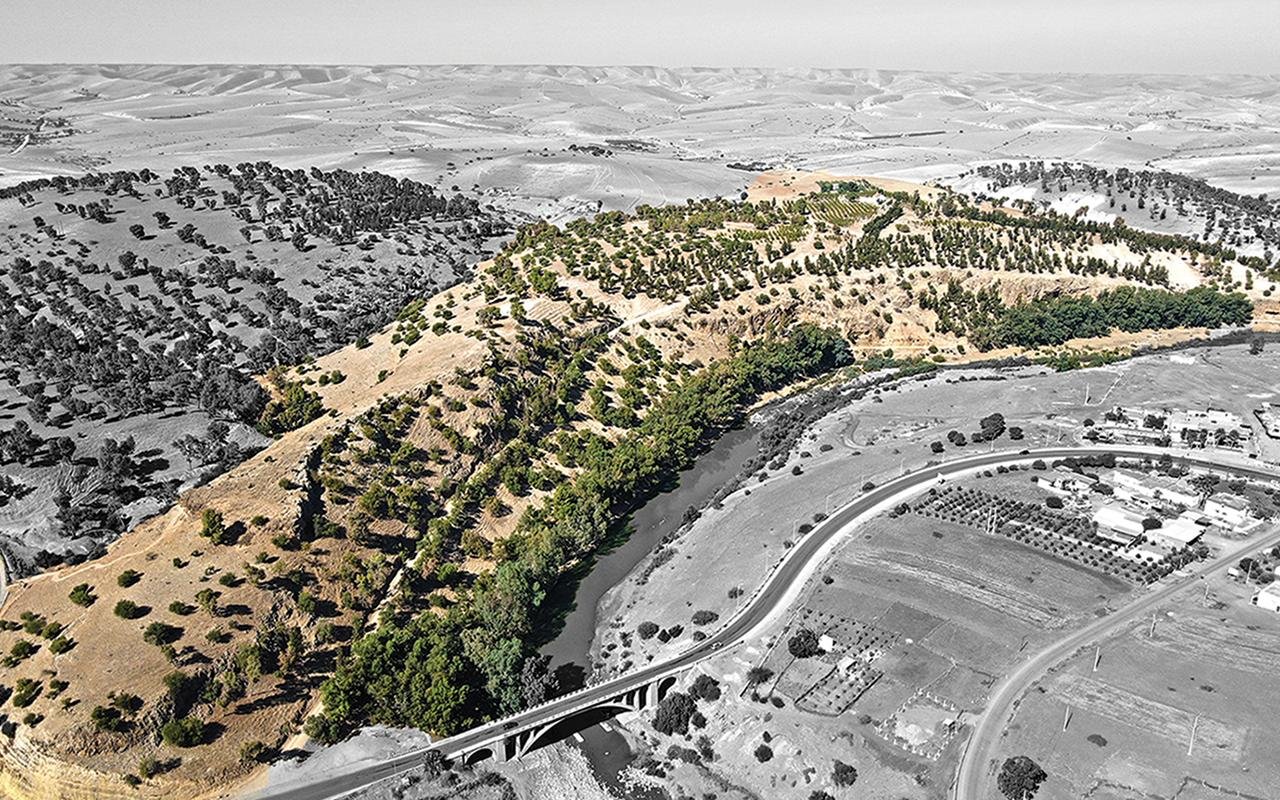
Remains of an unknown 5,000-year-old farming society discovered in Morocco
The Oued Beht ridge and river, from the south-east. Credit: Toby Wilkinson/C, Broodbank et al., Antiquity (2024)

The discovery was reported in the journal Antiquity and led by an international team including Professor Cyprian Broodbank from the University of Cambridge, Professor Youssef Bokbot from Morocco’s National Institute of Archaeological Sciences and Heritage (INSAP), and Professor Giulio Lucarini from Italy’s National Research Council. Oued Beht is located in the Maghreb, a region that has long been recognized as a crossroads of Mediterranean and African cultures, but its role during the Neolithic period had remained largely unexplored.

For decades, archaeologists believed that the Maghreb, located between the Mediterranean Sea and the Sahara Desert, was primarily inhabited by nomadic pastoralists during this time. However, the discovery of Oued Beht changes this narrative, demonstrating that a highly developed farming society thrived in the region. Broodbank said, “For over thirty years I have been convinced that Mediterranean archaeology has been missing something fundamental in later prehistoric North Africa. Now, at last, we know that was right.”

Excavations at the site have uncovered an abundance of artifacts, including domesticated plant and animal remains, pottery, and stone tools. These findings suggest that the society at Oued Beht was highly organized and engaged in large-scale farming. Evidence indicates that they cultivated crops like barley, wheat, peas, olives, and pistachios, and raised livestock such as sheep, goats, pigs, and cattle. The site also revealed extensive storage pits, which point to advanced agricultural practices and the ability to store surplus food.
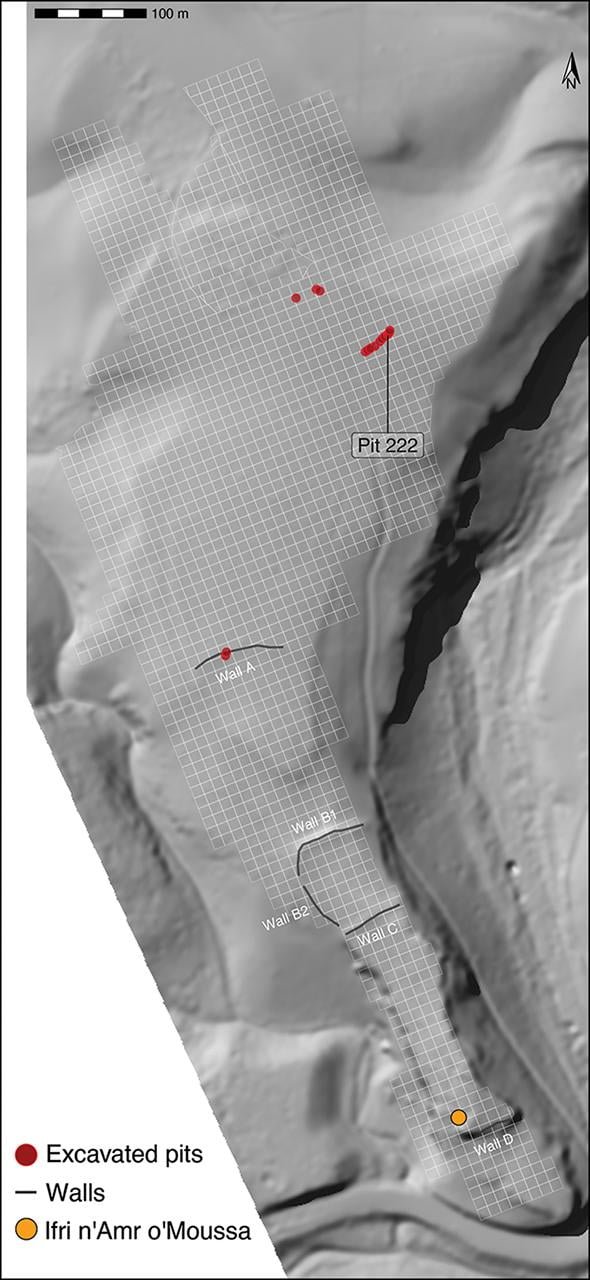
Remains of an unknown 5,000-year-old farming society discovered in Morocco
Plan of Oued Beht, showing known pits and linear structures. Credit: Toby Wilkinson/C, Broodbank et al., Antiquity (2024)

The scale of the settlement is impressive, with the archaeological team comparing it to Early Bronze Age Troy in size. Thousands of stone tools, such as axes, along with elaborately decorated pottery, were found, indicating a thriving community of hundreds of people. According to Lucarini, “The sheer quantity of pottery shards and polished stone tools found at the site is unprecedented.”

RelatedStories

7,000-year-old beaver bone pit discovered in Germany reveals Neolithic fur hunting practices

7,000-year-old beaver bone pit discovered in Germany reveals Neolithic fur hunting practices

May 1, 2026
Ancient Roman shipwreck reveals hidden secrets of waterproofing and Mediterranean repairs

Ancient Roman shipwreck reveals hidden secrets of waterproofing and Mediterranean repairs

April 27, 2026

One of the most exciting aspects of the discovery is its broader implications for understanding early Mediterranean and African connections. Archaeological evidence from the Iberian Peninsula, such as ivory and ostrich eggshells, had long suggested cultural links between North Africa and Europe during this period, but the exact nature of these connections remained unclear. The discovery of similar storage pits in both Morocco and Iberia points to significant trade and interaction across the Strait of Gibraltar. This suggests that the Maghreb was not an isolated region but a critical hub in the wider Mediterranean world.
Remains of an unknown 5,000-year-old farming society discovered in Morocco
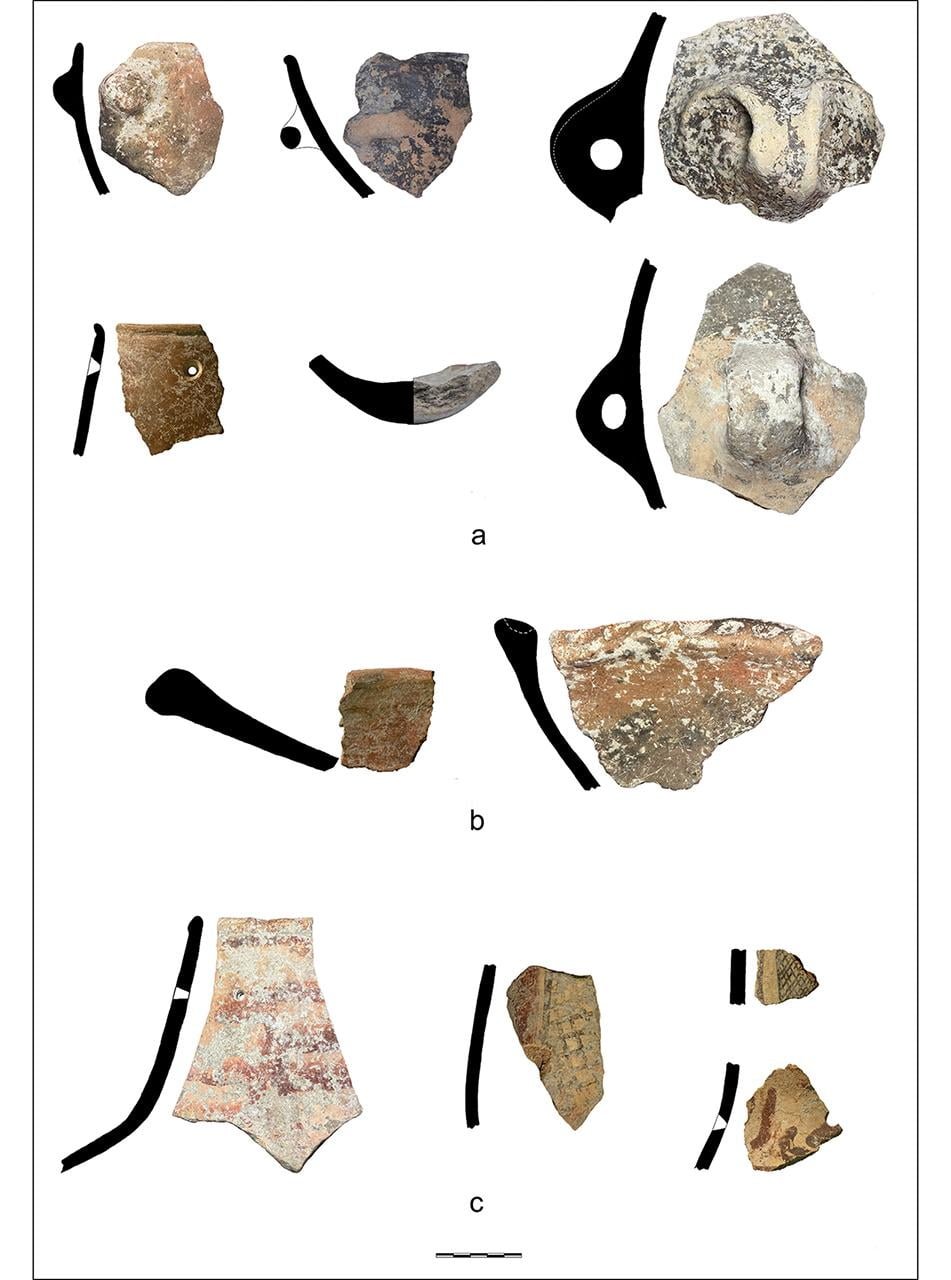
Final Neolithic pottery from Oued Beht. Credit: Rafael Laoutari / Rafael Martínez Sánchez / Moad Radi

Rather than being a marginal area dominated by nomadic herders, it was home to a complex, settled agricultural society that contributed to the broader development of Mediterranean civilization. As the study authors wrote, “It is crucial to consider Oued Beht within a wider co-evolving and connective framework embracing peoples on both sides of the Mediterranean-Atlantic gateway during the later fourth and third millennia BCE.”

The researchers argue that the absence of previous findings in the region was not due to a lack of prehistoric activity but rather to the relative lack of investigation. The Oued Beht site provides compelling evidence that North Africa played a far more central role in early Mediterranean history than previously thought.
More information: Broodbank C, Lucarini G, Bokbot Y, et al. (2024). Oued Beht, Morocco: a complex early farming society in north-west Africa and its implications for western Mediterranean interaction during later prehistory. Antiquity:1-20. doi:10.15184/aqy.2024.101
Share5Tweet3Share1ShareSend

You May Also Like...

7,000-year-old beaver bone pit discovered in Germany reveals Neolithic fur hunting practices
Archaeology

7,000-year-old beaver bone pit discovered in Germany reveals Neolithic fur hunting practices

May 1, 2026
Ancient DNA study rewrites fall of Rome, reveals small migrations shaped Central Europe
Anthropology

Ancient DNA study rewrites fall of Rome, reveals small migrations shaped Central Europe

May 1, 2026
New copy of earliest known English poem discovered in Rome manuscript
Archaeology

New copy of earliest known English poem discovered in Rome manuscript

April 30, 2026
How coral buildings are helping archaeologists date colonial-era sites in French Polynesia
Archaeology

How coral buildings are helping archaeologists date colonial-era sites in French Polynesia

April 30, 2026
Ancient cremation pyre uncovered at Sizewell site in England reveals rare prehistoric burial ritual
Archaeology

Ancient cremation pyre uncovered at Sizewell site in England reveals rare prehistoric burial ritual

April 30, 2026
Ancient mass grave in Jordan confirms victims of Justinian Plague pandemic
Anthropology

Ancient mass grave in Jordan confirms victims of Justinian Plague pandemic

April 29, 2026

Follow us


Instagram
244K

Facebook
118K

Threads
46K

LinkedIn
14K

Twitter
6K

YouTube
1K
  • Trending
  • Comments
  • Latest
Shipwreck Salvage. Credit: rawpixel.com / Public Domain

2,000-year-old shipwreck discovered off Turkish coast with remarkably preserved stacked ceramics

July 2, 2025
A new study suggests the mysterious Voynich Manuscript may be a medieval cipher

A new study suggests the mysterious Voynich Manuscript may be a medieval cipher

January 3, 2026
Viking age DNA reveals 9,000-year-old HIV-resistant gene originating near the Black Sea

Viking age DNA reveals 9,000-year-old HIV-resistant gene originating near the Black Sea

May 18, 2025
3D analysis reveals Shroud of Turin image likely came from sculpture, not Jesus’ body

3D analysis reveals Shroud of Turin image likely came from sculpture, not Jesus’ body

August 3, 2025
Moses may be named in ancient Egyptian mine inscriptions, sparking debate over earliest biblical references

Moses may be named in ancient Egyptian mine inscriptions, sparking debate over earliest biblical references

July 31, 2025
3D analysis reveals Shroud of Turin image likely came from sculpture, not Jesus’ body

3D analysis reveals Shroud of Turin image likely came from sculpture, not Jesus’ body

Moses may be named in ancient Egyptian mine inscriptions, sparking debate over earliest biblical references

Moses may be named in ancient Egyptian mine inscriptions, sparking debate over earliest biblical references

$1 million prize offered to decipher 5,300-year-old Indus Valley script

$1 million prize offered to decipher 5,300-year-old Indus Valley script

Oldest ever genetic data from a human relative found in 2-million-year-old fossilized teeth

Oldest ever genetic data from a human relative found in 2-million-year-old fossilized teeth

Exceptionally large Roman shoes discovered at Magna fort near Hadrian’s Wall

Exceptionally large Roman shoes discovered at Magna fort near Hadrian’s Wall

7,000-year-old beaver bone pit discovered in Germany reveals Neolithic fur hunting practices

7,000-year-old beaver bone pit discovered in Germany reveals Neolithic fur hunting practices

May 1, 2026
Ancient DNA study rewrites fall of Rome, reveals small migrations shaped Central Europe

Ancient DNA study rewrites fall of Rome, reveals small migrations shaped Central Europe

May 1, 2026
New copy of earliest known English poem discovered in Rome manuscript

New copy of earliest known English poem discovered in Rome manuscript

April 30, 2026
How coral buildings are helping archaeologists date colonial-era sites in French Polynesia

How coral buildings are helping archaeologists date colonial-era sites in French Polynesia

April 30, 2026
Ancient cremation pyre uncovered at Sizewell site in England reveals rare prehistoric burial ritual

Ancient cremation pyre uncovered at Sizewell site in England reveals rare prehistoric burial ritual

April 30, 2026

Archaeology News online magazine

Archaeology News is an international online magazine that covers all aspects of archaeology.


Categories

  • Academics
    • Books
    • Conferences
    • Universities
  • Articles
  • Download
  • Game
  • News
    • Anthropology
    • Archaeology
    • Paleontology
  • Quiz
  • Tours

Subscribe to our newsletter

© 2024 - Archaeology News Online Magazine. All Rights Reserved.

  • About
  • Privacy Policy
  • Terms of Use
  • Donation
  • Contact

Manage Consent
To provide the best experiences, we use technologies like cookies to store and/or access device information. Consenting to these technologies will allow us to process data such as browsing behavior or unique IDs on this site. Not consenting or withdrawing consent, may adversely affect certain features and functions.
Functional Always active
The technical storage or access is strictly necessary for the legitimate purpose of enabling the use of a specific service explicitly requested by the subscriber or user, or for the sole purpose of carrying out the transmission of a communication over an electronic communications network.
Preferences
The technical storage or access is necessary for the legitimate purpose of storing preferences that are not requested by the subscriber or user.
Statistics
The technical storage or access that is used exclusively for statistical purposes. The technical storage or access that is used exclusively for anonymous statistical purposes. Without a subpoena, voluntary compliance on the part of your Internet Service Provider, or additional records from a third party, information stored or retrieved for this purpose alone cannot usually be used to identify you.
Marketing
The technical storage or access is required to create user profiles to send advertising, or to track the user on a website or across several websites for similar marketing purposes.
  • Manage options
  • Manage services
  • Manage {vendor_count} vendors
  • Read more about these purposes
View preferences
  • {title}
  • {title}
  • {title}
  • Home
  • News
    • Archaeology
    • Anthropology
    • Paleontology
  • Academic
    • Books
    • Conferences
    • Universities
  • Articles
  • VR Tours
  • Quiz & Game
  • Download
  • Encyclopedia
  • Forum

About  .  Contact  .  Donation

© 2024 - Archaeology News Online Magazine. All Rights Reserved