• About
  • Privacy Policy
  • Terms of Use
  • Donation
  • Contact
No Result
View All Result
Archaeology News
  • Home
  • News
    • Archaeology
    • Anthropology
    • Paleontology
  • Academic
    • Books
    • Conferences
    • Universities
  • Articles
  • VR Tours
  • Quiz & Game
  • Download
  • Encyclopedia
  • Forum
Archaeology News
No Result
View All Result
Home News Archaeology

15,000-year-old evidence of medicinal plant use discovered in Morocco’s Taforalt Cave

by Dario Radley
November 5, 2024

Archaeologists have uncovered compelling evidence of early medicinal plant use by prehistoric humans, dating back approximately 15,000 years, in Morocco’s Taforalt Cave (Grotte des Pigeons).
Prehistoric hunter-gatherers had predominantly plant-based diet
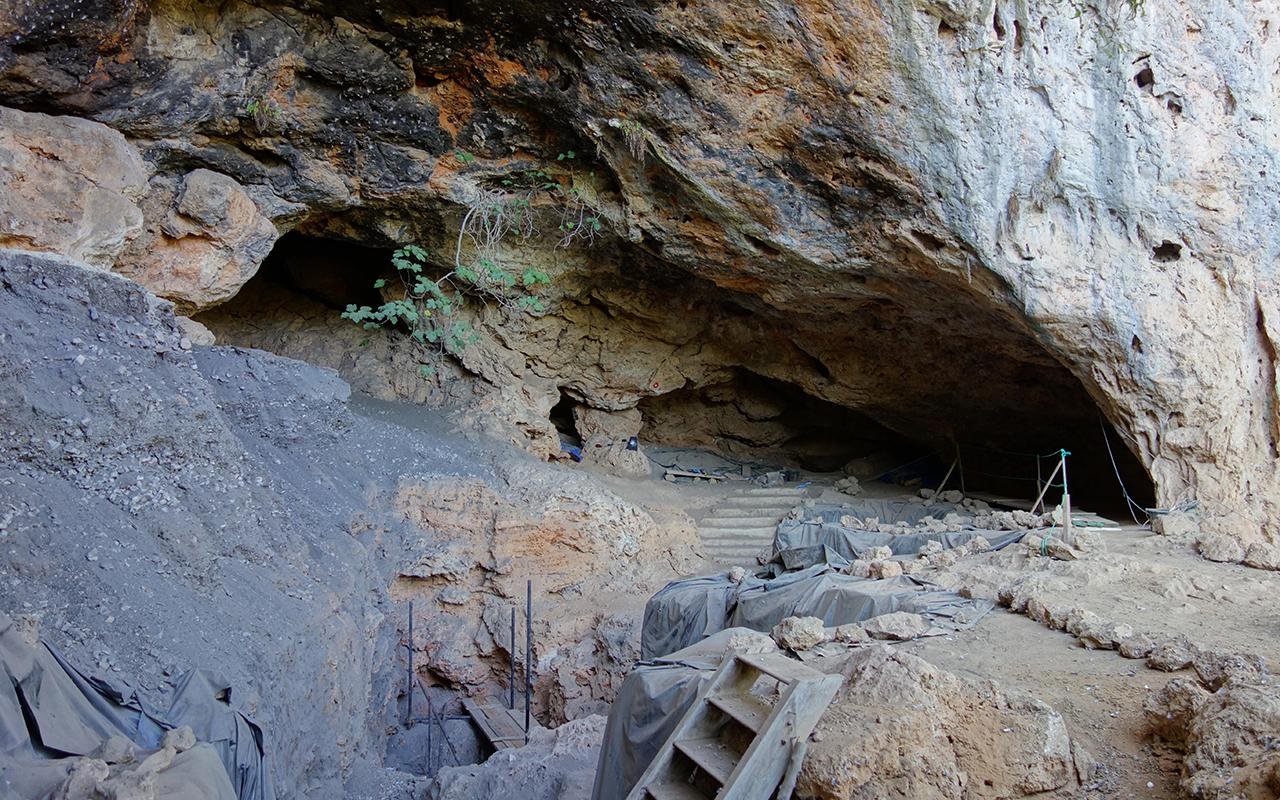
The site of Taforalt. Credit: Nicolas Perrault III/Wikimedia Commons

This significant find, published in Nature and led by an international team, was coordinated by Morocco’s National Institute of Archaeology and Heritage Sciences (INSAP). Researchers found charred remains of the Ephedra plant, suggesting it was used for therapeutic and ritualistic purposes by the Iberomaurusian people of North Africa during the Late Stone Age.

Ephedra, a resilient non-flowering shrub common in arid regions, is known for its potent alkaloids, including ephedrine and pseudoephedrine, which are used to alleviate pain and respiratory issues. According to INSAP’s director, Dr. Abdeljalil Bouzouggar, the ancient inhabitants of Taforalt Cave specifically utilized Ephedra seeds, an indication of a nuanced understanding of the plant’s medicinal properties. “This procedure would have been painful and involved significant bleeding, leading the team to suggest that Ephedra was used to stop bleeding and soothe pain,” Bouzouggar explained in an interview with Morocco World News.

The Iberomaurusians, a group of hunter-gatherers who lived in Morocco around 15,000 years ago, are already known for their elaborate burial practices. Taforalt Cave is home to some of the oldest known burials in North Africa, where human remains were discovered alongside artifacts and plant remains, revealing their symbolic and practical use of natural resources. Excavations conducted between 2005 and 2015 revealed layers of burials, including those of young adults, infants, and one notable individual who had undergone trepanation—a form of cranial surgery. Remarkably, this individual’s skull showed signs of healing, suggesting that medicinal plants like Ephedra might have been applied to aid in recovery.

15,000-year-old evidence of medicinal plant use discovered in Morocco’s Taforalt Cave
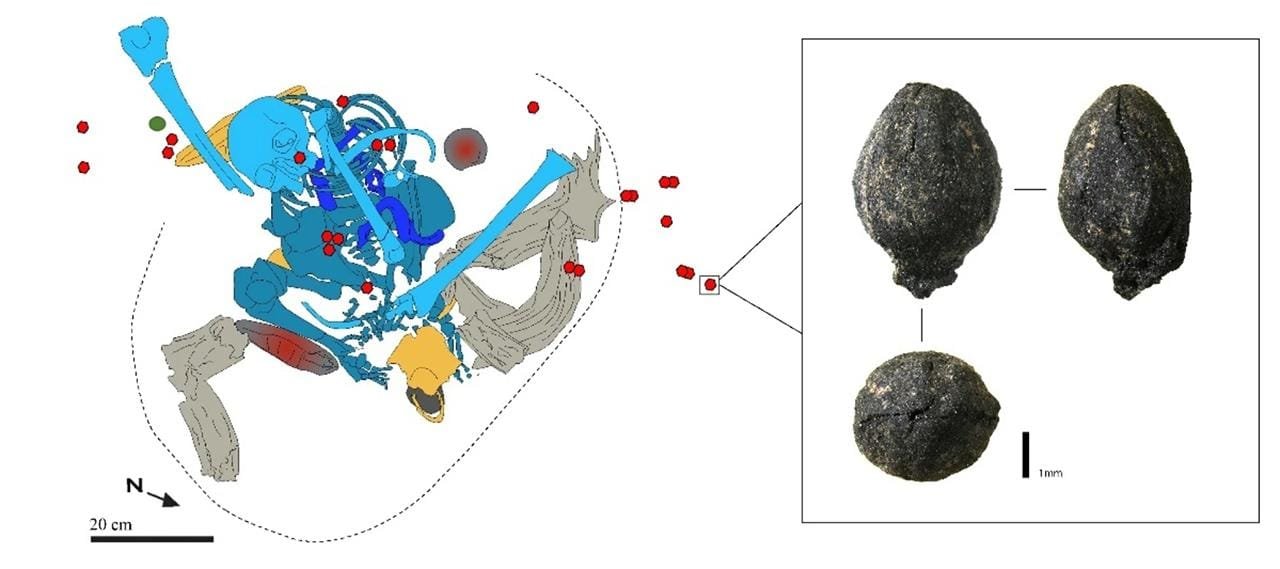
Drawing showing the location of in situ bones, stone, Ephedra cone bracts, and shell. The photo on the right side shows an archaeological Ephedra pair of cone bracts. Credit: Morales, J. et al., Sci Rep (2024). [This image is used under the CC BY-NC-ND license for non-commercial and educational purposes. If you are the copyright holder and object to its use, please contact us for immediate removal.]
The site is also famous for a ritual involving tooth extraction, likely performed as a rite of passage for adolescents. As Bouzouggar described, the pain and bleeding associated with tooth avulsion might have been alleviated by Ephedra’s medicinal properties. This points to a complex understanding of herbal remedies that likely helped these early communities endure painful procedures and honor cultural customs.

RelatedStories

5,500-year-old human skeleton in Colombia reveals earliest evidence of syphilis in the Americas

5,500-year-old human skeleton in Colombia reveals earliest evidence of syphilis in the Americas

January 23, 2026
480,000-year-old elephant bone tool from Boxgrove is Europe’s oldest known prehistoric retoucher

480,000-year-old elephant bone tool from Boxgrove is the oldest discovered in Europe

January 21, 2026

Notably, the discovery challenges existing beliefs about prehistoric medical knowledge, demonstrating that early humans in North Africa not only gathered medicinal plants but may have applied them in specific dosages or forms. The charred remains of Ephedra, found in burial sections of the cave, strongly suggest its use in funerary rituals, potentially as part of the mourning process or to prepare bodies for the afterlife.

INSAP’s team worked closely with Moroccan, British, and Spanish researchers. Their findings at Taforalt Cave add to the global understanding of ancient human societies’ adaptability and their relationship with the natural world.


More information: Morales, J., Carrión Marco, Y., Cooper, J.H. et al. (2024). Late pleistocene exploitation of Ephedra in a funerary context in Morocco. Sci Rep 14, 26443. doi:10.1038/s41598-024-77785-w
Share6Tweet4Share1ShareSend

You May Also Like...

South African San rock art shows evidence of trance dances and initiation rituals
Archaeology

South African San rock art shows evidence of trance dances and initiation rituals

January 25, 2026
Rare 10th-century bronze wheel cross found in Brandenburg reveals early Christian influence among Slavic populations
Archaeology

Rare 10th-century bronze wheel cross found in Brandenburg reveals early Christian influence among Slavic populations

January 25, 2026
Large Roman cemetery excavation at Brougham reveals diverse burial practices on Britain’s northern frontier
Archaeology

Large Roman cemetery excavation at Brougham reveals diverse burial practices on Britain’s northern frontier

January 24, 2026
5,500-year-old human skeleton in Colombia reveals earliest evidence of syphilis in the Americas
Anthropology

5,500-year-old human skeleton in Colombia reveals earliest evidence of syphilis in the Americas

January 23, 2026
Republican-era tombs and a Hercules shrine unearthed in eastern Rome reveal centuries of suburban life
Archaeology

Republican-era tombs and a Hercules shrine unearthed in eastern Rome reveal centuries of suburban life

January 23, 2026
New study finds evidence that Aztec King Moctezuma kept a zoo for ritual purposes
Archaeology

New study finds evidence that Aztec King Moctezuma kept a zoo for ritual purposes

January 22, 2026

Follow us


Instagram
244K

Facebook
118K

Threads
45K

LinkedIn
14K

Twitter
6K

YouTube
1K
  • Trending
  • Comments
  • Latest
Shipwreck Salvage. Credit: rawpixel.com / Public Domain

2,000-year-old shipwreck discovered off Turkish coast with remarkably preserved stacked ceramics

July 2, 2025
Viking age DNA reveals 9,000-year-old HIV-resistant gene originating near the Black Sea

Viking age DNA reveals 9,000-year-old HIV-resistant gene originating near the Black Sea

May 18, 2025
A new study suggests the mysterious Voynich Manuscript may be a medieval cipher

A new study suggests the mysterious Voynich Manuscript may be a medieval cipher

January 3, 2026
Moses may be named in ancient Egyptian mine inscriptions, sparking debate over earliest biblical references

Moses may be named in ancient Egyptian mine inscriptions, sparking debate over earliest biblical references

July 31, 2025
Mystery of Armenia’s 6,000-year-old dragon stones solved

Mystery of Armenia’s 6,000-year-old dragon stones solved

September 23, 2025
3D analysis reveals Shroud of Turin image likely came from sculpture, not Jesus’ body

3D analysis reveals Shroud of Turin image likely came from sculpture, not Jesus’ body

Moses may be named in ancient Egyptian mine inscriptions, sparking debate over earliest biblical references

Moses may be named in ancient Egyptian mine inscriptions, sparking debate over earliest biblical references

$1 million prize offered to decipher 5,300-year-old Indus Valley script

$1 million prize offered to decipher 5,300-year-old Indus Valley script

Oldest ever genetic data from a human relative found in 2-million-year-old fossilized teeth

Oldest ever genetic data from a human relative found in 2-million-year-old fossilized teeth

Exceptionally large Roman shoes discovered at Magna fort near Hadrian’s Wall

Exceptionally large Roman shoes discovered at Magna fort near Hadrian’s Wall

South African San rock art shows evidence of trance dances and initiation rituals

South African San rock art shows evidence of trance dances and initiation rituals

January 25, 2026
Rare 10th-century bronze wheel cross found in Brandenburg reveals early Christian influence among Slavic populations

Rare 10th-century bronze wheel cross found in Brandenburg reveals early Christian influence among Slavic populations

January 25, 2026
Large Roman cemetery excavation at Brougham reveals diverse burial practices on Britain’s northern frontier

Large Roman cemetery excavation at Brougham reveals diverse burial practices on Britain’s northern frontier

January 24, 2026
5,500-year-old human skeleton in Colombia reveals earliest evidence of syphilis in the Americas

5,500-year-old human skeleton in Colombia reveals earliest evidence of syphilis in the Americas

January 23, 2026
Republican-era tombs and a Hercules shrine unearthed in eastern Rome reveal centuries of suburban life

Republican-era tombs and a Hercules shrine unearthed in eastern Rome reveal centuries of suburban life

January 23, 2026

Archaeology News online magazine

Archaeology News is an international online magazine that covers all aspects of archaeology.


Categories

  • Academics
    • Books
    • Conferences
    • Universities
  • Articles
  • Download
  • Game
  • News
    • Anthropology
    • Archaeology
    • Paleontology
  • Quiz
  • Tours

Subscribe to our newsletter

© 2024 - Archaeology News Online Magazine. All Rights Reserved.

  • About
  • Privacy Policy
  • Terms of Use
  • Donation
  • Contact

Welcome Back!

Login to your account below

Forgotten Password? Sign Up

Create New Account!

Fill the forms below to register

All fields are required. Log In

Retrieve your password

Please enter your username or email address to reset your password.

Log In

Add New Playlist

Manage Consent
To provide the best experiences, we use technologies like cookies to store and/or access device information. Consenting to these technologies will allow us to process data such as browsing behavior or unique IDs on this site. Not consenting or withdrawing consent, may adversely affect certain features and functions.
Functional Always active
The technical storage or access is strictly necessary for the legitimate purpose of enabling the use of a specific service explicitly requested by the subscriber or user, or for the sole purpose of carrying out the transmission of a communication over an electronic communications network.
Preferences
The technical storage or access is necessary for the legitimate purpose of storing preferences that are not requested by the subscriber or user.
Statistics
The technical storage or access that is used exclusively for statistical purposes. The technical storage or access that is used exclusively for anonymous statistical purposes. Without a subpoena, voluntary compliance on the part of your Internet Service Provider, or additional records from a third party, information stored or retrieved for this purpose alone cannot usually be used to identify you.
Marketing
The technical storage or access is required to create user profiles to send advertising, or to track the user on a website or across several websites for similar marketing purposes.
  • Manage options
  • Manage services
  • Manage {vendor_count} vendors
  • Read more about these purposes
View preferences
  • {title}
  • {title}
  • {title}
  • Home
  • News
    • Archaeology
    • Anthropology
    • Paleontology
  • Academic
    • Books
    • Conferences
    • Universities
  • Articles
  • VR Tours
  • Quiz & Game
  • Download
  • Encyclopedia
  • Forum

About  .  Contact  .  Donation

© 2024 - Archaeology News Online Magazine. All Rights Reserved