
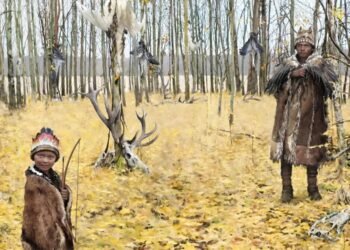
Archaeologists working at the Turlojiškė peat bog in southern Lithuania report evidence of a violent event from the Late Bronze Age, around 3,000 years ago. New fieldwork, laboratory tests, and a review of older finds point to a single episode in which a group of young men died and entered a shallow lake that later turned into peatland.
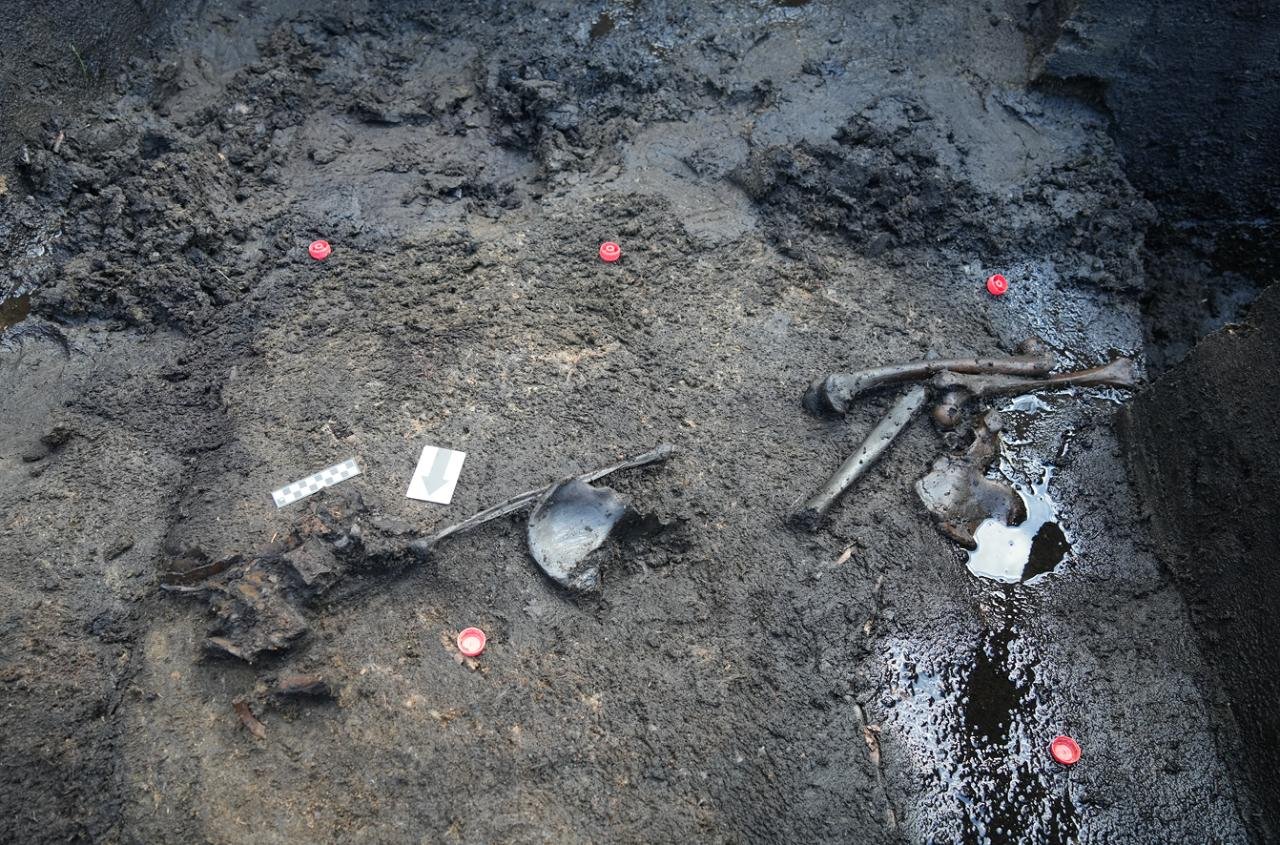
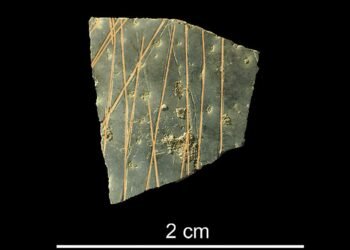
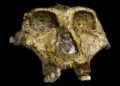
The site in Kalvarija eldership has drawn attention since the early twentieth century. In 1930, workers straightened the Kirsna River and found a human skull along with objects made of bone, antler, and flint. Additional human remains appeared in later decades. Between 1996 and 2003, archaeologist Algimantas Merkevičius led the first systematic excavations and documented traces of a settlement that once stood near a former lake. His team also recovered more human bones.
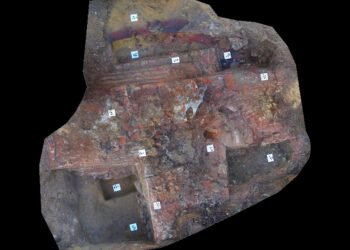
Research resumed in 2025 under archaeologist Mantas Daubaras, who worked with Vilnius University and partners in Poland. The team reopened a small area of the bog, collected sediment samples, and found the remains of another individual. They also reexamined archival records and studied bones stored at the Faculty of Medicine of Vilnius University. This combined approach helped clarify the site’s history.
Radiocarbon dating played a central role. Specialists at the Center for Physical Sciences and Technology dated several sets of human remains using AMS methods. Results show that at least 11 individuals died at roughly the same time during the Late Bronze Age. Geological data help explain the setting. The muddy sapropel layer at the bottom of the basin began forming more than 15,000 years ago, soon after the last Ice Age. Over time, sediments filled the lake. Around 3,000 years ago, peat started to form as the water body became shallow and marshy.
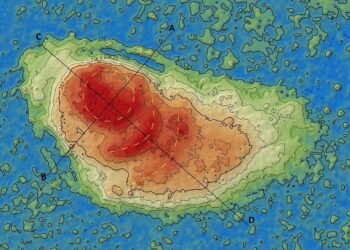
Researchers drilled 640 boreholes across the peat bog. These data allowed them to map the former lake bottom and build two-dimensional and three-dimensional models of the basin. Zoologists from the Tadas Ivanauskas Zoological Museum analyzed biological remains from sediment samples. They identified mollusk species that lived in the silting lake and reconstructed features of the ancient ecosystem.
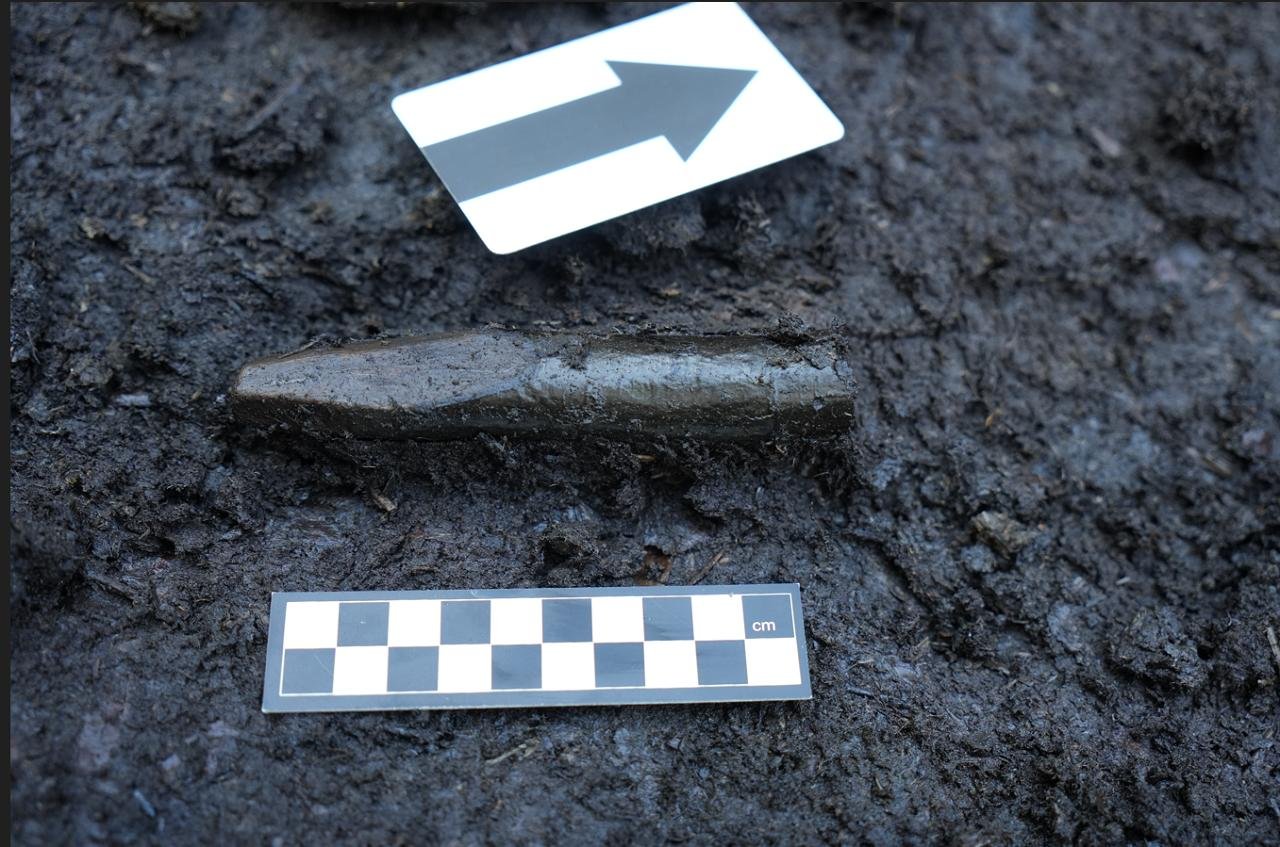
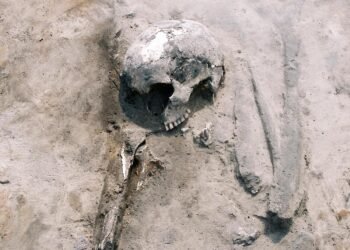
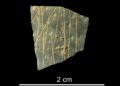
The human bones show clear signs of violence. Several skeletons bear perimortem injuries, including sharp force trauma consistent with weapons. Archaeologists also found flint arrowheads and specific types of bronze and stone axes in the same layers as the bones. The remains belong only to young men, which supports the idea of a combat related event rather than a normal burial ground.
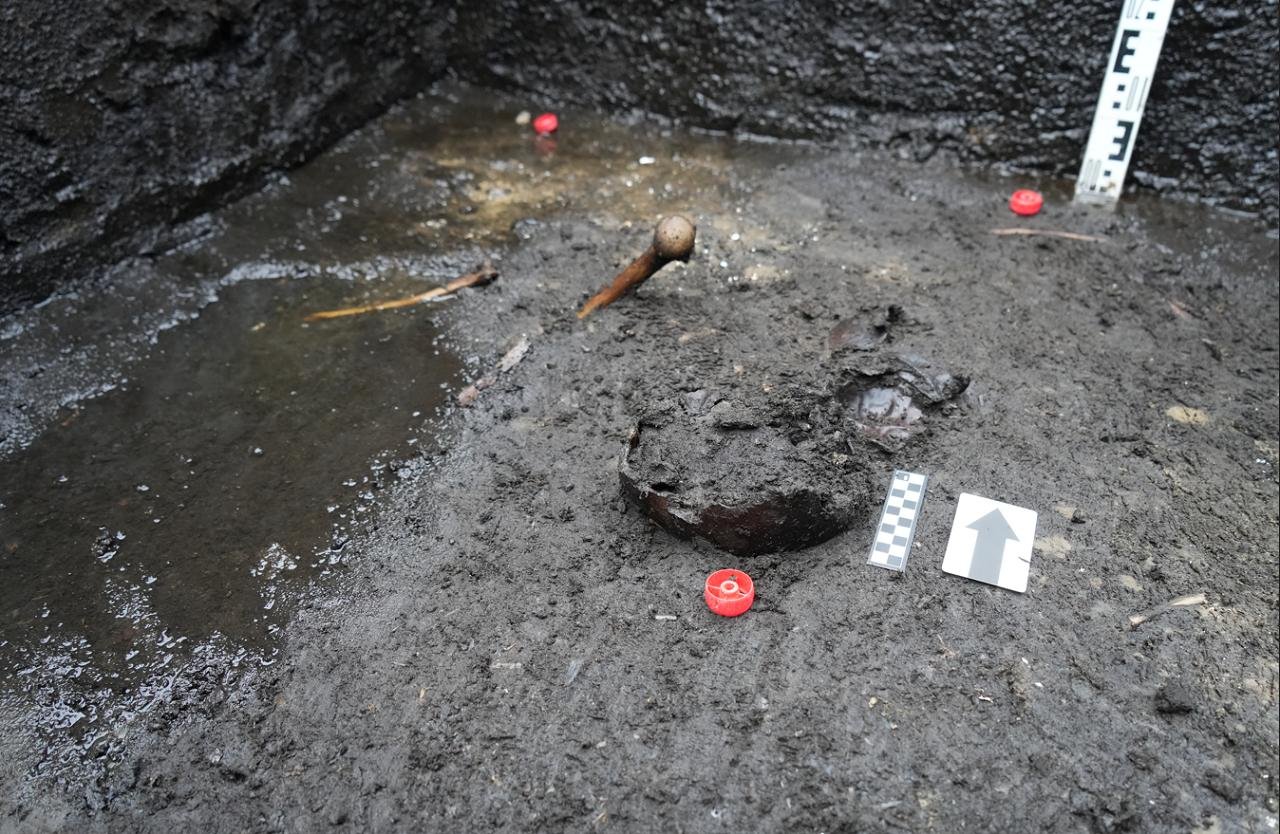
Taken together, the dating results, trauma patterns, demographic profile, and associated weapons support the interpretation of Turlojiškė as a battlefield related mass deposition. Comparable finds from the Tollense Valley in Germany and Alken Enge in Denmark show that large-scale conflicts took place in parts of Europe during the Bronze Age. The Turlojiškė site adds new evidence from the eastern Baltic region.
Researchers plan further fieldwork and laboratory studies in 2026. Several scientific papers are in preparation, which will present detailed analyses of the bones, artifacts, and environmental data.








Disclaimer: This website is a science-focused magazine that welcomes both academic and non-academic audiences. Comments are written by users and may include personal opinions or unverified claims. They do not necessarily reflect the views of our editorial team or rely on scientific evidence.
Comment Policy: We kindly ask all commenters to engage respectfully. Comments that contain offensive, insulting, degrading, discriminatory, or racist content will be automatically removed.