• About
  • Privacy Policy
  • Terms of Use
  • Donation
  • Contact
No Result
View All Result
Archaeology News
  • Home
  • News
    • Archaeology
    • Anthropology
    • Paleontology
  • Academic
    • Books
    • Conferences
    • Universities
  • Articles
  • VR Tours
  • Quiz & Game
  • Download
  • Encyclopedia
  • Forum
Archaeology News
No Result
View All Result
Home News Archaeology

First archaeological experiment in space

Dario Radley by Dario Radley
January 18, 2022
Share on FacebookShare on Linkedin.Share on RedditShare on Whatsapp

In a historic endeavor, the International Space Station (ISS) has become the stage for a pioneering archaeological study, marking a first-of-its-kind exploration of a space habitat.
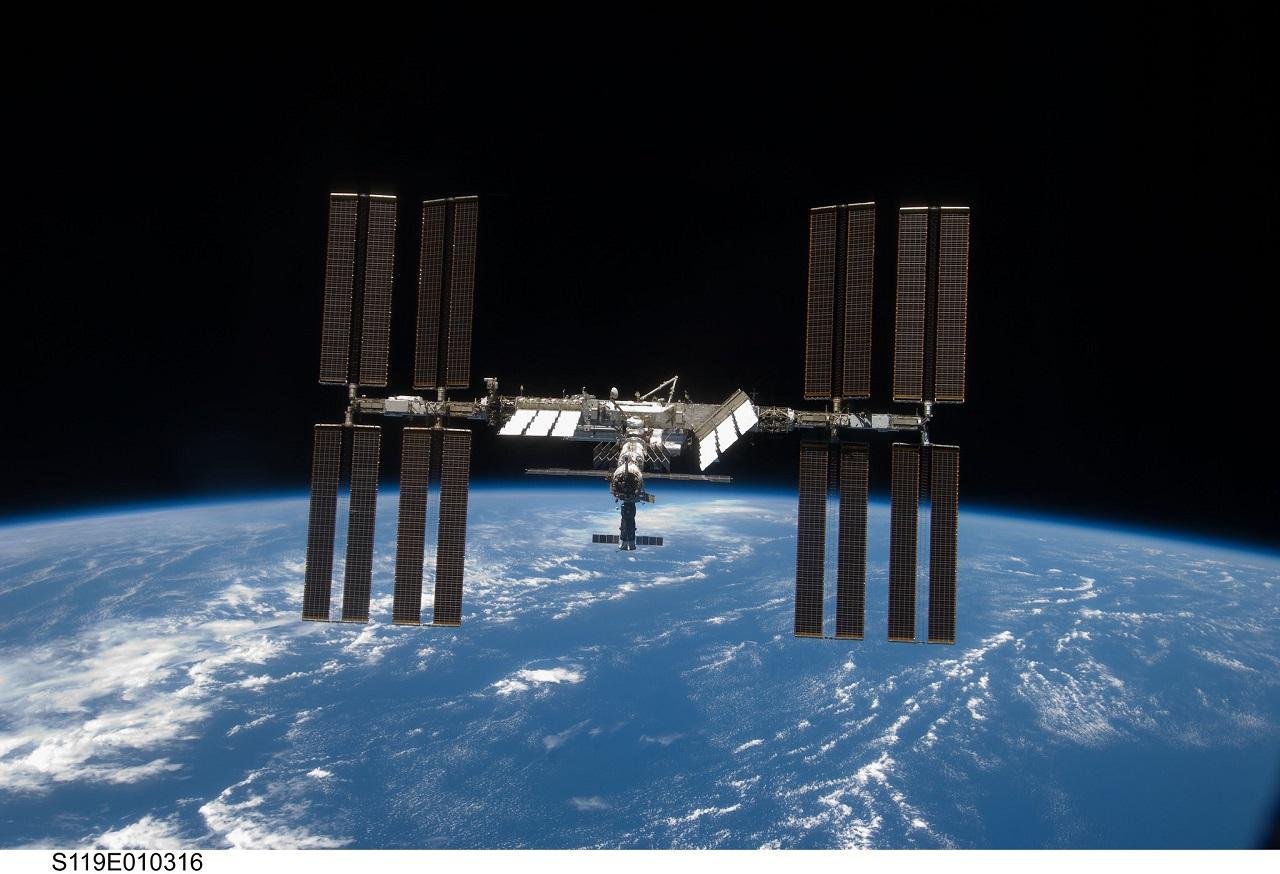
A Flinders University professor is helping lead the first archaeological study of a space habitat.
A Flinders University professor is helping lead the first archaeological study of a space habitat. Credit: NASA

Led by Associate Professor Alice Gorman from Flinders University and Associate Professor Justin Walsh of Chapman University in California, the International Space Station Archaeological Project (ISSAP) seeks to comprehend the human relationship with items in their space environment, offering a unique glimpse into how people adapt their behavior to an entirely novel setting.

The inaugural project, known as the Sampling Quadrangle Assemblages Research Experiment (SQuARE), has officially commenced. SQuARE creatively applies a fundamental archaeological technique used on Earth to the confines of space—the test pit.

While traditional archaeologists on Earth excavate one-meter squares to gain insights into a site and plan further investigations, the ISSAP team will employ adhesive tape to define one-meter areas within the International Space Station. Subsequently, they will utilize daily photographs to analyze how these spaces are utilized and how they evolve over time.

Associate Professor Gorman explains the novel approach: “Instead of digging them to reveal new layers of soil representing different moments in the site’s history, we will have them photographed each day to identify how they’re being used and how they change over time.”

The experiment was initiated by NASA astronaut Kayla Barron, who placed squares in several locations within the ISS, symbolizing work and leisure areas such as a galley table, workstation, EXPRESS racks, and the wall opposite the latrine.

Additionally, the ISS crew contributed by selecting an additional location for study, based on their assessment of what would be intriguing to document. This square was placed on one of the racks in the US laboratory module, Destiny.

The daily photography phase of the experiment is currently underway and will span a duration of 60 days. Associate Professor Walsh reflects on the significance of this pioneering project, stating, “We’re the first to try to understand how humans relate to the items they live with in space.”

By introducing archaeological perspectives to an active space environment, ISSAP aims to illuminate the ways in which people adapt to and interact with an entirely new habitat.

This groundbreaking endeavor holds great promise for shedding light on the cultural, behavioral, and functional aspects of human life in space, offering a new dimension to our understanding of space exploration and habitation.
ShareTweetShareShareSend

You May Also Like...

Ancient Roman toilets in Bulgaria reveal early spread of intestinal parasites
Anthropology

Ancient Roman toilets in Bulgaria reveal early spread of intestinal parasites

April 28, 2026
Ancient Roman shipwreck reveals hidden secrets of waterproofing and Mediterranean repairs
Archaeology

Ancient Roman shipwreck reveals hidden secrets of waterproofing and Mediterranean repairs

April 27, 2026
42 lost pages of Codex H recovered, revealing early New Testament structure and scribal practices
Archaeology

42 lost pages of Codex H recovered, revealing early New Testament structure and scribal practices

April 26, 2026
CT scans reveal hidden details of 2,300-year-old Egyptian mummies
Anthropology

CT scans reveal hidden details of 2,300-year-old Egyptian mummies

April 26, 2026
Rare 2,000-year-old Roman bread found at Vindonissa reveals early military life in Switzerland
Archaeology

Rare 2,000-year-old Roman bread found at Vindonissa reveals early military life in Switzerland

April 25, 2026
Over 1,000 archaeological features uncovered along Czech railway
Archaeology

Over 1,000 archaeological features uncovered along Czech railway

April 25, 2026

Follow us


Instagram
244K

Facebook
118K

Threads
46K

LinkedIn
14K

Twitter
6K

YouTube
1K
  • Trending
  • Comments
  • Latest
Shipwreck Salvage. Credit: rawpixel.com / Public Domain

2,000-year-old shipwreck discovered off Turkish coast with remarkably preserved stacked ceramics

July 2, 2025
Viking age DNA reveals 9,000-year-old HIV-resistant gene originating near the Black Sea

Viking age DNA reveals 9,000-year-old HIV-resistant gene originating near the Black Sea

May 18, 2025
A new study suggests the mysterious Voynich Manuscript may be a medieval cipher

A new study suggests the mysterious Voynich Manuscript may be a medieval cipher

January 3, 2026
3D analysis reveals Shroud of Turin image likely came from sculpture, not Jesus’ body

3D analysis reveals Shroud of Turin image likely came from sculpture, not Jesus’ body

August 3, 2025
Moses may be named in ancient Egyptian mine inscriptions, sparking debate over earliest biblical references

Moses may be named in ancient Egyptian mine inscriptions, sparking debate over earliest biblical references

July 31, 2025
3D analysis reveals Shroud of Turin image likely came from sculpture, not Jesus’ body

3D analysis reveals Shroud of Turin image likely came from sculpture, not Jesus’ body

Moses may be named in ancient Egyptian mine inscriptions, sparking debate over earliest biblical references

Moses may be named in ancient Egyptian mine inscriptions, sparking debate over earliest biblical references

$1 million prize offered to decipher 5,300-year-old Indus Valley script

$1 million prize offered to decipher 5,300-year-old Indus Valley script

Oldest ever genetic data from a human relative found in 2-million-year-old fossilized teeth

Oldest ever genetic data from a human relative found in 2-million-year-old fossilized teeth

Exceptionally large Roman shoes discovered at Magna fort near Hadrian’s Wall

Exceptionally large Roman shoes discovered at Magna fort near Hadrian’s Wall

Ancient Roman toilets in Bulgaria reveal early spread of intestinal parasites

Ancient Roman toilets in Bulgaria reveal early spread of intestinal parasites

April 28, 2026
Ancient Roman shipwreck reveals hidden secrets of waterproofing and Mediterranean repairs

Ancient Roman shipwreck reveals hidden secrets of waterproofing and Mediterranean repairs

April 27, 2026
42 lost pages of Codex H recovered, revealing early New Testament structure and scribal practices

42 lost pages of Codex H recovered, revealing early New Testament structure and scribal practices

April 26, 2026
CT scans reveal hidden details of 2,300-year-old Egyptian mummies

CT scans reveal hidden details of 2,300-year-old Egyptian mummies

April 26, 2026
Rare 2,000-year-old Roman bread found at Vindonissa reveals early military life in Switzerland

Rare 2,000-year-old Roman bread found at Vindonissa reveals early military life in Switzerland

April 25, 2026

Archaeology News online magazine

Archaeology News is an international online magazine that covers all aspects of archaeology.


Categories

  • Academics
    • Books
    • Conferences
    • Universities
  • Articles
  • Download
  • Game
  • News
    • Anthropology
    • Archaeology
    • Paleontology
  • Quiz
  • Tours

Subscribe to our newsletter

© 2024 - Archaeology News Online Magazine. All Rights Reserved.

  • About
  • Privacy Policy
  • Terms of Use
  • Donation
  • Contact

Manage Consent
To provide the best experiences, we use technologies like cookies to store and/or access device information. Consenting to these technologies will allow us to process data such as browsing behavior or unique IDs on this site. Not consenting or withdrawing consent, may adversely affect certain features and functions.
Functional Always active
The technical storage or access is strictly necessary for the legitimate purpose of enabling the use of a specific service explicitly requested by the subscriber or user, or for the sole purpose of carrying out the transmission of a communication over an electronic communications network.
Preferences
The technical storage or access is necessary for the legitimate purpose of storing preferences that are not requested by the subscriber or user.
Statistics
The technical storage or access that is used exclusively for statistical purposes. The technical storage or access that is used exclusively for anonymous statistical purposes. Without a subpoena, voluntary compliance on the part of your Internet Service Provider, or additional records from a third party, information stored or retrieved for this purpose alone cannot usually be used to identify you.
Marketing
The technical storage or access is required to create user profiles to send advertising, or to track the user on a website or across several websites for similar marketing purposes.
  • Manage options
  • Manage services
  • Manage {vendor_count} vendors
  • Read more about these purposes
View preferences
  • {title}
  • {title}
  • {title}
  • Home
  • News
    • Archaeology
    • Anthropology
    • Paleontology
  • Academic
    • Books
    • Conferences
    • Universities
  • Articles
  • VR Tours
  • Quiz & Game
  • Download
  • Encyclopedia
  • Forum

About  .  Contact  .  Donation

© 2024 - Archaeology News Online Magazine. All Rights Reserved