• About
  • Privacy Policy
  • Terms of Use
  • Donation
  • Contact
No Result
View All Result
Archaeology News
  • Home
  • News
    • Archaeology
    • Anthropology
    • Paleontology
  • Academic
    • Books
    • Conferences
    • Universities
  • Articles
  • VR Tours
  • Quiz & Game
  • Download
  • Encyclopedia
  • Forum
Archaeology News
No Result
View All Result
Home News Archaeology

Ritualistic finger amputation revealed in prehistoric cave art

by Dario Radley
January 3, 2024

A new interpretation of Paleolithic cave art suggests that prehistoric people engaged in deliberate finger amputation as part of religious rituals.
Ritualistic finger amputation revealed in prehistoric cave art
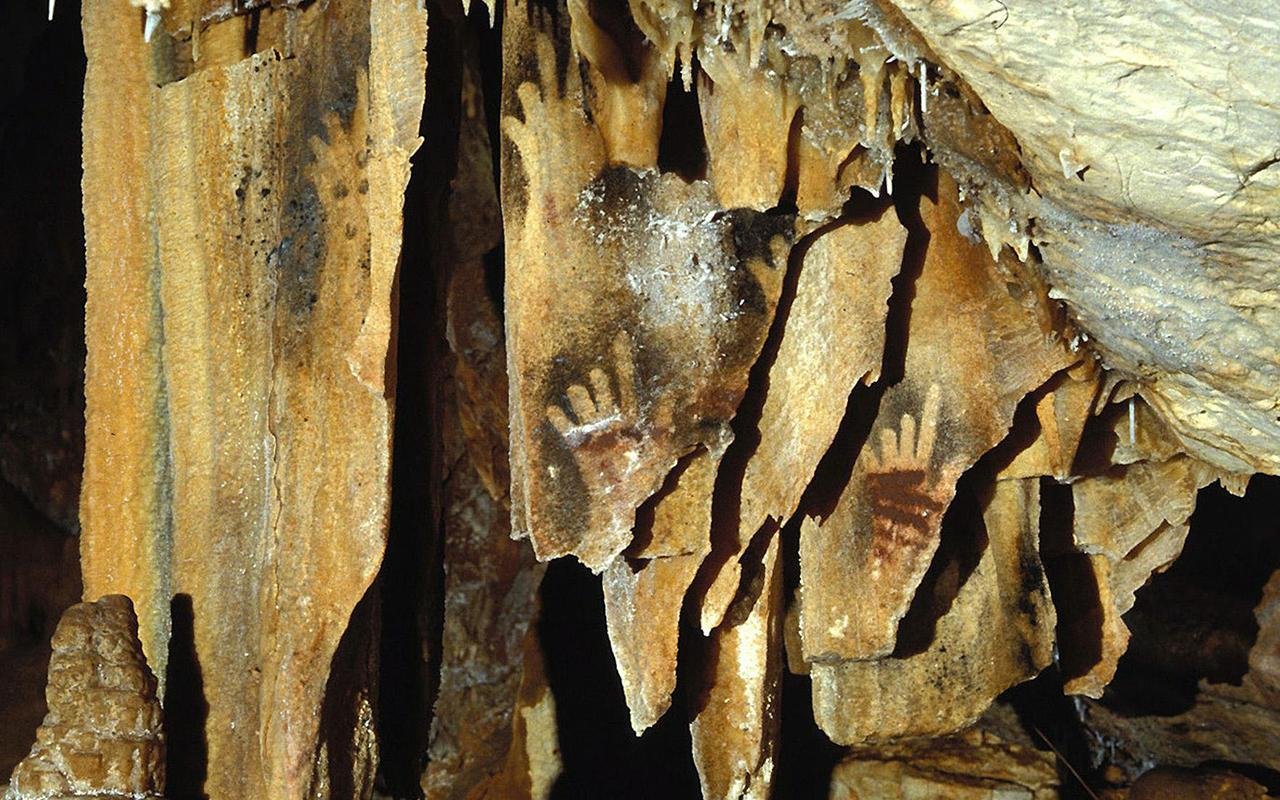
A number of stencils within the Cosquer cave seem to be created by hands that have digits missing. Credit: Jean Clottes

Researchers, led by archaeologist Professor Mark Collard from Simon Fraser University in Vancouver, presented their findings at a recent meeting of the European Society for Human Evolution, pointing to evidence from 25,000-year-old cave paintings in France and Spain.

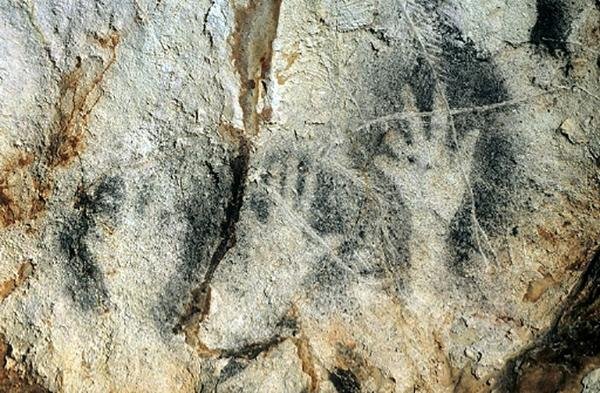
The handprints found in these caves, over 200 in total, exhibit missing digits, challenging previous explanations attributing the absence of fingers to artistic expression or medical issues like frostbite.

Collard and his team propose a more unsettling explanation, suggesting that deliberate finger amputation may have occurred in rituals aimed at seeking assistance from supernatural entities. Collard told the Guardian: “There is compelling evidence that these people may have had their fingers amputated deliberately in rituals intended to elicit help from supernatural entities.”
Ritualistic finger amputation revealed in prehistoric cave art
Handprint stencil, CosquerCave, Marseille, France. Credit: Luc Vanrell/French Ministry of Culture

The researchers argue that this practice was not unique to a specific time or location, citing contemporary examples such as the Dani people from the New Guinea Highlands, where women undergo finger amputation following the death of loved ones.

RelatedStories

La Pileta Cave digitally preserved: 3D LiDAR reveals prehistoric art and morphology

La Pileta Cave digitally preserved: 3D LiDAR reveals prehistoric art and morphology

September 18, 2025
Mysterious cave with ancient rock art unearthed in Thai forest sanctuary. Credit: Department of National Parks

Mysterious cave with ancient rock art unearthed in Thai forest sanctuary

August 23, 2025

Collard emphasizes, “This is a practice that was not necessarily routine but has occurred at various times throughout history.” The team suggests that Europeans in paleolithic times may have engaged in similar rituals, albeit with different belief systems.

Collard and his colleague, PhD student Brea McCauley, first proposed the finger amputation thesis a few years ago but faced criticism from peers who argued that such amputations would be catastrophic for individuals in harsh prehistoric conditions.

However, the researchers have since gathered more data to support their thesis. Their latest research, presented at the European Society conference, provides even more convincing evidence linking the removal of digits to appease deities with hand images in caves across France and Spain.

The cave paintings, falling into two types – prints and stencils – display hands with missing digits at four main sites: Maltravieso and Fuente del Trucho caves in Spain, and Gargas and Cosquer caves in France. The global scope of the phenomenon is highlighted by Collard, stating, “This form of self-mutilation has been practiced by groups from all inhabited continents.” The researchers found over 100 instances of finger amputation in other societies across Africa, Australia, North America, south Asia, and southeast Asia.
Ritualistic finger amputation revealed in prehistoric cave art
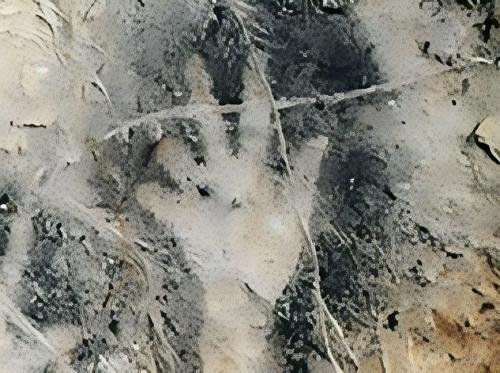
CosquerCave, France. Credit: Luc Vanrell/French Ministry of Culture

The extensive research by Collard and McCauley also involved examining the motivations for finger amputation in various cultures worldwide. They concluded that the presentation of shortened fingers in Paleolithic hand images was likely evidence of religious sacrificial rituals or social survival rituals that strengthened group bonds and loyalty. Collard notes that rituals involving self-mutilation, such as finger amputation, have persisted in different forms throughout history, with examples like fire-walking and skin-piercing.

In response to criticism of their initial thesis, the researchers conducted further research, addressing concerns about the impact of amputations on individuals during the late Ice Age. They presented additional evidence at the European Society for the Study of Human Evolution meeting, reinforcing their claim that the intentional removal of fingers was more likely a result of ritualistic or social motivations.

Collard also drew attention to contemporary practices, such as the Dani population in Western New Guinea and Western Papua, Indonesia. He also highlighted the Yakuza, known for yubitsume, the amputation of the little finger as a display of atonement or punishment.


Share4Tweet2Share1ShareSend

You May Also Like...

First known Andean trophy head with a cleft lip from southern Peru
Anthropology

First known Andean trophy head with a cleft lip from southern Peru

December 9, 2025
First evidence of lost-wax silver casting in Bronze Age Western Europe uncovered at El Argar, Spain
Archaeology

First evidence of lost-wax silver casting in Bronze Age Western Europe uncovered at El Argar, Spain

December 9, 2025
Longest and most intact section of Hasmonean city wall uncovered in Jerusalem
Archaeology

Longest and most intact section of Hasmonean city wall uncovered in Jerusalem

December 9, 2025
Ancient Egyptian pleasure barge unearthed in Alexandria’s sunken harbor
Archaeology

Ancient Egyptian pleasure boat unearthed in Alexandria’s sunken harbor

December 8, 2025
New study reveals archaic 'hobbits' were even smaller than previously thought
Anthropology

Drought may have driven the extinction of Homo floresiensis, the “Hobbit”

December 8, 2025
Digital archaeology reveals lost Pompeii towers rising above elite Roman villas
Archaeology

Digital archaeology reveals lost towers of Pompeii rising above elite Roman villas

December 7, 2025

Follow us


Instagram
245K

Facebook
117K

Threads
45K

LinkedIn
14K

Twitter
6K

YouTube
1K
  • Trending
  • Comments
  • Latest
Shipwreck Salvage. Credit: rawpixel.com / Public Domain

2,000-year-old shipwreck discovered off Turkish coast with remarkably preserved stacked ceramics

July 2, 2025
Viking age DNA reveals 9,000-year-old HIV-resistant gene originating near the Black Sea

Viking age DNA reveals 9,000-year-old HIV-resistant gene originating near the Black Sea

May 18, 2025
Complete copy of the Canopus Decree unearthed in Egypt after 150 years

Complete copy of the Canopus Decree unearthed in Egypt after 150 years

September 13, 2025
Mystery of Armenia’s 6,000-year-old dragon stones solved

Mystery of Armenia’s 6,000-year-old dragon stones solved

September 23, 2025
Moses may be named in ancient Egyptian mine inscriptions, sparking debate over earliest biblical references

Moses may be named in ancient Egyptian mine inscriptions, sparking debate over earliest biblical references

July 31, 2025
3D analysis reveals Shroud of Turin image likely came from sculpture, not Jesus’ body

3D analysis reveals Shroud of Turin image likely came from sculpture, not Jesus’ body

Moses may be named in ancient Egyptian mine inscriptions, sparking debate over earliest biblical references

Moses may be named in ancient Egyptian mine inscriptions, sparking debate over earliest biblical references

$1 million prize offered to decipher 5,300-year-old Indus Valley script

$1 million prize offered to decipher 5,300-year-old Indus Valley script

Oldest ever genetic data from a human relative found in 2-million-year-old fossilized teeth

Oldest ever genetic data from a human relative found in 2-million-year-old fossilized teeth

Exceptionally large Roman shoes discovered at Magna fort near Hadrian’s Wall

Exceptionally large Roman shoes discovered at Magna fort near Hadrian’s Wall

First known Andean trophy head with a cleft lip from southern Peru

First known Andean trophy head with a cleft lip from southern Peru

December 9, 2025
First evidence of lost-wax silver casting in Bronze Age Western Europe uncovered at El Argar, Spain

First evidence of lost-wax silver casting in Bronze Age Western Europe uncovered at El Argar, Spain

December 9, 2025
Longest and most intact section of Hasmonean city wall uncovered in Jerusalem

Longest and most intact section of Hasmonean city wall uncovered in Jerusalem

December 9, 2025
Ancient Egyptian pleasure barge unearthed in Alexandria’s sunken harbor

Ancient Egyptian pleasure boat unearthed in Alexandria’s sunken harbor

December 8, 2025
New study reveals archaic 'hobbits' were even smaller than previously thought

Drought may have driven the extinction of Homo floresiensis, the “Hobbit”

December 8, 2025

Archaeology News online magazine

Archaeology News is an international online magazine that covers all aspects of archaeology.


Categories

  • Academics
    • Books
    • Conferences
    • Universities
  • Articles
  • Download
  • Game
  • News
    • Anthropology
    • Archaeology
    • Paleontology
  • Quiz
  • Tours

Subscribe to our newsletter

© 2024 - Archaeology News Online Magazine. All Rights Reserved.

  • About
  • Privacy Policy
  • Terms of Use
  • Donation
  • Contact

Welcome Back!

Login to your account below

Forgotten Password? Sign Up

Create New Account!

Fill the forms below to register

All fields are required. Log In

Retrieve your password

Please enter your username or email address to reset your password.

Log In

Add New Playlist

Manage Consent
To provide the best experiences, we use technologies like cookies to store and/or access device information. Consenting to these technologies will allow us to process data such as browsing behavior or unique IDs on this site. Not consenting or withdrawing consent, may adversely affect certain features and functions.
Functional Always active
The technical storage or access is strictly necessary for the legitimate purpose of enabling the use of a specific service explicitly requested by the subscriber or user, or for the sole purpose of carrying out the transmission of a communication over an electronic communications network.
Preferences
The technical storage or access is necessary for the legitimate purpose of storing preferences that are not requested by the subscriber or user.
Statistics
The technical storage or access that is used exclusively for statistical purposes. The technical storage or access that is used exclusively for anonymous statistical purposes. Without a subpoena, voluntary compliance on the part of your Internet Service Provider, or additional records from a third party, information stored or retrieved for this purpose alone cannot usually be used to identify you.
Marketing
The technical storage or access is required to create user profiles to send advertising, or to track the user on a website or across several websites for similar marketing purposes.
  • Manage options
  • Manage services
  • Manage {vendor_count} vendors
  • Read more about these purposes
View preferences
  • {title}
  • {title}
  • {title}
  • Home
  • News
    • Archaeology
    • Anthropology
    • Paleontology
  • Academic
    • Books
    • Conferences
    • Universities
  • Articles
  • VR Tours
  • Quiz & Game
  • Download
  • Encyclopedia
  • Forum

About  .  Contact  .  Donation

© 2024 - Archaeology News Online Magazine. All Rights Reserved