• About
  • Privacy Policy
  • Terms of Use
  • Donation
  • Contact
No Result
View All Result
Archaeology News
  • Home
  • News
    • Archaeology
    • Anthropology
    • Paleontology
  • Academic
    • Books
    • Conferences
    • Universities
  • Articles
  • VR Tours
  • Quiz & Game
  • Download
  • Encyclopedia
  • Forum
Archaeology News
No Result
View All Result
Home News Archaeology

Shakespeare’s famous “upstart crow” insult may have come from collaborator Thomas Nashe, new research reveals

by Dario Radley
June 25, 2025

A team of literary scholars has reignited controversy surrounding one of English literature’s most renowned insults—”upstart crow”—long believed to be a jealous jibe at William Shakespeare by fellow playwright Robert Greene. But new research published in Shakespeare Quarterly now suggests that the true author of the phrase was actually Thomas Nashe, a colleague and potential collaborator of Shakespeare’s.
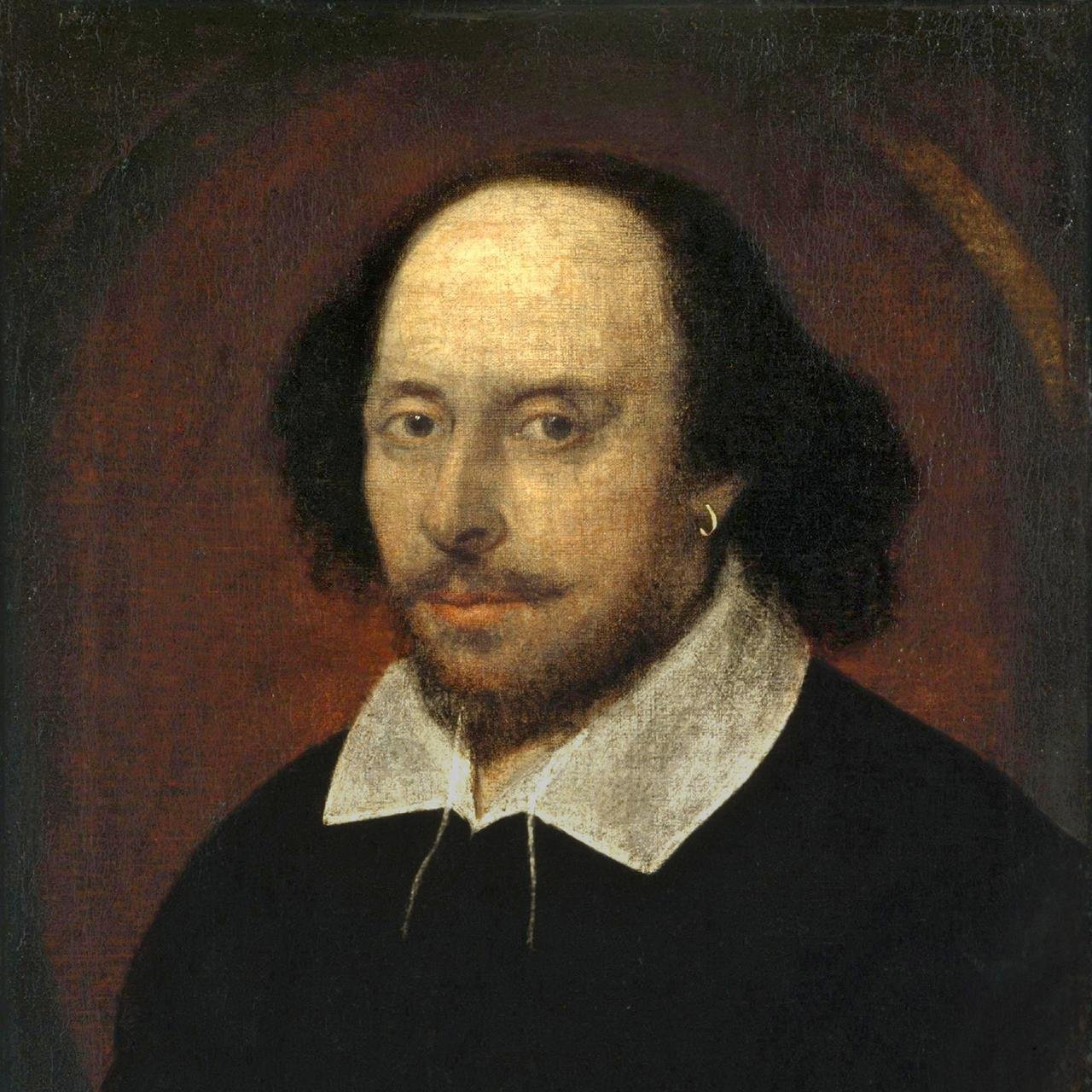
Shakespeare’s famous “upstart crow” insult may have come from collaborator Thomas Nashe
Portrait of William Shakespeare. Public Domain.

The insult first appeared in the 1592 pamphlet Greene’s Groatsworth of Wit, published a short time after Greene’s death. It criticized an “upstart crow beautified with our feathers,” commonly interpreted as a slight against Shakespeare, an actor-turned-playwright without a university education. The passage accuses him of intruding into literary territory claimed by the more formally educated “university wits,” a group that included Greene, Nashe, George Peele, and Christopher Marlowe.

Despite Groatsworth being traditionally ascribed to Greene, the recent study by Professor Brett Greatley-Hirsch (University of Leeds), Professor Andrew Hadfield (University of Sussex), and Dr. Rachel White (Durham University) presents compelling textual and computational evidence that Nashe is very possibly the author of the infamous lines.
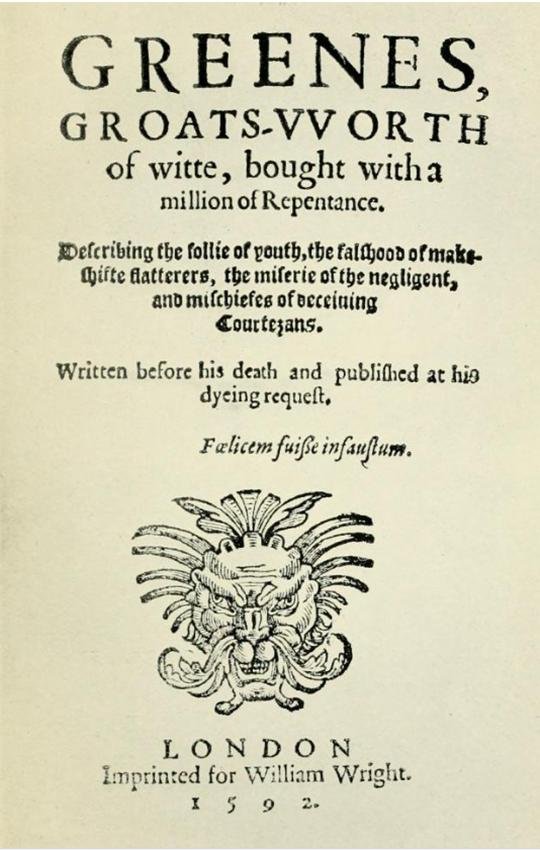
Shakespeare’s famous “upstart crow” insult may have come from collaborator Thomas Nashe
Title page of Groatsworth of Wit, 1592. Public Domain

The researchers used literary analysis and machine learning methods—including Delta analysis, Support Vector Machines, and Zeta methods—to compare linguistic patterns in Groatsworth with those in known works by Greene, Nashe, and Henry Chettle, Greene’s literary executor. Their results consistently pointed to Nashe as the likely author of the letter containing the “upstart crow” passage, with Chettle appearing to have compiled or edited other parts.
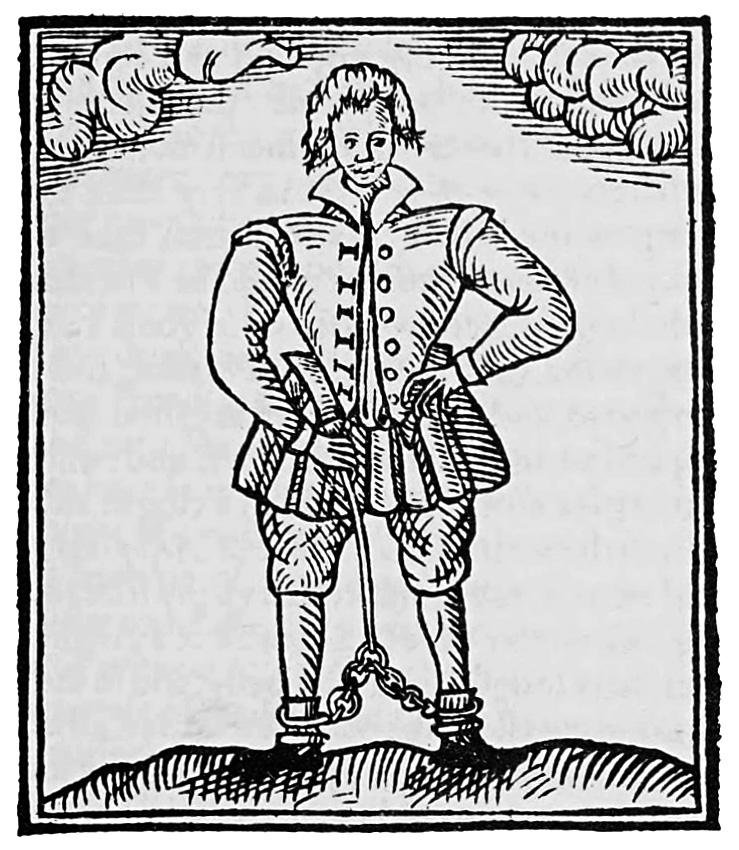
Shakespeare’s famous “upstart crow” insult may have come from collaborator Thomas Nashe
Woodcut of the author Thomas Nashe in chains. From Richard Lichfield’s The Trimming of Thomas Nashe, Gentleman (1597). Public Domain

The finding gives quantitative backing to a pre-existing hypothesis by Shakespearean scholar Professor Katherine Duncan-Jones, who had already speculated that the tone of the controversial passage matched the writing style of Nashe.

RelatedStories

Human genetic diversity and language structure show opposite global patterns, new Study Finds

Human genetic diversity and language structure show opposite global patterns, new Study Finds

May 7, 2026
Hymn to Babylon discovered, revealing ancient Mesopotamian city life

Hymn to Babylon discovered, revealing ancient Mesopotamian city life

July 2, 2025

But if Nashe wrote the insult, why would he target Shakespeare, especially since they may have collaborated on Henry VI, Part One? Specialists remain divided.
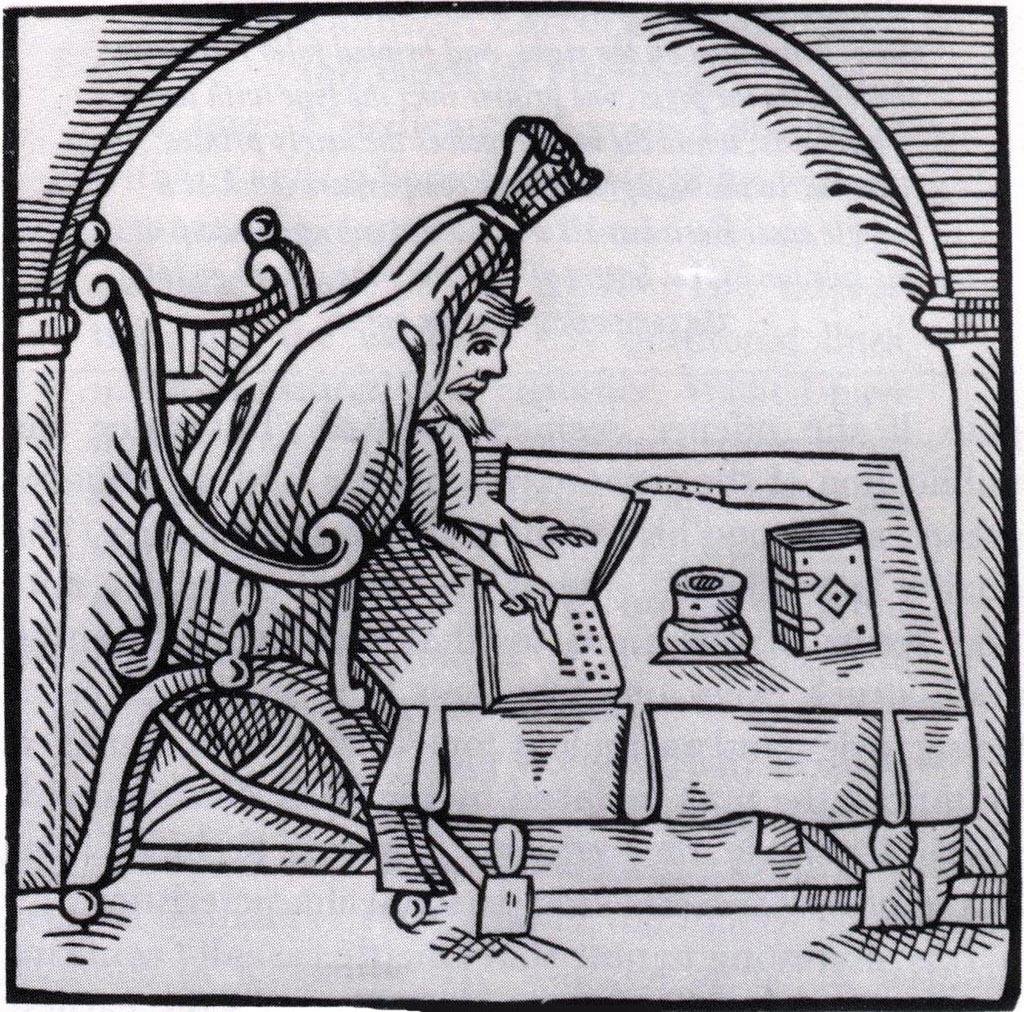
Shakespeare’s famous “upstart crow” insult may have come from collaborator Thomas Nashe
A 1598 woodcut showing Robert Greene seated at his writing desk. Public Domain

Curiously, Nashe denied authorship publicly at the time, claiming that “not the least word or syllable … proceeded from my pen.” Similarly, Chettle claimed the pamphlet was all Greene’s. However, scholars now suggest these denials may have been disingenuous.

The research not only complicates the narrative of Shakespeare’s early career and supposed rivalries but also challenges assumptions about Renaissance literary authorship. If Nashe is the author of the insult, it adds an ironic twist: the slight may have come from a friend and sometime collaborator, instead of a bitter rival.

More information: Greatley-Hirsch, B., Hadfield, A., & White, R. (2025). Upstart crows and red herrings: Thomas nashe and Greene’s groatsworth of wit. Shakespeare Quarterly. doi:10.1093/sq/quaf013

Share:

Share on Facebook Share on X (Twitter) Share on LinkedIn Share on Pinterest Share on WhatsApp Share on Email

You May Also Like...

100 Abbasid-era gold jewelry pieces found at ancient Dariyah site in Saudi Arabia
Archaeology

100 Abbasid-era gold jewelry pieces found at ancient Dariyah site in Saudi Arabia

May 22, 2026
Neanderthals gathered shellfish like modern humans 115,000 years ago, study finds
Anthropology

Neanderthals gathered shellfish like modern humans 115,000 years ago, study finds

May 21, 2026
Ancient pigeons were already living alongside humans 3,400 years ago, study finds
Archaeology

Ancient pigeons were already living alongside humans 3,400 years ago, study finds

May 21, 2026
Ancient Venetic sanctuary with rare inscriptions unearthed beneath road project in Italy
Archaeology

Ancient Venetic sanctuary with rare inscriptions unearthed beneath road project in Italy

May 21, 2026
1,000-year-old dingo burial in Australia reveals deep ties between Barkindji people and dingoes
Archaeology

1,000-year-old ritually buried dingo in Australia reveals deep ties between Barkindji people and dingoes

May 20, 2026
Ancient texts reveal how Persian and Greek rule shaped language in Central Asia
Archaeology

Ancient texts reveal how Persian and Greek rule shaped language in Central Asia

May 20, 2026

Comments 1

  1. Editorial Team says:
    1 second ago

    Disclaimer: This website is a science-focused magazine that welcomes both academic and non-academic audiences. Comments are written by users and may include personal opinions or unverified claims. They do not necessarily reflect the views of our editorial team or rely on scientific evidence.

    Comment Policy: We kindly ask all commenters to engage respectfully. Comments that contain offensive, insulting, degrading, discriminatory, or racist content will be automatically removed.

  2. Richard M. Waugaman, M.D. says:
    11 months ago

    Objective research suggests the insult wasn’t even directed at Shakespeare, but at the prominent actor Edward Alleyn. The wording fits much better with him.

Follow us


Instagram
242K

Facebook
117K

Threads
46K

LinkedIn
14K

Twitter
6K

YouTube
1K
100 Abbasid-era gold jewelry pieces found at ancient Dariyah site in Saudi Arabia

100 Abbasid-era gold jewelry pieces found at ancient Dariyah site in Saudi Arabia

May 22, 2026
Neanderthals gathered shellfish like modern humans 115,000 years ago, study finds

Neanderthals gathered shellfish like modern humans 115,000 years ago, study finds

May 21, 2026
Ancient pigeons were already living alongside humans 3,400 years ago, study finds

Ancient pigeons were already living alongside humans 3,400 years ago, study finds

May 21, 2026
Ancient Venetic sanctuary with rare inscriptions unearthed beneath road project in Italy

Ancient Venetic sanctuary with rare inscriptions unearthed beneath road project in Italy

May 21, 2026

Archaeology News online magazine

Archaeology News is an international online magazine that covers all aspects of archaeology.


Categories

  • Academics
    • Books
    • Conferences
    • Universities
  • Articles
  • Download
  • Game
  • News
    • Anthropology
    • Archaeology
    • Paleontology
  • Quiz
  • Tours

Subscribe to our newsletter

© 2024 - Archaeology News Online Magazine. All Rights Reserved.

  • About
  • Privacy Policy
  • Terms of Use
  • Donation
  • Contact

Manage Consent
To provide the best experiences, we use technologies like cookies to store and/or access device information. Consenting to these technologies will allow us to process data such as browsing behavior or unique IDs on this site. Not consenting or withdrawing consent, may adversely affect certain features and functions.
Functional Always active
The technical storage or access is strictly necessary for the legitimate purpose of enabling the use of a specific service explicitly requested by the subscriber or user, or for the sole purpose of carrying out the transmission of a communication over an electronic communications network.
Preferences
The technical storage or access is necessary for the legitimate purpose of storing preferences that are not requested by the subscriber or user.
Statistics
The technical storage or access that is used exclusively for statistical purposes. The technical storage or access that is used exclusively for anonymous statistical purposes. Without a subpoena, voluntary compliance on the part of your Internet Service Provider, or additional records from a third party, information stored or retrieved for this purpose alone cannot usually be used to identify you.
Marketing
The technical storage or access is required to create user profiles to send advertising, or to track the user on a website or across several websites for similar marketing purposes.
  • Manage options
  • Manage services
  • Manage {vendor_count} vendors
  • Read more about these purposes
View preferences
  • {title}
  • {title}
  • {title}
  • Home
  • News
    • Archaeology
    • Anthropology
    • Paleontology
  • Academic
    • Books
    • Conferences
    • Universities
  • Articles
  • VR Tours
  • Quiz & Game
  • Download
  • Encyclopedia
  • Forum

About  .  Contact  .  Donation

© 2024 - Archaeology News Online Magazine. All Rights Reserved