
A recent international study led by the University of Zurich examines links between human genetic diversity and language structure across world regions. Researchers combined population genetics datasets with linguistic databases, focusing on grammar patterns such as verb placement and sentence structure. Linguistic structural diversity shows uneven distribution across world regions. Findings appear in Proceedings of the National Academy of Sciences.

A consistent pattern appears across regions. Places with high genetic diversity show languages with more similar structural patterns. Regions with low genetic diversity show languages with wider structural variation. Statistical controls include geography, population density, environmental conditions, and long-term settlement history. The inverse relationship persists after controlling for major environmental and demographic factors.
Researchers compared variation among individuals with structural differences among languages in shared regions. Genetic diversity was measured through levels of shared ancestry and homozygosity across populations. Linguistic diversity was measured through variation in grammatical features such as word order patterns. Researchers also applied entropy measures across language datasets.
Population history shapes both genetics and language. Regions with frequent migration show higher genetic mixing and stronger spread of linguistic features across communities. Languages in these areas become structurally similar. Contact between groups leads to the diffusion of grammatical features. Regions with long-term isolation show lower genetic mixing and greater divergence in grammatical systems.
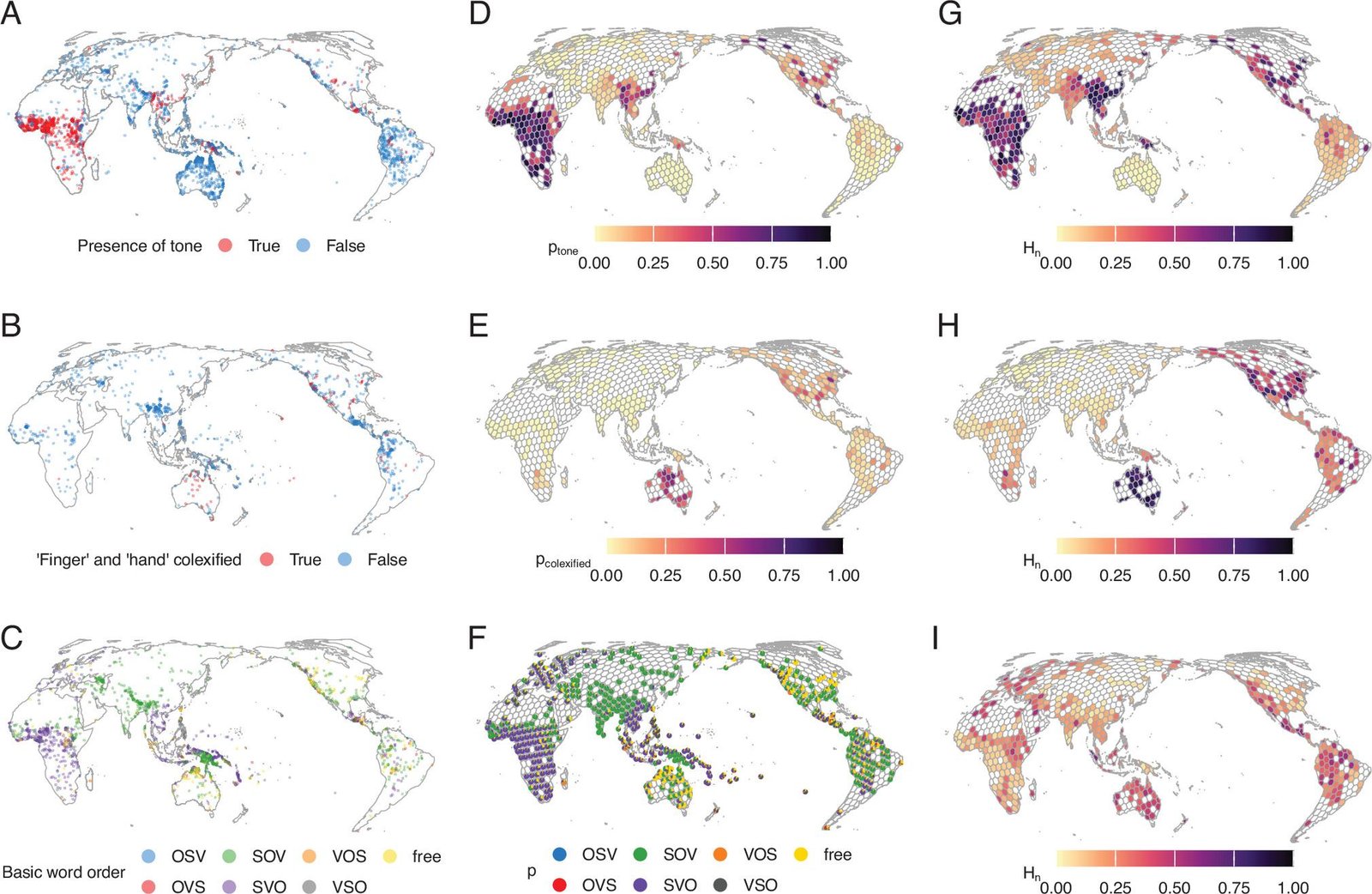
New Guinea and the Himalayan regions show low genetic diversity paired with high variation in language structure. Languages across these regions differ in grammar and sound systems compared with regions of frequent contact, such as parts of Europe and other highly connected areas. Some regions experienced long periods of separation across thousands of years.


Anna Graff, lead author at the University of Zurich, describes consistent global pattern across datasets. Graff says: “Global pattern remains consistent across regions”. Chiara Barbieri, a population geneticist at the University of Cagliari, links contact with genetic mixing and the spread of linguistic features across groups. Senior author Chiara Barbieri connects migration history with reduced structural differences among languages in connected regions.
Balthasar Bickel notes regions with long isolation preserve wider ranges of grammatical systems. These regions show language diversity reduced in areas with strong historical contact and migration. Variation appears across specific linguistic features such as verb placement patterns. Results link language structure closely with human population history across continents.
Publication: Graff, A., Ringen, E. J., Zakharko, T., Stoneking, M., Shimizu, K. K., Bickel, B., & Barbieri, C. (2026). An inverse correlation between structural linguistic and human genetic diversity. Proceedings of the National Academy of Sciences of the United States of America, 123(18), e2526762123. doi:10.1073/pnas.2526762123



















Disclaimer: This website is a science-focused magazine that welcomes both academic and non-academic audiences. Comments are written by users and may include personal opinions or unverified claims. They do not necessarily reflect the views of our editorial team or rely on scientific evidence.
Comment Policy: We kindly ask all commenters to engage respectfully. Comments that contain offensive, insulting, degrading, discriminatory, or racist content will be automatically removed.