• About
  • Privacy Policy
  • Terms of Use
  • Donation
  • Contact
No Result
View All Result
Archaeology News
  • Home
  • News
    • Archaeology
    • Anthropology
    • Paleontology
  • Academic
    • Books
    • Conferences
    • Universities
  • Articles
  • VR Tours
  • Quiz & Game
  • Download
  • Encyclopedia
  • Forum
Archaeology News
No Result
View All Result
Home News Archaeology

Lost Tiwanaku temple unearthed in Bolivia reveals ancient Andes trade and ritual network

by Dario Radley
June 24, 2025

Archaeologists have unearthed a previously unknown temple complex in Bolivia, belonging to the Tiwanaku civilization, one of South America’s oldest and most influential ancient cultures. The temple, built on a hill in the Caracollo municipality, approximately 215 km (130 miles) southeast of the main site at Tiwanaku near Lake Titicaca, was recently unearthed by a team of researchers led by José Capriles, an associate professor of anthropology at Penn State, in collaboration with Bolivian partners.
Lost Tiwanaku temple unearthed in Bolivia reveals ancient Andes trade and ritual network
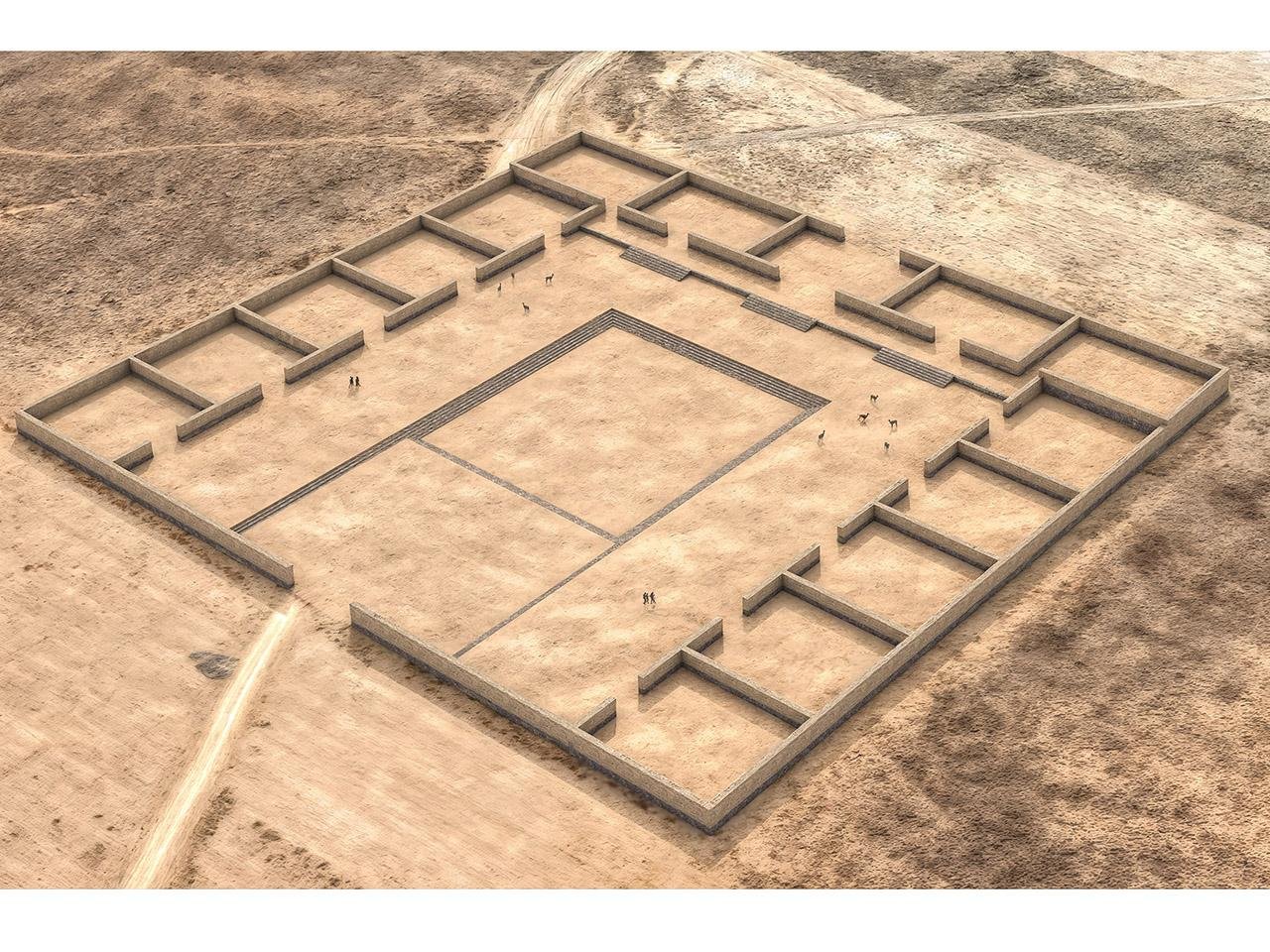
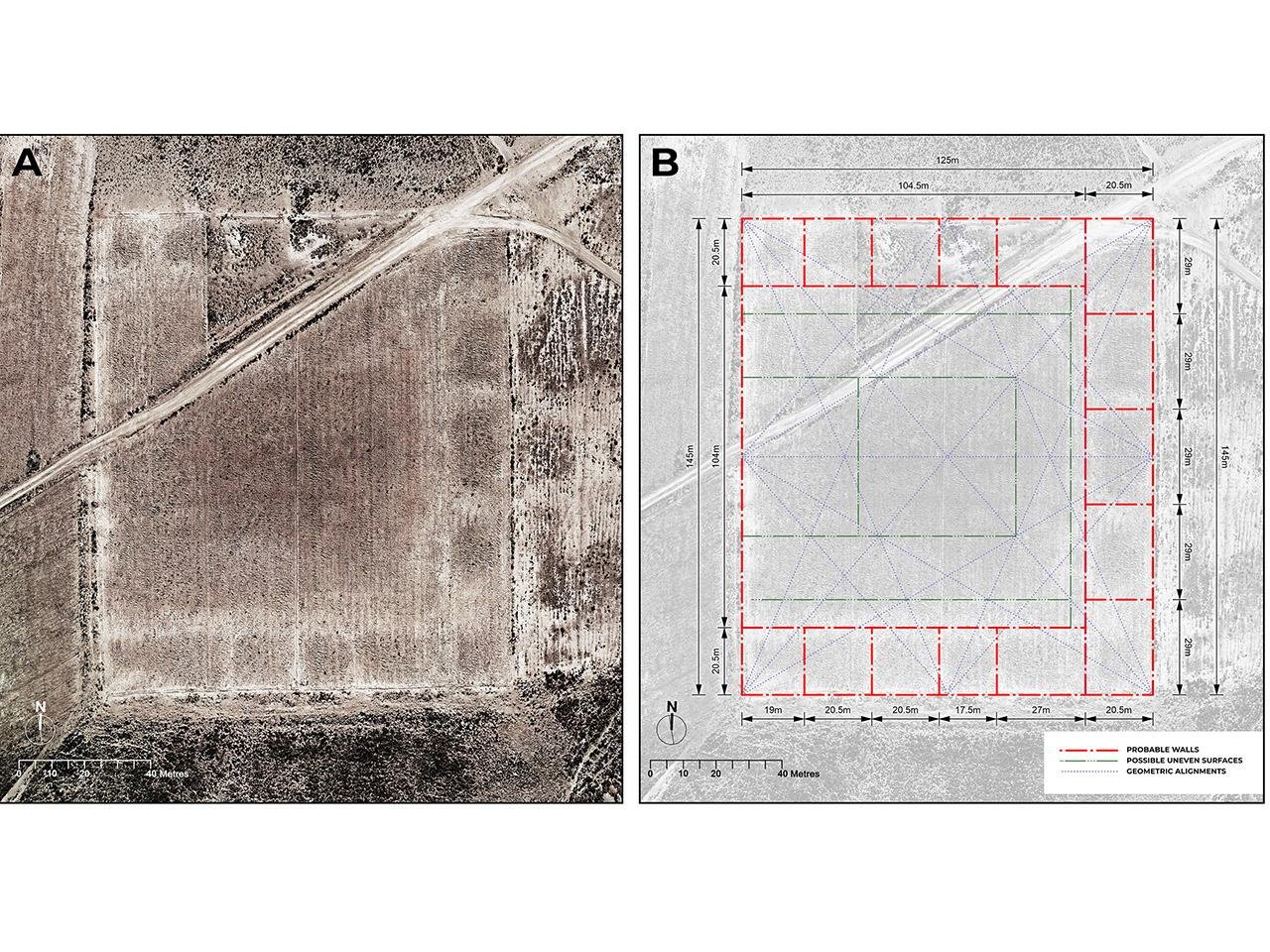
Stone alignments revealed an ancient temple, called Palaspata after the native name for the area. The temple complex is approximately 125 meters long by 145 meters wide — about the size of a city block — and includes 15 quadrangular enclosures arranged around a rectangular inner courtyard. This is a digital reconstruction of the temple. Credit: José Capriles / Penn State

Called Palaspata, named after the local Indigenous area, the complex had been locally familiar to farmers for decades but had never before been comprehensively studied. Using satellite imagery, drone aerial photography, and photogrammetry, the team identified faint surface features that suggested the presence of a terraced ceremonial structure. As described in research published June 24 in Antiquity, the site is about 125 by 145 meters in size—about the size of a city block—and contains 15 rectangular enclosures that are organized around a central sunken courtyard.

According to the researchers, at the time of Tiwanaku, the site connected three main trade routes spanning three vastly different ecosystems: the productive highlands around Lake Titicaca to the north, the arid Altiplano ideal for herding llamas to the west, and the agriculturally productive eastern Andean valleys of Cochabamba to the east.
Lost Tiwanaku temple unearthed in Bolivia reveals ancient Andes trade and ritual network
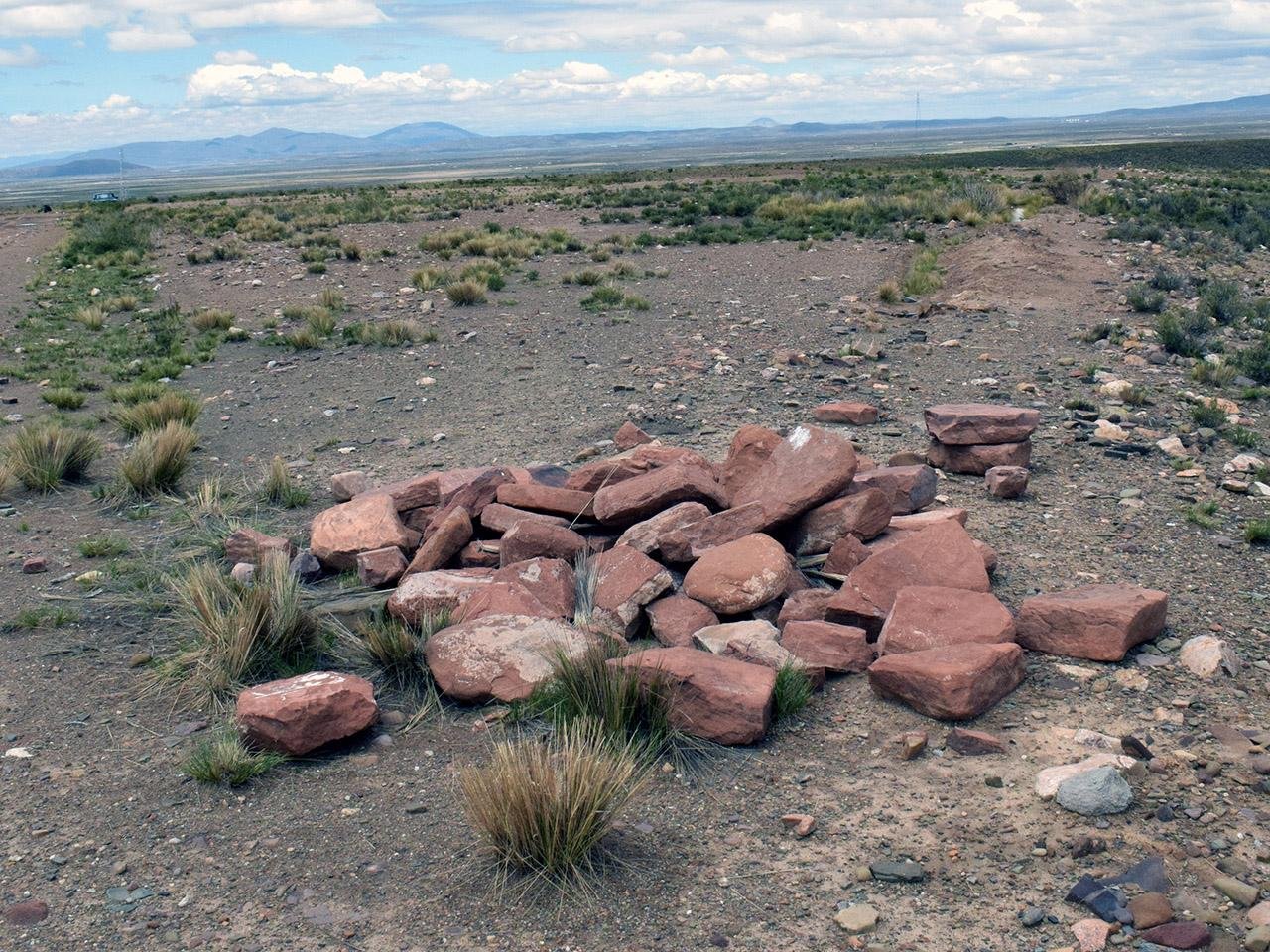
The newly discovered temple complex is located roughly 130 miles south of Tiwanaku’s established historical site, on top of a hill that was never explored in depth by researchers due to its unassuming location. Credit: José Capriles / Penn State

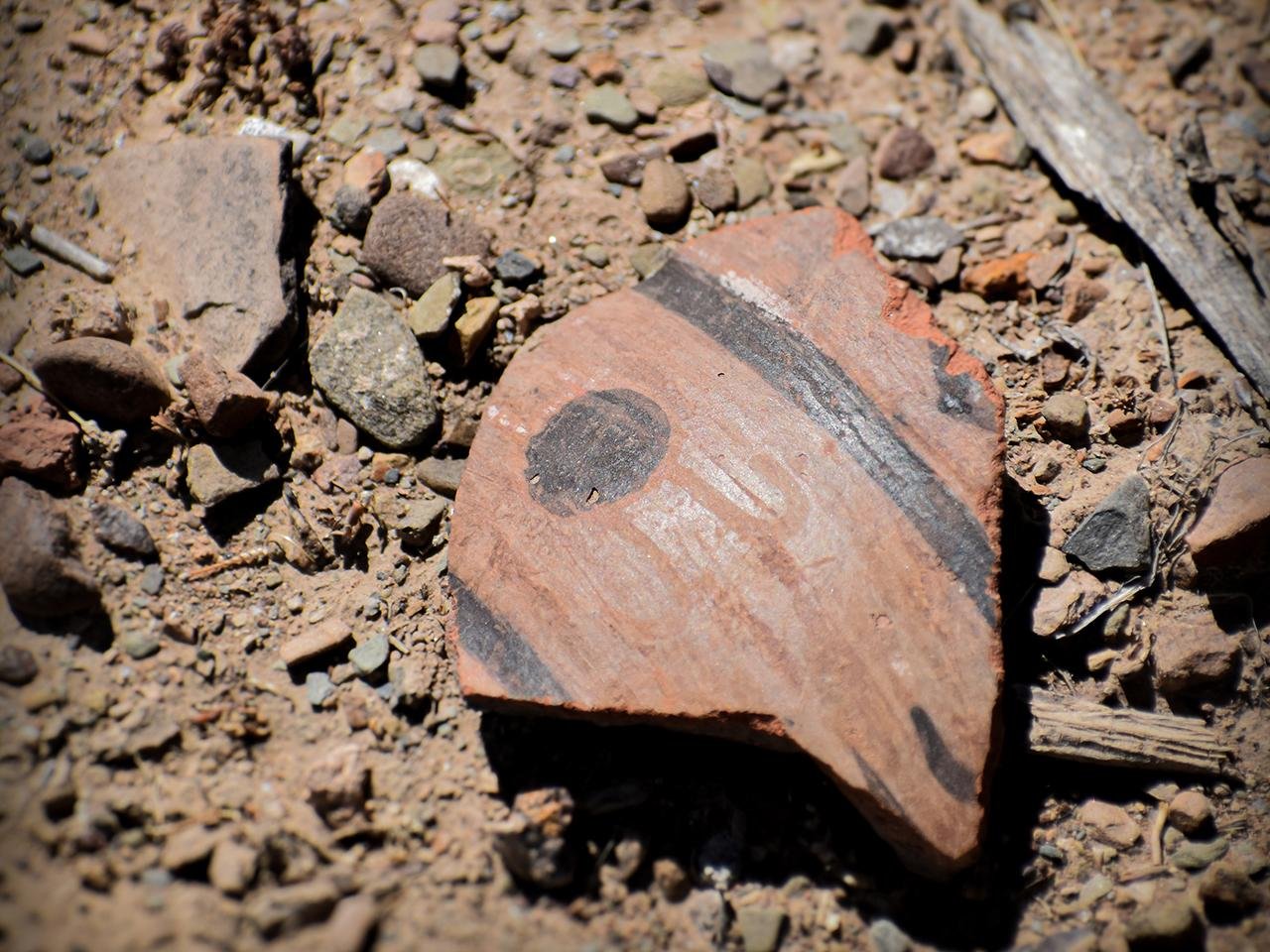
The temple’s architecture is comparable to known Tiwanaku structures and is most likely aligned with the solar equinox. Excavation revealed numerous fragments of kerus (ceremonial cups), which were traditionally used to drink chicha, a fermented maize beverage. Maize is not cultivated at high altitudes, and thus its presence indicates long-distance exchange, further emphasizing the site’s role as a connector between different regions.
Lost Tiwanaku temple unearthed in Bolivia reveals ancient Andes trade and ritual network
The surface of the temple contained numerous fragments of keru cups. The cups were used for drinking chicha, a traditional maize beer, during agricultural feasts and celebrations and point to the temple’s function as a central hub for trade. Credit: José Capriles / Penn State

Capriles explained that in Tiwanaku society, economic and political activities were often mediated through religious practices. “Divinity was a common language that would facilitate various individuals cooperating,” he said.

The discovery lends physical evidence to long-standing theories regarding Tiwanaku’s influence beyond its core territory. There has been debate among scholars regarding the extent of the civilization’s power, but Palaspata now offers definitive proof of state-level investment in peripheral infrastructure.
Lost Tiwanaku temple unearthed in Bolivia reveals ancient Andes trade and ritual network
The temple’s layout seems aligned to perform rituals following the solar equinox, the moment when the sun is directly above the equator. Using data they collected, the researchers developed a reconstruction to reveal what the ancient temple might have looked like. Credit: José Capriles / Penn State

The finding is also important on a local level. “This discovery is vital for our community,” said Justo Ventura Guarayo, mayor of Caracollo. “It highlights a crucial aspect of our local heritage that had been completely overlooked. We believe its documentation will be invaluable for promoting tourism and showcasing our region’s rich history.”

Together with the Ministry of Culture, Depatriarchalization, and Decolonization in Bolivia, researchers have sent samples to be radiocarbon dated, which were analyzed at Penn State’s Institute for Energy and the Environment. Further studies will be conducted to determine the temple’s precise age and its position in relation to other Tiwanaku ceremonial sites.
More information: Pennsylvania State University
Scientific Publication: Capriles, J. M., Calla Maldonado, S., Calero, J. P., & Delaere, C. (2025). Gateway to the east: the Palaspata temple and the south-eastern expansion of the Tiwanaku state. Antiquity, 99(405), 831–849. doi:10.15184/aqy.2025.59

Share:

Share on Facebook Share on X (Twitter) Share on LinkedIn Share on Pinterest Share on WhatsApp Share on Email

You May Also Like...

17,000-year-old cave paintings in Wales confirmed as the oldest rock art in the British Isles
Archaeology

17,000-year-old cave paintings in Wales confirmed as the oldest rock art in the British Isles

June 3, 2026
4-million-year-old juvenile tapir skeleton unearthed in Spain is the most complete ever found in Europe
Paleontology

4-million-year-old juvenile tapir skeleton unearthed in Spain is the most complete ever found in Europe

June 3, 2026
Langobard woman with healed skull injuries challenges assumptions about violence in early medieval society
Anthropology

Langobard woman with healed skull injuries challenges assumptions about violence in early medieval society

June 2, 2026
Ancient city of Ihnasya reveals Aphrodite statue, Senusret III inscription, and Roman basilica remains in Egypt
Archaeology

Ancient city of Ihnasya reveals Aphrodite statue, Senusret III inscription, and Roman basilica remains in Egypt

June 2, 2026
Rare funerary cache discovered at ancient Heliopolis site
Archaeology

Rare funerary cache discovered at ancient Heliopolis site

June 2, 2026
Archaeologists find Queen Elisenda’s remains among 25 medieval skeletons, including individuals with unexplained stab wounds
Anthropology

Archaeologists find Queen Elisenda’s remains among 25 medieval skeletons, including individuals with unexplained stab wounds

June 1, 2026

Follow us


Instagram
242K

Facebook
117K

Threads
47K

LinkedIn
15K

Twitter
6K

YouTube
1K

Archaeology News online magazine

Archaeology News is an international online magazine that covers all aspects of archaeology.


Categories

  • Academics
    • Books
    • Conferences
    • Universities
  • Articles
  • Download
  • Game
  • News
    • Anthropology
    • Archaeology
    • Paleontology
  • Quiz
  • Tours

Subscribe to our newsletter

© 2024 - Archaeology News Online Magazine. All Rights Reserved.

  • About
  • Privacy Policy
  • Terms of Use
  • Donation
  • Contact

Manage Consent
To provide the best experiences, we use technologies like cookies to store and/or access device information. Consenting to these technologies will allow us to process data such as browsing behavior or unique IDs on this site. Not consenting or withdrawing consent, may adversely affect certain features and functions.
Functional Always active
The technical storage or access is strictly necessary for the legitimate purpose of enabling the use of a specific service explicitly requested by the subscriber or user, or for the sole purpose of carrying out the transmission of a communication over an electronic communications network.
Preferences
The technical storage or access is necessary for the legitimate purpose of storing preferences that are not requested by the subscriber or user.
Statistics
The technical storage or access that is used exclusively for statistical purposes. The technical storage or access that is used exclusively for anonymous statistical purposes. Without a subpoena, voluntary compliance on the part of your Internet Service Provider, or additional records from a third party, information stored or retrieved for this purpose alone cannot usually be used to identify you.
Marketing
The technical storage or access is required to create user profiles to send advertising, or to track the user on a website or across several websites for similar marketing purposes.
  • Manage options
  • Manage services
  • Manage {vendor_count} vendors
  • Read more about these purposes
View preferences
  • {title}
  • {title}
  • {title}
  • Home
  • News
    • Archaeology
    • Anthropology
    • Paleontology
  • Academic
    • Books
    • Conferences
    • Universities
  • Articles
  • VR Tours
  • Quiz & Game
  • Download
  • Encyclopedia
  • Forum

About  .  Contact  .  Donation

© 2024 - Archaeology News Online Magazine. All Rights Reserved