• About
  • Privacy Policy
  • Terms of Use
  • Donation
  • Contact
No Result
View All Result
Archaeology News
  • Home
  • News
    • Archaeology
    • Anthropology
    • Paleontology
  • Academic
    • Books
    • Conferences
    • Universities
  • Articles
  • VR Tours
  • Quiz & Game
  • Download
  • Encyclopedia
  • Forum
Archaeology News
No Result
View All Result
Home News Anthropology

Unusual cases of cranial modification discovered in Viking women

by Dario Radley
March 31, 2024

Recent archaeological studies centered on the Viking era in Scandinavia have unearthed a plethora of permanent bodily modifications, illuminating the methods through which ancient societies communicated and expressed social identities.
Unusual cases of cranial modification discovered in Viking women
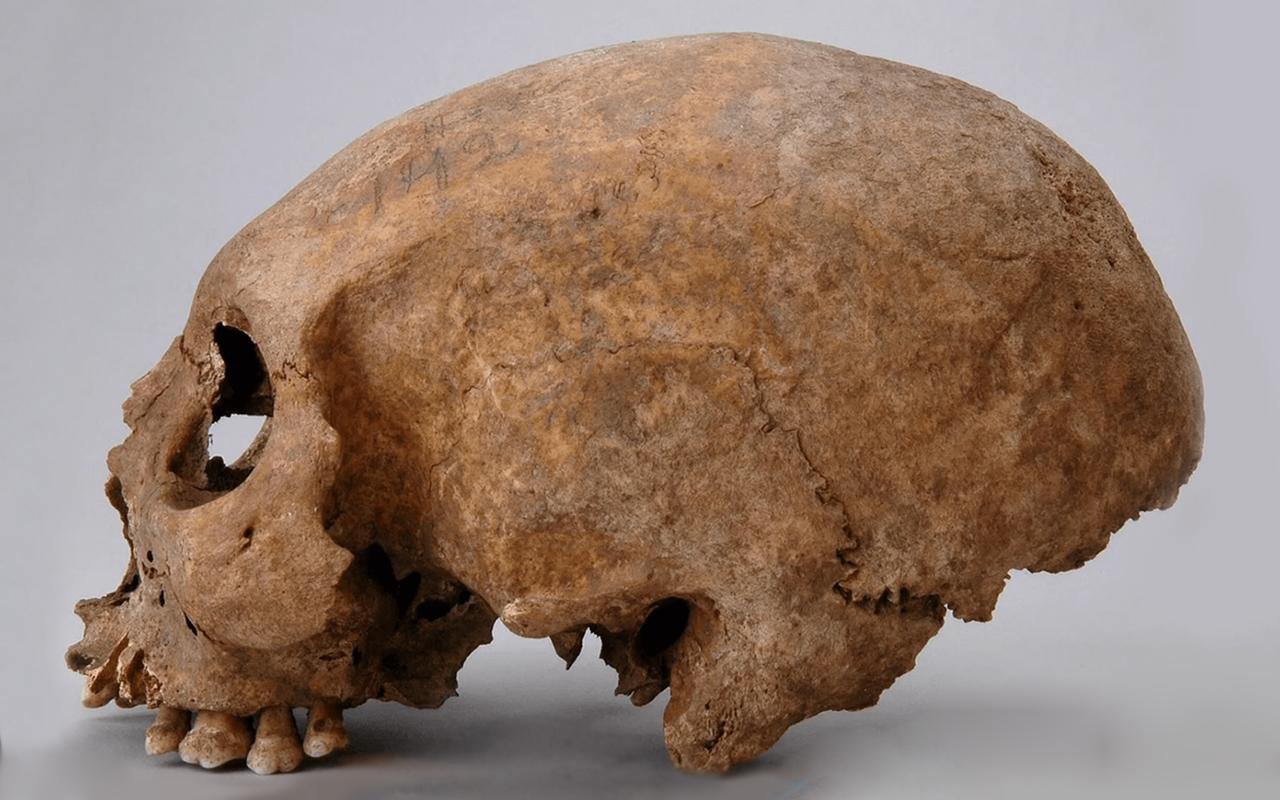
The skull of a female individual in grave 192 from Havor, located in Hablingbo parish, Gotland, shows signs of deliberate modification. Credit: SHM/Johnny Karlsson 2008-11-05 (CC BY 2.5 SE)

A study, conducted by Matthias Toplak and Lukas Kerk and published in Current Swedish Archaeology, has brought to attention various forms of bodily alterations prevalent among Vikings, particularly in Gotland, a Baltic island serving as a significant trading hub during that time.

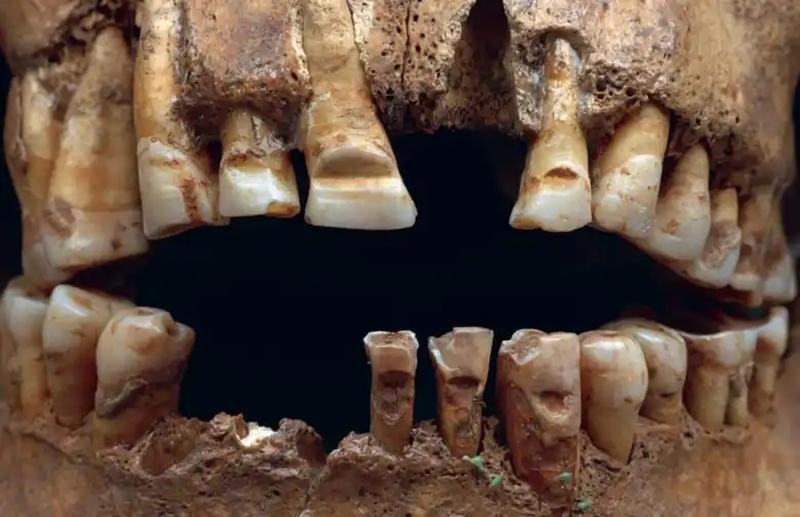
Among the most intriguing discoveries are dental alterations, with approximately 130 individuals, predominantly adult men, found to have horizontal grooves carved into their teeth. Concentrated mainly on Gotland, these modifications have sparked debates ranging from interpretations as marks of slaves to symbols denoting elite warrior status.
Unusual cases of cranial modification discovered in Viking women
Detail of the filed teeth of the male individual from grave 25 at Slite, Othem parish, Gotland. Credit: Lisa Hartzell

However, a closer examination suggests they may have functioned as signals of identification within a closed group of traders, akin to later medieval guilds. Variations in the patterns of notches indicate a possible regional signaling code, facilitating communication both within and outside the immediate community.

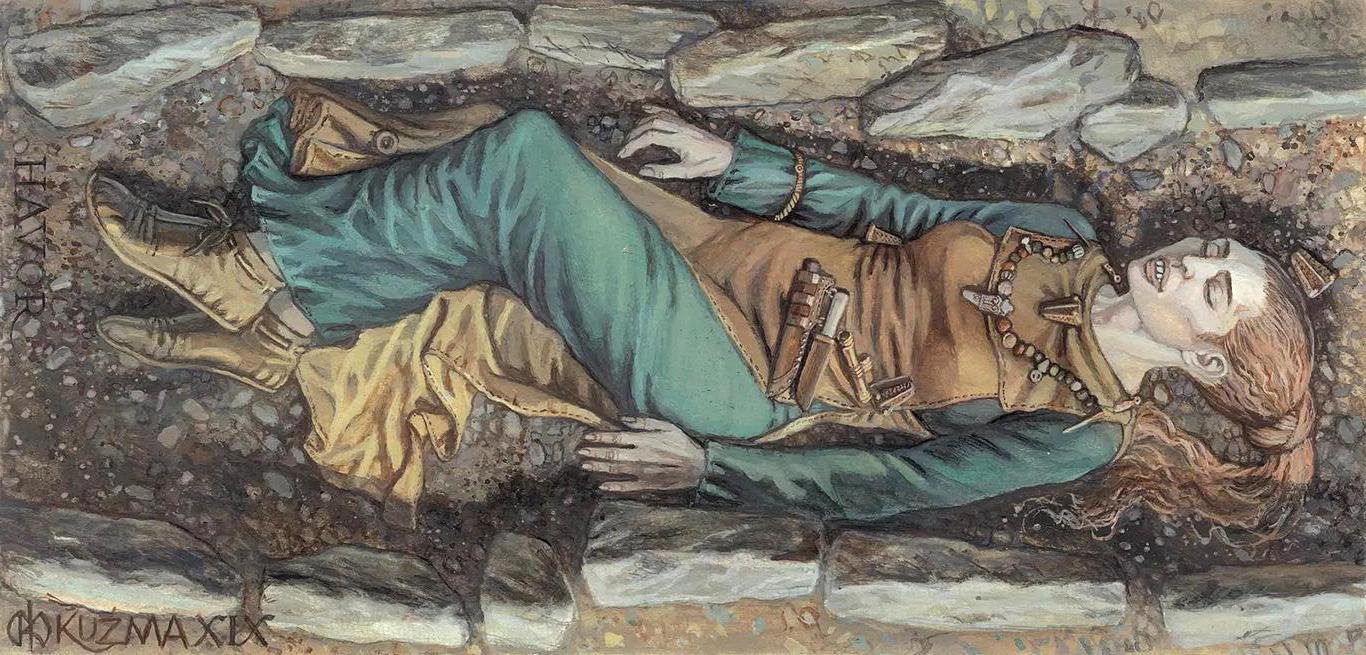
Moreover, the study unveils the presence of three Viking women with artificially elongated skulls, a practice seemingly foreign to Scandinavian Viking culture but prevalent in Eastern Europe during the same period. These women, buried with elaborate jewelry indicative of their acceptance and integration into the local community, raise questions about the adaptation and reinterpretation of foreign identity practices in Viking society.

RelatedStories

1,000-year-old English coins created against Viking raids found in Denmark

1,000-year-old English coins created against Viking raids found in Denmark

May 10, 2026
The Rold Treasure includes six Viking Age gold arm rings weighing a total of 762.5 grams, making it Denmark’s third-largest Viking gold hoard. Credit: North Jutland Museums

1,000-year-old Viking gold hoard discovered in Denmark among largest ever found

May 8, 2026
Unusual cases of cranial modification discovered in Viking women
Drawing of the grave of the female individual with an artificially modified skull in Havor grave 192, Hablingbo parish, Gotland. Credit: Mirosław Kuźma / Matthias Toplak

The methodology behind these cranial modifications remains enigmatic. Whether these modifications were carried out before arrival in Scandinavia or on Gotland itself remains unclear, prompting researchers to explore possible cultural exchanges and societal interpretations of such alterations.

Toplak and Kerk emphasize that these bodily modifications served not only as physical alterations but also as embodied signals conveying complex messages about an individual’s social status, group affiliation, and possibly cultural background. Through decoding these signals, researchers gain insights into the dynamic social dynamics and cultural practices of Viking communities.


More information: Matthias S. Toplak, Lukas Kerk, (2023). Body Modification on Viking Age Gotland. Filed Teeth and Artificially Modified Skulls as Embodiment of Social Identities. Current Swedish Archaeology, vol.31, doi:10.37718/CSA.2023.09

Share:

Share on Facebook Share on X (Twitter) Share on LinkedIn Share on Pinterest Share on WhatsApp Share on Email

You May Also Like...

Svalbard whalers show scurvy and extreme labor stress in “corpse point” cemetery
Anthropology

Svalbard whalers show scurvy and extreme labor stress in “corpse point” cemetery

May 25, 2026
'Patchwork families' lived in Europe over 5,000 years ago, Neolithic DNA study finds
Anthropology

‘Patchwork families’ lived in Europe over 5,000 years ago, Neolithic DNA study finds

May 25, 2026
100,000-year-old Homo sapiens bones from Ethiopia may preserve earliest evidence of human cremation
Anthropology

100,000-year-old Homo sapiens bones from Ethiopia may preserve earliest evidence of human cremation

May 24, 2026
Ancient Peruvian hairless dogs buried with Wari elites 1,200 years ago
Archaeology

Ancient Peruvian hairless dogs buried with Wari elites 1,200 years ago

May 24, 2026
4,000-year-old Mohenjo-daro study finds ancient city grew more equal over time
Archaeology

4,000-year-old Mohenjo-daro study finds ancient city grew more equal over time

May 24, 2026
Bronze Age towers in Sardinia remained centers of worship and ritual in the Iron Age
Archaeology

Bronze Age towers in Sardinia remained centers of worship and ritual in the Iron Age

May 23, 2026

Follow us


Instagram
242K

Facebook
117K

Threads
46K

LinkedIn
14K

Twitter
6K

YouTube
1K
Svalbard whalers show scurvy and extreme labor stress in “corpse point” cemetery

Svalbard whalers show scurvy and extreme labor stress in “corpse point” cemetery

May 25, 2026
'Patchwork families' lived in Europe over 5,000 years ago, Neolithic DNA study finds

‘Patchwork families’ lived in Europe over 5,000 years ago, Neolithic DNA study finds

May 25, 2026
100,000-year-old Homo sapiens bones from Ethiopia may preserve earliest evidence of human cremation

100,000-year-old Homo sapiens bones from Ethiopia may preserve earliest evidence of human cremation

May 24, 2026
Ancient Peruvian hairless dogs buried with Wari elites 1,200 years ago

Ancient Peruvian hairless dogs buried with Wari elites 1,200 years ago

May 24, 2026

Archaeology News online magazine

Archaeology News is an international online magazine that covers all aspects of archaeology.


Categories

  • Academics
    • Books
    • Conferences
    • Universities
  • Articles
  • Download
  • Game
  • News
    • Anthropology
    • Archaeology
    • Paleontology
  • Quiz
  • Tours

Subscribe to our newsletter

© 2024 - Archaeology News Online Magazine. All Rights Reserved.

  • About
  • Privacy Policy
  • Terms of Use
  • Donation
  • Contact

Manage Consent
To provide the best experiences, we use technologies like cookies to store and/or access device information. Consenting to these technologies will allow us to process data such as browsing behavior or unique IDs on this site. Not consenting or withdrawing consent, may adversely affect certain features and functions.
Functional Always active
The technical storage or access is strictly necessary for the legitimate purpose of enabling the use of a specific service explicitly requested by the subscriber or user, or for the sole purpose of carrying out the transmission of a communication over an electronic communications network.
Preferences
The technical storage or access is necessary for the legitimate purpose of storing preferences that are not requested by the subscriber or user.
Statistics
The technical storage or access that is used exclusively for statistical purposes. The technical storage or access that is used exclusively for anonymous statistical purposes. Without a subpoena, voluntary compliance on the part of your Internet Service Provider, or additional records from a third party, information stored or retrieved for this purpose alone cannot usually be used to identify you.
Marketing
The technical storage or access is required to create user profiles to send advertising, or to track the user on a website or across several websites for similar marketing purposes.
  • Manage options
  • Manage services
  • Manage {vendor_count} vendors
  • Read more about these purposes
View preferences
  • {title}
  • {title}
  • {title}
  • Home
  • News
    • Archaeology
    • Anthropology
    • Paleontology
  • Academic
    • Books
    • Conferences
    • Universities
  • Articles
  • VR Tours
  • Quiz & Game
  • Download
  • Encyclopedia
  • Forum

About  .  Contact  .  Donation

© 2024 - Archaeology News Online Magazine. All Rights Reserved