
A chance find in northern Denmark leads to one of the country’s largest Viking Age gold hoards.
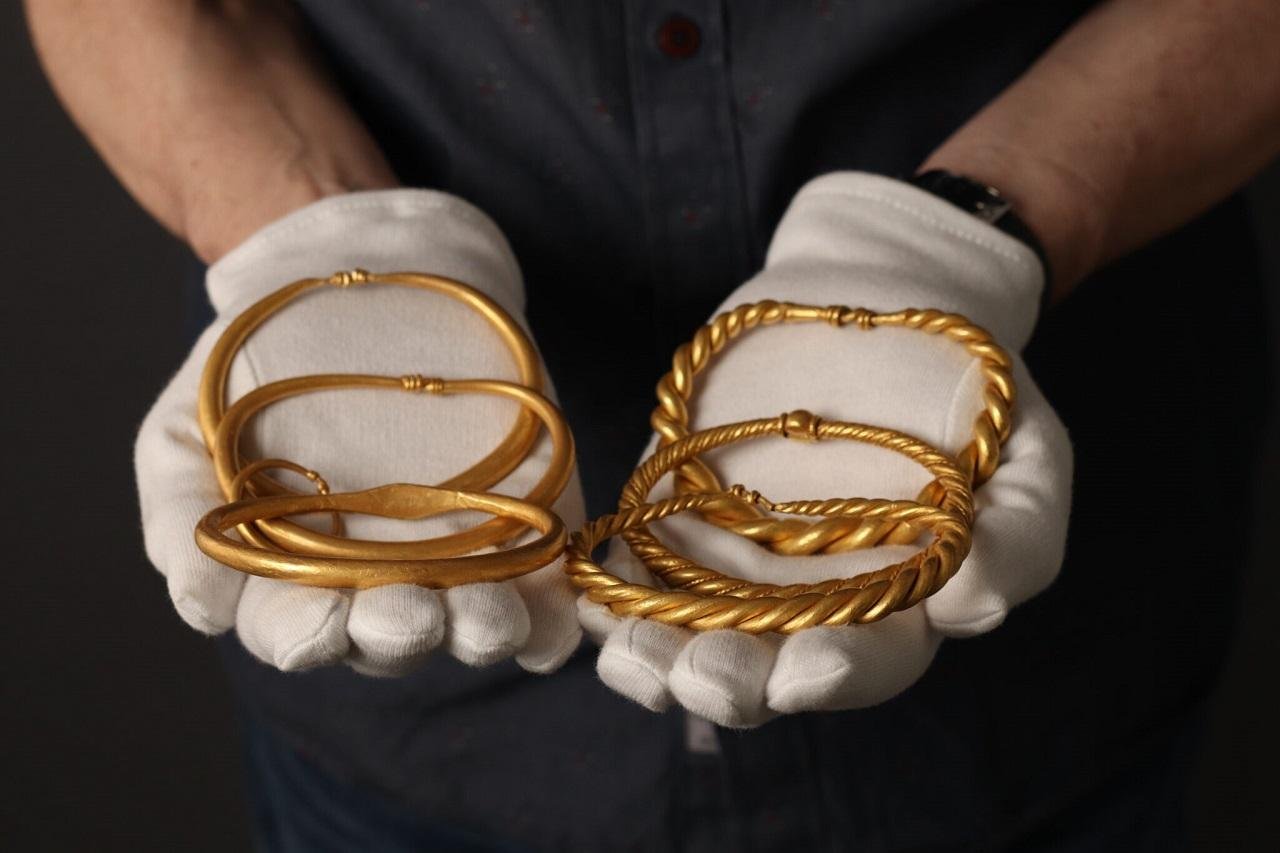
A discovery beside a forest track in northern Denmark has revealed one of the country’s most important Viking Age gold hoards in decades. Archaeologists uncovered six solid gold arm rings near Rold in Himmerland, a find now known as the Rold Treasure, which ranks as the third-largest Viking Age gold discovery ever recorded in Denmark.
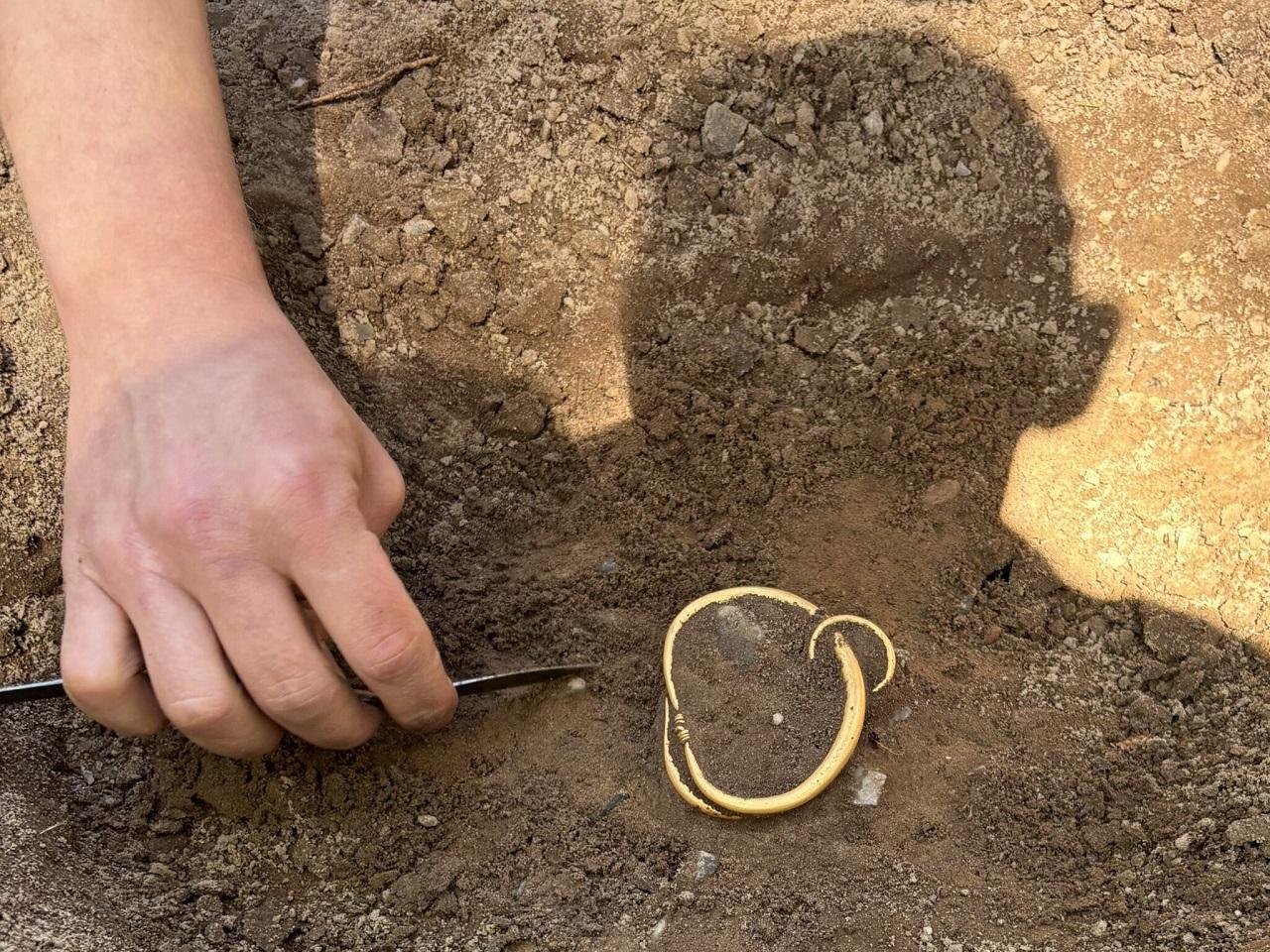
The discovery began on April 22 when a local resident brought two heavy gold rings to the archaeological department at the North Jutland Museums after noticing them partly exposed in the soil along a farm track in a wooded area. Museum archaeologists quickly identified the objects as Viking Age gold arm rings, an unusual and highly significant find.
A field investigation followed soon after. Archaeologists returned to the site and carried out a careful metal-detecting survey across a wider area. They soon located a third gold ring close to the original spot. Three more rings appeared around 15 meters away, bringing the total to six.
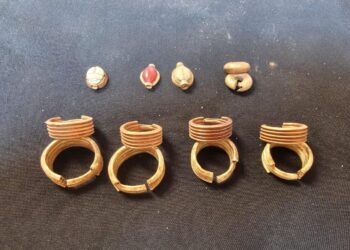
All six rings were intact and made of solid gold. Together, the hoard weighs 762.5 grams, or nearly 1.7 pounds. Only two Viking Age gold finds in Denmark have been larger: the Tissø ring found in western Zealand in 1977 and the Fæsted Hoard discovered near Ribe in 2016.
The objects date to the late Viking Age, roughly CE 900 to 1000, a period when Denmark was moving toward political unification under a single monarchy. This was the same era in which King Harald Bluetooth strengthened royal power and commemorated his achievements on the famous Jelling Stone around CE 965.
Gold arm rings of this type are known from Scandinavia, though most similar finds are made of silver rather than gold. During the Viking Age, gold was largely controlled by the social elite, making finds like this exceptionally rare.
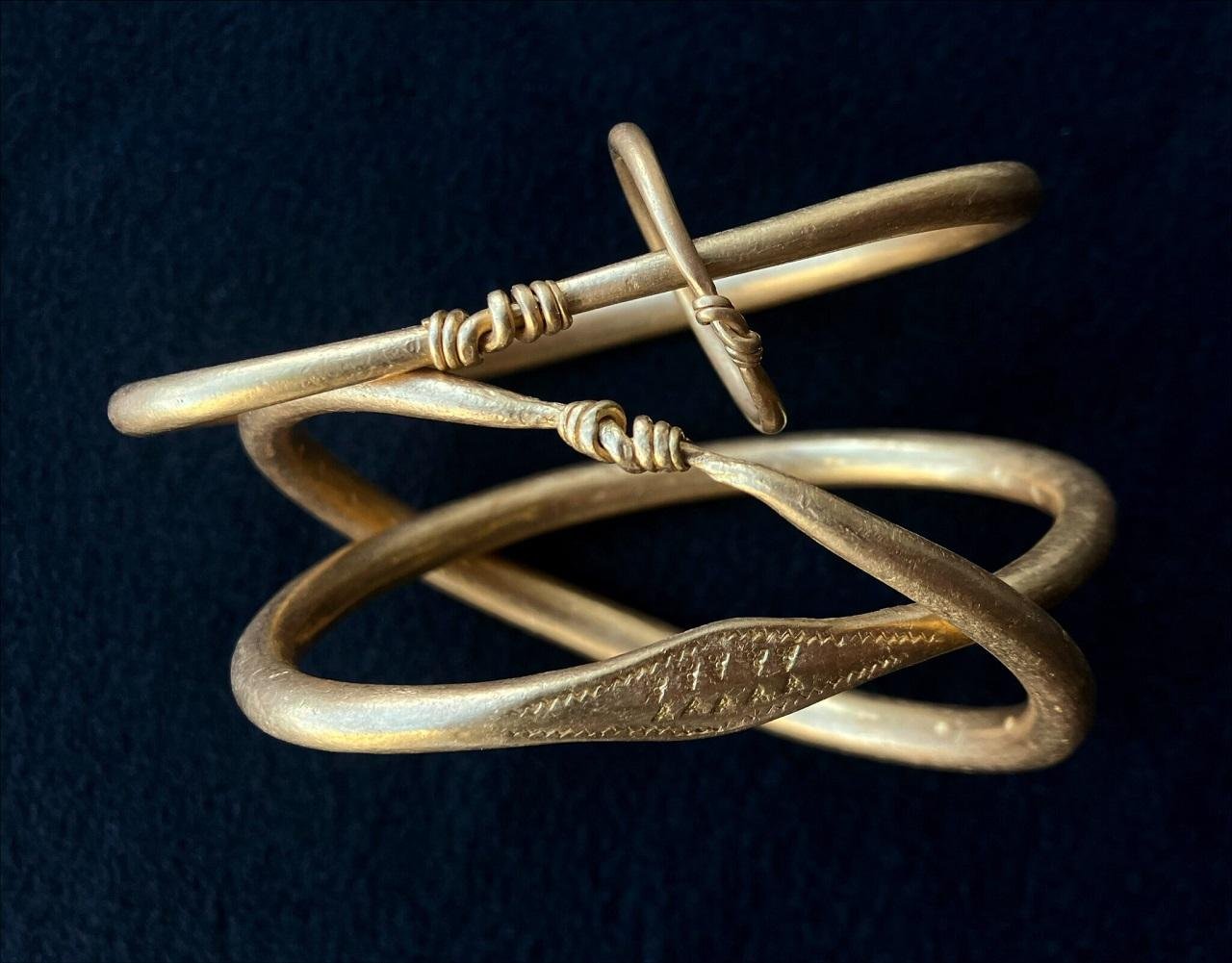
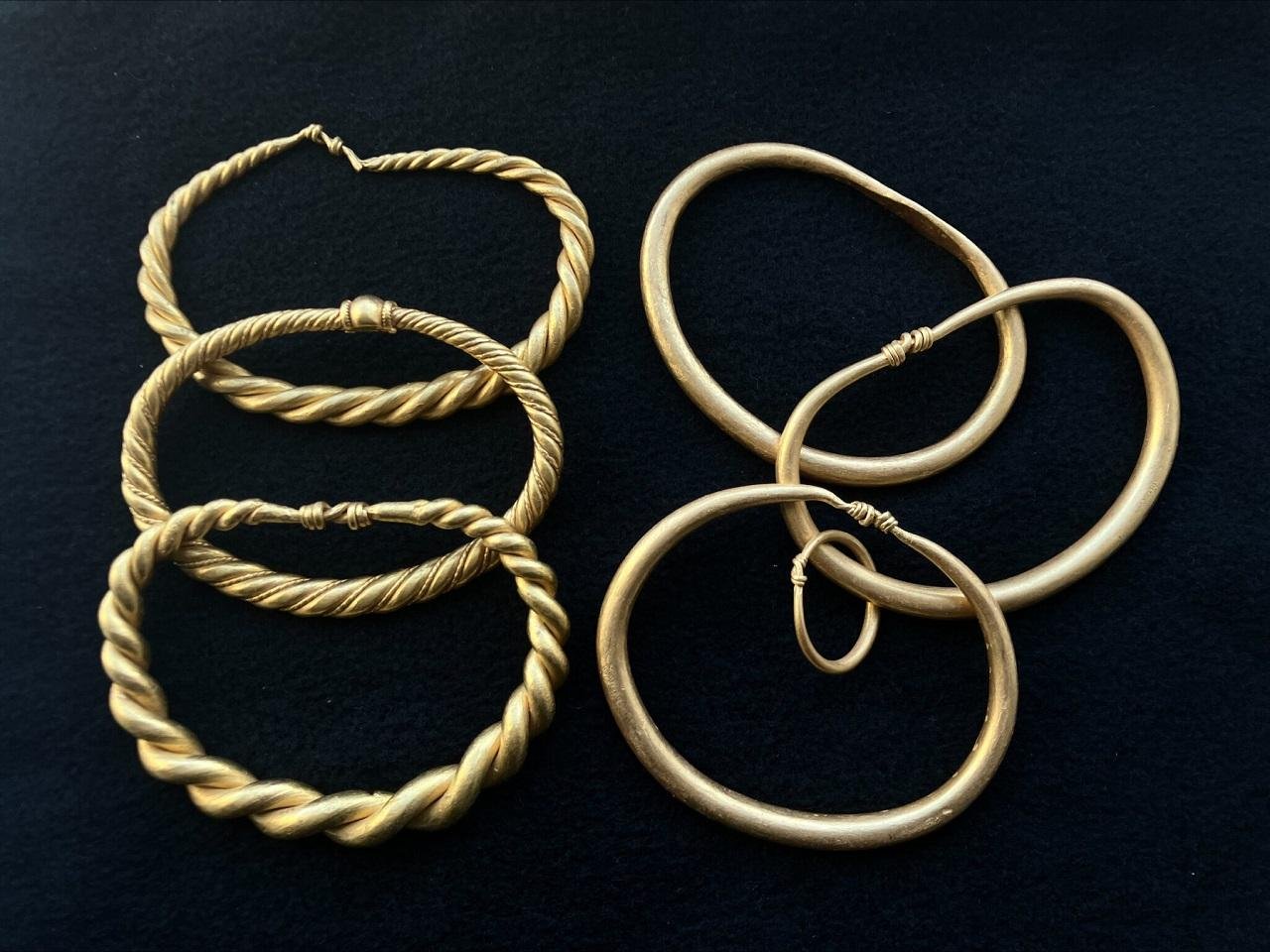
The collection includes both twisted and smooth arm rings, showing different forms of advanced metalworking. Three rings were made by twisting together two gold rods. One includes a thin inlaid gold wire and a knob-shaped clasp. The remaining pieces were shaped from solid rods or wire and finished with tightly wrapped closures known as running knots. One ring stands apart from the rest with flattened joined ends decorated with zigzag patterns and triangular designs.
The fact that all six rings were found whole is especially important to archaeologists. Viking silver objects were often cut into smaller fragments and used as payment metal in trade. These gold rings show no sign of being divided, which suggests they were not intended for everyday exchange or weighed bullion.
Researchers instead believe the rings likely served as symbols of status, wealth, and political ties. In Viking society, gold jewelry often carried social meaning beyond material value. Such objects could signal rank, loyalty, or connections to powerful leaders.
Because the hoard was buried intact, archaeologists think the deposit was deliberate. The owner may have hidden the treasure during a time of unrest or placed the objects in the ground as part of a ritual practice. The exact reason remains unknown.
The findspot has not been publicly disclosed. The site lies on private land with no public access, and both the finder and landowner have requested anonymity.
Under Danish law, the objects have been declared Danefæ, meaning historically important treasures become state property. The rings will now undergo further analysis, documentation, and conservation before being transferred to the National Museum of Denmark.
Museum officials hope the Rold Treasure will first go on display at the Aalborg Historical Museum before the summer holidays, allowing visitors to see one of Denmark’s most significant Viking Age gold discoveries close to where the treasure was buried more than 1,000 years ago.
More information: North Jutland Museums





Disclaimer: This website is a science-focused magazine that welcomes both academic and non-academic audiences. Comments are written by users and may include personal opinions or unverified claims. They do not necessarily reflect the views of our editorial team or rely on scientific evidence.
Comment Policy: We kindly ask all commenters to engage respectfully. Comments that contain offensive, insulting, degrading, discriminatory, or racist content will be automatically removed.