• About
  • Privacy Policy
  • Terms of Use
  • Donation
  • Contact
No Result
View All Result
Archaeology News
  • Home
  • News
    • Archaeology
    • Anthropology
    • Paleontology
  • Academic
    • Books
    • Conferences
    • Universities
  • Articles
  • VR Tours
  • Quiz & Game
  • Download
  • Encyclopedia
  • Forum
Archaeology News
No Result
View All Result
Home News Archaeology

Secrets of deadly last meal of mummified crocodile revealed

by Dario Radley
July 15, 2024

Researchers have unveiled remarkable details about a mummified crocodile by using 3D imaging technology to piece together the life and death of the crocodile, mummified by the ancient Egyptians.
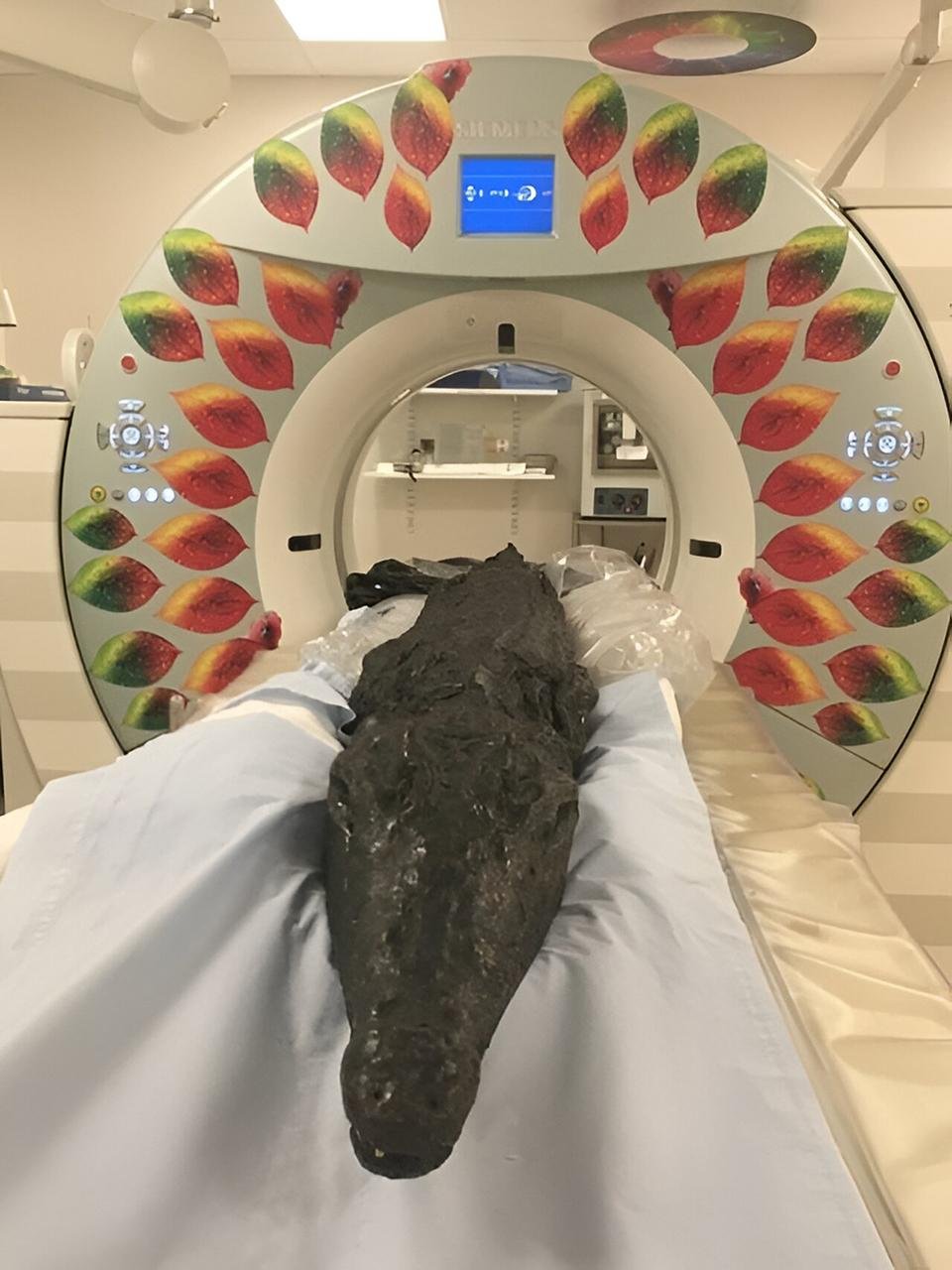
Secrets of deadly last meal of mummified croc revealed
Crocodile in the CT scanner. Credit: University of Manchester

The crocodile, which measures approximately 2.2 meters (7.2 feet) in length, has been the subject of intense study using state-of-the-art 3D imaging technology. The findings were published in the journal Digital Applications in Archaeology and Cultural Heritage.

The mummified crocodile, identified as specimen 2005.335, is housed at the Birmingham Museum and Art Gallery in the UK. Researchers from The University of Manchester, Loughborough University, and Birmingham City University collaborated on the project, which involved X-ray and CT scanning to examine the crocodile’s internal structure without causing any damage.

One of the most striking discoveries was the presence of a freshly eaten fish, still attached to a bronze hook, inside the crocodile’s stomach. This discovery suggests that the crocodile was wild-caught and died shortly after ingesting the baited fish. Dr. Lidija McKnight, lead author and Research Fellow from The University of Manchester explained to Newsweek, “The presence of the hook and the fish suggests that the [crocodile] died soon after ingesting them due to the lack of degradation by the digestive enzymes.”

The researchers also noted that the crocodile had swallowed numerous small stones, known as gastroliths, which these animals ingest to help break down food and regulate buoyancy. The placement of the gastroliths higher up in the digestive tract indicated an attempt to process the crocodile’s last meal before death. This further supports the theory that the animal died soon after consuming the fish.
RelatedStories

Ancient Egyptian tombs, painted coffins, and cat mummies unearthed in Luxor necropolis

Ancient Egyptian tombs, painted coffins, and cat mummies unearthed in Luxor necropolis

May 16, 2026
700-year-old mummy from Bolivia reveals scarlet fever bacterium present in the Americas before European contact

700-year-old mummy from Bolivia reveals scarlet fever bacterium present in the Americas before European contact

May 4, 2026

The study also explored the cultural and religious significance of crocodiles in ancient Egypt. These animals were venerated as symbols of fertility, associated with the annual Nile inundation and the resulting fertile agricultural land. They were also linked to the god Sobek, who was believed to embody the power and ferocity of the crocodile. Crocodiles were often mummified as offerings to Sobek, and this particular specimen is believed to have been prepared for such a purpose.

Dr. McKnight said: “Mummies have long been a source of fascination for museum visitors of all ages. Our work provides a unique opportunity to connect visitors to the story of this animal.” She emphasized the advantages of non-invasive techniques such as 3D radiography over traditional methods like unwrapping and autopsy, which can damage the specimens.

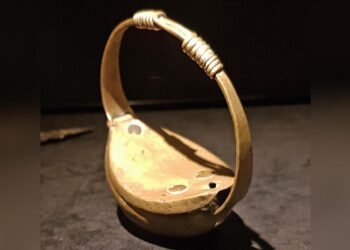
The meticulous scientific analysis also involved the virtual extraction of the fish hook from the mummy. Using specialist software, the researchers created a plastic replica of the hook, which was then cast in bronze, the material of the original hook. This process illustrated the advanced metallurgical techniques used by the ancient Egyptians, who likely employed hardened clay molds and charcoal-based heat sources to produce such items.

The study also revealed much about ancient Egyptian beliefs and practices. Some crocodiles, like the famous Suchus at the cult center of Crocodilopolis, were pampered as “cult animals,” receiving lavish diets and adornments befitting their divine status. Others were captured from the wild, possibly using baited hooks, and mummified as offerings. Dr. McKnight added: “Our work revealed a great amount of information, both about the life of the crocodile and the post-mortem treatment of its remains.”
University of Manchester

More information: McKnight, L. M., Bibb, R., & Cooper, F. (2024). Seeing is believing – The application of Three-Dimensional modelling technologies to reconstruct the final hours in the life of an ancient Egyptian Crocodile. Digital Applications in Archaeology and Cultural Heritage, 34(e00356), e00356. doi:10.1016/j.daach.2024.e00356

Share:

Share on Facebook Share on X (Twitter) Share on LinkedIn Share on Pinterest Share on WhatsApp Share on Email

You May Also Like...

Svalbard whalers show scurvy and extreme labor stress in “corpse point” cemetery
Anthropology

Svalbard whalers show scurvy and extreme labor stress in “corpse point” cemetery

May 25, 2026
'Patchwork families' lived in Europe over 5,000 years ago, Neolithic DNA study finds
Anthropology

‘Patchwork families’ lived in Europe over 5,000 years ago, Neolithic DNA study finds

May 25, 2026
100,000-year-old Homo sapiens bones from Ethiopia may preserve earliest evidence of human cremation
Anthropology

100,000-year-old Homo sapiens bones from Ethiopia may preserve earliest evidence of human cremation

May 24, 2026
Ancient Peruvian hairless dogs buried with Wari elites 1,200 years ago
Archaeology

Ancient Peruvian hairless dogs buried with Wari elites 1,200 years ago

May 24, 2026
4,000-year-old Mohenjo-daro study finds ancient city grew more equal over time
Archaeology

4,000-year-old Mohenjo-daro study finds ancient city grew more equal over time

May 24, 2026
Bronze Age towers in Sardinia remained centers of worship and ritual in the Iron Age
Archaeology

Bronze Age towers in Sardinia remained centers of worship and ritual in the Iron Age

May 23, 2026

Follow us


Instagram
242K

Facebook
117K

Threads
46K

LinkedIn
14K

Twitter
6K

YouTube
1K
Svalbard whalers show scurvy and extreme labor stress in “corpse point” cemetery

Svalbard whalers show scurvy and extreme labor stress in “corpse point” cemetery

May 25, 2026
'Patchwork families' lived in Europe over 5,000 years ago, Neolithic DNA study finds

‘Patchwork families’ lived in Europe over 5,000 years ago, Neolithic DNA study finds

May 25, 2026
100,000-year-old Homo sapiens bones from Ethiopia may preserve earliest evidence of human cremation

100,000-year-old Homo sapiens bones from Ethiopia may preserve earliest evidence of human cremation

May 24, 2026
Ancient Peruvian hairless dogs buried with Wari elites 1,200 years ago

Ancient Peruvian hairless dogs buried with Wari elites 1,200 years ago

May 24, 2026

Archaeology News online magazine

Archaeology News is an international online magazine that covers all aspects of archaeology.


Categories

  • Academics
    • Books
    • Conferences
    • Universities
  • Articles
  • Download
  • Game
  • News
    • Anthropology
    • Archaeology
    • Paleontology
  • Quiz
  • Tours

Subscribe to our newsletter

© 2024 - Archaeology News Online Magazine. All Rights Reserved.

  • About
  • Privacy Policy
  • Terms of Use
  • Donation
  • Contact

Manage Consent
To provide the best experiences, we use technologies like cookies to store and/or access device information. Consenting to these technologies will allow us to process data such as browsing behavior or unique IDs on this site. Not consenting or withdrawing consent, may adversely affect certain features and functions.
Functional Always active
The technical storage or access is strictly necessary for the legitimate purpose of enabling the use of a specific service explicitly requested by the subscriber or user, or for the sole purpose of carrying out the transmission of a communication over an electronic communications network.
Preferences
The technical storage or access is necessary for the legitimate purpose of storing preferences that are not requested by the subscriber or user.
Statistics
The technical storage or access that is used exclusively for statistical purposes. The technical storage or access that is used exclusively for anonymous statistical purposes. Without a subpoena, voluntary compliance on the part of your Internet Service Provider, or additional records from a third party, information stored or retrieved for this purpose alone cannot usually be used to identify you.
Marketing
The technical storage or access is required to create user profiles to send advertising, or to track the user on a website or across several websites for similar marketing purposes.
  • Manage options
  • Manage services
  • Manage {vendor_count} vendors
  • Read more about these purposes
View preferences
  • {title}
  • {title}
  • {title}
  • Home
  • News
    • Archaeology
    • Anthropology
    • Paleontology
  • Academic
    • Books
    • Conferences
    • Universities
  • Articles
  • VR Tours
  • Quiz & Game
  • Download
  • Encyclopedia
  • Forum

About  .  Contact  .  Donation

© 2024 - Archaeology News Online Magazine. All Rights Reserved