• About
  • Privacy Policy
  • Terms of Use
  • Donation
  • Contact
No Result
View All Result
Archaeology News
  • Home
  • News
    • Archaeology
    • Anthropology
    • Paleontology
  • Academic
    • Books
    • Conferences
    • Universities
  • Articles
  • VR Tours
  • Quiz & Game
  • Download
  • Encyclopedia
  • Forum
Archaeology News
No Result
View All Result
Home News Archaeology

7,000-years-old Neolithic settlement unearthed in Czech Republic

by Dario Radley
August 2, 2024

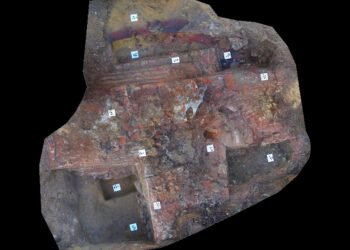
Archaeologists have uncovered a 7,000-year-old Neolithic settlement near Kutná Hora in the Czech Republic. Named “Dobřeň” after the nearby village, the site is exceptionally well-preserved, providing valuable information on the everyday life of its early inhabitants.
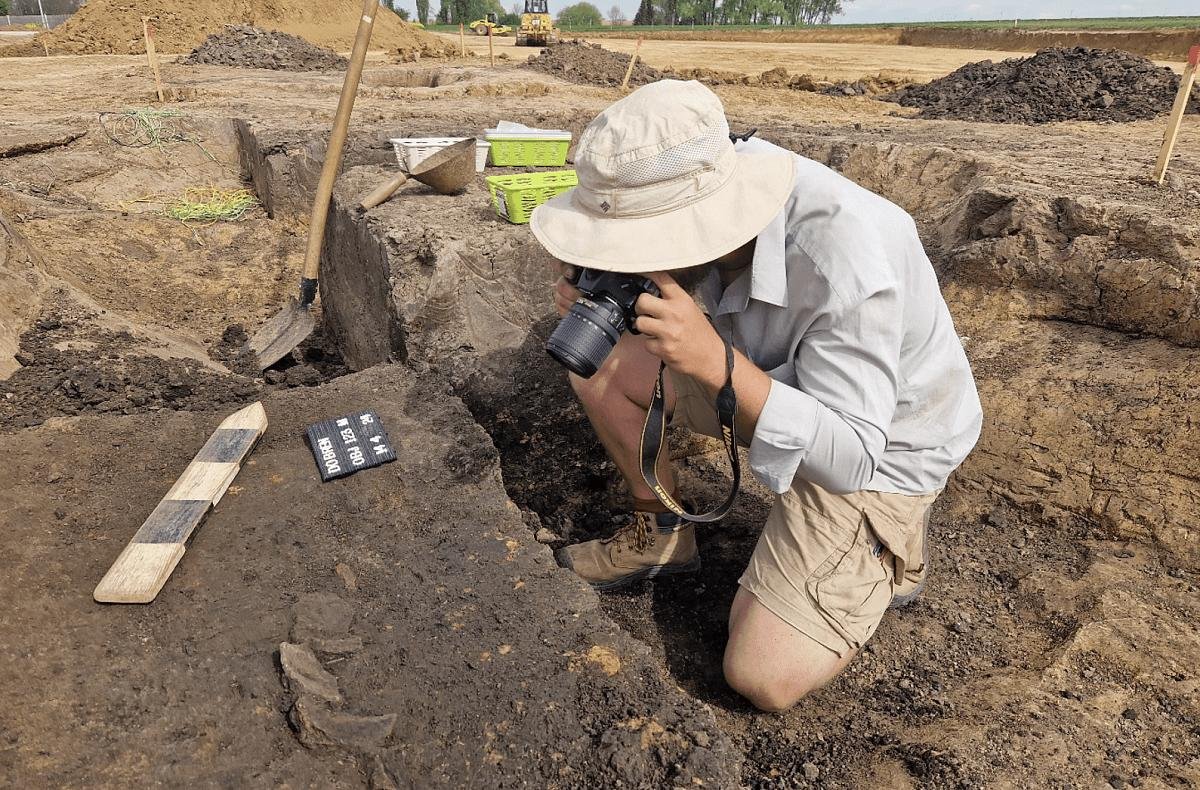
7,000-years-old Neolithic settlement unearthed in Czech Republic
Credit: Daniel Pilař, The Institute of Archaeology of the Czech Academy of Sciences

The discovery was made during routine rescue excavations earlier this spring. Daniel Pilař from the Czech Academy of Sciences’ Department of Prehistoric Archaeology highlighted the significance of the find to Radio Prague International, noting, “We usually supervise construction work in our district, and one day, in the middle of construction, we were surprised to find relics of a settlement that is not typical for this region. When we saw the house plans, we immediately knew we were dealing with a Neolithic settlement.”

The site features the floor plans of four long houses, which were originally built from wood and ranged from 5 meters wide and 10 to 20 meters long. “These houses consist of five lines made of stones. They were about five meters wide and 10 to 20 meters long, so they were quite big for the time,” Pilař explained. The well-preserved ground plans are a rarity, as Neolithic sites are often destroyed by subsequent settlements from the Bronze or Iron Ages. However, Dobřeň remained untouched for millennia, providing a pristine archaeological site.

In addition to the house plans, numerous pits were discovered. These pits, initially used for extracting clay for construction, were later repurposed as waste disposal sites. The waste found in these pits is crucial for understanding the daily lives of Neolithic people. Pilař noted, “This waste is very important for us because it offers a perfect insight into the everyday life of the Neolithic people.”
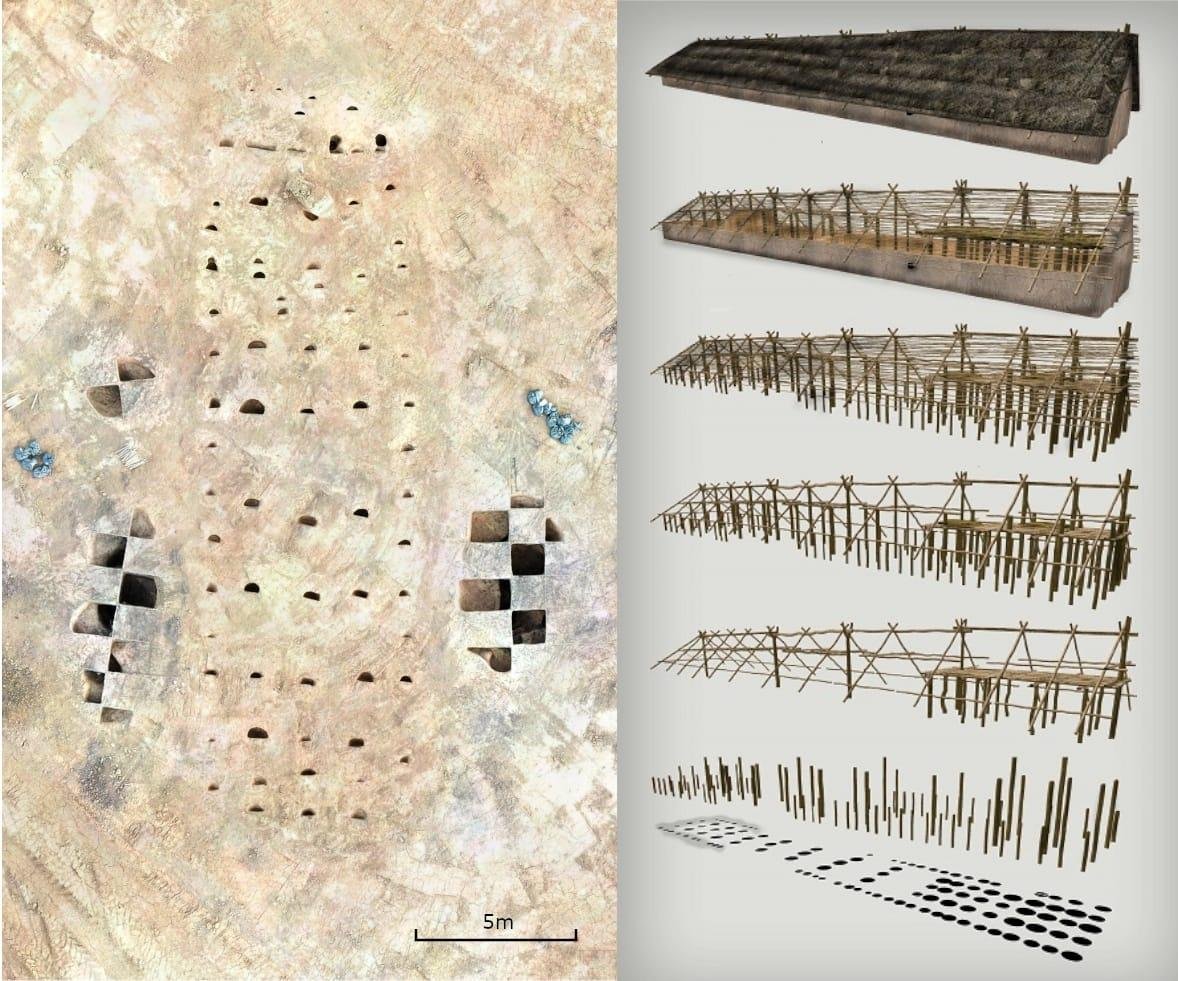
7,000-years-old Neolithic settlement unearthed in Czech Republic
Credit: The Institute of Archaeology of the Czech Academy of Sciences

Artifacts recovered from the site include pottery used for cooking and storage, flint blades for hunting and harvesting grain, and polished stone tools such as axes for carpentry and milling grain. The discovery of these tools provides a deeper understanding of the technological advancements and daily activities of these early agricultural communities. “They used pottery for cooking and for storage. They used flint blades for hunting or harvesting grains. They used polished stone tools, such as stone axes, for carpentry or stone mills for milling the grains,” said Pilař.


RelatedStories

How ancient communities adapted their diets and farming strategies in prehistoric Poland

How ancient communities adapted their diets and farming strategies in prehistoric Poland

February 26, 2026
9,000-year-old evidence of dairy use discovered in Iran’s Zagros Mountains

9,000-year-old evidence of dairy use discovered in Iran’s Zagros Mountains

February 21, 2026

The location of Dobřeň, situated between two streams with access to fresh water, seemed ideal for Neolithic settlement. However, the soil was not fertile enough for long-term agriculture, leading to its abandonment after a few generations. This abandonment contributed to its exceptional preservation.

The discovery of the Dobřeň site is expected to provide extensive data for further research. Archaeologists plan to use modern scientific analyses, including radiocarbon and luminescence dating, phytolith analysis, and plant genetics research, to gain more precise information about the environment and tools used by these early farmers.


Institute of Archeology of the Czech Academy of Sciences

Czech Academy of Sciences

Share4Tweet2Share1ShareSend

You May Also Like...

Lost medieval hillfort discovered in Poland’s Włodawa Forest reveals 244 artifacts from the 10th–13th centuries
Archaeology

Medieval hillfort discovered in Poland’s Włodawa Forest reveals 244 artifacts from the 10th–13th centuries

February 27, 2026
Male Neanderthals and female Homo sapiens shaped ancient interbreeding in the modern human genome, study finds
Anthropology

Male Neanderthals and female humans shaped modern DNA through ancient interbreeding, study finds

February 27, 2026
Medieval monastery remains discovered beneath Borken’s historic center in Germany
Archaeology

Medieval monastery remains discovered beneath Borken’s historic center in Germany

February 26, 2026
How ancient communities adapted their diets and farming strategies in prehistoric Poland
Anthropology

How ancient communities adapted their diets and farming strategies in prehistoric Poland

February 26, 2026
60,000-year-old ostrich eggshell engravings reveal humanity’s earliest geometric designs
Archaeology

60,000-year-old ostrich eggshell engravings reveal humanity’s earliest geometric designs

February 26, 2026
Mesolithic burials in Sweden show ancient fur and feather headgear uncovered by new microscopic analysis
Anthropology

Mesolithic burials in Sweden show ancient fur and feather headgear uncovered by new microscopic analysis

February 25, 2026

Comments 1

  1. Editorial Team says:
    1 second ago

    Disclaimer: This website is a science-focused magazine that welcomes both academic and non-academic audiences. Comments are written by users and may include personal opinions or unverified claims. They do not necessarily reflect the views of our editorial team or rely on scientific evidence.

    Comment Policy: We kindly ask all commenters to engage respectfully. Comments that contain offensive, insulting, degrading, discriminatory, or racist content will be automatically removed.

  2. Sue Bridge says:
    2 years ago

    I would very much like any articles, photos or any updates on the archeological dig at Marais de St Gond, and information about whether it can be visited. My particular interest is in finding out what is known about the ‘Neolithic Revolution’ as the people living there turned to agriculture.

    Thanks so much

Follow us


Instagram
244K

Facebook
118K

Threads
46K

LinkedIn
14K

Twitter
6K

YouTube
1K
  • Trending
  • Comments
  • Latest
Shipwreck Salvage. Credit: rawpixel.com / Public Domain

2,000-year-old shipwreck discovered off Turkish coast with remarkably preserved stacked ceramics

July 2, 2025
Viking age DNA reveals 9,000-year-old HIV-resistant gene originating near the Black Sea

Viking age DNA reveals 9,000-year-old HIV-resistant gene originating near the Black Sea

May 18, 2025
A new study suggests the mysterious Voynich Manuscript may be a medieval cipher

A new study suggests the mysterious Voynich Manuscript may be a medieval cipher

January 3, 2026
Moses may be named in ancient Egyptian mine inscriptions, sparking debate over earliest biblical references

Moses may be named in ancient Egyptian mine inscriptions, sparking debate over earliest biblical references

July 31, 2025
Mystery of Armenia’s 6,000-year-old dragon stones solved

Mystery of Armenia’s 6,000-year-old dragon stones solved

September 23, 2025
3D analysis reveals Shroud of Turin image likely came from sculpture, not Jesus’ body

3D analysis reveals Shroud of Turin image likely came from sculpture, not Jesus’ body

Moses may be named in ancient Egyptian mine inscriptions, sparking debate over earliest biblical references

Moses may be named in ancient Egyptian mine inscriptions, sparking debate over earliest biblical references

$1 million prize offered to decipher 5,300-year-old Indus Valley script

$1 million prize offered to decipher 5,300-year-old Indus Valley script

Oldest ever genetic data from a human relative found in 2-million-year-old fossilized teeth

Oldest ever genetic data from a human relative found in 2-million-year-old fossilized teeth

Exceptionally large Roman shoes discovered at Magna fort near Hadrian’s Wall

Exceptionally large Roman shoes discovered at Magna fort near Hadrian’s Wall

Lost medieval hillfort discovered in Poland’s Włodawa Forest reveals 244 artifacts from the 10th–13th centuries

Medieval hillfort discovered in Poland’s Włodawa Forest reveals 244 artifacts from the 10th–13th centuries

February 27, 2026
Male Neanderthals and female Homo sapiens shaped ancient interbreeding in the modern human genome, study finds

Male Neanderthals and female humans shaped modern DNA through ancient interbreeding, study finds

February 27, 2026
Medieval monastery remains discovered beneath Borken’s historic center in Germany

Medieval monastery remains discovered beneath Borken’s historic center in Germany

February 26, 2026
How ancient communities adapted their diets and farming strategies in prehistoric Poland

How ancient communities adapted their diets and farming strategies in prehistoric Poland

February 26, 2026
60,000-year-old ostrich eggshell engravings reveal humanity’s earliest geometric designs

60,000-year-old ostrich eggshell engravings reveal humanity’s earliest geometric designs

February 26, 2026

Archaeology News online magazine

Archaeology News is an international online magazine that covers all aspects of archaeology.


Categories

  • Academics
    • Books
    • Conferences
    • Universities
  • Articles
  • Download
  • Game
  • News
    • Anthropology
    • Archaeology
    • Paleontology
  • Quiz
  • Tours

Subscribe to our newsletter

© 2024 - Archaeology News Online Magazine. All Rights Reserved.

  • About
  • Privacy Policy
  • Terms of Use
  • Donation
  • Contact

Manage Consent
To provide the best experiences, we use technologies like cookies to store and/or access device information. Consenting to these technologies will allow us to process data such as browsing behavior or unique IDs on this site. Not consenting or withdrawing consent, may adversely affect certain features and functions.
Functional Always active
The technical storage or access is strictly necessary for the legitimate purpose of enabling the use of a specific service explicitly requested by the subscriber or user, or for the sole purpose of carrying out the transmission of a communication over an electronic communications network.
Preferences
The technical storage or access is necessary for the legitimate purpose of storing preferences that are not requested by the subscriber or user.
Statistics
The technical storage or access that is used exclusively for statistical purposes. The technical storage or access that is used exclusively for anonymous statistical purposes. Without a subpoena, voluntary compliance on the part of your Internet Service Provider, or additional records from a third party, information stored or retrieved for this purpose alone cannot usually be used to identify you.
Marketing
The technical storage or access is required to create user profiles to send advertising, or to track the user on a website or across several websites for similar marketing purposes.
  • Manage options
  • Manage services
  • Manage {vendor_count} vendors
  • Read more about these purposes
View preferences
  • {title}
  • {title}
  • {title}
  • Home
  • News
    • Archaeology
    • Anthropology
    • Paleontology
  • Academic
    • Books
    • Conferences
    • Universities
  • Articles
  • VR Tours
  • Quiz & Game
  • Download
  • Encyclopedia
  • Forum

About  .  Contact  .  Donation

© 2024 - Archaeology News Online Magazine. All Rights Reserved