• About
  • Privacy Policy
  • Terms of Use
  • Donation
  • Contact
No Result
View All Result
Archaeology News
  • Home
  • News
    • Archaeology
    • Anthropology
    • Paleontology
  • Academic
    • Books
    • Conferences
    • Universities
  • Articles
  • VR Tours
  • Quiz & Game
  • Download
  • Encyclopedia
  • Forum
Archaeology News
No Result
View All Result
Home News Anthropology

Reconstructions reveal faces of Neolithic sisters buried 6,000 years ago

by Dario Radley
August 3, 2025

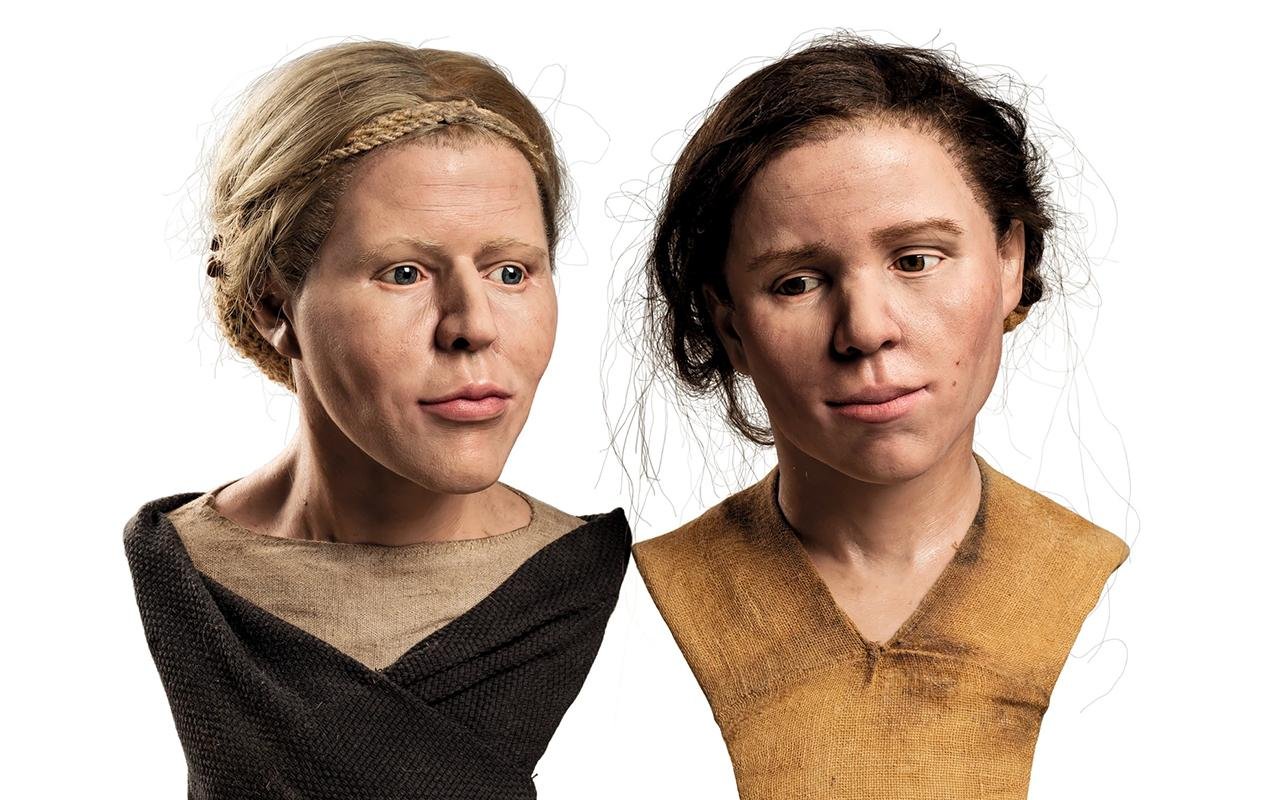
More than 6,000 years ago, in the Krumlov Forest of South Moravia in the Czech Republic, two sisters endured a hard life in an ancient mining settlement. Now, thanks to advanced forensic methods and archaeological research, their incredibly lifelike faces have been uncovered in new 3D reconstructions. These reconstructions give us not just a glimpse into their physical appearance but also into a society that may have exploited its most vulnerable members.
Reconstructions reveal faces of Neolithic sisters buried 6,000 years ago
Anthropological reconstruction of the sisters. (photo by F. Fojtík). Credit: E. Vaníčková, et al., Archaeolo Anthropol Sci (2025)

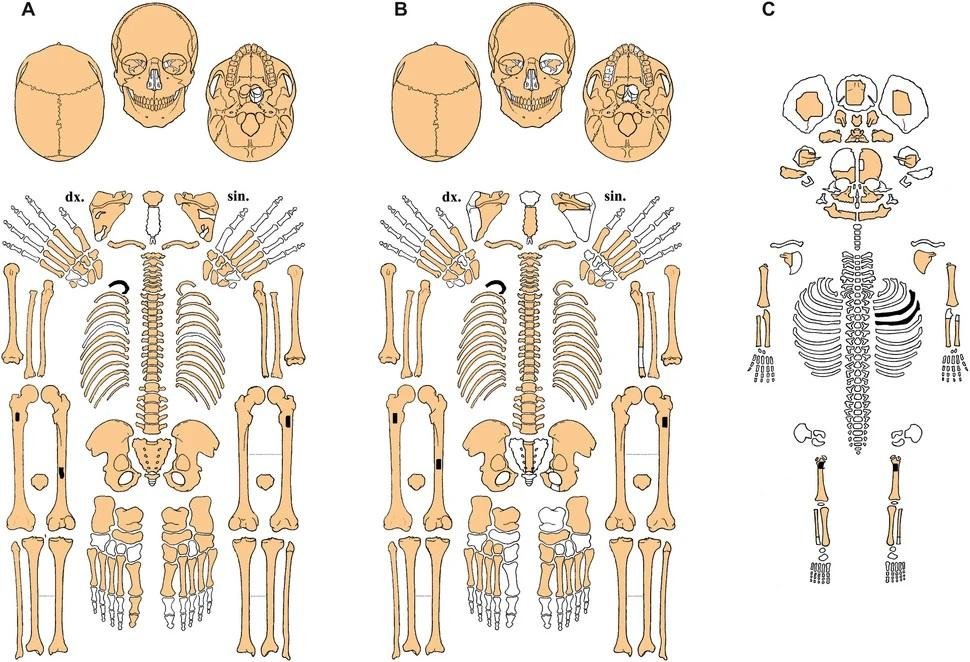
The remains were first discovered over 15 years ago during excavations at a Neolithic chert (flint) mine—specifically, Pit 4, one of hundreds discovered in the area, which is known for prehistoric mining activity from the Mesolithic to the Iron Age. The remains included two adult females buried one atop the other, with the older woman hugging a newborn baby on her chest. Next to them was a partially complete skeleton of a small dog. The females were likely sisters and were interred in the shaft in which they had labored, according to a paper published in Archaeological and Anthropological Sciences.

Dr. Martin Oliva, an archaeologist with the Moravian Museum and a co-author of the study, told Live Science that the location of the women’s graves within the mine suggests that the women likely labored there. The mine may have also had spiritual meaning, serving as a sacred site related to ancestral or sacrificial rituals, the researchers suggest.

Detailed analysis, involving radiocarbon dating, genetic analysis, isotopic analysis, and bone study, paints a grim picture of physical suffering and exploitation. Both women, estimated to have been around 30 to 40 years old, were around 1.48 and 1.46 meters (approximately 4.8 feet) tall and bore signs of heavy labor. The bones exhibited worn vertebrae, early arthritis, herniated discs, and partially healed fractures—specifically, one on the older sister’s forearm—indicating that they continued to work despite severe trauma.
Reconstructions reveal faces of Neolithic sisters buried 6,000 years ago
Preservation scheme, skeleton H1 (A), H2a (B), H2b (C) (drawing by I. Jarošová and M. Fojtová). Credit: E. Vaníčková, et al., Archaeolo Anthropol Sci (2025)

Interestingly, isotopic analysis of nitrogen and carbon levels indicated that although the sisters had grown up malnourished and ill, in adulthood, they had consumed a high-meat diet. This was unusual for European Neolithic populations, which may have been due to better access to wild game in the densely forested region or a nutritional strategy to fuel their hard labor.

RelatedStories

6,000-year-old necropolis in Spain rewrites origins of Europe’s first megalithic tombs

6,000-year-old necropolis in Spain rewrites origins of Europe’s first megalithic tombs

May 18, 2026
Ancient Danes kept fishing for millennia after farming arrived, study finds

Ancient Danes kept fishing for millennia after farming arrived, study finds

May 14, 2026

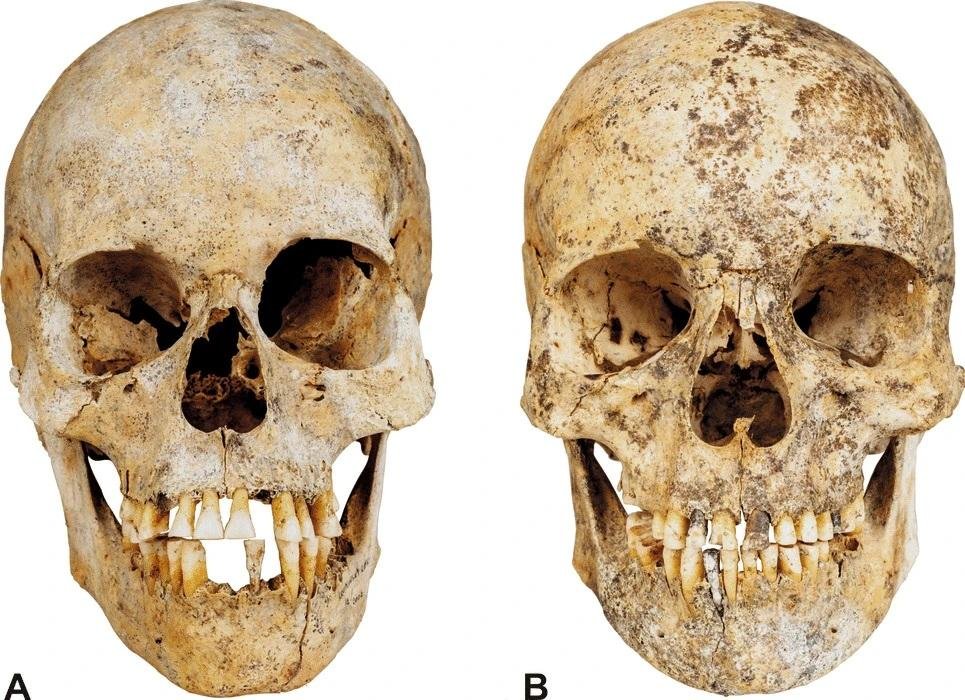
DNA testing confirmed the sibling relationship and even determined some physical features. The younger sister likely had dark hair and green or hazel eyes, while the older may have had blue eyes and blonde hair. These features were utilized for the lifelike facial reconstructions—on display today at the Moravian Museum in Brno—created using plaster, silicone, prosthetic eyes, and implanted hair. The skulls were in a good state and allowed for detailed facial modeling.
Reconstructions reveal faces of Neolithic sisters buried 6,000 years ago
Skull of female H2a enface (A) and skull of female H1 enface (B) (photo byF. Fojtík). Credit: E. Vaníčková, et al., Archaeolo Anthropol Sci (2025)

The reconstructions also depict clothing derived from Neolithic-era archaeological textile finds, made entirely of plant fibers like flax and nettles. The older woman wears a simple blouse and plant-fiber wrap, and a hairnet. The younger one wears a linen blouse with braided fabric strips woven through her hair.

But questions remain. The infant that was buried was genetically not related to either woman, and the positioning of the dog’s remains adds another question mark to the burial. Scientists have not ruled out that the women and infant could have been victims of ritual sacrifice or symbolic appeasement to the earth, as mining shafts could have had spiritual significance to Neolithic peoples.

In the broader social context, the authors point to a possible reorganization of work in the Neolithic period. The article contends that as soon as hierarchical societies began to emerge, “the hardest labour may no longer have been done by the strongest, but by those who could most easily be forced to do it.” This is a hint that even in early agricultural societies, labor might have been distributed in unequal forms, possibly on the basis of gender, age, or social status.

More information: Vaníčková, E., Vymazalová, K., Vargová, L. et al. (2025). Ritual Burials in a Prehistoric Mining Shaft in the Krumlov Forest (Czechia). Archaeol Anthropol Sci 17, 146. doi:10.1007/s12520-025-02251-1

Share:

Share on Facebook Share on X (Twitter) Share on LinkedIn Share on Pinterest Share on WhatsApp Share on Email

You May Also Like...

2,300-year-old Iron Age riverside structure discovered beneath German city astonishes archaeologists
Archaeology

2,300-year-old Iron Age riverside structure discovered beneath German city

May 22, 2026
100 Abbasid-era gold jewelry pieces found at ancient Dariyah site in Saudi Arabia
Archaeology

100 Abbasid-era gold jewelry pieces found at ancient Dariyah site in Saudi Arabia

May 22, 2026
Neanderthals gathered shellfish like modern humans 115,000 years ago, study finds
Anthropology

Neanderthals gathered shellfish like modern humans 115,000 years ago, study finds

May 21, 2026
Ancient pigeons were already living alongside humans 3,400 years ago, study finds
Archaeology

Ancient pigeons were already living alongside humans 3,400 years ago, study finds

May 21, 2026
Ancient Venetic sanctuary with rare inscriptions unearthed beneath road project in Italy
Archaeology

Ancient Venetic sanctuary with rare inscriptions unearthed beneath road project in Italy

May 21, 2026
1,000-year-old dingo burial in Australia reveals deep ties between Barkindji people and dingoes
Archaeology

1,000-year-old ritually buried dingo in Australia reveals deep ties between Barkindji people and dingoes

May 20, 2026

Comments 6

  1. Editorial Team says:
    1 second ago

    Disclaimer: This website is a science-focused magazine that welcomes both academic and non-academic audiences. Comments are written by users and may include personal opinions or unverified claims. They do not necessarily reflect the views of our editorial team or rely on scientific evidence.

    Comment Policy: We kindly ask all commenters to engage respectfully. Comments that contain offensive, insulting, degrading, discriminatory, or racist content will be automatically removed.

  2. Tom says:
    10 months ago

    Looks like she had a tooth hammered in

  3. Rob Crawford says:
    10 months ago

    Why are they shown with filthy faces?

    • Robin says:
      10 months ago

      I assume because they worked as miners.

  4. Joyce M Johns says:
    10 months ago

    The one with the black outfit is simply missing a strand of pearls. Lol! Very cool work.

  5. Kali says:
    10 months ago

    The R word… why? Expedient burial in a hole they didn’t have to dig. I would suspect most would have osteological signs of heavy labor for the period, but I guess there needs to be a “story” to sell. There are a million other reasons, but it always has to be “ritual”. Burial is a ritual…

  6. vidmate says:
    7 months ago

    This is such a fascinating post! The idea of reconstructing the faces of Neolithic sisters truly brings history to life. It’s incredible to think about their lives and the world they lived in 6,000 years ago. I’d love to learn more about the burial practices of that time and what insights these reconstructions might provide into their society. Thank you for sharing this intriguing piece of archaeology!

Follow us


Instagram
242K

Facebook
117K

Threads
46K

LinkedIn
14K

Twitter
6K

YouTube
1K
2,300-year-old Iron Age riverside structure discovered beneath German city astonishes archaeologists

2,300-year-old Iron Age riverside structure discovered beneath German city

May 22, 2026
100 Abbasid-era gold jewelry pieces found at ancient Dariyah site in Saudi Arabia

100 Abbasid-era gold jewelry pieces found at ancient Dariyah site in Saudi Arabia

May 22, 2026
Neanderthals gathered shellfish like modern humans 115,000 years ago, study finds

Neanderthals gathered shellfish like modern humans 115,000 years ago, study finds

May 21, 2026
Ancient pigeons were already living alongside humans 3,400 years ago, study finds

Ancient pigeons were already living alongside humans 3,400 years ago, study finds

May 21, 2026

Archaeology News online magazine

Archaeology News is an international online magazine that covers all aspects of archaeology.


Categories

  • Academics
    • Books
    • Conferences
    • Universities
  • Articles
  • Download
  • Game
  • News
    • Anthropology
    • Archaeology
    • Paleontology
  • Quiz
  • Tours

Subscribe to our newsletter

© 2024 - Archaeology News Online Magazine. All Rights Reserved.

  • About
  • Privacy Policy
  • Terms of Use
  • Donation
  • Contact

Manage Consent
To provide the best experiences, we use technologies like cookies to store and/or access device information. Consenting to these technologies will allow us to process data such as browsing behavior or unique IDs on this site. Not consenting or withdrawing consent, may adversely affect certain features and functions.
Functional Always active
The technical storage or access is strictly necessary for the legitimate purpose of enabling the use of a specific service explicitly requested by the subscriber or user, or for the sole purpose of carrying out the transmission of a communication over an electronic communications network.
Preferences
The technical storage or access is necessary for the legitimate purpose of storing preferences that are not requested by the subscriber or user.
Statistics
The technical storage or access that is used exclusively for statistical purposes. The technical storage or access that is used exclusively for anonymous statistical purposes. Without a subpoena, voluntary compliance on the part of your Internet Service Provider, or additional records from a third party, information stored or retrieved for this purpose alone cannot usually be used to identify you.
Marketing
The technical storage or access is required to create user profiles to send advertising, or to track the user on a website or across several websites for similar marketing purposes.
  • Manage options
  • Manage services
  • Manage {vendor_count} vendors
  • Read more about these purposes
View preferences
  • {title}
  • {title}
  • {title}
  • Home
  • News
    • Archaeology
    • Anthropology
    • Paleontology
  • Academic
    • Books
    • Conferences
    • Universities
  • Articles
  • VR Tours
  • Quiz & Game
  • Download
  • Encyclopedia
  • Forum

About  .  Contact  .  Donation

© 2024 - Archaeology News Online Magazine. All Rights Reserved