• About
  • Privacy Policy
  • Terms of Use
  • Donation
  • Contact
No Result
View All Result
Archaeology News
  • Home
  • News
    • Archaeology
    • Anthropology
    • Paleontology
  • Academic
    • Books
    • Conferences
    • Universities
  • Articles
  • VR Tours
  • Quiz & Game
  • Download
  • Encyclopedia
  • Forum
Archaeology News
No Result
View All Result
Home News Archaeology

Human hair khipus reveal Inca record-keeping was used by both elites and commoners

by Dario Radley
August 19, 2025

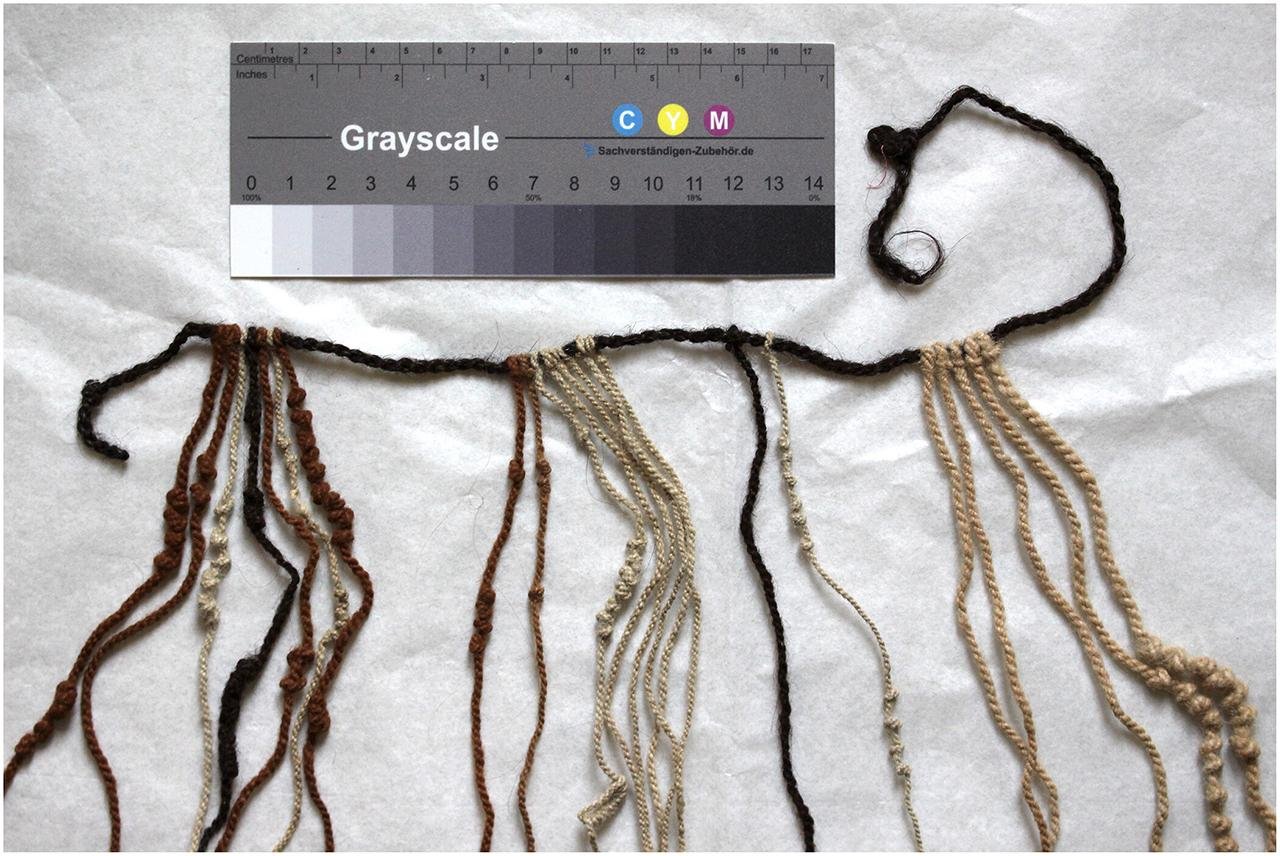
A recently studied 500-year-old Inca khipu (Quipu) has overturned assumptions about who created these intricate thread-based documents. The study, published in Science Advances, suggests that khipus—formerly thought to be the domain of high-level imperial officials—were also made by non-elite members of society.
Human hair khipus reveal Inca record-keeping was used by both elites and commoners
The khipu analyzed in the study, featuring a primary cord woven from human hair. Credit: Hyland, School of Divinity, University of St Andrews / S. Hyland et al., Science Advances (2025)

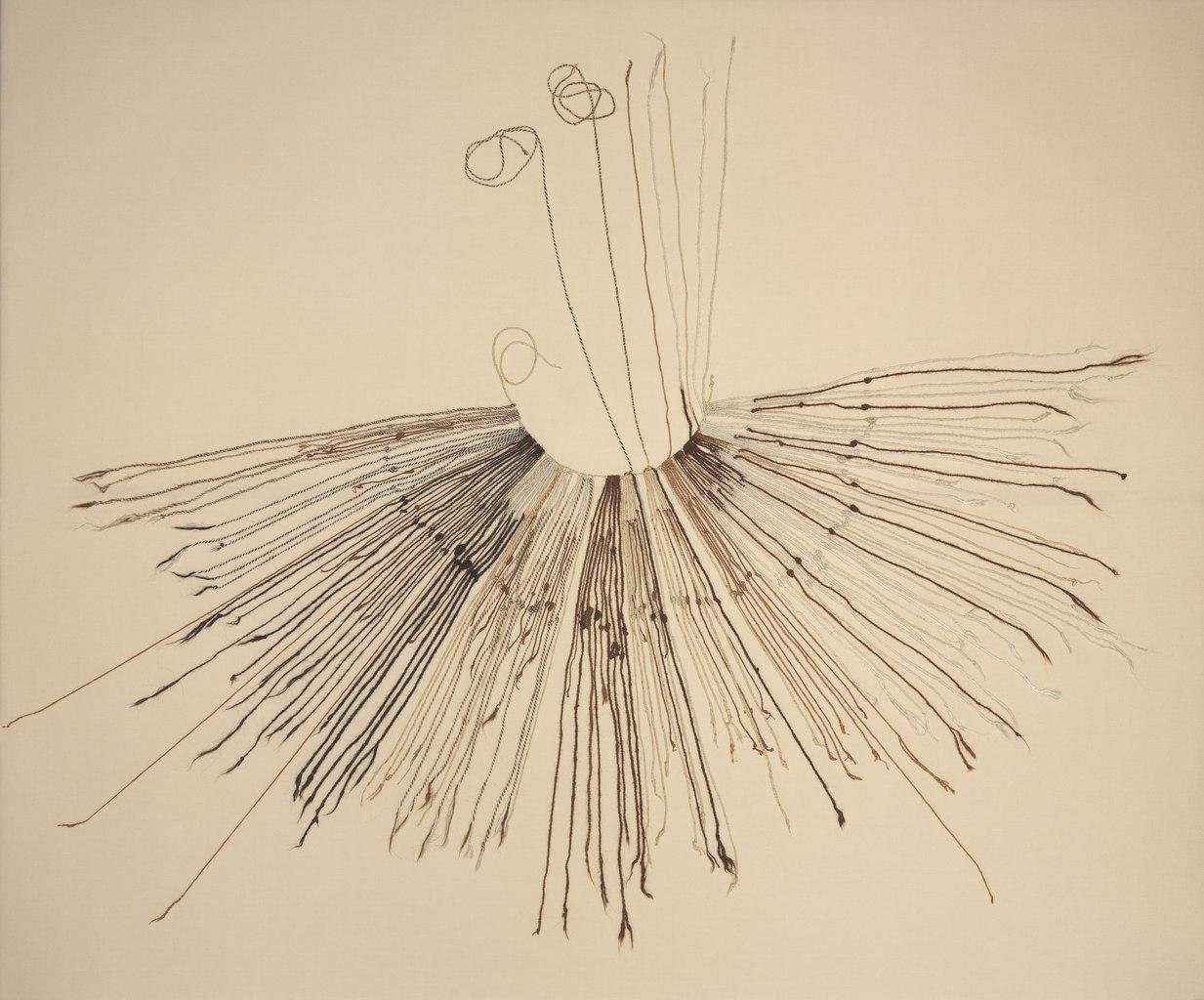
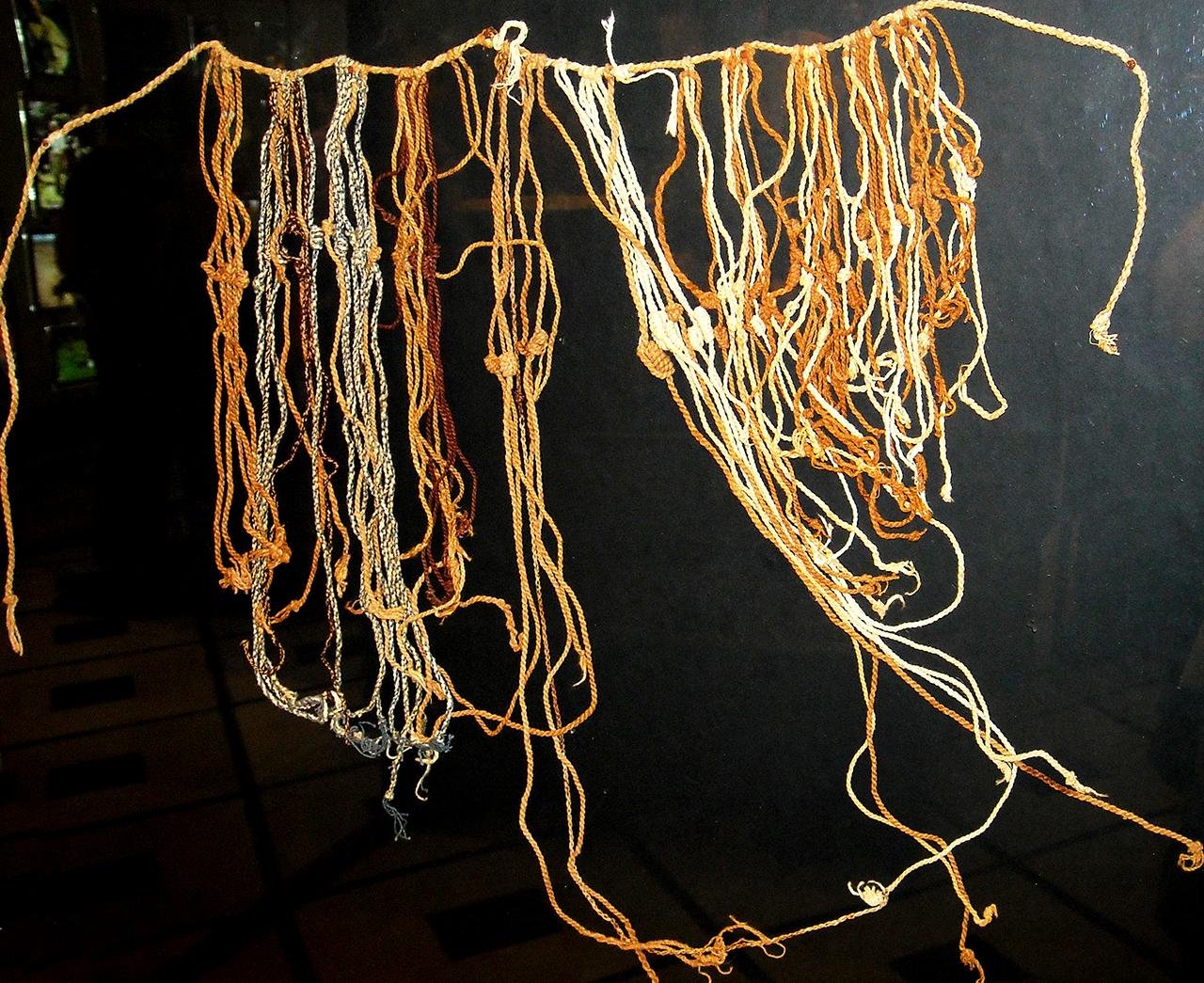
Khipus were the Inca Empire’s unique system of record-keeping. Comprising a main cord with numerous knotted threads hanging from it, each arrangement represented numerical values in a decimal system. What made them even more personal was the practice of weaving human hair strands into the central cord. Historians have long assumed that this hair belonged to high-ranking male bureaucrats known as khipukamayuqs, who were official state recorders.

Colonial Spanish chroniclers reinforced this idea, referring to khipus as tools of male elites that were buried with their owners when they died. However, Indigenous writer Felipe Guaman Poma de Ayala, in the early 17th century, wrote that khipus were also made by women. By the 19th and 20th centuries, scholars discovered khipus being used by laborers and peasants in remote Andean villages. Even so, direct evidence of commoners creating khipus was elusive—until now.

The discovery came when researchers performed radiocarbon dating and isotope analysis on a khipu made of alpaca wool and human hair. Previously, the artifact was thought to be relatively modern, since Inca khipus were usually made of cotton, while post-Inca examples were often crafted from animal fibers. The radiocarbon results confirming its Inca-period origin came as a major surprise.
Human hair khipus reveal Inca record-keeping was used by both elites and commoners
Inka khipu, ca. 1400–1532. Cleveland Museum of Art, Cleveland, Ohio.

The bigger surprise was in the hair. A 104-centimeter strand of hair was tested for carbon, nitrogen, and sulfur levels, which revealed what the individual had eaten. Contrary to expectations, the individual had eaten very little meat or maize—the fineries of elite Inca banquets often served with chicha, a maize beer. Instead, the diet was dominated by greens and tubers typical of peasants. As the study authors wrote, “It is difficult to imagine a scenario where an official khipukamayuq could have refrained from consuming large amounts of maize in the form of beer.”


RelatedStories

Study identifies first deliberate mummification in Inca capacocha child sacrifice

Study identifies first deliberate mummification in Inca capacocha child sacrifice

February 3, 2026
First known Andean trophy head with a cleft lip from southern Peru

First known Andean trophy head with a cleft lip from southern Peru

December 9, 2025

Further isotopic information revealed where the individual lived. The study indicated that they lived at an altitude of between 2,600 and 2,800 meters (around 8,560 to 9,186 feet) in the Andes highlands, far from the Pacific Ocean. This corresponds to the low percentage of marine resources included in the diet and points toward a likely location in southern Peru or northern Chile.
Human hair khipus reveal Inca record-keeping was used by both elites and commoners
Inka khipu, ca. 1400–1500, Peru. From the exhibition “The World That Wasn’t There: Pre-Columbian Art in the Ligabue Collections,” Archaeological Museum of Naples. Credit: Carlo Raso

Altogether, these findings show that this khipu was not produced by a high-ranking scribe but by a low-ranking commoner. Although humble in origin, the maker of the khipu demonstrated incredible skill in weaving the complex cord and knots.

The discovery undermines the centuries-long image of khipus as symbols of elite authority and alludes to a more widespread practice of record-keeping in Inca society. While what the knots tell us is unclear, Hyland speculates that they may be linked to ritual offerings. More broadly, the research reaffirms the integrity of Indigenous testimonies, such as Guaman Poma’s account, that, centuries before, had already shown commoners and women were involved in khipu traditions.

At least for now, this one artifact cannot rewrite Inca history, but it provides a new line of inquiry. As the authors of the research note, further isotopic analysis of more khipus may show just how widespread record-keeping was among common people in the Inca Empire.
More information: Hyland, S., Lee, K., Koon, H., Laukkanen, S., & Spindler, L. (2025). Stable isotope evidence for the participation of commoners in Inka khipu production. Science Advances, 11(33), eadv1950. doi:10.1126/sciadv.adv1950
Share20Tweet12Share3ShareSend

You May Also Like...

Cut marks on 1.6-million-year-old bones reveal early humans moved and processed meat in Kenya
Anthropology

Cut marks on 1.6-million-year-old bones reveal early humans moved and processed meat in Kenya

May 13, 2026
280 ancient stone burial monuments found in Sudan reveal lost cattle-herding culture in the Sahara
Archaeology

280 ancient stone burial monuments found in Sudan reveal lost cattle-herding culture in the Sahara

May 13, 2026
Rare Bronze Age burial in Sweden reveals unusual pair of Wendel neck rings and complex ritual landscape near Norrköping
Archaeology

Rare Bronze Age burial in Sweden reveals unusual pair of Wendel neck rings and complex ritual landscape near Norrköping

May 12, 2026
Kasta Tomb in Amphipolis fully revealed as restoration uncovers largest burial mound in Macedonia
Archaeology

Kasta Tomb in Amphipolis fully revealed as restoration uncovers largest burial mound in Macedonia

May 12, 2026
Rare Roman villa threatened by farming damage reveals rare mosaic and bathhouse remains in Devon
Archaeology

Rare Roman villa threatened by farming damage reveals rare mosaic and bathhouse remains in Devon

May 12, 2026
Ancient burials, Roman well, and Anglo-Saxon house uncovered during A46 Newark bypass excavations
Anthropology

Ancient burials, Roman well, and Anglo-Saxon house uncovered during A46 Newark bypass excavations

May 12, 2026

Follow us


Instagram
242K

Facebook
117K

Threads
46K

LinkedIn
14K

Twitter
6K

YouTube
1K
  • Trending
  • Comments
  • Latest
Shipwreck Salvage. Credit: rawpixel.com / Public Domain

2,000-year-old shipwreck discovered off Turkish coast with remarkably preserved stacked ceramics

July 2, 2025
A new study suggests the mysterious Voynich Manuscript may be a medieval cipher

A new study suggests the mysterious Voynich Manuscript may be a medieval cipher

January 3, 2026
Viking age DNA reveals 9,000-year-old HIV-resistant gene originating near the Black Sea

Viking age DNA reveals 9,000-year-old HIV-resistant gene originating near the Black Sea

May 18, 2025
3D analysis reveals Shroud of Turin image likely came from sculpture, not Jesus’ body

3D analysis reveals Shroud of Turin image likely came from sculpture, not Jesus’ body

August 3, 2025
Moses may be named in ancient Egyptian mine inscriptions, sparking debate over earliest biblical references

Moses may be named in ancient Egyptian mine inscriptions, sparking debate over earliest biblical references

July 31, 2025
3D analysis reveals Shroud of Turin image likely came from sculpture, not Jesus’ body

3D analysis reveals Shroud of Turin image likely came from sculpture, not Jesus’ body

Moses may be named in ancient Egyptian mine inscriptions, sparking debate over earliest biblical references

Moses may be named in ancient Egyptian mine inscriptions, sparking debate over earliest biblical references

$1 million prize offered to decipher 5,300-year-old Indus Valley script

$1 million prize offered to decipher 5,300-year-old Indus Valley script

Oldest ever genetic data from a human relative found in 2-million-year-old fossilized teeth

Oldest ever genetic data from a human relative found in 2-million-year-old fossilized teeth

Exceptionally large Roman shoes discovered at Magna fort near Hadrian’s Wall

Exceptionally large Roman shoes discovered at Magna fort near Hadrian’s Wall

Cut marks on 1.6-million-year-old bones reveal early humans moved and processed meat in Kenya

Cut marks on 1.6-million-year-old bones reveal early humans moved and processed meat in Kenya

May 13, 2026
280 ancient stone burial monuments found in Sudan reveal lost cattle-herding culture in the Sahara

280 ancient stone burial monuments found in Sudan reveal lost cattle-herding culture in the Sahara

May 13, 2026
Rare Bronze Age burial in Sweden reveals unusual pair of Wendel neck rings and complex ritual landscape near Norrköping

Rare Bronze Age burial in Sweden reveals unusual pair of Wendel neck rings and complex ritual landscape near Norrköping

May 12, 2026
Kasta Tomb in Amphipolis fully revealed as restoration uncovers largest burial mound in Macedonia

Kasta Tomb in Amphipolis fully revealed as restoration uncovers largest burial mound in Macedonia

May 12, 2026
Rare Roman villa threatened by farming damage reveals rare mosaic and bathhouse remains in Devon

Rare Roman villa threatened by farming damage reveals rare mosaic and bathhouse remains in Devon

May 12, 2026

Archaeology News online magazine

Archaeology News is an international online magazine that covers all aspects of archaeology.


Categories

  • Academics
    • Books
    • Conferences
    • Universities
  • Articles
  • Download
  • Game
  • News
    • Anthropology
    • Archaeology
    • Paleontology
  • Quiz
  • Tours

Subscribe to our newsletter

© 2024 - Archaeology News Online Magazine. All Rights Reserved.

  • About
  • Privacy Policy
  • Terms of Use
  • Donation
  • Contact

Manage Consent
To provide the best experiences, we use technologies like cookies to store and/or access device information. Consenting to these technologies will allow us to process data such as browsing behavior or unique IDs on this site. Not consenting or withdrawing consent, may adversely affect certain features and functions.
Functional Always active
The technical storage or access is strictly necessary for the legitimate purpose of enabling the use of a specific service explicitly requested by the subscriber or user, or for the sole purpose of carrying out the transmission of a communication over an electronic communications network.
Preferences
The technical storage or access is necessary for the legitimate purpose of storing preferences that are not requested by the subscriber or user.
Statistics
The technical storage or access that is used exclusively for statistical purposes. The technical storage or access that is used exclusively for anonymous statistical purposes. Without a subpoena, voluntary compliance on the part of your Internet Service Provider, or additional records from a third party, information stored or retrieved for this purpose alone cannot usually be used to identify you.
Marketing
The technical storage or access is required to create user profiles to send advertising, or to track the user on a website or across several websites for similar marketing purposes.
  • Manage options
  • Manage services
  • Manage {vendor_count} vendors
  • Read more about these purposes
View preferences
  • {title}
  • {title}
  • {title}
  • Home
  • News
    • Archaeology
    • Anthropology
    • Paleontology
  • Academic
    • Books
    • Conferences
    • Universities
  • Articles
  • VR Tours
  • Quiz & Game
  • Download
  • Encyclopedia
  • Forum

About  .  Contact  .  Donation

© 2024 - Archaeology News Online Magazine. All Rights Reserved