• About
  • Privacy Policy
  • Terms of Use
  • Donation
  • Contact
No Result
View All Result
Archaeology News
  • Home
  • News
    • Archaeology
    • Anthropology
    • Paleontology
  • Academic
    • Books
    • Conferences
    • Universities
  • Articles
  • VR Tours
  • Quiz & Game
  • Download
  • Encyclopedia
  • Forum
Archaeology News
No Result
View All Result
Home News Archaeology

Inca ceramics were a key tool for religious and political dominance

by Dario Radley
November 15, 2024

The Incas, renowned for their vast empire and sophisticated culture, controlled their expansive territory through a strategic combination of military dominance and religious authority. Central to their rituals was the use of ceramics, which not only served practical purposes but also embodied their ideological and imperial values. Among these rituals, the capacocha ceremony, a poignant and solemn act of child sacrifice performed on mountain peaks, stands out as a testament to their religious devotion and imperial control.
Inca ceramics were a key tool for religious and political dominance
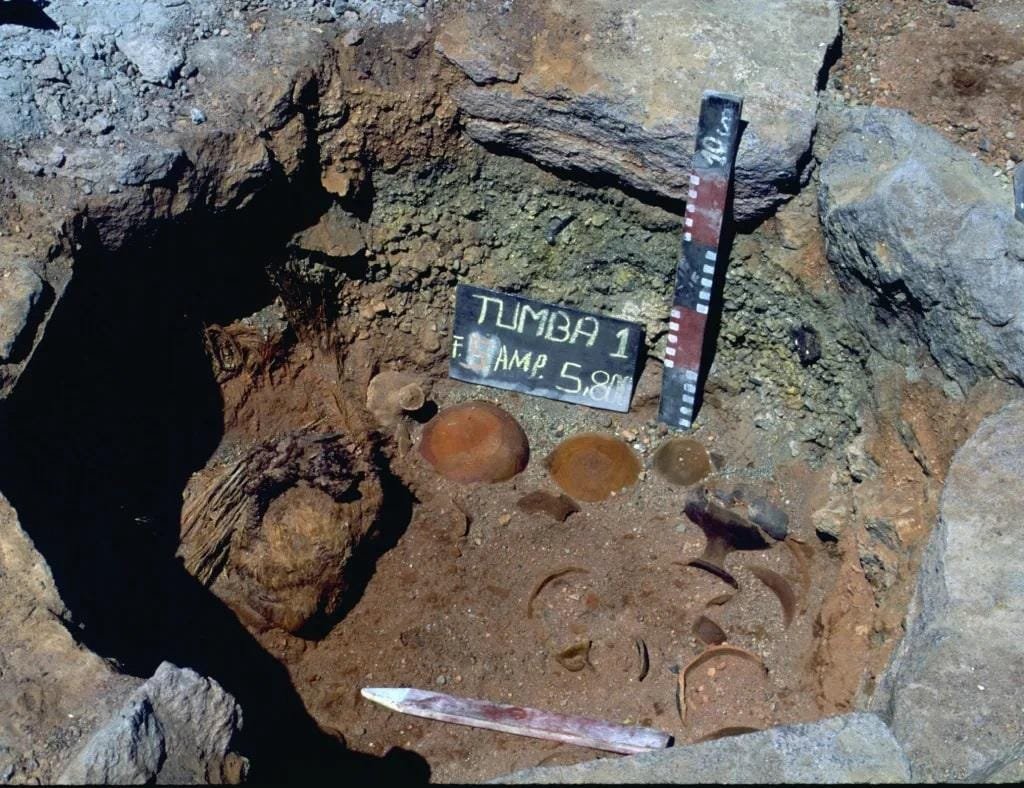
Ampato, tomb 1, (5,800 m above sea level). Five broken vessels were discovered. Credit: Johan Reinhard, Museo Santuarios Andinos UCSM

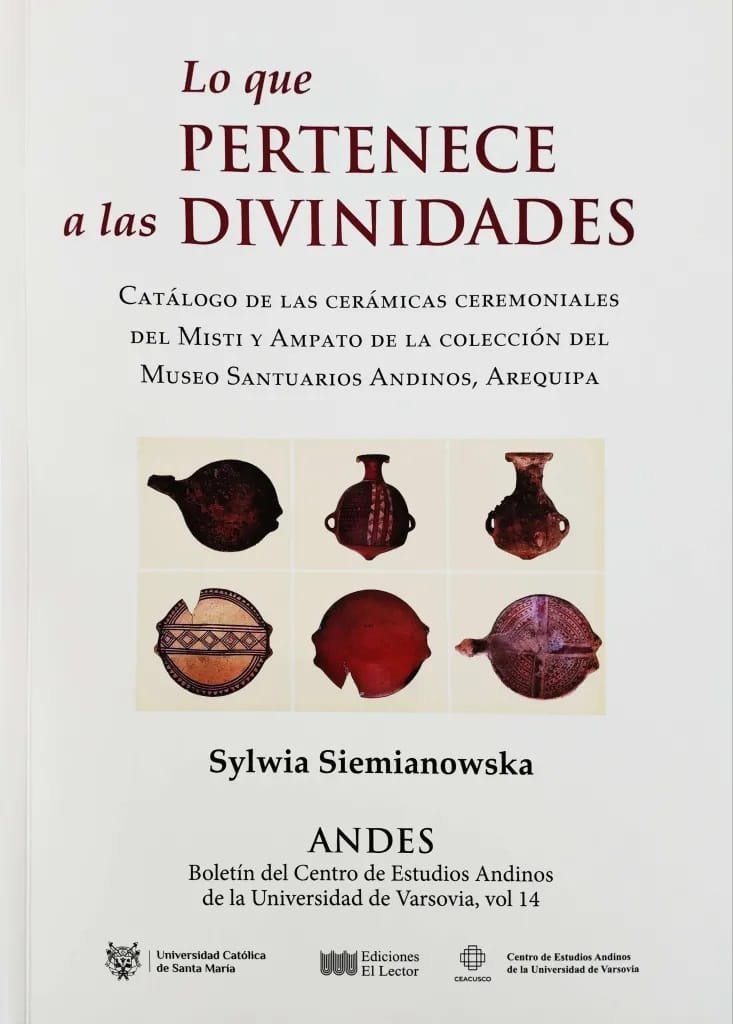
Dr. Sylwia Siemianowska of the Institute of Archaeology and Ethnology of the Polish Academy of Sciences (IAE PAN) has extensively studied these ceremonies. In her recently published bilingual book, Lo que pertenece a las divinidades, she catalogues Inca ceramics discovered alongside child sacrifices on Peru’s Misti and Ampato volcanoes. The capacocha ritual, practiced approximately 500 years ago, involved the sacrifice of children aged 6 to 13, who were considered divine messengers carrying offerings and prayers to the gods.

Dr. Siemianowska explains that ceramic vessels played a vital role in Inca burial and ritual practices. These vessels were not mere objects but symbols of the empire’s religious and political ideologies. Found alongside sacrificial remains on Misti and Ampato, the ceramics included puccu plates, bowls, and the iconic Inca aryballos—amphorae used to store ceremonial chicha, a fermented maize drink central to many Inca rituals. “It is a kind of gift for a deity,” she noted in an interview with PAP, describing how, during sun ceremonies, the Inca would drink chicha from one cup and offer it to the Sun from another, symbolizing a connection between the mortal and divine realms.

Research conducted in 2020 by Dagmara Socha of the Andean Research Center at the University of Warsaw uncovered significant finds on Misti and Ampato. On Misti, eight to nine children were buried with grave goods that included 47 figurines made of gold, silver, and copper, stone vessels, Spondylus shell artifacts, and 32 ceramic vessels. Similarly, on Ampato, three child graves, including a six-year-old boy and two girls, were accompanied by 37 ceramic vessels, along with other artifacts.

Archaeologists reconstruct face of Incan ‘Ice Maiden’ mummy killed in ritual sacrifice 500 years ago
Mummy Juanita, or the Lady of Ampato, is the frozen body of a young Inca girl, sacrificed to the gods between 1440 and 1480, around 12–15 years old. Credit: Martine, via Flickr

These artifacts now reside in the Museo Santuarios Andinos in Arequipa, Peru. The ceramics are adorned with geometric patterns, wavy lines, and zigzags painted with mineral pigments after firing. While most of the vessels were intact, some on Ampato appeared to have been deliberately broken, a ritual act thought to seal the sacred space.

The Incas’ use of ceramics extended beyond practical functions. These objects served as powerful symbols of Inca imperialism, reflected in their standardized forms, decorations, and materials. “Ceramics carried ideas, symbolized belonging to a specific social group, and marked norms and customs,” explained Dr. Siemianowska. Ritual ceramics, especially miniature vessels, were crafted exclusively for ceremonial purposes and lacked utilitarian functions.
Inca ceramics were a key tool for religious and political dominance
In her recently published bilingual book, Lo que pertenece a las divinidades, Dr. Sylwia Siemianowska catalogues Inca ceramics discovered alongside child sacrifices on Peru’s Misti and Ampato volcanoes.

One unique aspect was the use of well-sealed vessels for substitute offerings, where materials like llama blood and powdered Spondylus shell were mixed and ceremonially offered to volcanoes. “Since we cannot reach the center of the volcano directly, we make a symbolic offering through a vessel filled with gifts,” noted Dr. Siemianowska.

These discoveries illuminate the intricate connections between Inca religion, politics, and daily life, showcasing the central role of ceramics in sustaining their empire.

Sources: PAP
Share:

Share on Facebook Share on X (Twitter) Share on LinkedIn Share on Pinterest Share on WhatsApp Share on Email

Related Posts

Stone Age humans built complex grass beds at Border Cave 200,000 years ago, study finds
Archaeology

Stone Age humans built complex grass beds at Border Cave 200,000 years ago, study finds

May 30, 2026
Radiocarbon dating confirms Teutonic Knights built Feldioara Fortress in 13th-century Transylvania
Archaeology

Radiocarbon dating confirms Teutonic Knights built Feldioara Fortress in 13th-century Transylvania

May 30, 2026
Ancient shipwreck with 300 amphorae found off Italy could reshape views of Mediterranean wine trade
Archaeology

Ancient shipwreck with 300 amphorae found off Italy could reshape views of Mediterranean wine trade

May 29, 2026
Ancient DNA reveals 700-kilometer migration along Peru’s coast before the Inca Empire
Anthropology

Ancient DNA reveals 700-kilometer migration along Peru’s coast before the Inca Empire

May 29, 2026
6,000-year-old mega-structure unearthed at prehistoric settlement in Romania
Archaeology

6,000-year-old mega-structure unearthed at prehistoric settlement in Romania

May 29, 2026
Medieval bone study identifies microbial communities driving archaeological bone degradation and preservation
Anthropology

Medieval bone study identifies microbial communities driving archaeological bone degradation and preservation

May 28, 2026

Follow us


Instagram
242K

Facebook
117K

Threads
47K

LinkedIn
15K

Twitter
6K

YouTube
1K

Archaeology News online magazine

Archaeology News is an international online magazine that covers all aspects of archaeology.


Categories

  • Academics
    • Books
    • Conferences
    • Universities
  • Articles
  • Download
  • Game
  • News
    • Anthropology
    • Archaeology
    • Paleontology
  • Quiz
  • Tours

Subscribe to our newsletter

© 2024 - Archaeology News Online Magazine. All Rights Reserved.

  • About
  • Privacy Policy
  • Terms of Use
  • Donation
  • Contact

Manage Consent
To provide the best experiences, we use technologies like cookies to store and/or access device information. Consenting to these technologies will allow us to process data such as browsing behavior or unique IDs on this site. Not consenting or withdrawing consent, may adversely affect certain features and functions.
Functional Always active
The technical storage or access is strictly necessary for the legitimate purpose of enabling the use of a specific service explicitly requested by the subscriber or user, or for the sole purpose of carrying out the transmission of a communication over an electronic communications network.
Preferences
The technical storage or access is necessary for the legitimate purpose of storing preferences that are not requested by the subscriber or user.
Statistics
The technical storage or access that is used exclusively for statistical purposes. The technical storage or access that is used exclusively for anonymous statistical purposes. Without a subpoena, voluntary compliance on the part of your Internet Service Provider, or additional records from a third party, information stored or retrieved for this purpose alone cannot usually be used to identify you.
Marketing
The technical storage or access is required to create user profiles to send advertising, or to track the user on a website or across several websites for similar marketing purposes.
  • Manage options
  • Manage services
  • Manage {vendor_count} vendors
  • Read more about these purposes
View preferences
  • {title}
  • {title}
  • {title}
  • Home
  • News
    • Archaeology
    • Anthropology
    • Paleontology
  • Academic
    • Books
    • Conferences
    • Universities
  • Articles
  • VR Tours
  • Quiz & Game
  • Download
  • Encyclopedia
  • Forum

About  .  Contact  .  Donation

© 2024 - Archaeology News Online Magazine. All Rights Reserved