• About
  • Privacy Policy
  • Terms of Use
  • Donation
  • Contact
No Result
View All Result
Archaeology News
  • Home
  • News
    • Archaeology
    • Anthropology
    • Paleontology
  • Academic
    • Books
    • Conferences
    • Universities
  • Articles
  • VR Tours
  • Quiz & Game
  • Download
  • Encyclopedia
  • Forum
Archaeology News
No Result
View All Result
Home News Archaeology

Archaeologists discover traces of Roman aqueduct in Britain that supplied water to Durnovaria

by Dario Radley
November 21, 2024

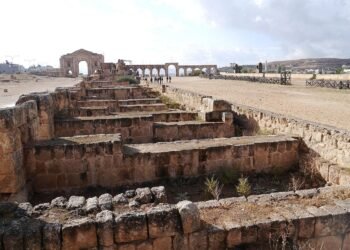
Archaeologists from Bournemouth University (BU) have made a groundbreaking discovery regarding the Dorchester Aqueduct, one of the longest and most extensively studied Roman watercourses in Britain. Their research has revealed that the aqueduct, which supplied fresh water to the Roman town of Durnovaria (modern Dorchester), extended two kilometers further than previously thought, reaching the village of Notton on the River Frome.
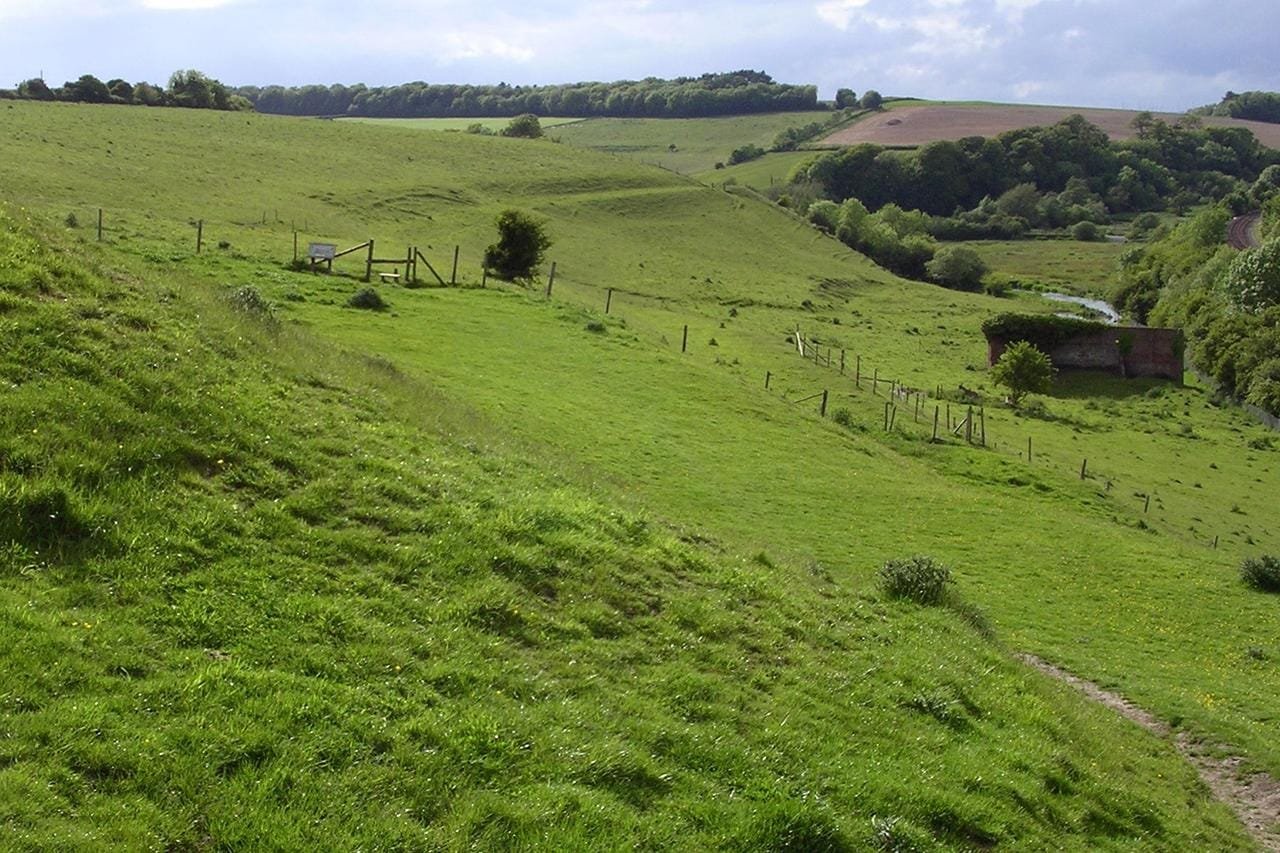
Archaeologists discover traces of Roman aqueduct in Britain that supplied water to Durnovaria
The Dorchester aqueduct viewed from Poundbury hillfort, Dorset, U.K. Credit: Jim Champion / Wikimedia Commons, CC BY-SA 3.0

The Dorchester Aqueduct, known for its critical role in providing water to public baths, fountains, and affluent households in Roman Britain, represents a vital element of Roman urban infrastructure. Harry Manley, from BU’s Department of Life & Environmental Sciences, said: “Getting water supplied into prominent structures and buildings in the town would have been a sign of modern living at the time, and an indicator of the town’s status.”

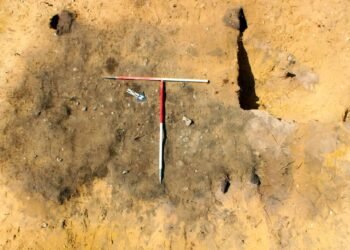
The research team employed innovative methods to map the previously unknown sections of the aqueduct. Utilizing publicly available LiDAR data, which analyzes land elevation and features, Manley traced the aqueduct’s route upstream from the previously believed water source at Steppes Bottom lake. This analysis, corroborated by a geophysical survey conducted near Frampton Villa, revealed evidence of a narrow channel running northwest to southeast. Ground-penetrating radar surveys and subsequent excavations further confirmed the presence of a wooden aqueduct channel at these locations.

The excavation uncovered remnants of decomposed wooden planks that once formed a rectangular, box-shaped conduit approximately one meter wide and 0.35 meters deep. This evidence highlights the engineering ingenuity of Roman Britain, which, while simpler in design compared to aqueducts in continental Europe, was nevertheless a source of civic pride and practicality.
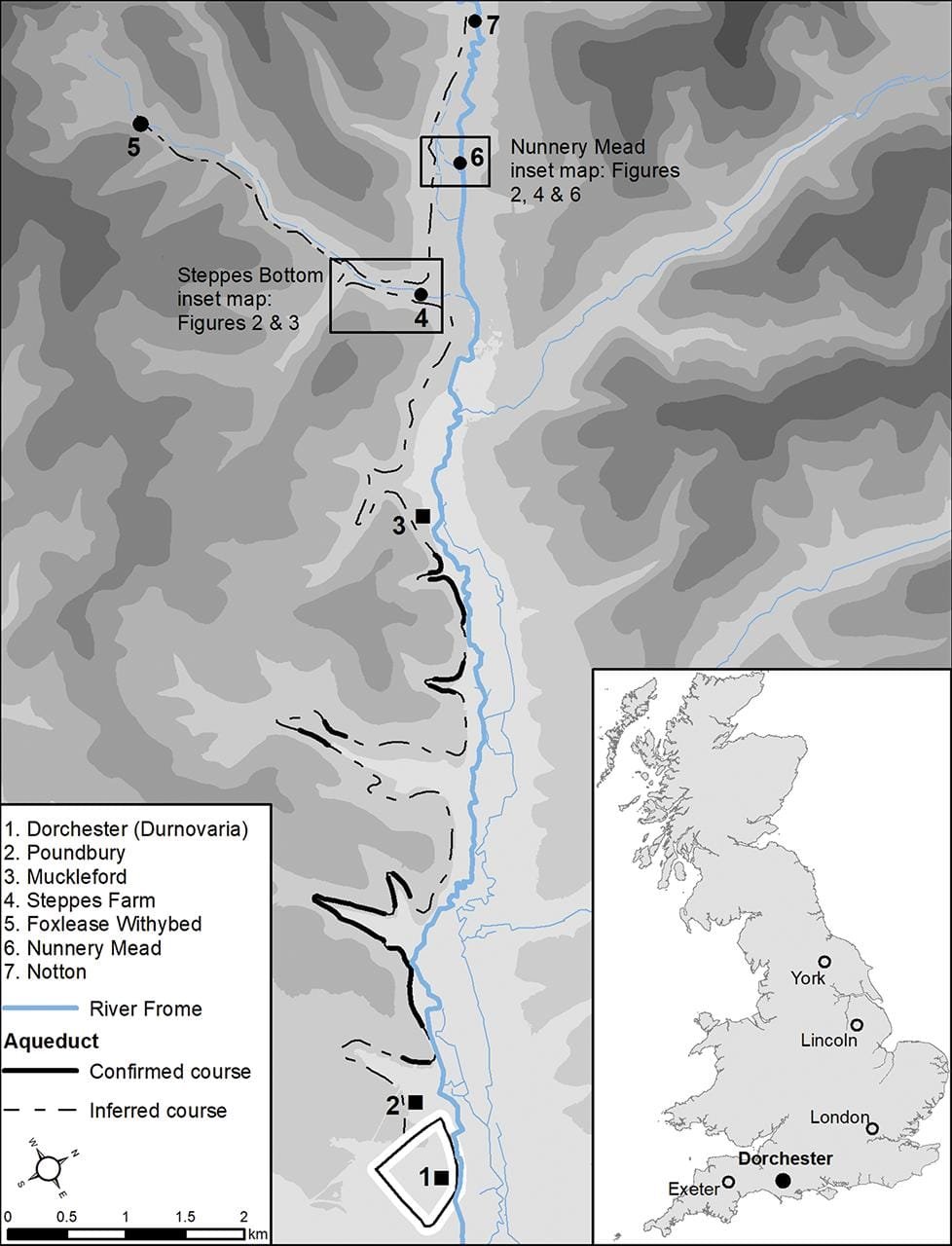
Archaeologists discover traces of Roman aqueduct in Britain that supplied water to Durnovaria
Route of aqueduct northwest of Dorchester (Solid line = confirmed location; dashed line = inferred route. River Frome shown as bold blue). Credit: H. Manley Britannia (2024)

Previous studies had suggested that the aqueduct originated at Steppes Bottom. However, the new findings indicate that its source was likely further upstream, near Notton. This discovery challenges earlier interpretations, such as those by Bill Putnam, whose 1990s excavations identified features in Steppes Bottom potentially associated with water management for a medieval priory. The new data suggests these features could instead be remnants of Roman engineering designed to carry water across the valley.

RelatedStories

Ancient Venetic sanctuary with rare inscriptions unearthed beneath road project in Italy

Ancient Venetic sanctuary with rare inscriptions unearthed beneath road project in Italy

May 21, 2026
Ancient settlement with weaving workshop and longhouses uncovered in Germany gravel pit

Ancient settlement with weaving workshop and longhouses uncovered in Germany gravel pit

May 17, 2026

The findings, published in the journal Britannia, provide a clearer picture of the aqueduct’s construction and maintenance. Integrating archaeological evidence from the past century with modern topographic data, the team is developing a comprehensive analysis of the aqueduct’s full 20-kilometer route. This effort is bolstered by access to previously unpublished archival data from Putnam’s original excavations. “This research has clearly shown the benefit of integrating archival archaeological evidence with landscape-scale topographic data within a GIS,” the researchers stated.

Archaeologists discover traces of Roman aqueduct in Britain that supplied water to Durnovaria
Magnetic survey results of geophysical survey for Nunnery Mead. Credit: H. Manley Britannia (2024)

The discovery underscores the importance of the aqueduct not just as a functional water supply system but also as a symbol of Roman innovation and urbanization in Britain. It adds a critical chapter to the history of Durnovaria, a town that played a strategically significant role during the Roman occupation. As Manley explained, “Understanding more about how it was constructed and maintained, and where it began, adds further detail to this vital aspect of Roman life.”
Bournmouth University

More information: Manley H, Cheetham P, Stewart D, Russell M. (2024). A Source of Confusion: New Archaeological Evidence for the Dorchester Aqueduct. Britannia:1-15. doi:10.1017/S0068113X24000254

Share:

Share on Facebook Share on X (Twitter) Share on LinkedIn Share on Pinterest Share on WhatsApp Share on Email

You May Also Like...

Svalbard whalers show scurvy and extreme labor stress in “corpse point” cemetery
Anthropology

Svalbard whalers show scurvy and extreme labor stress in “corpse point” cemetery

May 25, 2026
'Patchwork families' lived in Europe over 5,000 years ago, Neolithic DNA study finds
Anthropology

‘Patchwork families’ lived in Europe over 5,000 years ago, Neolithic DNA study finds

May 25, 2026
100,000-year-old Homo sapiens bones from Ethiopia may preserve earliest evidence of human cremation
Anthropology

100,000-year-old Homo sapiens bones from Ethiopia may preserve earliest evidence of human cremation

May 24, 2026
Ancient Peruvian hairless dogs buried with Wari elites 1,200 years ago
Archaeology

Ancient Peruvian hairless dogs buried with Wari elites 1,200 years ago

May 24, 2026
4,000-year-old Mohenjo-daro study finds ancient city grew more equal over time
Archaeology

4,000-year-old Mohenjo-daro study finds ancient city grew more equal over time

May 24, 2026
Bronze Age towers in Sardinia remained centers of worship and ritual in the Iron Age
Archaeology

Bronze Age towers in Sardinia remained centers of worship and ritual in the Iron Age

May 23, 2026

Follow us


Instagram
242K

Facebook
117K

Threads
46K

LinkedIn
14K

Twitter
6K

YouTube
1K
Svalbard whalers show scurvy and extreme labor stress in “corpse point” cemetery

Svalbard whalers show scurvy and extreme labor stress in “corpse point” cemetery

May 25, 2026
'Patchwork families' lived in Europe over 5,000 years ago, Neolithic DNA study finds

‘Patchwork families’ lived in Europe over 5,000 years ago, Neolithic DNA study finds

May 25, 2026
100,000-year-old Homo sapiens bones from Ethiopia may preserve earliest evidence of human cremation

100,000-year-old Homo sapiens bones from Ethiopia may preserve earliest evidence of human cremation

May 24, 2026
Ancient Peruvian hairless dogs buried with Wari elites 1,200 years ago

Ancient Peruvian hairless dogs buried with Wari elites 1,200 years ago

May 24, 2026

Archaeology News online magazine

Archaeology News is an international online magazine that covers all aspects of archaeology.


Categories

  • Academics
    • Books
    • Conferences
    • Universities
  • Articles
  • Download
  • Game
  • News
    • Anthropology
    • Archaeology
    • Paleontology
  • Quiz
  • Tours

Subscribe to our newsletter

© 2024 - Archaeology News Online Magazine. All Rights Reserved.

  • About
  • Privacy Policy
  • Terms of Use
  • Donation
  • Contact

Manage Consent
To provide the best experiences, we use technologies like cookies to store and/or access device information. Consenting to these technologies will allow us to process data such as browsing behavior or unique IDs on this site. Not consenting or withdrawing consent, may adversely affect certain features and functions.
Functional Always active
The technical storage or access is strictly necessary for the legitimate purpose of enabling the use of a specific service explicitly requested by the subscriber or user, or for the sole purpose of carrying out the transmission of a communication over an electronic communications network.
Preferences
The technical storage or access is necessary for the legitimate purpose of storing preferences that are not requested by the subscriber or user.
Statistics
The technical storage or access that is used exclusively for statistical purposes. The technical storage or access that is used exclusively for anonymous statistical purposes. Without a subpoena, voluntary compliance on the part of your Internet Service Provider, or additional records from a third party, information stored or retrieved for this purpose alone cannot usually be used to identify you.
Marketing
The technical storage or access is required to create user profiles to send advertising, or to track the user on a website or across several websites for similar marketing purposes.
  • Manage options
  • Manage services
  • Manage {vendor_count} vendors
  • Read more about these purposes
View preferences
  • {title}
  • {title}
  • {title}
  • Home
  • News
    • Archaeology
    • Anthropology
    • Paleontology
  • Academic
    • Books
    • Conferences
    • Universities
  • Articles
  • VR Tours
  • Quiz & Game
  • Download
  • Encyclopedia
  • Forum

About  .  Contact  .  Donation

© 2024 - Archaeology News Online Magazine. All Rights Reserved