
Archaeologists working at Pompeii have introduced a new digital reconstruction of a man who died during the eruption of Mount Vesuvius in 79 CE. The project brings together field data and artificial intelligence, offering a closer look at the final moments of one of the disaster’s victims.
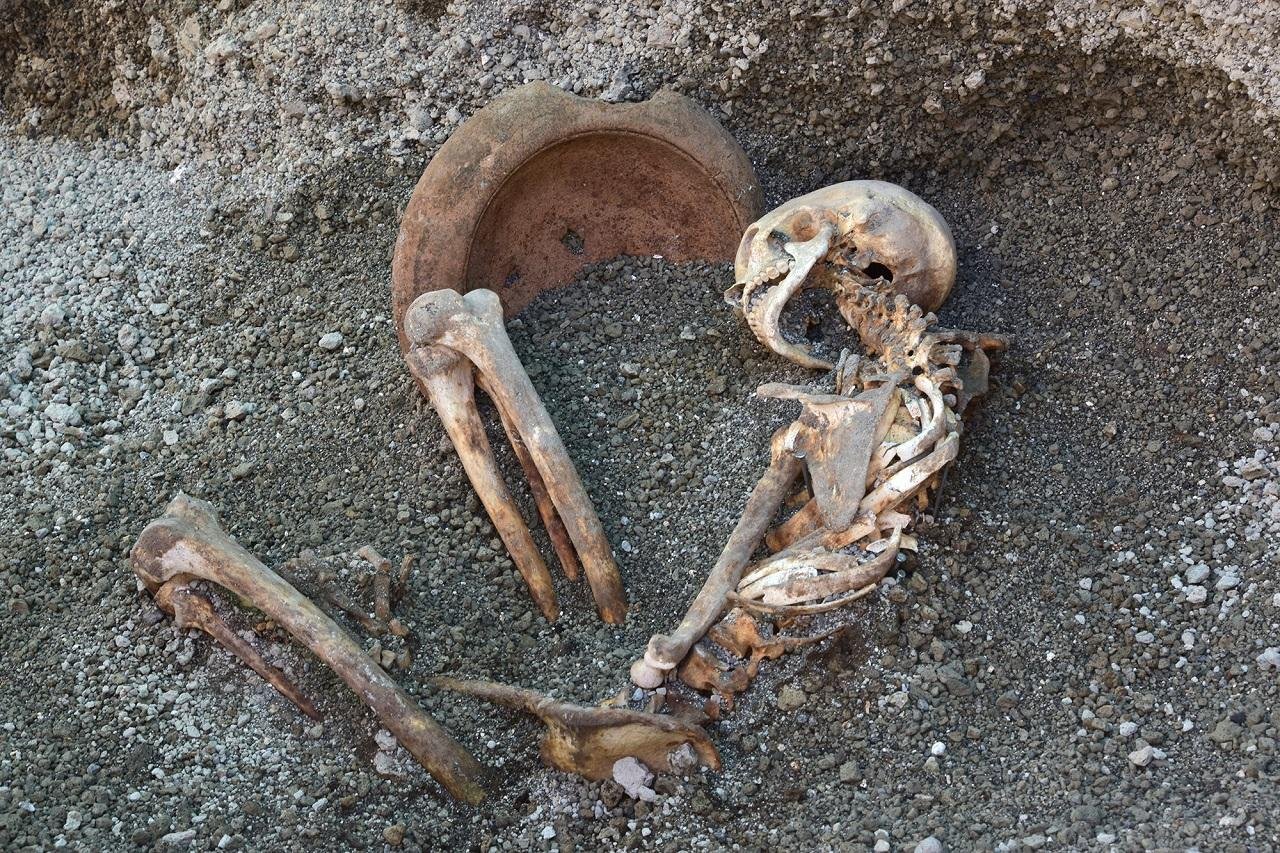
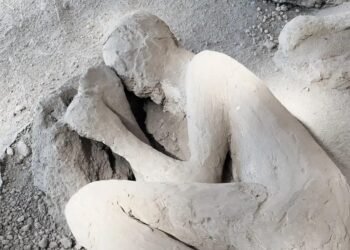
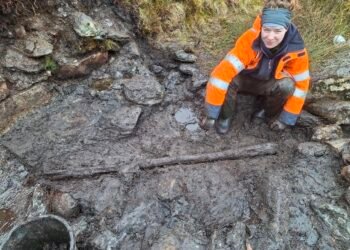
The remains were uncovered near the Porta Stabia necropolis, outside the ancient city walls. Excavations in this area revealed two men who had tried to escape toward the coast. Their positions and injuries suggest they died at different stages of the eruption. One of them, a younger individual, appears to have been overtaken by a fast-moving pyroclastic flow made of hot gases and ash. The second man, older and found nearby, likely died earlier while volcanic debris fell across the area.
Archaeologists found this second victim lying beside a terracotta mortar. The object showed signs of damage and was positioned near his head. Researchers interpret this as an attempt to shield himself from falling lapilli, the small stones produced during the eruption. Written accounts from Pliny the Younger describe similar actions. People caught in the disaster tried to protect their heads using whatever objects they had.
Other items found with the man help reconstruct his final movements. He carried a ceramic oil lamp, likely used to move through thick ash and low visibility. A small iron ring was still on his finger. A purse with ten bronze coins lay nearby. These details show what he chose to take while fleeing and how he tried to navigate the conditions around him.
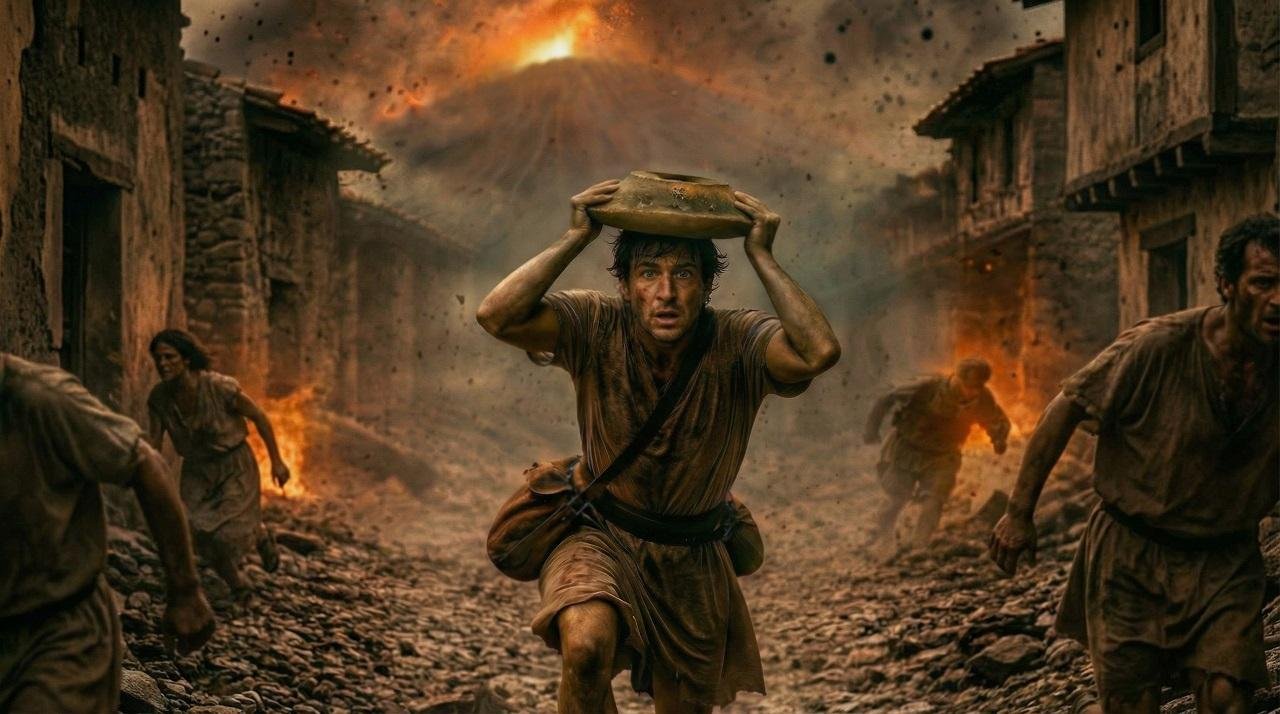
The digital reconstruction focuses on this individual. Researchers combined archaeological measurements with artificial intelligence and photo editing tools to create a realistic portrait. The image shows a man moving along a rough path, raising the mortar above his head while debris falls around him. The goal was not to produce a definitive likeness but to build a visual model grounded in physical evidence.

This work forms part of a broader effort to manage the large volume of data collected at Pompeii. The site continues to produce detailed information about daily life in the Roman world, preserved under ash for nearly two thousand years. Specialists involved in the project stress that artificial intelligence serves as a support tool rather than a replacement for traditional analysis. Each reconstruction begins with excavation data and is checked against established methods.
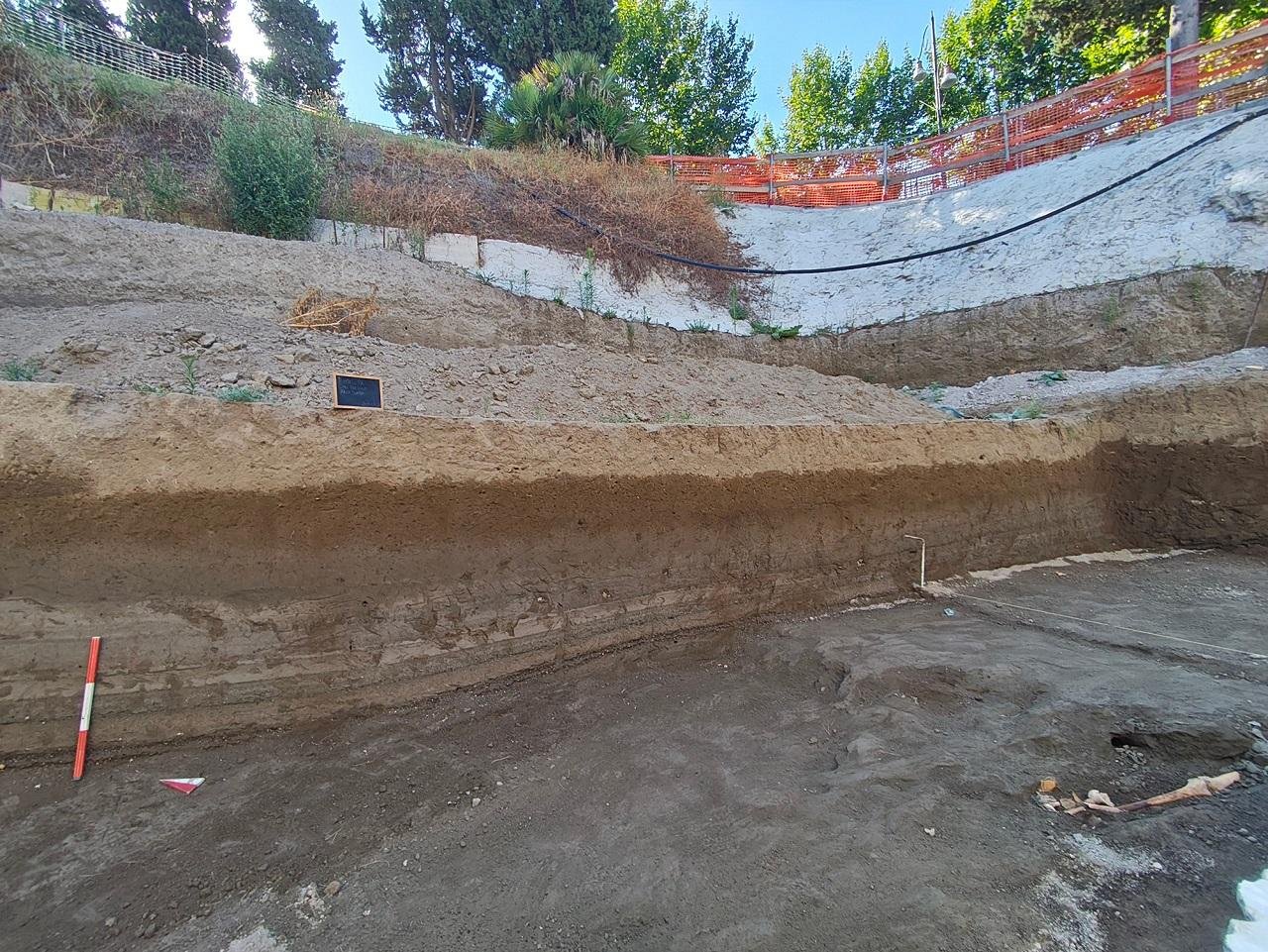
The case also highlights the risks faced by those who tried to escape the city. The two men followed the same route but encountered different phases of the eruption. One died during the early fall of volcanic stones. The other was caught later by a much more destructive surge. Their remains provide a sequence of events recorded directly in the ground.
The Archaeological Park plans to continue testing similar methods as part of its research program. Results from this study, including technical details on the reconstruction process, have been published in the Pompeii Excavations E-journal.
More information: Italian Ministry of Culture

Disclaimer: This website is a science-focused magazine that welcomes both academic and non-academic audiences. Comments are written by users and may include personal opinions or unverified claims. They do not necessarily reflect the views of our editorial team or rely on scientific evidence.
Comment Policy: We kindly ask all commenters to engage respectfully. Comments that contain offensive, insulting, degrading, discriminatory, or racist content will be automatically removed.