
A bronze cup found in central Spain is giving archaeologists a new view of Roman military life and long-distance connections across the empire. Known as the Berlanga Cup, the vessel was discovered near Berlanga de Duero in the province of Soria, nearly 2,000 kilometers from northern Britain, where Hadrian’s Wall once marked Rome’s northern frontier.
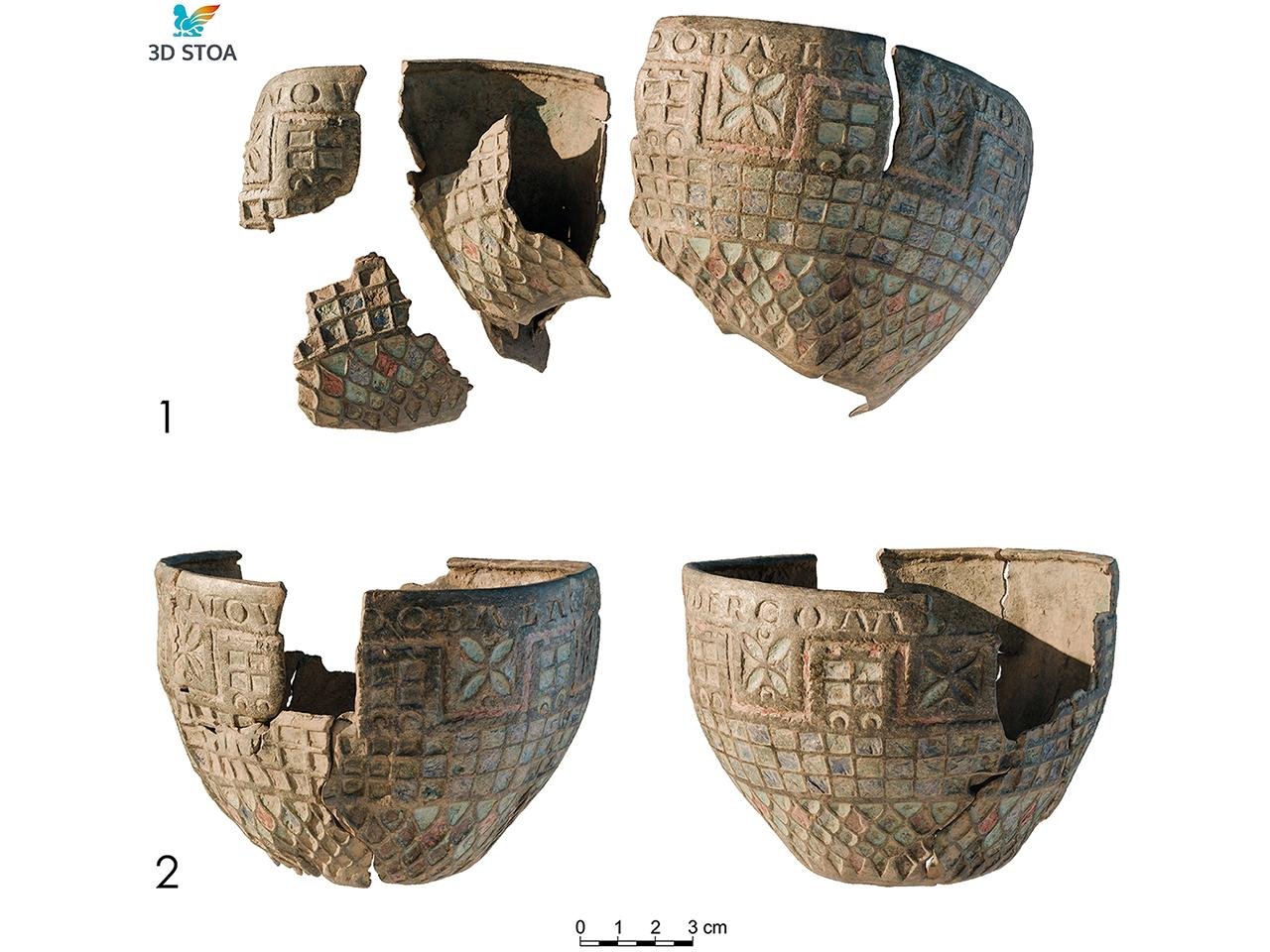
The object belongs to a rare group of bronze vessels called Hadrian’s Wall pans, small decorated cups inscribed with the names of forts along the Wall. Several examples have been found before in Britain and France, including the well-known Rudge Cup, but the Berlanga Cup stands out for one reason. Around its rim are the names of four forts from the eastern section of Hadrian’s Wall: Cilurnum, Onno, Vindobala, and Condercom.
Researchers say this is the only known vessel of this type listing forts from the Wall’s eastern end. Earlier pans mostly referred to central and western forts. This new evidence shows the eastern frontier was also included in these objects and challenges earlier theories suggesting the vessels formed a tidy geographical series covering the Wall in sections. Instead, the cups were likely made as individual items for specific owners.
The cup was found in four fragments, though about 90 percent of the vessel survives. Archaeologists used digital modeling to reconstruct the original form, correct distortions, and improve the reading of the inscription. The reconstructed vessel measures slightly over 11 centimeters wide and nearly 8 centimeters high.
Its decoration also attracted attention. The thin bronze walls were covered with colored enamel in red, green, blue, and turquoise. Geometric designs, tower-like motifs, and decorative bands still survive on the surface, showing the cup was once a carefully finished object rather than ordinary tableware.
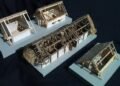

Scientific analysis offered more clues about its origin. The metal is a leaded copper alloy typical of Roman craftsmanship from the second century CE. Lead isotope testing points to northern Britain as the likely source of the lead, indicating the cup was produced there rather than in Hispania. The enamel technique also matches Roman British traditions, where colored glass paste was placed into small cut cells on bronze surfaces.
The discovery site adds another layer to the story. The fragments were recovered at La Cerrada de Arroyo, a rural area near Berlanga de Duero. After the find, archaeologists carried out ground-penetrating radar surveys and surface investigations. These revealed buried Roman structures, including rectangular spaces and possible floors. Pottery found nearby suggests Roman occupation from the first to fourth centuries CE.
Researchers believe the cup likely traveled to Spain through military movement. One possible link is the Cohors I Celtiberorum, a Roman auxiliary unit recruited from the Celtiberian region of Hispania and known to have served in Britain. A soldier from this unit may have brought the cup home after completing service on Hadrian’s Wall.
The object may have been purchased as a personal keepsake or presented as a retirement or service gift. Its selective inscription suggests a personal connection to specific forts rather than a generic souvenir.
Dating remains approximate, but archaeologists place the cup between about CE 124 and 150, or possibly slightly later in the second century. The named forts were active by this period, and both the materials and craftsmanship fit the date range.
The Berlanga Cup is only the second object of this type discovered in Hispania and the clearest Spanish example known so far. Beyond its artistic value, the find offers rare evidence of how Roman soldiers moved across the empire and carried objects tied to their service and identity.
More broadly, the cup connects two distant parts of the Roman world, northern Britain and inland Spain, through one personal object. What first appeared to be a damaged bronze vessel now tells a larger story about military careers, travel, and memory in the Roman Empire.

Disclaimer: This website is a science-focused magazine that welcomes both academic and non-academic audiences. Comments are written by users and may include personal opinions or unverified claims. They do not necessarily reflect the views of our editorial team or rely on scientific evidence.
Comment Policy: We kindly ask all commenters to engage respectfully. Comments that contain offensive, insulting, degrading, discriminatory, or racist content will be automatically removed.