• About
  • Privacy Policy
  • Terms of Use
  • Donation
  • Contact
No Result
View All Result
Archaeology News
  • Home
  • News
    • Archaeology
    • Anthropology
    • Paleontology
  • Academic
    • Books
    • Conferences
    • Universities
  • Articles
  • VR Tours
  • Quiz & Game
  • Download
  • Encyclopedia
  • Forum
Archaeology News
No Result
View All Result
Home News Archaeology

How Nile River stability shaped the rise of ancient Napata in Sudan’s Kushite kingdom

by Dario Radley
April 28, 2026

The ancient city of Napata in present-day Sudan stood for centuries as a center of power in the Kushite kingdom. New research links this long history to changes in the Nile River and the land around Jebel Barkal, where the city took shape.
How Nile River stability shaped the rise of ancient Napata in Sudan’s Kushite kingdom
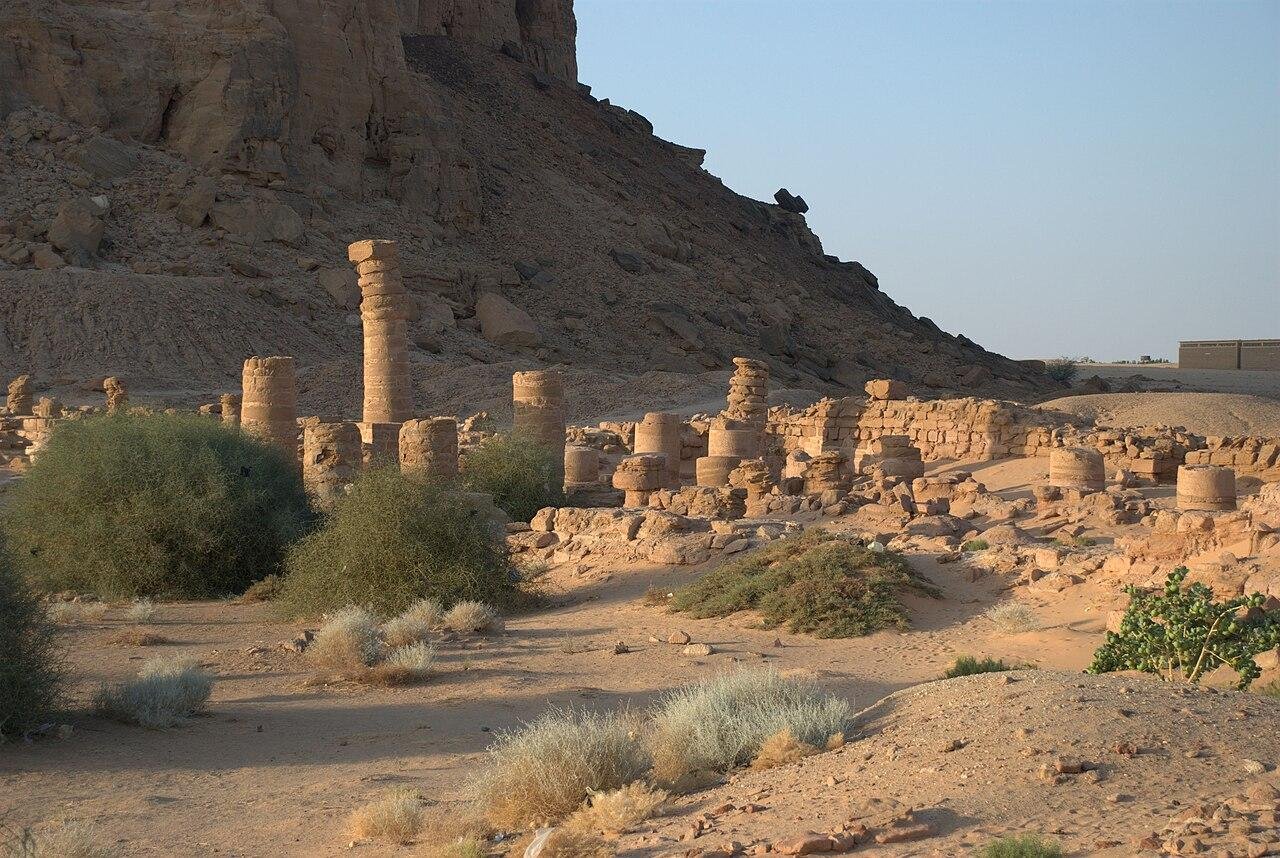
Southwest view of Amun Temple at Jebel Barkal. Credit: Bertramz / CC BY 3.0

A team from the University of Michigan worked with Sudanese researchers to study the river valley beneath the site. Their goal focused on how the Nile shifted over the past 12,500 years and how those changes shaped settlement. The study appears in the Proceedings of the National Academy of Sciences.

Fieldwork involved 26 sediment cores taken across the valley. Each core reached between five and 13 meters deep. Samples were collected at regular intervals. The team used optically stimulated luminescence and radiocarbon dating to build a timeline of river activity. Pottery remains added further dating control.

The record shows a major change in the river’s behavior. During the early and middle Holocene, the Nile cut deeply into its valley. Around 4,000 years ago, rainfall patterns shifted. The river slowed and began to deposit sediment instead of eroding land. Over time, layers of clay and silt built up to nearly 10 meters thick and formed a broad floodplain.
How Nile River stability shaped the rise of ancient Napata in Sudan’s Kushite kingdom
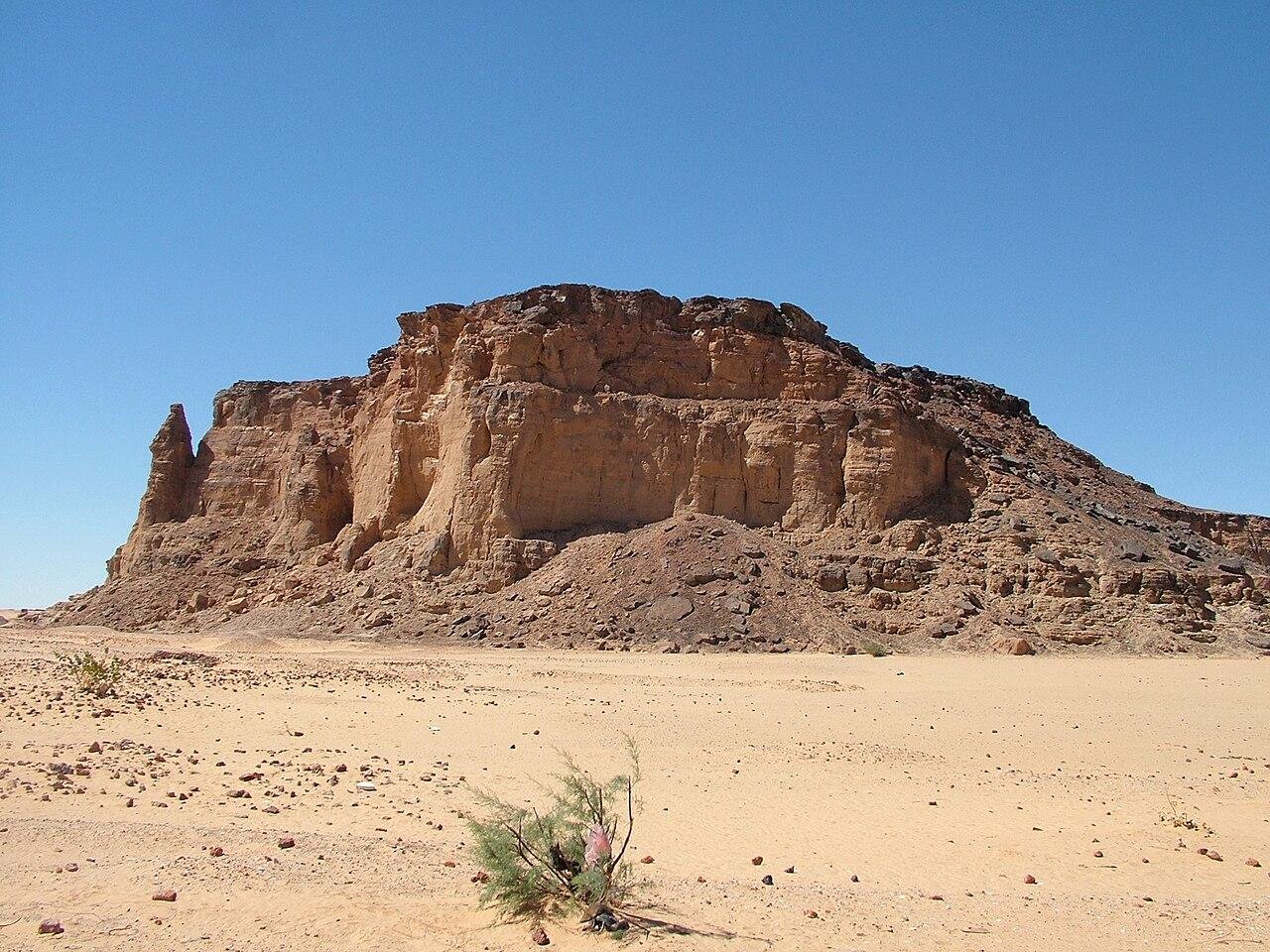
Gebel Barkal in Nubia, Sudan. Credit: LassiHU / CC BY-SA 4.0

Near Jebel Barkal, the Nile entered a long period of stability. The Fourth Cataract, located upstream, played a central role. Rapids and islands in this stretch reduced the river’s force. Sediment settled more easily as energy dropped. The narrow valley also helped control how water spread across the land.

RelatedStories

4,000-year-old Kerma burial unearthed in Sudan’s Bayuda Desert

4,000-year-old Kerma burial unearthed in Sudan’s Bayuda Desert

February 13, 2026
Facial tattoos on Nubian toddlers: new evidence of faith, protection, and identity from 1,400 years ago

Facial tattoos on Nubian toddlers: new evidence of faith, protection, and identity from 1,400 years ago

December 27, 2025

These conditions shaped a landscape suited for settlement. The floodplain supported farming and lowered the risk of destructive floods. Water remained accessible throughout the year. Jebel Barkal held religious importance as well, which reinforced the area’s role as a cultural center.

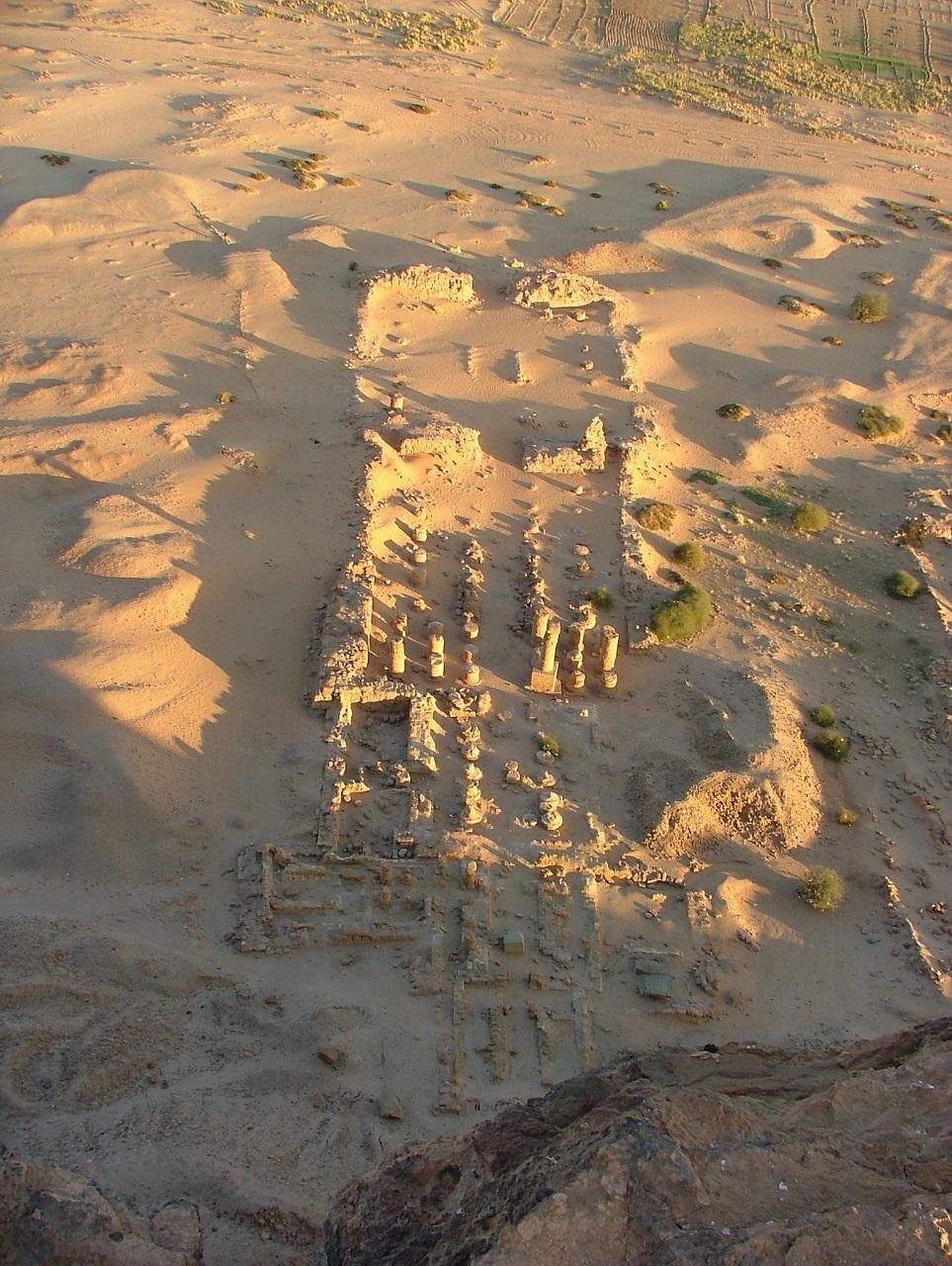
Napata developed into a major city between about 1070 BCE and 350 CE. Archaeological remains include pyramids, temples, and palaces linked to Kushite rulers. The city stood within a wider network that connected with Egypt and other regions of the ancient world.
How Nile River stability shaped the rise of ancient Napata in Sudan’s Kushite kingdom
Ruins of the Temple of Amun at Jebel Barkal. CC BY-SA 3.0

The study shows how river behavior and human activity stayed closely linked. Shifts in flow and sediment shaped where people built and how they sustained their communities. A stable river system supported long-term occupation at Napata.

Research at the site continues despite ongoing conflict in Sudan. Local archaeologists from the National Corporation for Antiquities and Museums remain active in the field with support from international partners. Their work adds new data from a region with fewer large scale studies compared to Egypt.

This combination of geological and archaeological evidence provides a clearer picture of how the Nile influenced one of Africa’s early civilizations. Changes in climate and river patterns played a direct role in the rise and persistence of Napata and the Kushite kingdom.

Publication: Peeters, J., Winkels, T. G., Wolf, P., Skuldbøl, T. B. B., Chamberlain, E. L., Büchner-Matthews, S., … Emberling, G. (2026). Holocene Nile dynamics shaped the physical and cultural landscape of ancient Nubia. Proceedings of the National Academy of Sciences of the United States of America, 123(18). doi:10.1073/pnas.2529986123
More information: University of Michigan
ShareTweetShareShareSend

You May Also Like...

AI reconstructs face of Pompeii victim killed in Mount Vesuvius eruption
Archaeology

AI reconstructs face of Pompeii victim killed in Mount Vesuvius eruption

April 28, 2026
Ancient Roman toilets in Bulgaria reveal early spread of intestinal parasites
Anthropology

Ancient Roman toilets in Bulgaria reveal early spread of intestinal parasites

April 28, 2026
Ancient Roman shipwreck reveals hidden secrets of waterproofing and Mediterranean repairs
Archaeology

Ancient Roman shipwreck reveals hidden secrets of waterproofing and Mediterranean repairs

April 27, 2026
42 lost pages of Codex H recovered, revealing early New Testament structure and scribal practices
Archaeology

42 lost pages of Codex H recovered, revealing early New Testament structure and scribal practices

April 26, 2026
CT scans reveal hidden details of 2,300-year-old Egyptian mummies
Anthropology

CT scans reveal hidden details of 2,300-year-old Egyptian mummies

April 26, 2026
Rare 2,000-year-old Roman bread found at Vindonissa reveals early military life in Switzerland
Archaeology

Rare 2,000-year-old Roman bread found at Vindonissa reveals early military life in Switzerland

April 25, 2026

Comments 0

  1. Editorial Team says:
    1 second ago

    Disclaimer: This website is a science-focused magazine that welcomes both academic and non-academic audiences. Comments are written by users and may include personal opinions or unverified claims. They do not necessarily reflect the views of our editorial team or rely on scientific evidence.

    Comment Policy: We kindly ask all commenters to engage respectfully. Comments that contain offensive, insulting, degrading, discriminatory, or racist content will be automatically removed.

    Reply

Leave a Reply Cancel reply

Your email address will not be published. Required fields are marked *

Follow us


Instagram
244K

Facebook
118K

Threads
46K

LinkedIn
14K

Twitter
6K

YouTube
1K
  • Trending
  • Comments
  • Latest
Shipwreck Salvage. Credit: rawpixel.com / Public Domain

2,000-year-old shipwreck discovered off Turkish coast with remarkably preserved stacked ceramics

July 2, 2025
Viking age DNA reveals 9,000-year-old HIV-resistant gene originating near the Black Sea

Viking age DNA reveals 9,000-year-old HIV-resistant gene originating near the Black Sea

May 18, 2025
A new study suggests the mysterious Voynich Manuscript may be a medieval cipher

A new study suggests the mysterious Voynich Manuscript may be a medieval cipher

January 3, 2026
3D analysis reveals Shroud of Turin image likely came from sculpture, not Jesus’ body

3D analysis reveals Shroud of Turin image likely came from sculpture, not Jesus’ body

August 3, 2025
Moses may be named in ancient Egyptian mine inscriptions, sparking debate over earliest biblical references

Moses may be named in ancient Egyptian mine inscriptions, sparking debate over earliest biblical references

July 31, 2025
3D analysis reveals Shroud of Turin image likely came from sculpture, not Jesus’ body

3D analysis reveals Shroud of Turin image likely came from sculpture, not Jesus’ body

Moses may be named in ancient Egyptian mine inscriptions, sparking debate over earliest biblical references

Moses may be named in ancient Egyptian mine inscriptions, sparking debate over earliest biblical references

$1 million prize offered to decipher 5,300-year-old Indus Valley script

$1 million prize offered to decipher 5,300-year-old Indus Valley script

Oldest ever genetic data from a human relative found in 2-million-year-old fossilized teeth

Oldest ever genetic data from a human relative found in 2-million-year-old fossilized teeth

Exceptionally large Roman shoes discovered at Magna fort near Hadrian’s Wall

Exceptionally large Roman shoes discovered at Magna fort near Hadrian’s Wall

How Nile River stability shaped the rise of ancient Napata in Sudan’s Kushite kingdom

How Nile River stability shaped the rise of ancient Napata in Sudan’s Kushite kingdom

April 28, 2026
AI reconstructs face of Pompeii victim killed in Mount Vesuvius eruption

AI reconstructs face of Pompeii victim killed in Mount Vesuvius eruption

April 28, 2026
Ancient Roman toilets in Bulgaria reveal early spread of intestinal parasites

Ancient Roman toilets in Bulgaria reveal early spread of intestinal parasites

April 28, 2026
Ancient Roman shipwreck reveals hidden secrets of waterproofing and Mediterranean repairs

Ancient Roman shipwreck reveals hidden secrets of waterproofing and Mediterranean repairs

April 27, 2026
42 lost pages of Codex H recovered, revealing early New Testament structure and scribal practices

42 lost pages of Codex H recovered, revealing early New Testament structure and scribal practices

April 26, 2026

Archaeology News online magazine

Archaeology News is an international online magazine that covers all aspects of archaeology.


Categories

  • Academics
    • Books
    • Conferences
    • Universities
  • Articles
  • Download
  • Game
  • News
    • Anthropology
    • Archaeology
    • Paleontology
  • Quiz
  • Tours

Subscribe to our newsletter

© 2024 - Archaeology News Online Magazine. All Rights Reserved.

  • About
  • Privacy Policy
  • Terms of Use
  • Donation
  • Contact

Manage Consent
To provide the best experiences, we use technologies like cookies to store and/or access device information. Consenting to these technologies will allow us to process data such as browsing behavior or unique IDs on this site. Not consenting or withdrawing consent, may adversely affect certain features and functions.
Functional Always active
The technical storage or access is strictly necessary for the legitimate purpose of enabling the use of a specific service explicitly requested by the subscriber or user, or for the sole purpose of carrying out the transmission of a communication over an electronic communications network.
Preferences
The technical storage or access is necessary for the legitimate purpose of storing preferences that are not requested by the subscriber or user.
Statistics
The technical storage or access that is used exclusively for statistical purposes. The technical storage or access that is used exclusively for anonymous statistical purposes. Without a subpoena, voluntary compliance on the part of your Internet Service Provider, or additional records from a third party, information stored or retrieved for this purpose alone cannot usually be used to identify you.
Marketing
The technical storage or access is required to create user profiles to send advertising, or to track the user on a website or across several websites for similar marketing purposes.
  • Manage options
  • Manage services
  • Manage {vendor_count} vendors
  • Read more about these purposes
View preferences
  • {title}
  • {title}
  • {title}
  • Home
  • News
    • Archaeology
    • Anthropology
    • Paleontology
  • Academic
    • Books
    • Conferences
    • Universities
  • Articles
  • VR Tours
  • Quiz & Game
  • Download
  • Encyclopedia
  • Forum

About  .  Contact  .  Donation

© 2024 - Archaeology News Online Magazine. All Rights Reserved