• About
  • Privacy Policy
  • Terms of Use
  • Donation
  • Contact
No Result
View All Result
Archaeology News
  • Home
  • News
    • Archaeology
    • Anthropology
    • Paleontology
  • Academic
    • Books
    • Conferences
    • Universities
  • Articles
  • VR Tours
  • Quiz & Game
  • Download
  • Encyclopedia
  • Forum
Archaeology News
No Result
View All Result
Home News Archaeology

Deity of death statue uncovered during Maya Train construction

by Dario Radley
June 22, 2023

Archaeologists from the National Institute of Anthropology and History (INAH) have made a significant discovery during the construction of Section 7 of the Maya Train near the village of Conhuas in the Mexican state of Campeche.

Deity of death statue uncovered during Maya Train construction
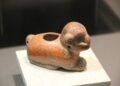
Figure of the God Kisin (also known as Cizin) on a Brick, Postclassic Period, 900–1250 CE, INAH Maya Exhibit, National Museum, Beijing. Credit: Gary Lee Todd

The finding is an anthropomorphic limestone statue dating back to the Early Classic Period (CE 200-600) and represents a Maya death deity, possibly Cizin or Kisin, known for their association with the afterlife.

The statue, measuring 25 centimeters in height, depicts the deity in a seated position and exhibits distinctive features, including an erect tabular cranial modification, a nose ring, and a mask.

These characteristics align with mortuary motifs and suggest a connection to a deity of death, as stated by the head of the INAH.

The discovery took place near Balamku, an archaeological zone featuring a Maya temple complex known for its well-preserved stucco friezes. Balamku is in close proximity to the excavation site for Section 7 of the Maya Train project, which has also yielded other significant findings.

RelatedStories

Ancient Maya traded live dogs across hundreds of miles, isotope study finds

Ancient Maya traded live dogs across hundreds of miles, isotope study finds

May 9, 2026
Council houses reveal shift from royal rule to collective governance in Terminal Classic Maya society

Council houses reveal shift from royal rule to collective governance in Terminal Classic Maya society

April 11, 2026

So far, 21,960 immovable sites have been identified for protection, alongside 72,480 ceramic potsherds, 64 human burials, and 227 natural features associated with human occupation.

This discovery adds to the growing body of knowledge about the ancient Maya civilization. It is noteworthy that in April 2023, another important finding was made during the same excavations: a statue of Kʼawiil, the Maya lightning god.

This statue is significant as only three others have been discovered previously, all originating from Tikal in Guatemala. The inclusion of Kʼawiil in Maya mythology is crucial to understanding their religious beliefs, particularly in relation to serpents, fertility, and maize.

The ongoing archaeological work along the Maya Train project is shedding new light on the history and heritage of the Maya civilization. These discoveries underscore the importance of preserving and studying these ancient sites, as they offer valuable insights into the past and enrich our understanding of this fascinating ancient civilization.

While the exact identification of the deity depicted in the recently found statue remains uncertain, Diego Prieto Hernández, the General Director of the INAH, described it as a figure that “appeals to mortuary motifs and would be linked to a deity of death.”

The Maya pantheon includes numerous deities, and the god of death, Cizin or Kisin, is often portrayed wearing a “death collar” made of disembodied eyes connected by their nerve cords. In other depictions, Cizin appears as a dancing skeleton holding a cigar-like object emitting smoke.

The limestone effigy was discovered near Balamkú, an archaeological site consisting of three complexes, with the largest known as the Temple of the Jaguar due to feline engravings on its walls.

The Maya civilization flourished between 200 and 900 A.D., dominating southeastern Mexico, Guatemala, Belize, and parts of El Salvador and Honduras. The Maya held a belief in divinity permeating all things, even inanimate objects and considered caves as sacred entrances to the underworld.

The underworld was believed to have nine layers, each governed by a Lord of the Night, although it remains unclear whether the limestone statue represents Cizin or another Lord of the Night.

Research is ongoing to gain further insights into this recent discovery and its significance within Maya mythology.
Share:

Share on Facebook Share on X (Twitter) Share on LinkedIn Share on Pinterest Share on WhatsApp Share on Email

You May Also Like...

Neanderthals gathered shellfish like modern humans 115,000 years ago, study finds
Anthropology

Neanderthals gathered shellfish like modern humans 115,000 years ago, study finds

May 21, 2026
Ancient pigeons were already living alongside humans 3,400 years ago, study finds
Archaeology

Ancient pigeons were already living alongside humans 3,400 years ago, study finds

May 21, 2026
Ancient Venetic sanctuary with rare inscriptions unearthed beneath road project in Italy
Archaeology

Ancient Venetic sanctuary with rare inscriptions unearthed beneath road project in Italy

May 21, 2026
1,000-year-old dingo burial in Australia reveals deep ties between Barkindji people and dingoes
Archaeology

1,000-year-old ritually buried dingo in Australia reveals deep ties between Barkindji people and dingoes

May 20, 2026
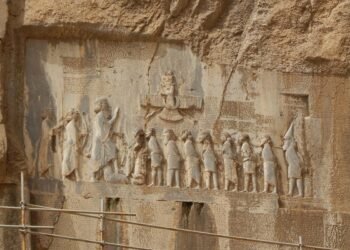
Ancient texts reveal how Persian and Greek rule shaped language in Central Asia
Archaeology

Ancient texts reveal how Persian and Greek rule shaped language in Central Asia

May 20, 2026
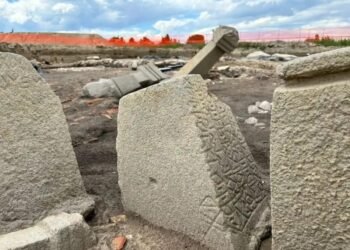
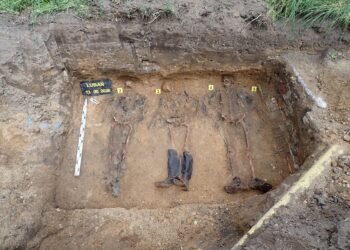
World War II mass grave in Poland reveals remains of German officer killed during Battle of Lauban
Anthropology

World War II mass grave in Poland reveals remains of German officer killed during Battle of Lauban

May 19, 2026

Follow us


Instagram
242K

Facebook
117K

Threads
46K

LinkedIn
14K

Twitter
6K

YouTube
1K
Neanderthals gathered shellfish like modern humans 115,000 years ago, study finds

Neanderthals gathered shellfish like modern humans 115,000 years ago, study finds

May 21, 2026
Ancient pigeons were already living alongside humans 3,400 years ago, study finds

Ancient pigeons were already living alongside humans 3,400 years ago, study finds

May 21, 2026
Ancient Venetic sanctuary with rare inscriptions unearthed beneath road project in Italy

Ancient Venetic sanctuary with rare inscriptions unearthed beneath road project in Italy

May 21, 2026
1,000-year-old dingo burial in Australia reveals deep ties between Barkindji people and dingoes

1,000-year-old ritually buried dingo in Australia reveals deep ties between Barkindji people and dingoes

May 20, 2026

Archaeology News online magazine

Archaeology News is an international online magazine that covers all aspects of archaeology.


Categories

  • Academics
    • Books
    • Conferences
    • Universities
  • Articles
  • Download
  • Game
  • News
    • Anthropology
    • Archaeology
    • Paleontology
  • Quiz
  • Tours

Subscribe to our newsletter

© 2024 - Archaeology News Online Magazine. All Rights Reserved.

  • About
  • Privacy Policy
  • Terms of Use
  • Donation
  • Contact

Manage Consent
To provide the best experiences, we use technologies like cookies to store and/or access device information. Consenting to these technologies will allow us to process data such as browsing behavior or unique IDs on this site. Not consenting or withdrawing consent, may adversely affect certain features and functions.
Functional Always active
The technical storage or access is strictly necessary for the legitimate purpose of enabling the use of a specific service explicitly requested by the subscriber or user, or for the sole purpose of carrying out the transmission of a communication over an electronic communications network.
Preferences
The technical storage or access is necessary for the legitimate purpose of storing preferences that are not requested by the subscriber or user.
Statistics
The technical storage or access that is used exclusively for statistical purposes. The technical storage or access that is used exclusively for anonymous statistical purposes. Without a subpoena, voluntary compliance on the part of your Internet Service Provider, or additional records from a third party, information stored or retrieved for this purpose alone cannot usually be used to identify you.
Marketing
The technical storage or access is required to create user profiles to send advertising, or to track the user on a website or across several websites for similar marketing purposes.
  • Manage options
  • Manage services
  • Manage {vendor_count} vendors
  • Read more about these purposes
View preferences
  • {title}
  • {title}
  • {title}
  • Home
  • News
    • Archaeology
    • Anthropology
    • Paleontology
  • Academic
    • Books
    • Conferences
    • Universities
  • Articles
  • VR Tours
  • Quiz & Game
  • Download
  • Encyclopedia
  • Forum

About  .  Contact  .  Donation

© 2024 - Archaeology News Online Magazine. All Rights Reserved