• About
  • Privacy Policy
  • Terms of Use
  • Donation
  • Contact
No Result
View All Result
Archaeology News
  • Home
  • News
    • Archaeology
    • Anthropology
    • Paleontology
  • Academic
    • Books
    • Conferences
    • Universities
  • Articles
  • VR Tours
  • Quiz & Game
  • Download
  • Encyclopedia
  • Forum
Archaeology News
No Result
View All Result
Home News Archaeology

Discovery of largest cluster of sunken vessels reveals grim legacy of transatlantic slave trade

by Dario Radley
February 25, 2024

The discovery of the largest cluster of sunken vessels from the 18th and 19th centuries in the northern Bahamas sheds new light on the harrowing history of the transatlantic slave trade. Identified as a “highway to horror” by British marine archaeologist Sean Kingsley, these wrecks serve as silent witnesses to the brutal colonial past, carrying enslaved Africans on nightmarish voyages.

Discovery of largest cluster of sunken vessels reveals grim legacy of transatlantic slave trade
Enslaved Africans being trafficked on a slave ship; by Johann Moritz Rugendas c. 1830. Credit: Museo Itaú Cultural

A comprehensive research effort led by the Bahamas Lost Ships Project, spearheaded by Allen Exploration, has brought to light the haunting legacy of 14 slave ships that sank between 1767 and 1860. These vessels, mostly American-flagged, were part of a sinister network profiting from the exploitation of human lives in Cuba’s sugar and coffee plantations. Kingsley highlights Cuba’s duplicitous role, ostensibly agreeing to end the slave trade while actively engaging in extensive trafficking.

The fate of those trafficked in these ships remains largely unknown, with many forced below deck as the vessels foundered, ensuring the crew’s escape while condemning the enslaved to a watery grave. Kingsley emphasizes the horrors endured by these individuals, forced to confront a new terror in the form of shipwrecks after enduring unimaginable hardships throughout their journey.

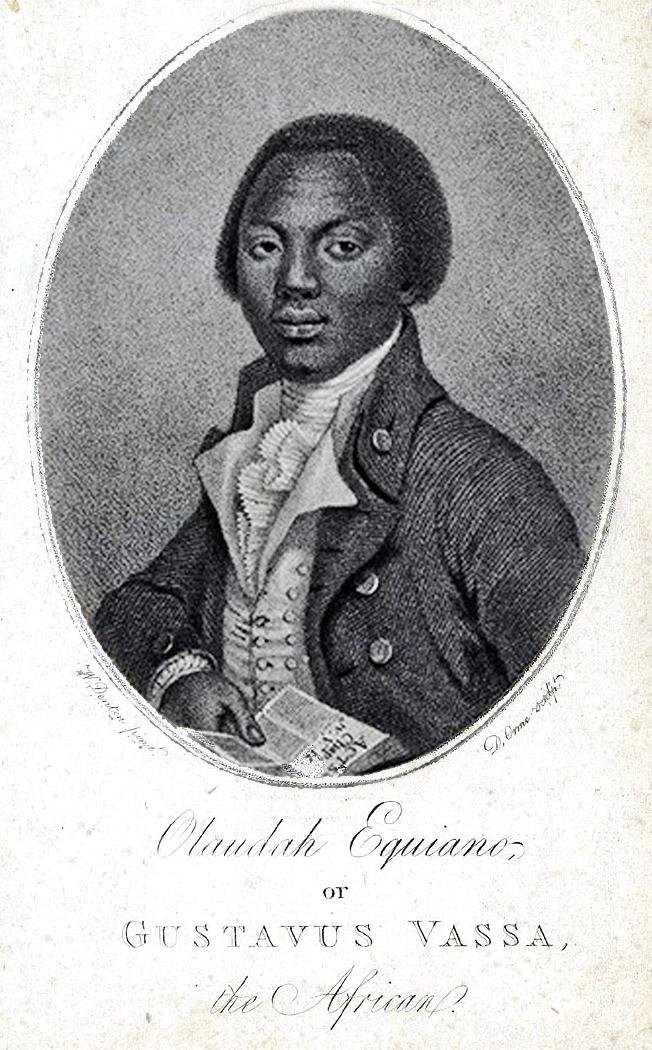
The research, detailed in a report titled “Greater Abaco’s Shipwrecked Echoes of the Caribbean Plantation Economy,” underscores the urgent need to acknowledge and confront this dark chapter of history. Notable among the wrecks is the ship that once carried Olaudah Equiano, a formerly enslaved individual who survived the disaster to become a leading abolitionist voice.
Discovery of largest cluster of sunken vessels reveals grim legacy of transatlantic slave trade
The Interesting Narrative of the Life of Olaudah Equiano, Or Gustavus Vassa, The African, by Olaudah Equiano. Credit: Project Gutenberg

Michael Pateman, director of the Bahamas Maritime Museum, reflects on the horrors faced by those enslaved, particularly in Cuba’s sugar plantations, emphasizing the importance of remembering their suffering. Carl Allen, founder of Allen Exploration, echoes this sentiment, stressing the significance of history and archaeology in preserving and honoring these memories.

Detailed historical documentation reveals the extensive maritime traffic in the region, dating back to at least 1657, with the Providence Channel serving as a crucial passage for ships navigating between the Atlantic Ocean and the Gulf of Florida.
Discovery of largest cluster of sunken vessels reveals grim legacy of transatlantic slave trade
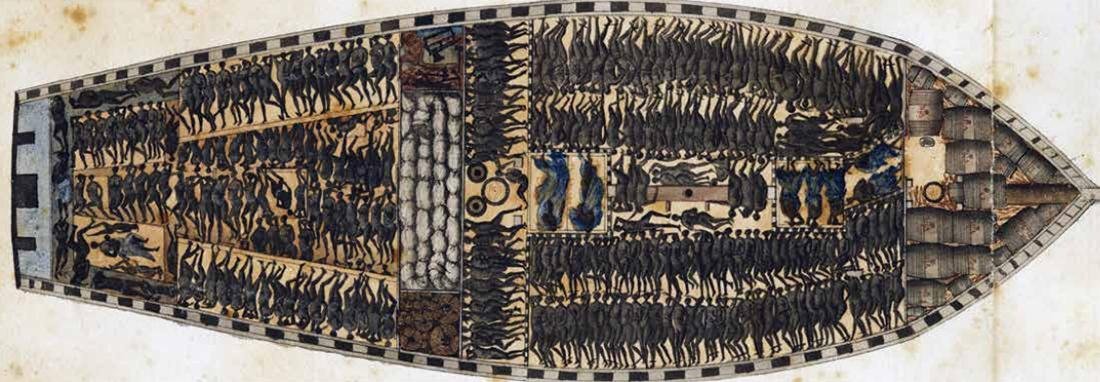
Slave deck of the Séraphique Marie of Nantes in France, trading in 1770 with Angola. Painting: René Lhermitte

The research also highlights the illegal involvement of US ships in the trafficking and transport of enslaved Africans. Of the 14 ships wrecked in the Greater Abacos region, 11 were US-flagged, underlining the deep entanglement of American vessels in the transatlantic slave trade. Ports of departure ranged from Africa to Virginia and South Carolina in the United States, with final destinations including Cuba, New Orleans, and Nassau.

The report’s publication, coinciding with Black History Month in the US, serves as a timely reminder of the atrocities of the past that must not be forgotten. As Carl Allen aptly puts it, “History and archaeology let us give new life to the memories using physical evidence that nobody can ignore.”
Share:

Share on Facebook Share on X (Twitter) Share on LinkedIn Share on Pinterest Share on WhatsApp Share on Email

You May Also Like...

17,000-year-old cave paintings in Wales confirmed as the oldest rock art in the British Isles
Archaeology

17,000-year-old cave paintings in Wales confirmed as the oldest rock art in the British Isles

June 3, 2026
4-million-year-old juvenile tapir skeleton unearthed in Spain is the most complete ever found in Europe
Paleontology

4-million-year-old juvenile tapir skeleton unearthed in Spain is the most complete ever found in Europe

June 3, 2026
Langobard woman with healed skull injuries challenges assumptions about violence in early medieval society
Anthropology

Langobard woman with healed skull injuries challenges assumptions about violence in early medieval society

June 2, 2026
Ancient city of Ihnasya reveals Aphrodite statue, Senusret III inscription, and Roman basilica remains in Egypt
Archaeology

Ancient city of Ihnasya reveals Aphrodite statue, Senusret III inscription, and Roman basilica remains in Egypt

June 2, 2026
Rare funerary cache discovered at ancient Heliopolis site
Archaeology

Rare funerary cache discovered at ancient Heliopolis site

June 2, 2026
Archaeologists find Queen Elisenda’s remains among 25 medieval skeletons, including individuals with unexplained stab wounds
Anthropology

Archaeologists find Queen Elisenda’s remains among 25 medieval skeletons, including individuals with unexplained stab wounds

June 1, 2026

Follow us


Instagram
242K

Facebook
117K

Threads
47K

LinkedIn
15K

Twitter
6K

YouTube
1K

Archaeology News online magazine

Archaeology News is an international online magazine that covers all aspects of archaeology.


Categories

  • Academics
    • Books
    • Conferences
    • Universities
  • Articles
  • Download
  • Game
  • News
    • Anthropology
    • Archaeology
    • Paleontology
  • Quiz
  • Tours

Subscribe to our newsletter

© 2024 - Archaeology News Online Magazine. All Rights Reserved.

  • About
  • Privacy Policy
  • Terms of Use
  • Donation
  • Contact

Manage Consent
To provide the best experiences, we use technologies like cookies to store and/or access device information. Consenting to these technologies will allow us to process data such as browsing behavior or unique IDs on this site. Not consenting or withdrawing consent, may adversely affect certain features and functions.
Functional Always active
The technical storage or access is strictly necessary for the legitimate purpose of enabling the use of a specific service explicitly requested by the subscriber or user, or for the sole purpose of carrying out the transmission of a communication over an electronic communications network.
Preferences
The technical storage or access is necessary for the legitimate purpose of storing preferences that are not requested by the subscriber or user.
Statistics
The technical storage or access that is used exclusively for statistical purposes. The technical storage or access that is used exclusively for anonymous statistical purposes. Without a subpoena, voluntary compliance on the part of your Internet Service Provider, or additional records from a third party, information stored or retrieved for this purpose alone cannot usually be used to identify you.
Marketing
The technical storage or access is required to create user profiles to send advertising, or to track the user on a website or across several websites for similar marketing purposes.
  • Manage options
  • Manage services
  • Manage {vendor_count} vendors
  • Read more about these purposes
View preferences
  • {title}
  • {title}
  • {title}
  • Home
  • News
    • Archaeology
    • Anthropology
    • Paleontology
  • Academic
    • Books
    • Conferences
    • Universities
  • Articles
  • VR Tours
  • Quiz & Game
  • Download
  • Encyclopedia
  • Forum

About  .  Contact  .  Donation

© 2024 - Archaeology News Online Magazine. All Rights Reserved