• About
  • Privacy Policy
  • Terms of Use
  • Donation
  • Contact
No Result
View All Result
Archaeology News
  • Home
  • News
    • Archaeology
    • Anthropology
    • Paleontology
  • Academic
    • Books
    • Conferences
    • Universities
  • Articles
  • VR Tours
  • Quiz & Game
  • Download
  • Encyclopedia
  • Forum
Archaeology News
No Result
View All Result
Home News Archaeology

15,800-year-old Ice Age engravings reveal earliest depictions of fish trapping

by Dario Radley
November 7, 2024

At the Gönnersdorf archaeological site along the banks of the Rhine in Germany, an interdisciplinary team led by Dr. Jérôme Robitaille, a researcher at the Monrepos Archaeological Research Center of the Leibniz-Zentrum für Archäologie (LEIZA), has identified intricate engravings on schist stone slabs that appear to depict fish caught in nets or traps. These findings, recently published in the journal PLOS ONE, may push the origins of net fishing back to around 15,800 years ago.
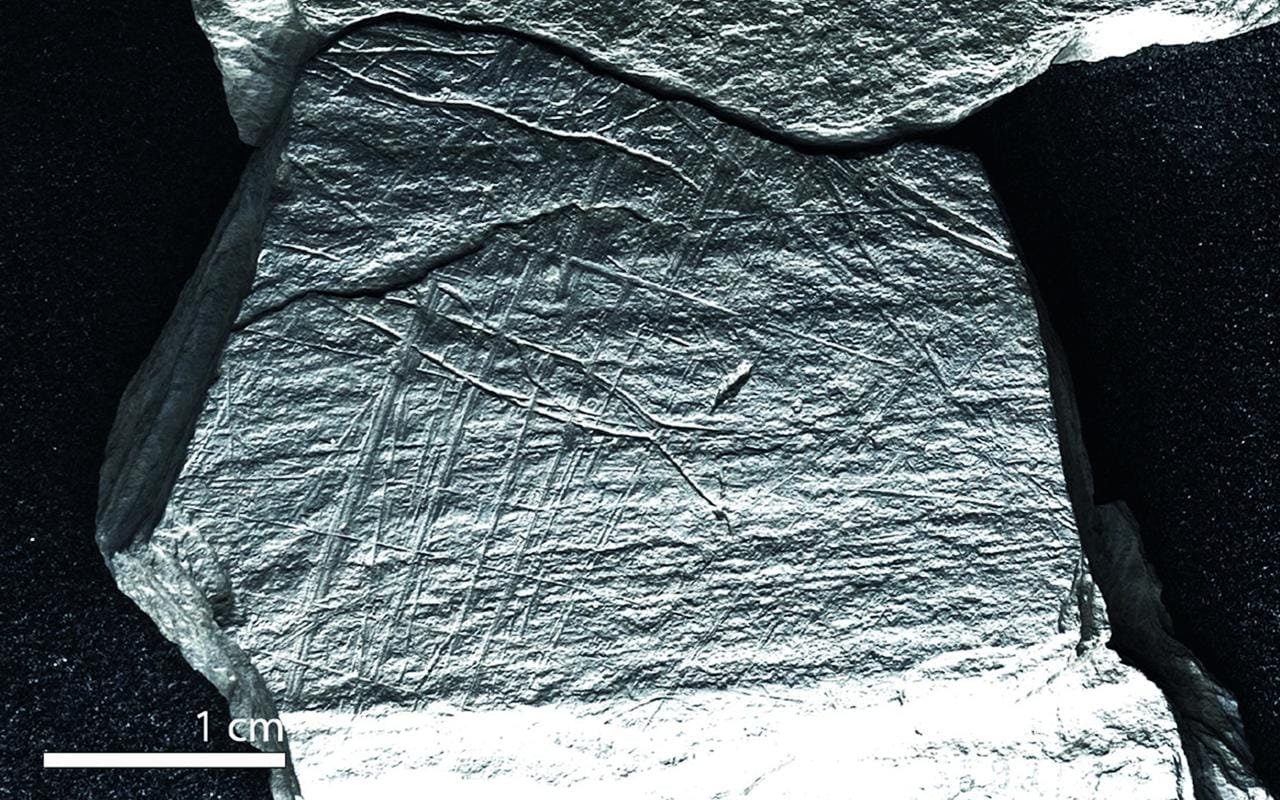
15,800-year-old Ice Age engravings reveal earliest depictions of fish trapping
An ancient plaquette from the Ice Age site of Gönnersdorf depicts a fish trap, with the fish engraved first, then overlaid by a net of lines. Credit: Robitaille et al., 2024, PLOS ONE, CC-BY 4.0

The Gönnersdorf site, already famous for its extensive array of prehistoric art, contains 406 decorated slabs, or plaquettes, which have been studied for decades. Among these plaquettes are hundreds of engraved images of animals vital to Ice Age hunter-gatherers, including reindeer, wild horses, woolly rhinos, and mammoths, as well as highly stylized female figures that have made the site world-renowned. Until now, these artistic depictions had not included scenes related to fishing practices.

However, with the help of Reflectance Transformation Imaging (RTI), a technique that enhances fine surface details, researchers uncovered previously unnoticed images of fish surrounded by grid-like patterns on eight of the schist slabs. According to the team, the central positioning of the fish—within grid lines that clearly overlay them and extend beyond their outlines—strongly suggests that the grids represent a form of container, such as a net or trap, in which the fish have become enmeshed.

The deliberate layering of the grid lines over the fish motifs implies a purposeful artistic design that may represent the process or concept of fishing, rather than simply depicting individual fish.
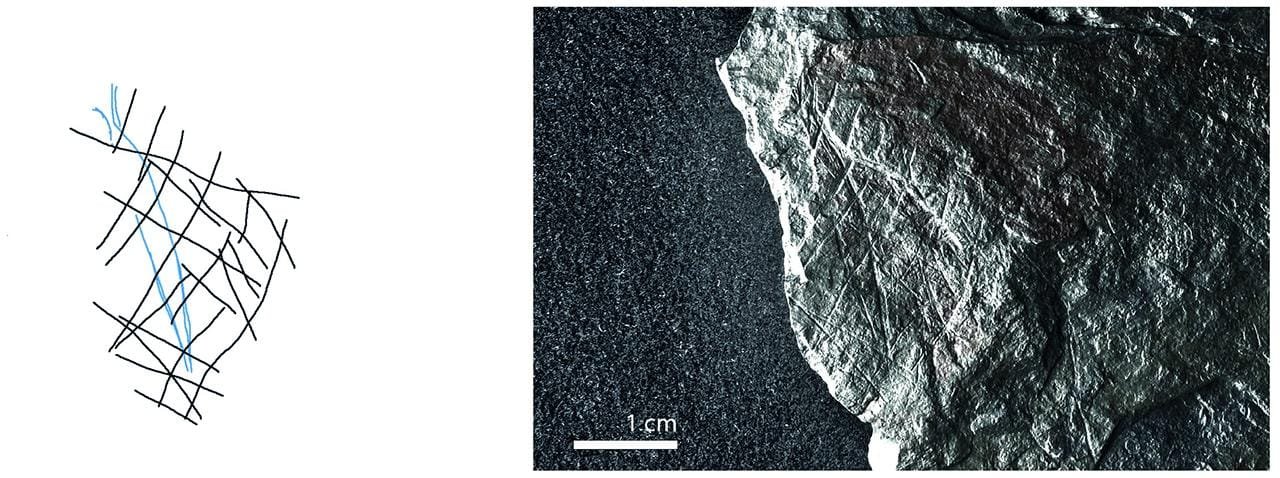
15,800-year-old Ice Age engravings reveal earliest depictions of fish trapping
An ancient plaquette from the Ice Age site of Gönnersdorf. Credit: Robitaille et al., 2024, PLOS ONE, CC-BY 4.0

These discoveries are not only visually striking but also provide the earliest known evidence of net or trap fishing in European prehistory. They suggest that Ice Age communities may have used nets, likely made from plant fibers such as milkweed or nettle, to capture fish in larger quantities during seasonal migrations. This aligns with archaeological evidence of fish remains at the site, indicating that fish were indeed part of the inhabitants’ diet.


RelatedStories

146,000-year-old Ice Age humans used advanced stone tools for butchery and survival

146,000-year-old Ice Age humans used advanced stone tools for butchery and survival

May 8, 2026
40,000-year-old European engravings reveal structured sign systems, study finds

40,000-year-old European engravings reveal structured sign systems, study finds

February 25, 2026

In addition to documenting fishing techniques, the engravings reveal that these practices held a deeper symbolic or cultural significance for the Magdalenian people, who lived at Gönnersdorf around 17,000 to 12,000 years ago. The abstract depiction of fish as geometric forms contrasts sharply with the naturalistic style used to portray other animals, suggesting a unique cultural importance placed on fishing within this community.
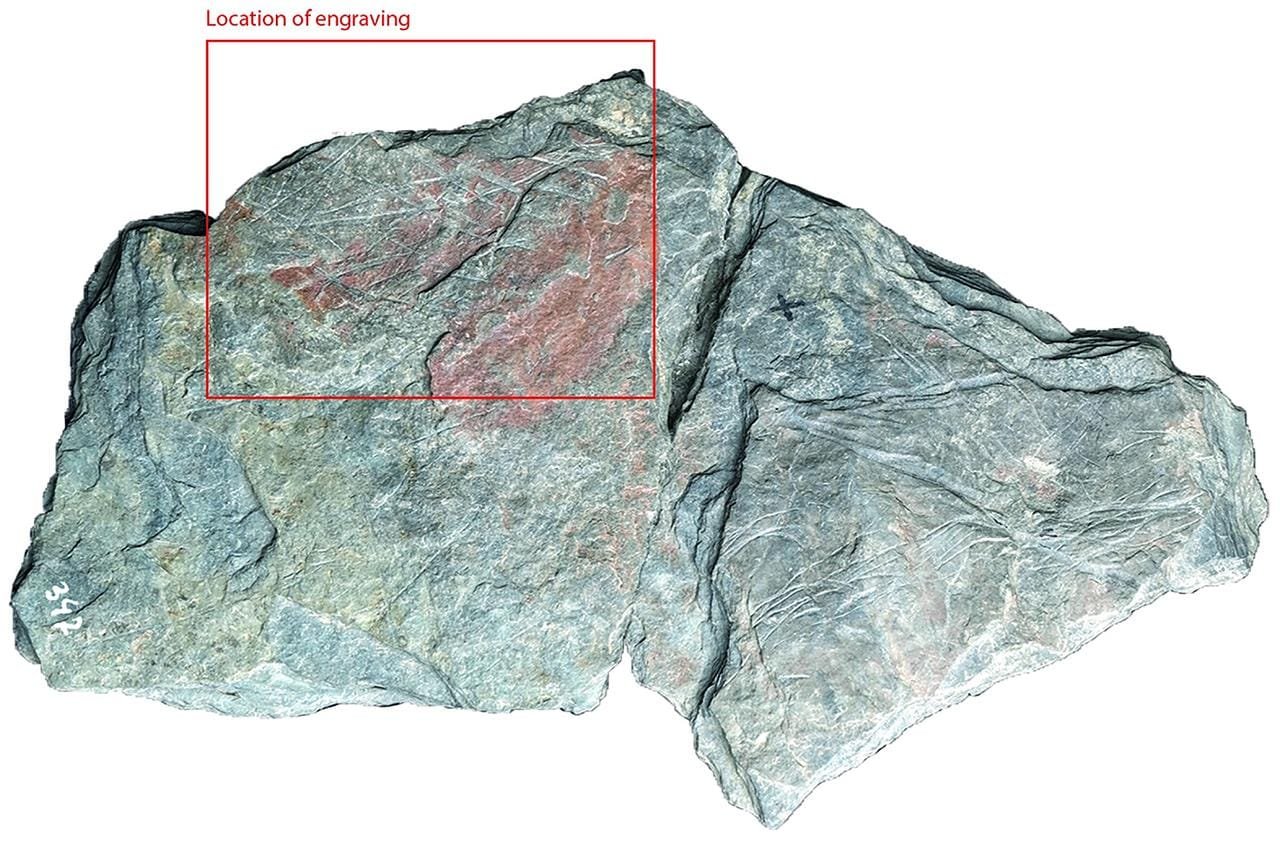
15,800-year-old Ice Age engravings reveal earliest depictions of fish trapping
An ancient plaquette from the Ice Age site of Gönnersdorf. Credit: Robitaille et al., 2024, PLOS ONE, CC-BY 4.0

The study also highlights the possibility that Magdalenian people were already proficient in textile technology, as evidenced by carved figurines from Gönnersdorf that show clothed figures. This indicates that textile weaving was likely part of their technological repertoire, further supporting the theory that they had the capability to produce fishing nets.

The discovery of these fishing scenes on engraved plaquettes at Gönnersdorf is significant for what it reveals about early human creativity, technology, and lifestyle.


More information: Robitaille, J., Meyering, L.-E., Gaudzinski-Windheuser, S., Pettitt, P., Jöris, O., & Kentridge, R. (2024). Upper Palaeolithic fishing techniques: Insights from the engraved plaquettes of the Magdalenian site of Gönnersdorf, Germany. PloS One, 19(11), e0311302. doi:10.1371/journal.pone.0311302

Share:

Share on Facebook Share on X (Twitter) Share on LinkedIn Share on Pinterest Share on WhatsApp Share on Email

You May Also Like...

Stone Age humans built complex grass beds at Border Cave 200,000 years ago, study finds
Archaeology

Stone Age humans built complex grass beds at Border Cave 200,000 years ago, study finds

May 30, 2026
Radiocarbon dating confirms Teutonic Knights built Feldioara Fortress in 13th-century Transylvania
Archaeology

Radiocarbon dating confirms Teutonic Knights built Feldioara Fortress in 13th-century Transylvania

May 30, 2026
Ancient shipwreck with 300 amphorae found off Italy could reshape views of Mediterranean wine trade
Archaeology

Ancient shipwreck with 300 amphorae found off Italy could reshape views of Mediterranean wine trade

May 29, 2026
Ancient DNA reveals 700-kilometer migration along Peru’s coast before the Inca Empire
Anthropology

Ancient DNA reveals 700-kilometer migration along Peru’s coast before the Inca Empire

May 29, 2026
6,000-year-old mega-structure unearthed at prehistoric settlement in Romania
Archaeology

6,000-year-old mega-structure unearthed at prehistoric settlement in Romania

May 29, 2026
Medieval bone study identifies microbial communities driving archaeological bone degradation and preservation
Anthropology

Medieval bone study identifies microbial communities driving archaeological bone degradation and preservation

May 28, 2026

Follow us


Instagram
242K

Facebook
117K

Threads
47K

LinkedIn
15K

Twitter
6K

YouTube
1K
Stone Age humans built complex grass beds at Border Cave 200,000 years ago, study finds

Stone Age humans built complex grass beds at Border Cave 200,000 years ago, study finds

May 30, 2026
Radiocarbon dating confirms Teutonic Knights built Feldioara Fortress in 13th-century Transylvania

Radiocarbon dating confirms Teutonic Knights built Feldioara Fortress in 13th-century Transylvania

May 30, 2026
Ancient shipwreck with 300 amphorae found off Italy could reshape views of Mediterranean wine trade

Ancient shipwreck with 300 amphorae found off Italy could reshape views of Mediterranean wine trade

May 29, 2026
Ancient DNA reveals 700-kilometer migration along Peru’s coast before the Inca Empire

Ancient DNA reveals 700-kilometer migration along Peru’s coast before the Inca Empire

May 29, 2026

Archaeology News online magazine

Archaeology News is an international online magazine that covers all aspects of archaeology.


Categories

  • Academics
    • Books
    • Conferences
    • Universities
  • Articles
  • Download
  • Game
  • News
    • Anthropology
    • Archaeology
    • Paleontology
  • Quiz
  • Tours

Subscribe to our newsletter

© 2024 - Archaeology News Online Magazine. All Rights Reserved.

  • About
  • Privacy Policy
  • Terms of Use
  • Donation
  • Contact

Manage Consent
To provide the best experiences, we use technologies like cookies to store and/or access device information. Consenting to these technologies will allow us to process data such as browsing behavior or unique IDs on this site. Not consenting or withdrawing consent, may adversely affect certain features and functions.
Functional Always active
The technical storage or access is strictly necessary for the legitimate purpose of enabling the use of a specific service explicitly requested by the subscriber or user, or for the sole purpose of carrying out the transmission of a communication over an electronic communications network.
Preferences
The technical storage or access is necessary for the legitimate purpose of storing preferences that are not requested by the subscriber or user.
Statistics
The technical storage or access that is used exclusively for statistical purposes. The technical storage or access that is used exclusively for anonymous statistical purposes. Without a subpoena, voluntary compliance on the part of your Internet Service Provider, or additional records from a third party, information stored or retrieved for this purpose alone cannot usually be used to identify you.
Marketing
The technical storage or access is required to create user profiles to send advertising, or to track the user on a website or across several websites for similar marketing purposes.
  • Manage options
  • Manage services
  • Manage {vendor_count} vendors
  • Read more about these purposes
View preferences
  • {title}
  • {title}
  • {title}
  • Home
  • News
    • Archaeology
    • Anthropology
    • Paleontology
  • Academic
    • Books
    • Conferences
    • Universities
  • Articles
  • VR Tours
  • Quiz & Game
  • Download
  • Encyclopedia
  • Forum

About  .  Contact  .  Donation

© 2024 - Archaeology News Online Magazine. All Rights Reserved