• About
  • Privacy Policy
  • Terms of Use
  • Donation
  • Contact
No Result
View All Result
Archaeology News
  • Home
  • News
    • Archaeology
    • Anthropology
    • Paleontology
  • Academic
    • Books
    • Conferences
    • Universities
  • Articles
  • VR Tours
  • Quiz & Game
  • Download
  • Encyclopedia
  • Forum
Archaeology News
No Result
View All Result
Home News Archaeology

New archaeological method links ancient mega settlements to modern concepts of human development

by Dario Radley
December 2, 2024

A recent study by researchers from the ROOTS Cluster of Excellence at Kiel University has unveiled a novel method to explore ancient social dynamics and individual well-being through archaeology. By employing the “capability approach,” a philosophical framework developed by Indian economist and philosopher Amartya Sen, the study bridges the gap between ancient material remains and modern concepts like the United Nations Human Development Index (HDI). Published in the journal Open Archaeology, the research sheds new light on Europe’s first mega settlements, which existed around 7,000 to 5,000 years ago.
New archaeological method links ancient mega settlements to modern concepts of human development
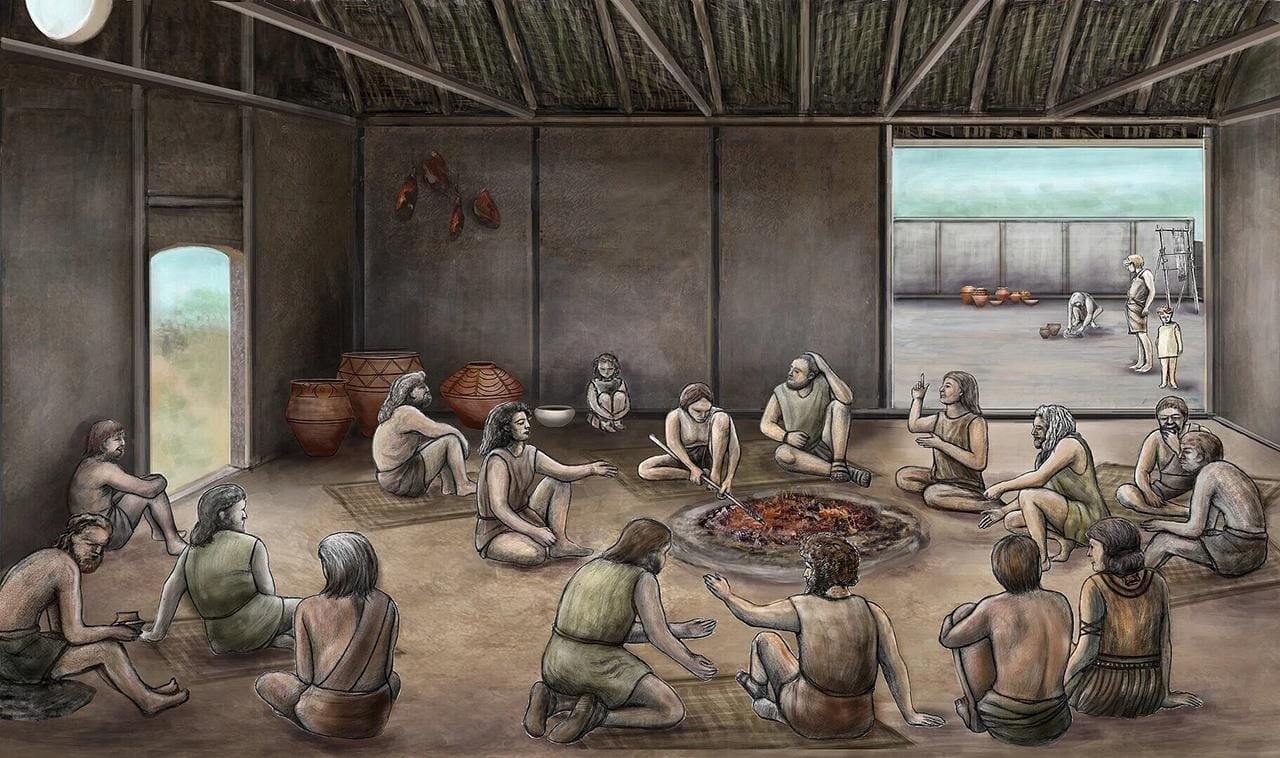
Reconstruction drawing of a meeting scene in a Cucuteni-Trypillia settlement. In their heyday, these settlements were characterized by great social equality. Credit: Susanne Beyer / Kiel University

The Capability Approach in Archaeology

The “capability approach” emphasizes that human well-being extends beyond material possessions to include opportunities and capabilities that enable individuals and communities to lead meaningful lives. While this concept underpins the HDI today, applying it to ancient societies presents challenges. “How can we use the static remains of material culture to reconstruct dimensions of the dynamic activity behind it?” asks co-author Dr. René Ohlrau.

To address this, the researchers devised a methodology to link HDI indicators—such as living standards and innovation capacity—to archaeological data. For instance, evidence of technological advancements, like new plow or loom designs, can reflect societal innovation, a key HDI dimension. “This is the first time we’ve successfully connected archaeological categories to those of the HDI, allowing us to relate the distant past to present-day concepts,” says Dr. Vesa Arponen, one of the authors.

Case Study: Cucuteni-Trypillia Mega Settlements

The study focused on the Cucuteni-Trypillia communities, which thrived between 5050 and 2950 BCE in what are now Romania, Moldova, and Ukraine. Known for their vast, circular settlements spanning up to 320 hectares and housing populations of up to 17,000, these societies represent Europe’s earliest examples of large-scale urban living.

During their peak, these settlements exhibited significant social equality and offered individuals ample opportunities for active participation in community life. Interestingly, the research challenges traditional explanations for their development, such as climate change or population pressures driving technological and political innovation. Instead, it posits that expanded opportunities for personal and communal fulfillment may have attracted more inhabitants, spurring both population growth and innovation. “Our results suggest that the dynamics of Cucuteni-Trypillia societies may have been driven by opportunities for self-realization rather than external pressures,” explains Dr. Arponen.


RelatedStories

How coral buildings are helping archaeologists date colonial-era sites in French Polynesia

How coral buildings are helping archaeologists date colonial-era sites in French Polynesia

April 30, 2026
3D metrological analysis connects dispersed Egyptian artifacts and recovers their lost histories

3D metrological analysis connects dispersed Egyptian artifacts and recovers their lost histories

February 17, 2026
New archaeological method links ancient mega settlements to modern concepts of human development
An example of urban planning in the form of habitable concentric walls of the Cucuteni-Tripilia culture. Credit: Kenny Arne Lang Antonsen & Jimmy John Antonsen / Wikimedia Commons, CC BY-SA 4.0

Expanding Archaeological Horizons

The Cucuteni-Trypillia culture, which evolved from the Danubian Linear Pottery culture, is renowned for its unique practice of intentionally burning villages periodically. While typically described as proto-city-states, these communities also demonstrate an unusual degree of social equity during their peak. By applying the HDI framework, the study offers fresh perspectives on these societies.

The implications of this methodology extend far beyond the Cucuteni-Trypillia culture. The researchers plan to apply their approach to other archaeological contexts, fostering new discussions about the interpretation of ancient societies. “This tool not only opens doors to reinterpret past communities but also questions traditional patterns of explanation in archaeology,” says Dr. Arponen.

This innovative application of the HDI to archaeological findings illustrates how ancient societies can be analyzed through a modern lens, revealing parallels between the challenges of the past and contemporary human development.

Share:

Share on Facebook Share on X (Twitter) Share on LinkedIn Share on Pinterest Share on WhatsApp Share on Email

You May Also Like...

2,300-year-old Iron Age riverside structure discovered beneath German city astonishes archaeologists
Archaeology

2,300-year-old Iron Age riverside structure discovered beneath German city

May 22, 2026
100 Abbasid-era gold jewelry pieces found at ancient Dariyah site in Saudi Arabia
Archaeology

100 Abbasid-era gold jewelry pieces found at ancient Dariyah site in Saudi Arabia

May 22, 2026
Neanderthals gathered shellfish like modern humans 115,000 years ago, study finds
Anthropology

Neanderthals gathered shellfish like modern humans 115,000 years ago, study finds

May 21, 2026
Ancient pigeons were already living alongside humans 3,400 years ago, study finds
Archaeology

Ancient pigeons were already living alongside humans 3,400 years ago, study finds

May 21, 2026
Ancient Venetic sanctuary with rare inscriptions unearthed beneath road project in Italy
Archaeology

Ancient Venetic sanctuary with rare inscriptions unearthed beneath road project in Italy

May 21, 2026
1,000-year-old dingo burial in Australia reveals deep ties between Barkindji people and dingoes
Archaeology

1,000-year-old ritually buried dingo in Australia reveals deep ties between Barkindji people and dingoes

May 20, 2026

Follow us


Instagram
242K

Facebook
117K

Threads
46K

LinkedIn
14K

Twitter
6K

YouTube
1K
2,300-year-old Iron Age riverside structure discovered beneath German city astonishes archaeologists

2,300-year-old Iron Age riverside structure discovered beneath German city

May 22, 2026
100 Abbasid-era gold jewelry pieces found at ancient Dariyah site in Saudi Arabia

100 Abbasid-era gold jewelry pieces found at ancient Dariyah site in Saudi Arabia

May 22, 2026
Neanderthals gathered shellfish like modern humans 115,000 years ago, study finds

Neanderthals gathered shellfish like modern humans 115,000 years ago, study finds

May 21, 2026
Ancient pigeons were already living alongside humans 3,400 years ago, study finds

Ancient pigeons were already living alongside humans 3,400 years ago, study finds

May 21, 2026

Archaeology News online magazine

Archaeology News is an international online magazine that covers all aspects of archaeology.


Categories

  • Academics
    • Books
    • Conferences
    • Universities
  • Articles
  • Download
  • Game
  • News
    • Anthropology
    • Archaeology
    • Paleontology
  • Quiz
  • Tours

Subscribe to our newsletter

© 2024 - Archaeology News Online Magazine. All Rights Reserved.

  • About
  • Privacy Policy
  • Terms of Use
  • Donation
  • Contact

Manage Consent
To provide the best experiences, we use technologies like cookies to store and/or access device information. Consenting to these technologies will allow us to process data such as browsing behavior or unique IDs on this site. Not consenting or withdrawing consent, may adversely affect certain features and functions.
Functional Always active
The technical storage or access is strictly necessary for the legitimate purpose of enabling the use of a specific service explicitly requested by the subscriber or user, or for the sole purpose of carrying out the transmission of a communication over an electronic communications network.
Preferences
The technical storage or access is necessary for the legitimate purpose of storing preferences that are not requested by the subscriber or user.
Statistics
The technical storage or access that is used exclusively for statistical purposes. The technical storage or access that is used exclusively for anonymous statistical purposes. Without a subpoena, voluntary compliance on the part of your Internet Service Provider, or additional records from a third party, information stored or retrieved for this purpose alone cannot usually be used to identify you.
Marketing
The technical storage or access is required to create user profiles to send advertising, or to track the user on a website or across several websites for similar marketing purposes.
  • Manage options
  • Manage services
  • Manage {vendor_count} vendors
  • Read more about these purposes
View preferences
  • {title}
  • {title}
  • {title}
  • Home
  • News
    • Archaeology
    • Anthropology
    • Paleontology
  • Academic
    • Books
    • Conferences
    • Universities
  • Articles
  • VR Tours
  • Quiz & Game
  • Download
  • Encyclopedia
  • Forum

About  .  Contact  .  Donation

© 2024 - Archaeology News Online Magazine. All Rights Reserved