• About
  • Privacy Policy
  • Terms of Use
  • Donation
  • Contact
No Result
View All Result
Archaeology News
  • Home
  • News
    • Archaeology
    • Anthropology
    • Paleontology
  • Academic
    • Books
    • Conferences
    • Universities
  • Articles
  • VR Tours
  • Quiz & Game
  • Download
  • Encyclopedia
  • Forum
Archaeology News
No Result
View All Result
Home News Archaeology

Ancient artifacts unearthed in Iraq uncover hidden history of ancient Mesopotamia

by Dario Radley
January 16, 2025

Recent excavations at the Middle Bronze Age site of Kurd Qaburstan in northeastern Iraq are uncovering a wealth of artifacts and architectural remains. Led by Dr. Tiffany Earley-Spadoni, an associate professor of history at UCF, the research team uncovered clay tablets with cuneiform writing, a game board, and monumental structural remains.
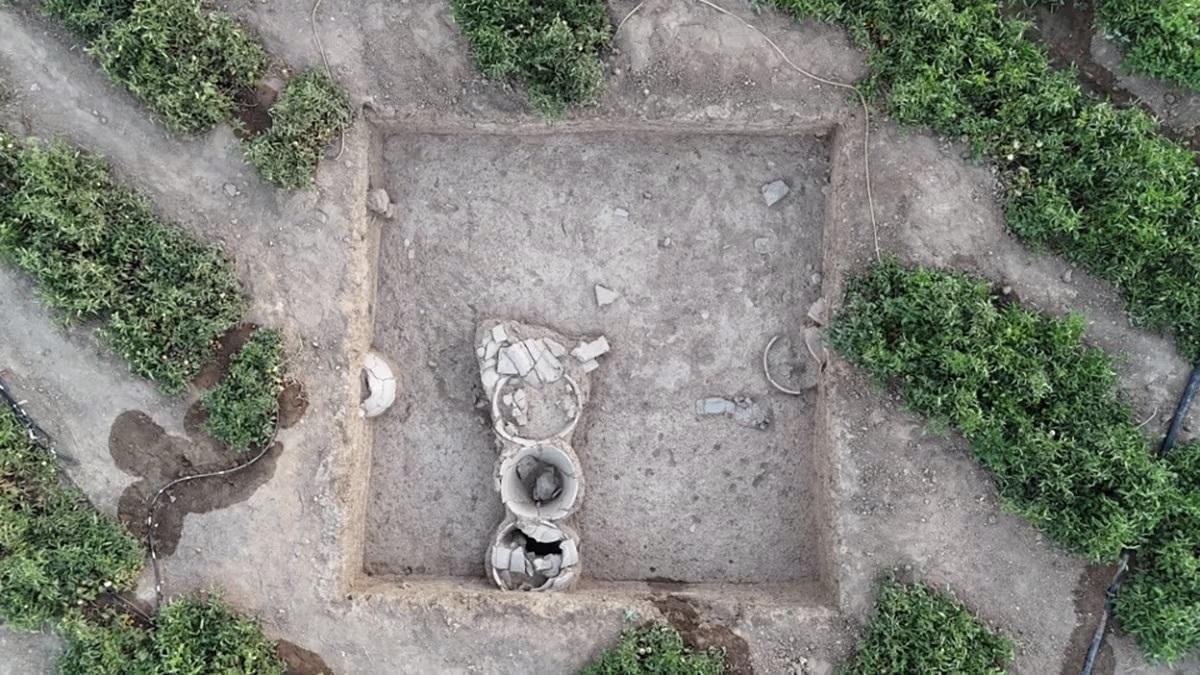
Ancient artifacts unearthed in Iraq uncover hidden history of ancient Mesopotamia
A portion of the excavated Mesopotamian site of Kurd Qaburstan. Credit: Tiffany Earley-Spadoni / University of Central Florida

Situated close to the city of Erbil, Kurd Qaburstan is thought to be the site of the ancient city of Qabra, a town of some regional importance that is mentioned in the Old Babylonian monuments, such as the Stele of Dadusha. The site dates to circa 1800 BCE during the reign of the renowned law-giving king Hammurabi. Despite the fact that Mesopotamia is primarily known as the cradle of urban civilization, the Middle Bronze Age in Northern Iraq is still poorly documented due to a general absence of research and biases in the sources.

“We hope to find even more historical records that will help us tell the story of [the city] from the perspective of its own people rather than relying only on accounts written by their enemies,” said Dr. Earley-Spadoni. “While we know a great deal about the development of writing in southern Iraq, far less is known about literacy in northern Mesopotamian cities, especially near Erbil where Kurd Qaburstan is located.”

These clay tablets are significant as they are the first such finds in this part of the world. Preliminary interpretations of the tablets include the fact that they could be informative about the relations of the city with other settlements and the degree of literacy among its inhabitants. Scholars examine names, choice of words, and style of writing to piece together cultural identity and the historical context in which the people of Kurd Qaburstan lived.
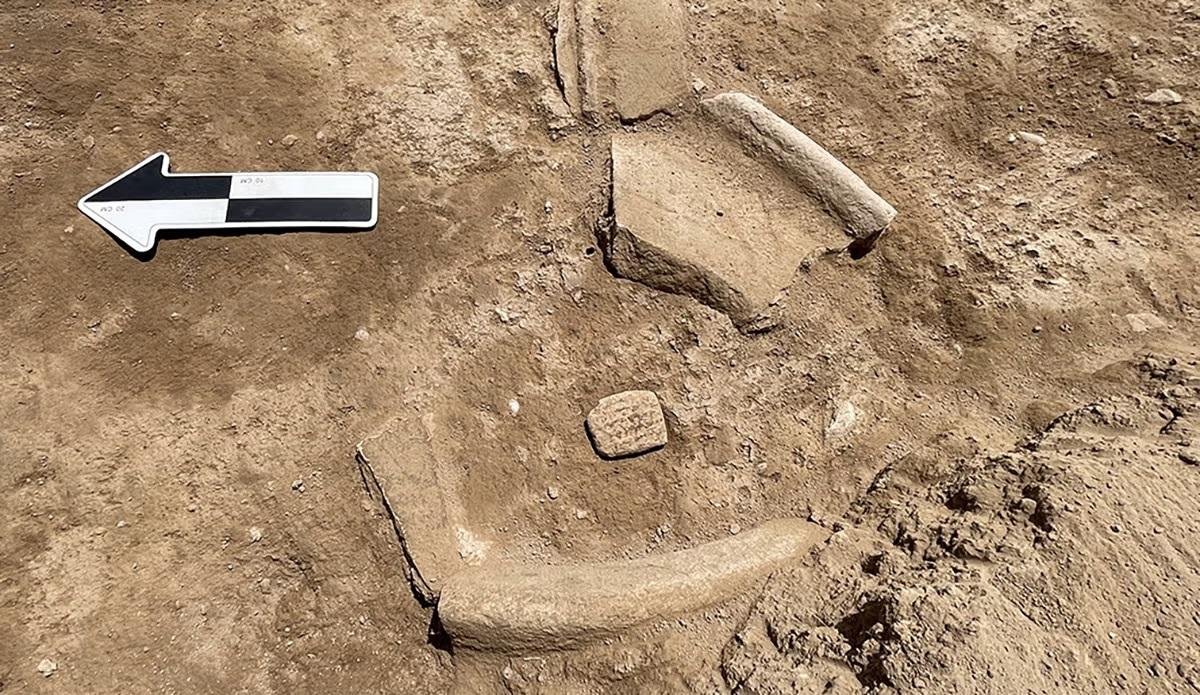
Ancient artifacts unearthed in Iraq uncover hidden history of ancient Mesopotamia
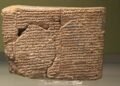
One of three clay cuneiform tablets discovered at the Middle Bronze Age site of Kurd Qaburstan in northeast Iraq. It was found in a debris-filled corridor in the lower town palace. Early interpretations of this tablet suggests dramatic events and possibly ancient warfare. Credit: Tiffany Earley-Spadoni / University of Central Florida

The team dug up two main areas: the residential quarters in the northwest and the newly found administrative center, or lower town palace. In 2022, the team hypothesized a palace and confirmed its existence with geophysical surveys via magnetometry, showing monumental architecture, human remains, and clear signs of destruction. A discovery of this nature thus points to the fact that the site underwent some significant historical events linked to violence in the ancient world.

RelatedStories

Ancient Mesopotamian cuneiform texts reach new audiences through major digital archive

Ancient Mesopotamian cuneiform texts reach new audiences through major digital archive

May 10, 2026
Archaeologists identify forgotten city of Alexandria on the Tigris in southern Iraq

Archaeologists identify forgotten city of Alexandria on the Tigris in southern Iraq

February 3, 2026

In the residential quarters, outer courtyards, clay drainpipes, and household refuse were found. Pottery remains included cups, plates, and jars. The presence of elaborately decorated pieces indicated that private wealth among the residents did not align with the typical profile of the non-elite in ancient Mesopotamian cities. Animal bones retrieved alongside the pottery signaled a spectrum of diets that included both domesticated meats and game, a situation that subverts assumptions of social and lifestyle division.

“We’re studying this ancient city to learn very specific things about the ancient inhabitants,” said Dr. Earley-Spadoni. “To what degree did they plan their environment? We also want to know how social inequality worked in this ancient city. Were there very poor people and very rich people? Or was there possibly a middle class?”

Mesopotamia’s dense network of ancient cities, located in the fertile plains between the Tigris and Euphrates rivers, has long intrigued researchers. Scholars have scoured the southern cities, such as Uruk, but northern sites, such as Kurd Qaburstan, are allowing researchers to fill gaps in history.

More information: University of Central Florida
Share:

Share on Facebook Share on X (Twitter) Share on LinkedIn Share on Pinterest Share on WhatsApp Share on Email

You May Also Like...

'Patchwork families' lived in Europe over 5,000 years ago, Neolithic DNA study finds
Anthropology

‘Patchwork families’ lived in Europe over 5,000 years ago, Neolithic DNA study finds

May 25, 2026
100,000-year-old Homo sapiens bones from Ethiopia may preserve earliest evidence of human cremation
Anthropology

100,000-year-old Homo sapiens bones from Ethiopia may preserve earliest evidence of human cremation

May 24, 2026
Ancient Peruvian hairless dogs buried with Wari elites 1,200 years ago
Archaeology

Ancient Peruvian hairless dogs buried with Wari elites 1,200 years ago

May 24, 2026
4,000-year-old Mohenjo-daro study finds ancient city grew more equal over time
Archaeology

4,000-year-old Mohenjo-daro study finds ancient city grew more equal over time

May 24, 2026
Bronze Age towers in Sardinia remained centers of worship and ritual in the Iron Age
Archaeology

Bronze Age towers in Sardinia remained centers of worship and ritual in the Iron Age

May 23, 2026
Rare 19th-century bone dental bridge found in Portugal points to early cosmetic tooth replacement
Anthropology

Rare 19th-century bone dental bridge found in Portugal points to early cosmetic tooth replacement

May 23, 2026

Follow us


Instagram
242K

Facebook
117K

Threads
46K

LinkedIn
14K

Twitter
6K

YouTube
1K
'Patchwork families' lived in Europe over 5,000 years ago, Neolithic DNA study finds

‘Patchwork families’ lived in Europe over 5,000 years ago, Neolithic DNA study finds

May 25, 2026
100,000-year-old Homo sapiens bones from Ethiopia may preserve earliest evidence of human cremation

100,000-year-old Homo sapiens bones from Ethiopia may preserve earliest evidence of human cremation

May 24, 2026
Ancient Peruvian hairless dogs buried with Wari elites 1,200 years ago

Ancient Peruvian hairless dogs buried with Wari elites 1,200 years ago

May 24, 2026
4,000-year-old Mohenjo-daro study finds ancient city grew more equal over time

4,000-year-old Mohenjo-daro study finds ancient city grew more equal over time

May 24, 2026

Archaeology News online magazine

Archaeology News is an international online magazine that covers all aspects of archaeology.


Categories

  • Academics
    • Books
    • Conferences
    • Universities
  • Articles
  • Download
  • Game
  • News
    • Anthropology
    • Archaeology
    • Paleontology
  • Quiz
  • Tours

Subscribe to our newsletter

© 2024 - Archaeology News Online Magazine. All Rights Reserved.

  • About
  • Privacy Policy
  • Terms of Use
  • Donation
  • Contact

Manage Consent
To provide the best experiences, we use technologies like cookies to store and/or access device information. Consenting to these technologies will allow us to process data such as browsing behavior or unique IDs on this site. Not consenting or withdrawing consent, may adversely affect certain features and functions.
Functional Always active
The technical storage or access is strictly necessary for the legitimate purpose of enabling the use of a specific service explicitly requested by the subscriber or user, or for the sole purpose of carrying out the transmission of a communication over an electronic communications network.
Preferences
The technical storage or access is necessary for the legitimate purpose of storing preferences that are not requested by the subscriber or user.
Statistics
The technical storage or access that is used exclusively for statistical purposes. The technical storage or access that is used exclusively for anonymous statistical purposes. Without a subpoena, voluntary compliance on the part of your Internet Service Provider, or additional records from a third party, information stored or retrieved for this purpose alone cannot usually be used to identify you.
Marketing
The technical storage or access is required to create user profiles to send advertising, or to track the user on a website or across several websites for similar marketing purposes.
  • Manage options
  • Manage services
  • Manage {vendor_count} vendors
  • Read more about these purposes
View preferences
  • {title}
  • {title}
  • {title}
  • Home
  • News
    • Archaeology
    • Anthropology
    • Paleontology
  • Academic
    • Books
    • Conferences
    • Universities
  • Articles
  • VR Tours
  • Quiz & Game
  • Download
  • Encyclopedia
  • Forum

About  .  Contact  .  Donation

© 2024 - Archaeology News Online Magazine. All Rights Reserved