• About
  • Privacy Policy
  • Terms of Use
  • Donation
  • Contact
No Result
View All Result
Archaeology News
  • Home
  • News
    • Archaeology
    • Anthropology
    • Paleontology
  • Academic
    • Books
    • Conferences
    • Universities
  • Articles
  • VR Tours
  • Quiz & Game
  • Download
  • Encyclopedia
  • Forum
Archaeology News
No Result
View All Result
Home News Anthropology

Scientists discover traces of military service on a 19th-century soldier’s teeth

by Dario Radley
February 4, 2025

A discovery made by scientists at the Olomouc Archaeological Center has provided the first physical evidence of a long-suspected military practice from the late 18th and early 19th centuries.
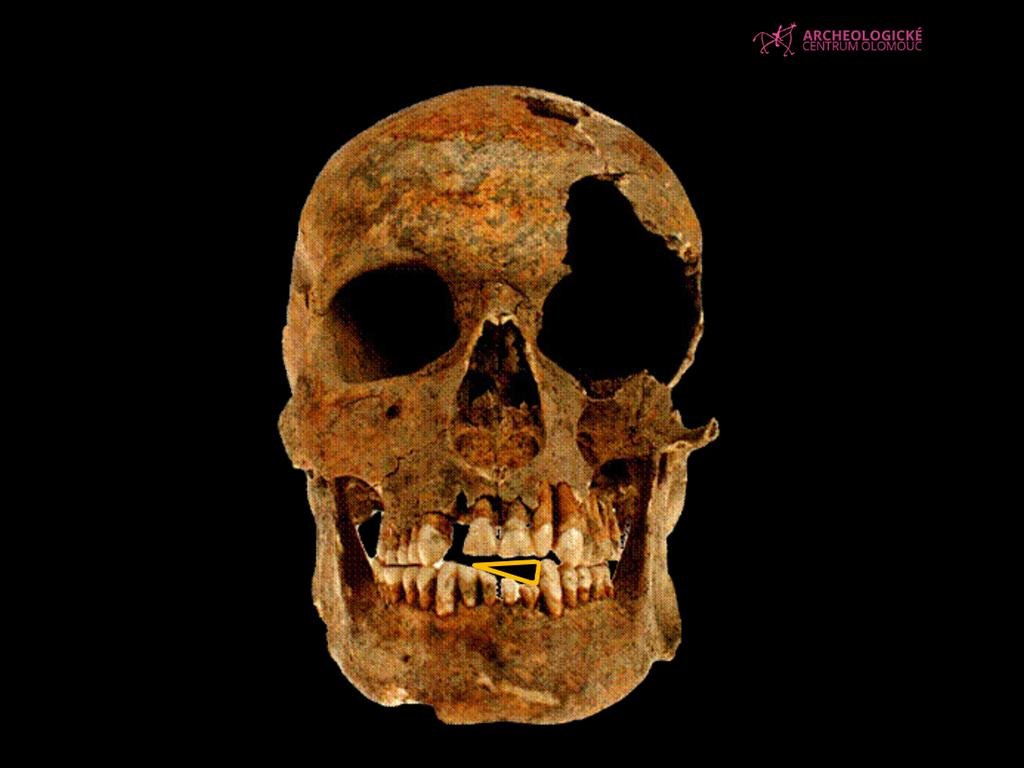
Scientists discover traces of military service on a 19th-century soldier’s teeth
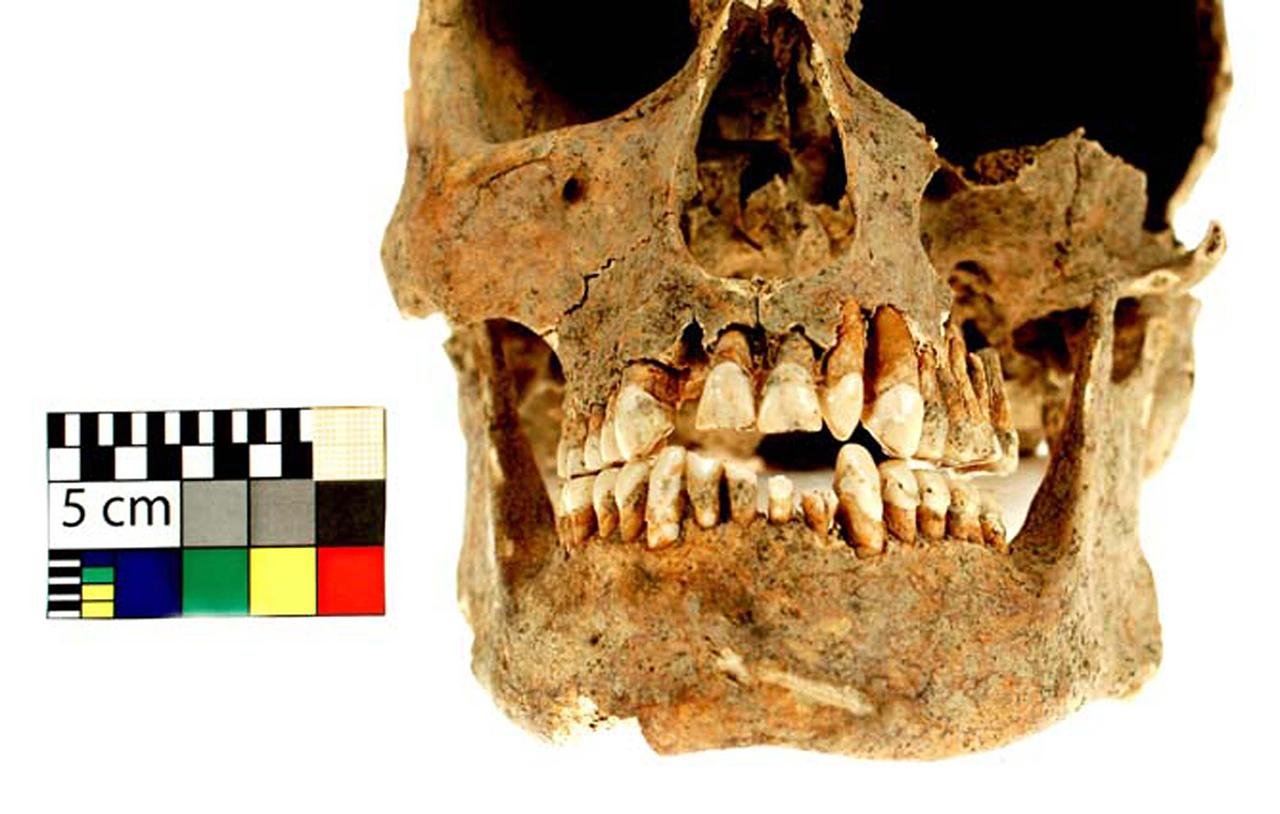
Photograph of a damaged dentition of a soldier from the 19th century. Credit: Archaeological Center Olomouc

Analysis of the skeleton of a soldier found in the town of Majetín, in the Olomouc region, indicates that he habitually opened gunpowder cartridges with his teeth, leaving permanent damage to his incisors. Chemical testing further corroborated remnants of gunpowder in his dental tartar, providing an unusual insight into the daily life and physical stresses experienced by soldiers at the time.

The remains were first excavated in 2012, though it took nearly a decade of research to uncover the full extent of the find. Anthropologist Lukáš Šín, who led the study, stated that the skeleton belonged to a man aged between 30 and 50 years and who stood about 174 cm tall. His lower three incisors, however, showed definite signs of repeated mechanical stress that experts believe stemmed from the use of his teeth to tear open powder cartridges. “The soldier’s teeth were weakened through repeated activity, and this stress could have resulted in the crowns of the teeth breaking,” said Šín.
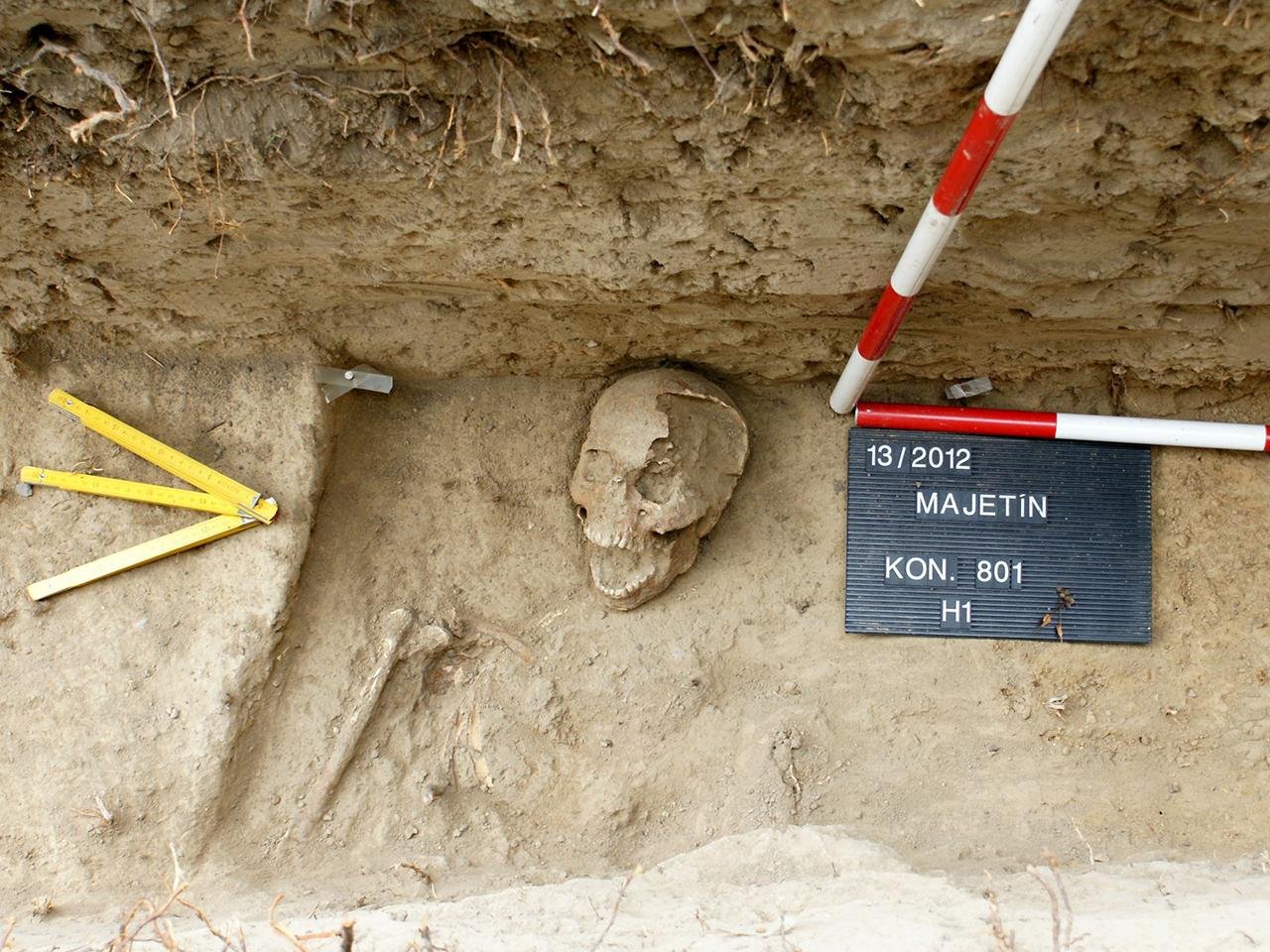
Scientists discover traces of military service on a 19th-century soldier’s teeth
Photograph of the Soldier Found in Majetín. Credit: Archaeological Center Olomouc

Historical records indicate that soldiers of this era loaded their firearms by biting into paper cartridges containing gunpowder and bullets, separating the powder before pouring it into the muzzle of their weapons. The practice has been documented in military manuals, although direct physical evidence had always been lacking—until now. The find in Majetín thus represents the first documented case where the recovery of skeletal remains confirms this method.
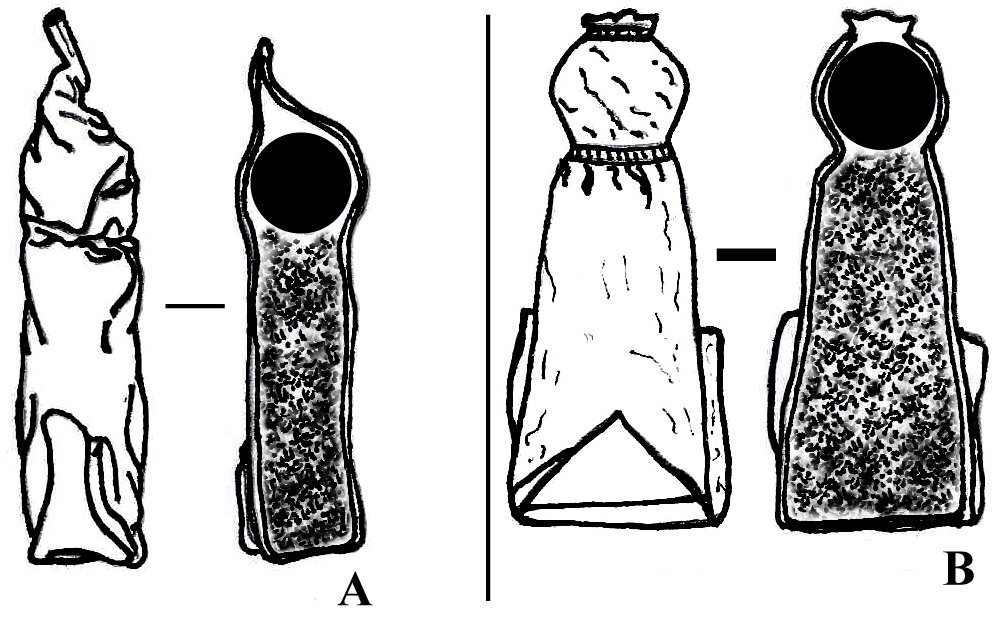
Scientists discover traces of military service on a 19th-century soldier’s teeth
An illustration of bullets. Credit: Archaeological Center Olomouc

Further evidence supporting this hypothesis emerged in 2017, when Dr. Dana Fialová from Masaryk University performed a chemical analysis of the dental tartar of the remains using X-ray spectroscopy. Her team detected significant concentrations of sulfur, which is an important component of gunpowder. “The sulfur from the gunpowder not only contaminated the dental cavity and the tartar, but also contributed to exposing the tooth bed and causing gingivitis,” Šín explained. This confirms that the soldier frequently handled gunpowder in his mouth, reinforcing the theory that he was involved in loading firearms using his teeth.

RelatedStories

World War II mass grave in Poland reveals remains of German officer killed during Battle of Lauban

World War II mass grave in Poland reveals remains of German officer killed during Battle of Lauban

May 19, 2026
Nottingham reaches 1,000 recorded underground caves in major archaeological milestone in England

Nottingham reaches 1,000 recorded underground caves in major archaeological milestone in England

May 3, 2026

The skeleton also bore signs of a tough military life. The wear on the lumbar vertebrae suggests the long and strenuous marches endured by infantrymen of this period.
Scientists discover traces of military service on a 19th-century soldier’s teeth
The Majetín soldier is the first globally recognized case of this phenomenon. Credit: Archaeological Center Olomouc

Experts date the soldier to between the 18th and 19th centuries, coinciding with the period when front-loading firearms were used in military conflicts. Curiously enough, in June 2012, similar dental damage was observed by Belgian archaeologist Dominique Bosquet and her team on the battlefield of Waterloo. Yet their research has yet to be published, making the Majetín soldier the first case of its kind in the world to have been identified.

The skeletal remains are now preserved in the archives of the Olomouc Archaeological Center, and the results of this long-term study have been published in scientific journals.

More information: Archaeological Center Olomouc
Share:

Share on Facebook Share on X (Twitter) Share on LinkedIn Share on Pinterest Share on WhatsApp Share on Email

You May Also Like...

Ancient Venetic sanctuary with rare inscriptions unearthed beneath road project in Italy
Archaeology

Ancient Venetic sanctuary with rare inscriptions unearthed beneath road project in Italy

May 21, 2026
1,000-year-old dingo burial in Australia reveals deep ties between Barkindji people and dingoes
Archaeology

1,000-year-old ritually buried dingo in Australia reveals deep ties between Barkindji people and dingoes

May 20, 2026
Ancient texts reveal how Persian and Greek rule shaped language in Central Asia
Archaeology

Ancient texts reveal how Persian and Greek rule shaped language in Central Asia

May 20, 2026
World War II mass grave in Poland reveals remains of German officer killed during Battle of Lauban
Anthropology

World War II mass grave in Poland reveals remains of German officer killed during Battle of Lauban

May 19, 2026
massive jar in Laos contained remains of 37 people, revealing ancient burial rituals and Asian trade links
Anthropology

Massive jar in Laos contained remains of 37 people, revealing ancient burial rituals and Asian trade links

May 19, 2026
6,000-year-old necropolis in Spain rewrites origins of Europe’s first megalithic tombs
Archaeology

6,000-year-old necropolis in Spain rewrites origins of Europe’s first megalithic tombs

May 18, 2026

Comments 2

  1. Editorial Team says:
    1 second ago

    Disclaimer: This website is a science-focused magazine that welcomes both academic and non-academic audiences. Comments are written by users and may include personal opinions or unverified claims. They do not necessarily reflect the views of our editorial team or rely on scientific evidence.

    Comment Policy: We kindly ask all commenters to engage respectfully. Comments that contain offensive, insulting, degrading, discriminatory, or racist content will be automatically removed.

  2. Dianne Oliver says:
    1 year ago

    Since a young child I wanted to be an archaeologist but circumstances (mental health issues) prevented me from finishing school….but I’ve always held a passion for archaeology & history. I am nearly 80 yo & I became a ceramist with a Diploma in my 60’s… I dig for my own clay in many areas which is always exciting….One day my pots & sculptures may be uncovered. That would be exciting. 🤗

  3. Melissa M says:
    1 year ago

    As long as one can think and dream, let not others expectations and measures of chronological numbers, be of any block or sway. Keep creating beauty and expression that’ll stand as a tangible mark of ‘you’..long into our future where we now, are but unknown dust😇🫶

Follow us


Instagram
242K

Facebook
117K

Threads
46K

LinkedIn
14K

Twitter
6K

YouTube
1K
Ancient Venetic sanctuary with rare inscriptions unearthed beneath road project in Italy

Ancient Venetic sanctuary with rare inscriptions unearthed beneath road project in Italy

May 21, 2026
1,000-year-old dingo burial in Australia reveals deep ties between Barkindji people and dingoes

1,000-year-old ritually buried dingo in Australia reveals deep ties between Barkindji people and dingoes

May 20, 2026
Ancient texts reveal how Persian and Greek rule shaped language in Central Asia

Ancient texts reveal how Persian and Greek rule shaped language in Central Asia

May 20, 2026
World War II mass grave in Poland reveals remains of German officer killed during Battle of Lauban

World War II mass grave in Poland reveals remains of German officer killed during Battle of Lauban

May 19, 2026

Archaeology News online magazine

Archaeology News is an international online magazine that covers all aspects of archaeology.


Categories

  • Academics
    • Books
    • Conferences
    • Universities
  • Articles
  • Download
  • Game
  • News
    • Anthropology
    • Archaeology
    • Paleontology
  • Quiz
  • Tours

Subscribe to our newsletter

© 2024 - Archaeology News Online Magazine. All Rights Reserved.

  • About
  • Privacy Policy
  • Terms of Use
  • Donation
  • Contact

Manage Consent
To provide the best experiences, we use technologies like cookies to store and/or access device information. Consenting to these technologies will allow us to process data such as browsing behavior or unique IDs on this site. Not consenting or withdrawing consent, may adversely affect certain features and functions.
Functional Always active
The technical storage or access is strictly necessary for the legitimate purpose of enabling the use of a specific service explicitly requested by the subscriber or user, or for the sole purpose of carrying out the transmission of a communication over an electronic communications network.
Preferences
The technical storage or access is necessary for the legitimate purpose of storing preferences that are not requested by the subscriber or user.
Statistics
The technical storage or access that is used exclusively for statistical purposes. The technical storage or access that is used exclusively for anonymous statistical purposes. Without a subpoena, voluntary compliance on the part of your Internet Service Provider, or additional records from a third party, information stored or retrieved for this purpose alone cannot usually be used to identify you.
Marketing
The technical storage or access is required to create user profiles to send advertising, or to track the user on a website or across several websites for similar marketing purposes.
  • Manage options
  • Manage services
  • Manage {vendor_count} vendors
  • Read more about these purposes
View preferences
  • {title}
  • {title}
  • {title}
  • Home
  • News
    • Archaeology
    • Anthropology
    • Paleontology
  • Academic
    • Books
    • Conferences
    • Universities
  • Articles
  • VR Tours
  • Quiz & Game
  • Download
  • Encyclopedia
  • Forum

About  .  Contact  .  Donation

© 2024 - Archaeology News Online Magazine. All Rights Reserved