• About
  • Privacy Policy
  • Terms of Use
  • Donation
  • Contact
No Result
View All Result
Archaeology News
  • Home
  • News
    • Archaeology
    • Anthropology
    • Paleontology
  • Academic
    • Books
    • Conferences
    • Universities
  • Articles
  • VR Tours
  • Quiz & Game
  • Download
  • Encyclopedia
  • Forum
Archaeology News
No Result
View All Result
Home News Archaeology

Trojans of all classes enjoyed wine in Bronze Age Troy, study reveals

by Dario Radley
March 31, 2025

For the first time, scientists have unveiled chemical evidence that wine was consumed on a large scale in ancient Troy, contradicting earlier assumptions that it was a drink of the elite. Scientists from the Universities of Tübingen, Bonn, and Jena conducted a biomolecular analysis of drinking vessels from the legendary city and found that wine was something both the upper and lower classes drank. Their findings were published in the American Journal of Archaeology.
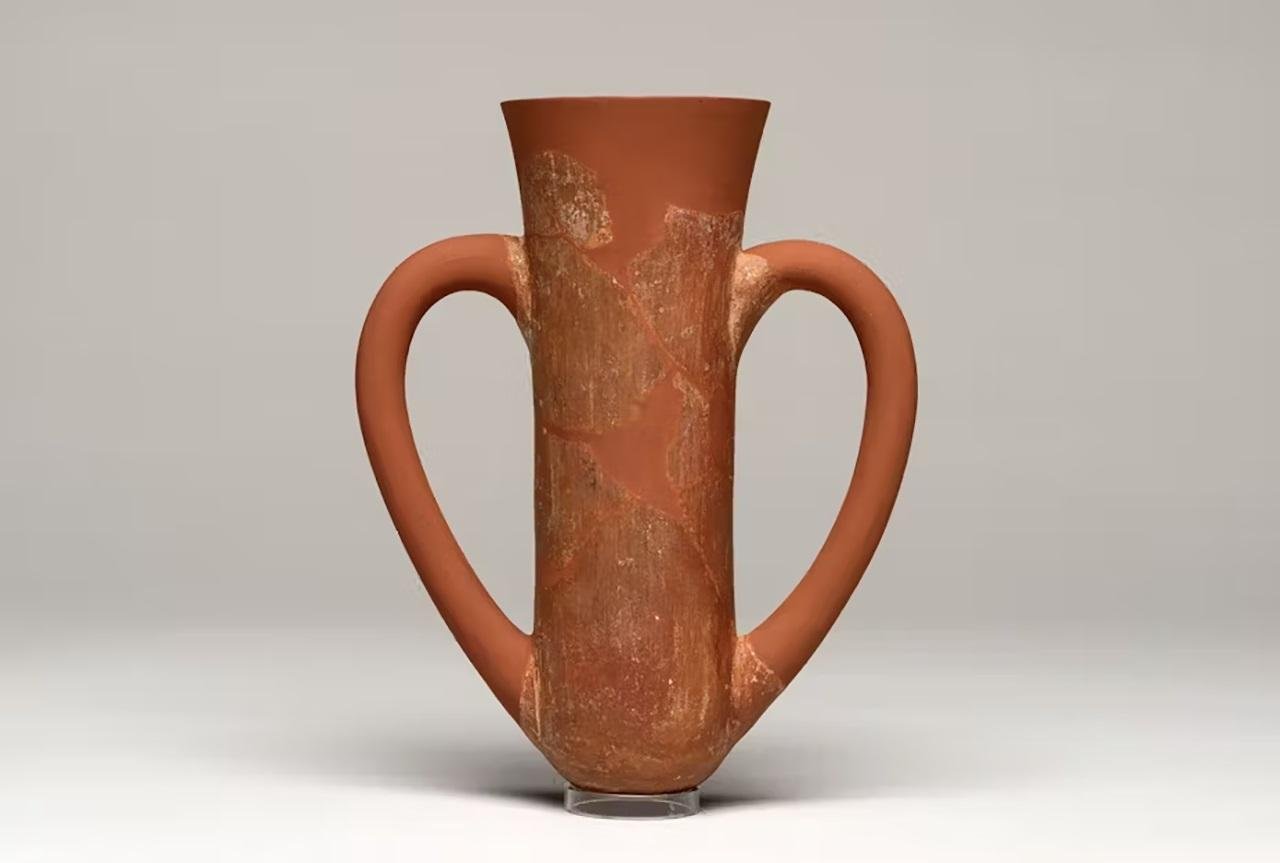
Wine for all: Trojans of all classes enjoyed it in Bronze Age Troy
Depas amphikypellon from Schliemann’s excavations at Troy. Credit: Institute of Classical Archaeology at the University of Tübingen/Valentin Marquardt, CC BY-SA

The research focused on the depas amphikypellon, a characteristic two-handled clay goblet known from Homeric epics. The vessels, dating from 2500 to 2000 BCE, were initially excavated by German archaeologist Heinrich Schliemann in the 19th century, and he surmised that they were used in celebratory toasts, as described in The Iliad. Nonetheless, the question of whether wine was actually contained in them had gone unanswered until this investigation.

Dr. Stephan Blum from the University of Tübingen explained, “Heinrich Schliemann already conjectured that the depas goblet was passed around at celebrations—just as described in The Iliad. Our research has now confirmed that these vessels were indeed used for wine.”

The researchers used gas chromatography (GC) and mass spectrometry (GC-MS) to analyze organic residues on ceramic fragments of depas goblets from the University of Tübingen’s classical archaeology collection. The examination showed the presence of pyruvic and succinic acids—chemical markers of fermented grape juice. Dr. Maxime Rageot of the University of Bonn, who led the residue analysis, stated, “The evidence of these acids was conclusive: They only occur when grape juice ferments. So now we can state with confidence that wine was actually drunk from the depas goblets and not just grape juice.”

Wine for all: Trojans of all classes enjoyed it in Bronze Age Troy
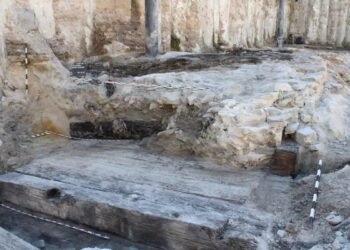
Depas amphikypellon found outside the citadel wall of Troy II. Credit: University of Tübingen

Although wine has long been considered a luxury product during the Bronze Age, researchers have now established that it was not exclusive to the elite. Chemical analysis of ordinary cups from Troy’s outer settlements, which accommodated common people, also revealed the same wine residues. “We’ve also chemically studied ordinary cups that were found in the outer settlement of Troy and therefore outside the citadel,” said Blum. “These vessels also contained wine, so it is clear that wine was an everyday drink for the common people too.”

RelatedStories

Over 1,000 archaeological features uncovered along Czech railway

Over 1,000 archaeological features uncovered along Czech railway

April 25, 2026
Late Bronze Age bronze ring hoard near Dresden reveals ritual practices and social life 1300–1100 BCE

Late Bronze Age bronze ring hoard near Dresden reveals ritual practices and social life 1300–1100 BCE

April 21, 2026

The discovery contradicts traditional beliefs that wine drinking was strictly controlled by the ruling elite. In many ancient societies, wine was generally associated with elite status due to the complexities of grape cultivation and trade. But Troy’s location in a region favorable to viticulture suggests that wine might have been more widely available across all levels of society.
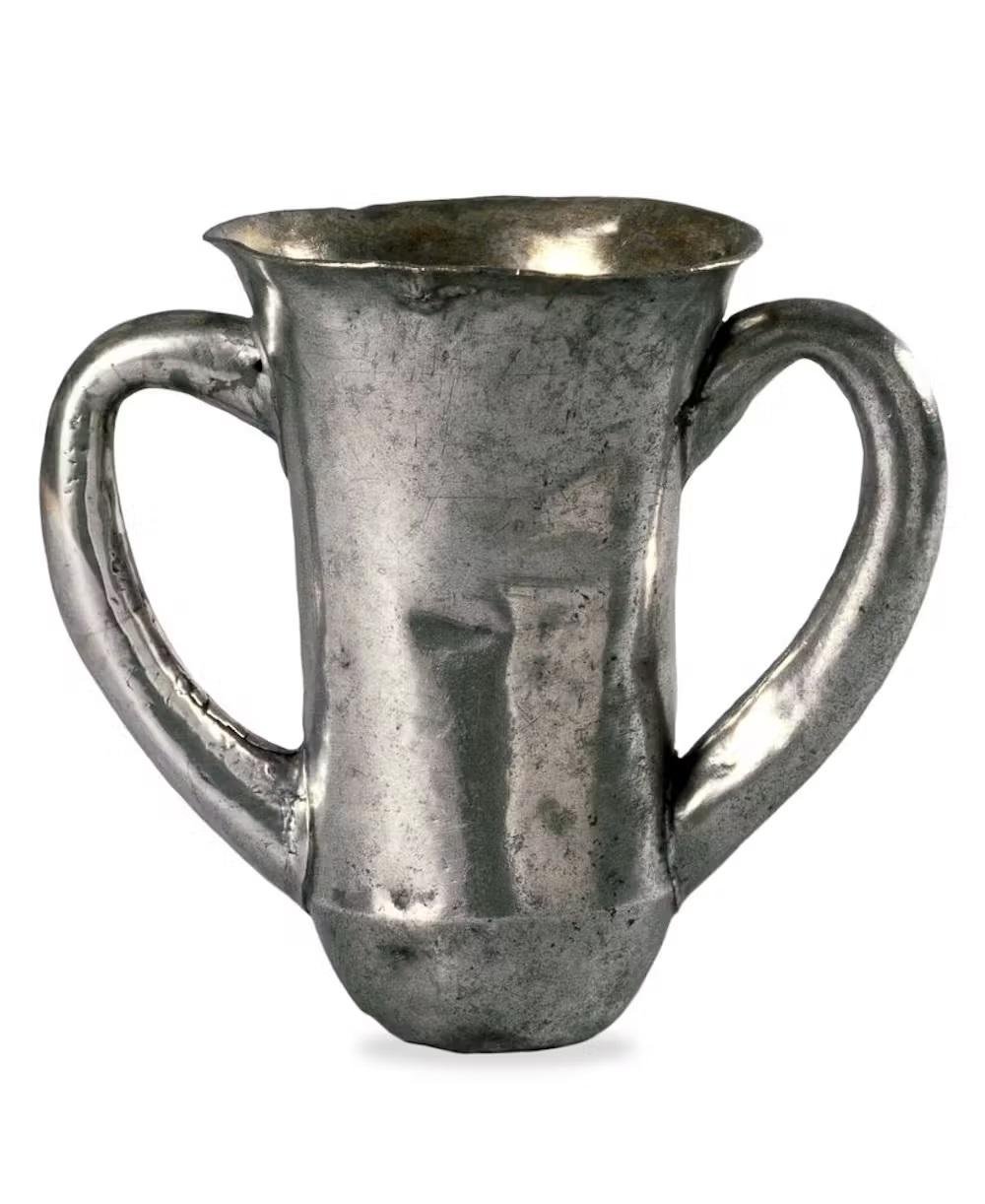
Wine for all: Trojans of all classes enjoyed it in Bronze Age Troy
The silver example from the British Museum, found near Troy. The Trustees of the British Museum, CC BY-SA

Professor Karla Pollmann, President of the University of Tübingen, said, “Research into Troy has a long tradition at the University of Tübingen, and I am delighted that we have been able to add another piece to the puzzle revealing the picture of Troy.”

Traditionally considered a symbol of wealth and religious rituals, this new evidence suggests that in Troy, wine drinking was a democratized practice. This finding raises new questions about wine consumption in other ancient cultures. Further biomolecular research at other Aegean and Anatolian locations can determine if widespread wine consumption was a unique characteristic of Troy or a broader regional phenomenon.

University of Tübingen

More information: Blum, S. W. E., Rageot, M., & Mühlenbruch, T. (2025). The question of wine consumption in early bronze age Troy: Organic residue analysis and the depas amphikypellon. American Journal of Archaeology, 129(2), 263–279. doi:10.1086/734061
Share1Tweet1ShareShareSend

You May Also Like...

Over 1,000 archaeological features uncovered along Czech railway
Archaeology

Over 1,000 archaeological features uncovered along Czech railway

April 25, 2026
Ancient ship burial in Norway dates to CE 700, rewriting early Viking Age origins
Archaeology

Ancient ship burial in Norway dates to CE 700, rewriting early Viking Age origins

April 25, 2026
Ramses II statue found in Egypt’s eastern Nile Delta shows ancient reuse of royal monuments
Archaeology

Ramses II statue found in Egypt’s eastern Nile Delta shows ancient reuse of royal monuments

April 24, 2026
Late Bronze Age bronze ring hoard near Dresden reveals ritual practices and social life 1300–1100 BCE
Archaeology

Late Bronze Age bronze ring hoard near Dresden reveals ritual practices and social life 1300–1100 BCE

April 21, 2026
Roman cemetery in Egypt reveals golden tongues, mummies, and rare Iliad papyrus
Anthropology

Roman cemetery in Egypt reveals golden tongues, mummies, and rare Iliad papyrus

April 19, 2026
Basel plague study finds young workers had highest death rates in 17th century outbreak
Anthropology

Basel plague study finds young workers had highest death rates in 17th century outbreak

April 17, 2026

Follow us


Instagram
244K

Facebook
118K

Threads
46K

LinkedIn
14K

Twitter
6K

YouTube
1K
  • Trending
  • Comments
  • Latest
Shipwreck Salvage. Credit: rawpixel.com / Public Domain

2,000-year-old shipwreck discovered off Turkish coast with remarkably preserved stacked ceramics

July 2, 2025
Viking age DNA reveals 9,000-year-old HIV-resistant gene originating near the Black Sea

Viking age DNA reveals 9,000-year-old HIV-resistant gene originating near the Black Sea

May 18, 2025
A new study suggests the mysterious Voynich Manuscript may be a medieval cipher

A new study suggests the mysterious Voynich Manuscript may be a medieval cipher

January 3, 2026
3D analysis reveals Shroud of Turin image likely came from sculpture, not Jesus’ body

3D analysis reveals Shroud of Turin image likely came from sculpture, not Jesus’ body

August 3, 2025
Moses may be named in ancient Egyptian mine inscriptions, sparking debate over earliest biblical references

Moses may be named in ancient Egyptian mine inscriptions, sparking debate over earliest biblical references

July 31, 2025
3D analysis reveals Shroud of Turin image likely came from sculpture, not Jesus’ body

3D analysis reveals Shroud of Turin image likely came from sculpture, not Jesus’ body

Moses may be named in ancient Egyptian mine inscriptions, sparking debate over earliest biblical references

Moses may be named in ancient Egyptian mine inscriptions, sparking debate over earliest biblical references

$1 million prize offered to decipher 5,300-year-old Indus Valley script

$1 million prize offered to decipher 5,300-year-old Indus Valley script

Oldest ever genetic data from a human relative found in 2-million-year-old fossilized teeth

Oldest ever genetic data from a human relative found in 2-million-year-old fossilized teeth

Exceptionally large Roman shoes discovered at Magna fort near Hadrian’s Wall

Exceptionally large Roman shoes discovered at Magna fort near Hadrian’s Wall

Over 1,000 archaeological features uncovered along Czech railway

Over 1,000 archaeological features uncovered along Czech railway

April 25, 2026
Ancient ship burial in Norway dates to CE 700, rewriting early Viking Age origins

Ancient ship burial in Norway dates to CE 700, rewriting early Viking Age origins

April 25, 2026
Ramses II statue found in Egypt’s eastern Nile Delta shows ancient reuse of royal monuments

Ramses II statue found in Egypt’s eastern Nile Delta shows ancient reuse of royal monuments

April 24, 2026
Late Bronze Age bronze ring hoard near Dresden reveals ritual practices and social life 1300–1100 BCE

Late Bronze Age bronze ring hoard near Dresden reveals ritual practices and social life 1300–1100 BCE

April 21, 2026
Roman cemetery in Egypt reveals golden tongues, mummies, and rare Iliad papyrus

Roman cemetery in Egypt reveals golden tongues, mummies, and rare Iliad papyrus

April 19, 2026

Archaeology News online magazine

Archaeology News is an international online magazine that covers all aspects of archaeology.


Categories

  • Academics
    • Books
    • Conferences
    • Universities
  • Articles
  • Download
  • Game
  • News
    • Anthropology
    • Archaeology
    • Paleontology
  • Quiz
  • Tours

Subscribe to our newsletter

© 2024 - Archaeology News Online Magazine. All Rights Reserved.

  • About
  • Privacy Policy
  • Terms of Use
  • Donation
  • Contact

Manage Consent
To provide the best experiences, we use technologies like cookies to store and/or access device information. Consenting to these technologies will allow us to process data such as browsing behavior or unique IDs on this site. Not consenting or withdrawing consent, may adversely affect certain features and functions.
Functional Always active
The technical storage or access is strictly necessary for the legitimate purpose of enabling the use of a specific service explicitly requested by the subscriber or user, or for the sole purpose of carrying out the transmission of a communication over an electronic communications network.
Preferences
The technical storage or access is necessary for the legitimate purpose of storing preferences that are not requested by the subscriber or user.
Statistics
The technical storage or access that is used exclusively for statistical purposes. The technical storage or access that is used exclusively for anonymous statistical purposes. Without a subpoena, voluntary compliance on the part of your Internet Service Provider, or additional records from a third party, information stored or retrieved for this purpose alone cannot usually be used to identify you.
Marketing
The technical storage or access is required to create user profiles to send advertising, or to track the user on a website or across several websites for similar marketing purposes.
  • Manage options
  • Manage services
  • Manage {vendor_count} vendors
  • Read more about these purposes
View preferences
  • {title}
  • {title}
  • {title}
  • Home
  • News
    • Archaeology
    • Anthropology
    • Paleontology
  • Academic
    • Books
    • Conferences
    • Universities
  • Articles
  • VR Tours
  • Quiz & Game
  • Download
  • Encyclopedia
  • Forum

About  .  Contact  .  Donation

© 2024 - Archaeology News Online Magazine. All Rights Reserved